
Preventing Bacteria Growth in Dog Water Bowls: A Scientific Approach to Pet Hydration

What if the persistent slime in your dog's water bowl isn't a cleaning failure, but a fundamental design flaw? Most pet owners find themselves in a cycle of reactive scrubbing, only to see the pink hue of Serratia marcescens or a slippery biofilm return within hours. It's an exhausting battle against invisible pathogens that compromises both your home’s aesthetic and your pet’s health. Understanding the science of preventing bacteria growth in dog water bowls requires moving beyond the sponge and looking at how water is stored and exposed to the air.
You value a hydration environment that stays as clean as your own kitchen. We'll show you how to break the cycle of contamination by implementing a sophisticated routine that prioritizes long-term biological safety. By shifting to systems that control water exposure, like Torus, you can significantly reduce the surface area available for bacterial colonization. No more stagnant pools; only protected, filtered water.
This guide explores the biological mechanisms behind bowl contamination and how to implement a hydration routine that fits a modern lifestyle. We'll examine the hierarchy of safe materials and the technical logic of stored water systems. Discover how to transition from constant maintenance to a streamlined, health-forward hydration strategy that complements your home.
Key Takeaways
- Understand the biological nature of biofilms and why these resilient microbial communities require a more sophisticated management approach than standard cleaning.
- Identify how environmental catalysts like UV light and oxygen exposure significantly accelerate the rate of bacterial and fungal replication in open water.
- Learn why preventing bacteria growth in dog water bowls depends more on controlling the hydration environment than on frequent, reactive scrubbing.
- Evaluate the material science of hydration vessels to understand how microscopic surface textures can harbor pathogens like Serratia marcescens.
- Discover how to implement a proactive hydration framework that utilizes filtration and limited water exposure to ensure a cleaner, safer drinking environment.
Understanding the Biofilm: Why Your Dog's Water Bowl Feels Slimy
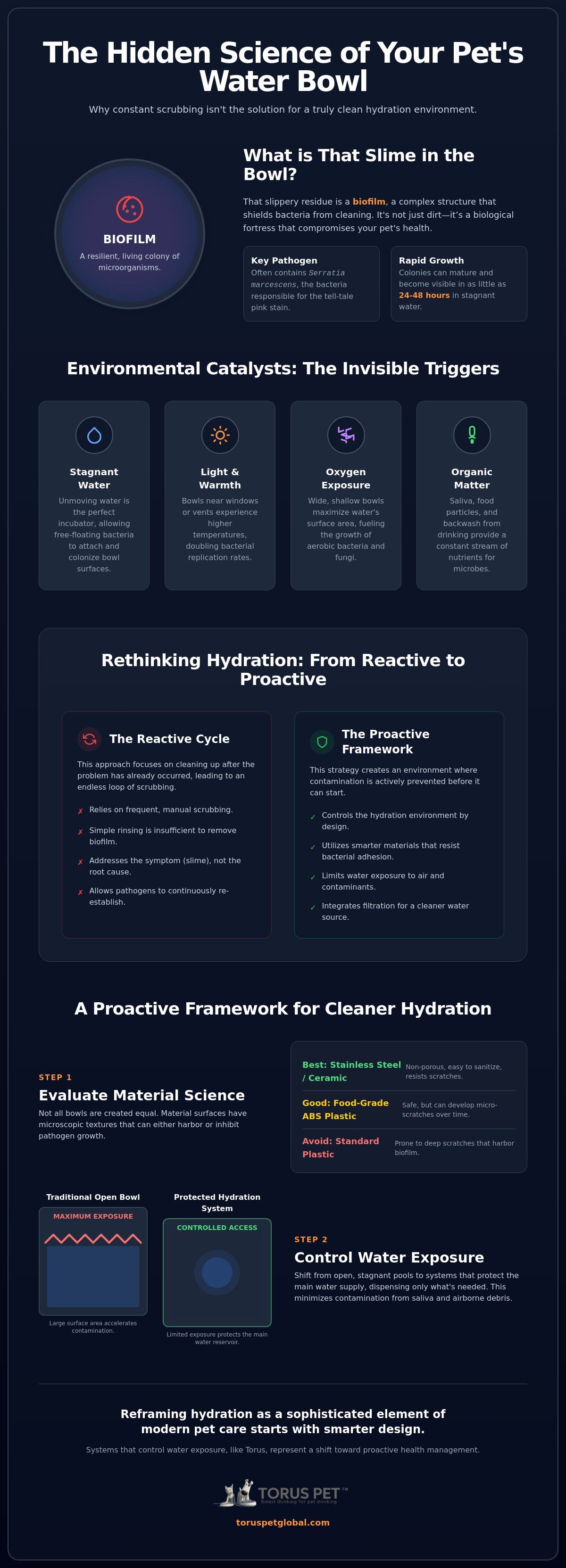
That slippery, translucent residue on the surface of your pet's water bowl is not just "old water." It is a complex, living structure known as a biofilm. Understanding the Biofilm is essential for any pet owner focused on long-term wellness. This extracellular matrix is a collection of microorganisms that adhere to surfaces, creating a resilient colony. It isn't just an aesthetic nuisance; it’s a biological shield. This "slime" protects bacteria like Serratia marcescens—the pathogen responsible for pink staining—from the environment and standard cleaning efforts.
Most owners attempt to solve this with a quick rinse. Unfortunately, rinsing is insufficient. The matrix is chemically bonded to the bowl's surface. Without physical disruption or antimicrobial intervention, the colony remains intact. When you focus on preventing bacteria growth in dog water bowls, you must realize that a simple splash of water doesn't reset the clock. It only dilutes the surface layer while the fortress underneath continues to expand.
The Bacterial Lifecycle in Stagnant Water
Microbial growth begins the moment water sits still. Bacteria transition from a free-floating state to a sessile, or attached, state. They seek out microscopic imperfections in the bowl material to anchor themselves. Once attached, they begin secreting the matrix that forms the biofilm. This process is fueled by organic matter. Saliva, backwash, and stray food particles provide a constant nutrient stream. Stagnant, open water acts as the ideal incubator, allowing these colonies to reach maturity in as little as 24 to 48 hours.
Health Implications of Chronic Contamination
Biofilms act as a permanent reservoir for pathogens. As your pet drinks, they ingest these microorganisms, which can lead to systemic issues. Chronic exposure is linked to periodontal disease and significant disruption of the digestive tract. There is also a zoonotic risk; these bacteria can transfer to humans through casual contact or shared living spaces. Biofilm is a biological fortress that safeguards pathogens from standard hygiene.
Traditional bowls offer no defense against this cycle. They leave water exposed and vulnerable. Systems that control water exposure, like Torus, represent a shift toward proactive management. By limiting the volume of water interacting with the environment and saliva, you reduce the surface area available for colonization. This sophisticated approach moves beyond reactive scrubbing to create a consistently cleaner hydration environment.
Factors That Accelerate Bacterial Growth in Pet Hydration
Most pet owners assume that if a bowl looks clean, the water inside is safe. However, environmental factors often act as silent catalysts for microbial blooms. Ultraviolet light and warmth are the two most significant accelerators in the modern home. When water is left in a sunny spot, bacterial replication rates can double with just a few degrees of temperature increase. Heat creates an ideal incubation chamber, turning a simple drink into a biological risk. A strategic approach to preventing bacteria growth in dog water bowls involves understanding these invisible triggers.
Oxygen exposure is another critical factor. Many traditional bowls are designed with a wide, shallow profile. While this may seem convenient, it creates a high surface-area-to-volume ratio that facilitates the growth of aerobic bacteria and fungi. This design maximizes oxygen exchange, providing the exact fuel that pathogens need to thrive. Every time your pet drinks, they also introduce backwash. This physical act of lapping up water forces saliva and oral microbes back into the main supply, seeding the environment with new contaminants.
Environmental Triggers in the Modern Home
Placement is often overlooked in the quest for cleaner hydration. Bowls located near windows or heating vents experience rapid temperature fluctuations that encourage mold development. High-traffic areas like kitchens or entryways also increase the risk of airborne dust and debris settling into the water. In humid environments, these particles act as anchors for fungal growth. Contemporary research on bowl materials suggests that even the most durable surfaces can't overcome the disadvantages of poor placement and open air exposure.
The Saliva-Oxygen Connection
Saliva isn't just moisture; it's a nutrient-rich soup of enzymes and proteins. When these organic materials mix with oxygen in an open bowl, they begin to oxidize and rot. This process creates the "stale" smell often associated with old water and provides the foundation for the biofilm discussed earlier. Limiting the amount of water exposed to the air at any given time is the only way to disrupt this cycle.
Stagnant water in a wide bowl is a liability. It invites contamination, fuels growth, and requires constant maintenance. By moving toward a managed system, you eliminate these environmental vulnerabilities. You can explore how the science of controlled hydration helps maintain water quality by shielding the supply from light and air. This shift from open exposure to a protected reservoir ensures that the water remains fresh, cool, and significantly less prone to bacterial spikes.
A Proactive Framework for Preventing Contamination
Many owners believe a daily dishwasher cycle is the gold standard for cleanliness. While high heat sanitizes the surface, it does nothing to stop the re-contamination that occurs the moment you set the bowl back on the floor. A more effective strategy for preventing bacteria growth in dog water bowls is proactive environmental control. By utilizing systems that store the bulk of the water in a protected, light-shielded reservoir, you eliminate the primary conditions that allow pathogens to flourish.
This approach minimizes the surface area exposed to oxygen and light. When water is kept in an internal tank, it remains cooler and cleaner for longer periods. It also reduces the risk of contracting diseases transmitted from water bowls, such as E. coli or Salmonella, which thrive in open, stagnant environments. Moving the water supply from an open dish to a managed reservoir is the first step in a sophisticated hydration routine.
Advanced Filtration Methods
Purity is not just about visual clarity. The science behind hydration involves removing invisible stressors that can impact pet health. Mechanical filtration traps physical debris like dust and hair, while active carbon adsorption targets chemical impurities. This process helps reduce chlorine and heavy metals, providing a cleaner base that is less hospitable to microbial blooms.
Maintaining this integrity requires attention to detail. Regularly replacing consumable filtration media ensures that the water supply remains consistently protected. Filtration is a continuous process, not a one-time event. When you prioritize high-quality filtration, you're investing in the long-term biological safety of your pet's environment.
Establishing a Maintenance Rhythm
A sophisticated routine balances daily oversight with periodic deep-cleans. While a protected reservoir handles the heavy lifting of environmental control, a weekly sanitization of the drinking well is still necessary. This rhythm is the most sustainable way of preventing bacteria growth in dog water bowls without requiring hours of manual labor. It turns cleaning into a quick, manageable task rather than an exhausting battle against slime.
Specialized cleaning kits can help maintain hard-to-reach hardware areas, ensuring that no part of the system becomes a hidden breeding ground. This framework respects your time and your home's aesthetic. It shifts the burden from constant, reactive scrubbing to a streamlined system of maintenance. The result is a hydration environment that stays cleaner for longer, allowing you to focus on the joy of shared life rather than the logistics of maintenance.
Beyond the Basic Bowl: Material Science and Design Solutions
Selecting a vessel for your pet often feels like a choice between aesthetic and durability. However, the material you choose plays a decisive role in preventing bacteria growth in dog water bowls. While many owners opt for plastic due to its weight and price, it is the least effective material for long-term health. Plastic is inherently porous. Over time, it develops microscopic scratches from cleaning or chewing. These tiny canyons provide the perfect sanctuary for bacteria to anchor and multiply, shielded from your sponge.
Stainless steel is widely regarded as the hygienic standard because it is non-porous and durable. Yet, even high-quality steel cannot stop the formation of biofilm if the water remains stagnant and exposed to the air. A more advanced solution involves antimicrobial-infused materials. These components provide active protection by inhibiting microbial DNA replication on the surface. This design philosophy moves beyond passive storage to create an environment that is fundamentally hostile to pathogens.
Material Comparison for Modern Homes
Ceramic is a popular choice for design-conscious homes, but it carries a hidden risk known as "crazing." These are fine, hair-like cracks in the glaze that occur over time. Like the scratches in plastic, these cracks hide bacteria and are nearly impossible to sanitize fully. For those prioritizing safety, food-grade, BPA-free materials offer the best balance of safety and longevity. You can explore hydration dispensers designed with this level of material integrity to ensure your pet's water stays cleaner for longer.
The Benefits of Controlled Water Exposure
Design is just as critical as material. Traditional bowls rely on open exposure, which we've identified as a primary driver of contamination. Modern hydration solutions utilize gravity-fed systems to ensure only a small amount of water is in the drinking well at any time. This drastically reduces the "backwash" effect. By separating the main reservoir from the drinking surface, you prevent oral microbes from seeding the entire water supply.
Low-profile, non-tipping designs also offer an aesthetic benefit for clean, modern homes. They eliminate the clutter of traditional bowls while providing a sophisticated delivery system. This managed approach ensures that preventing bacteria growth in dog water bowls becomes a function of the design itself. Explore our range of Pet Hydration Solutions to see how thoughtful design can transform your home's hygiene and your pet's health.
Reframing Hydration as a Sophisticated Pet Care Element
Viewing hydration as a simple chore often leads to the very hygiene failures we have discussed. When we treat water delivery as a passive event, we invite the environmental factors that fuel contamination. By reframing hydration as a managed delivery system, you move away from the frustration of constant scrubbing. This shift is essential for preventing bacteria growth in dog water bowls while aligning with the standards of a modern home.
Modern pet ownership is increasingly defined by the intersection of design, health, and technology. You don't settle for subpar materials in your own kitchen; your pet's resources should meet that same standard. A thoughtful modern pet care routine integrates these elements to create a friction-free environment. It's about choosing systems that work autonomously to safeguard health. This allows you to focus on your lifestyle rather than the logistics of maintenance.
Transitioning to a system that controls water exposure, like Torus, fundamentally changes your daily experience. It reduces the burden of reactive cleaning by addressing the root cause of biofilm formation. No more stagnant pools; only protected, fresh water. When the environment is controlled, the risk of microbial spikes is naturally minimized, providing a safer hydration space without the need for constant intervention.
Implementing a Modern Hydration Routine
Integrating a filtered hydration system into a busy lifestyle doesn't need to add stress. In fact, it's designed to remove it. Once you understand how it works, the difference in water delivery becomes clear. The bulk of the water remains protected from dust, light, and oral bacteria, only dispensing small amounts as needed. This logic extends to travel as well. Portable solutions ensure that water quality is maintained whether you're at home or on the move, keeping hydration consistent and clean.
The Final Takeaway: Quality Over Convenience
Investing in a high-quality hydration solution is a long-term health strategy rather than a simple purchase. It offers the peace of mind that comes from knowing your pet's water is stored and delivered safely. Clean water is the foundation of vitality. Its delivery should be as sophisticated as its importance to your pet's wellbeing. By choosing design-led, scientifically backed systems, you provide a cleaner environment that supports long-term health and complements the aesthetics of a modern home.
Elevating the Standards of Pet Hydration
Managing your pet's health starts with the resources they consume most. We've seen that the persistent slime in traditional vessels is a complex biological fortress that requires more than just reactive scrubbing. True success in preventing bacteria growth in dog water bowls comes from a design-led approach that addresses the root causes of contamination: oxygen exposure, UV light, and porous materials.
By transitioning to an enclosed, filtered system, you eliminate the environmental triggers that allow pathogens to thrive. It’s about choosing quality over convenience and design over tradition. Systems that utilize advanced antimicrobial-infused materials and require no electricity offer a seamless way to maintain water integrity in any modern home. These portable, non-tipping solutions ensure that your pet's hydration is as sophisticated as the rest of your care routine.
Ready to upgrade your home’s hydration environment? Explore Torus Hydration Solutions to discover a smarter way to provide clean, filtered water. Your pet deserves a foundation of vitality that is protected, pure, and easy to maintain.
Frequently Asked Questions
How often should I really clean my dog's water bowl?
Daily washing with soap and hot water is the recommended standard for maintaining basic hygiene. While a quick rinse might seem sufficient, it doesn't remove the sticky matrix of a biofilm that adheres to the surface. Weekly disinfection with a mild bleach solution or a high-heat dishwasher cycle provides a deeper level of sanitation for the vessel's surface.
Is the pink slime in my dog's bowl dangerous to my family?
Yes, the pink residue is often Serratia marcescens, a bacterium that can cause infections in humans, particularly those with compromised immune systems. This pathogen thrives in moist environments and can easily spread through cross-contamination in the kitchen. Maintaining a clean hydration area is a vital step in protecting the overall health of your household.
Can I just use a dishwasher to kill all the bacteria in a pet bowl?
A dishwasher's high-heat cycle is highly effective at sanitizing surfaces, but it doesn't prevent immediate re-contamination once the bowl is back in use. A 2023 Italian study found that dishwasher use results in lower microbial levels than hand-washing. However, for a truly clean environment, you must combine periodic sanitization with a system that limits water exposure to the air.
Why does my dog's water bowl get slimy even if I change the water every day?
Sliminess occurs because bacteria have already anchored themselves to the bowl's surface, creating a resilient biofilm that water changes alone cannot flush away. This matrix acts as a biological fortress, protecting the colony from the environment. To stop the slime, you must physically disrupt the matrix through scrubbing or utilize a system designed for preventing bacteria growth in dog water bowls by shielding the supply.
What is the safest material for a dog water bowl to prevent bacteria?
304 food-grade stainless steel is widely considered the gold standard for pet safety due to its non-porous and durable nature. Unlike plastic, it doesn't develop microscopic scratches that harbor pathogens. For an even more advanced approach, look for systems that utilize antimicrobial-infused materials to actively inhibit the replication of microbial DNA on the drinking surface.
Does filtered water help prevent bacteria growth in the bowl?
Yes, filtration removes the chemical impurities and organic matter that serve as a primary food source for bacteria. By reducing chlorine, heavy metals, and debris, you create an environment that is less hospitable to microbial blooms. Using advanced filtration is a proactive way of preventing bacteria growth in dog water bowls, ensuring the water stays fresher for longer periods.
How can I tell if there is biofilm in my pet's water?
The most reliable way to detect biofilm is to feel the inner surface of the bowl for a slippery or slimy texture. Even if the water looks clear, this tactile residue indicates that a microbial community has already established itself. If you notice a pink or orange tint around the waterline, the contamination has reached a mature stage and requires immediate physical cleaning.
Are automatic pet fountains better at preventing bacteria than regular bowls?
Not necessarily; many electronic fountains have complex internal parts and pumps that are difficult to clean, creating hidden breeding grounds. A more effective solution is a non-electronic system that controls water exposure through a protected reservoir. This design limits the volume of water interacting with light and air, providing the benefits of a fountain without the maintenance frustrations.


