
How to Encourage a Dog to Drink More Water: A Scientific Approach to Canine Hydration

What if the reason your dog ignores their bowl isn't stubbornness, but a biological response to the way we store their water? Most pet parents understand that hydration is the foundation of long-term kidney health, yet we often struggle with how to encourage a dog to drink more water when they seem disinterested in stagnant, open bowls. Bacteria levels in standing water can increase significantly within just 24 hours, signaling to your pet that the source is no longer fresh or safe.
You deserve a routine that offers peace of mind without the constant maintenance of refilling and cleaning messy spills. No stagnant water, no slime, no daily scrubbing. No problem. This guide provides a scientific approach to canine hydration, focusing on delivery systems that respect your dog's natural instincts. Discover how to optimize your dog’s hydration through a sophisticated understanding of water quality and storage.
We'll examine why temperature and filtration matter more than flavor and how modern hydration solutions, like Torus Pet, provide the clean water your pet needs. By the end, you'll have a reliable hydration strategy that requires minimal intervention and ensures your home remains a clean, sophisticated space.
Key Takeaways
- Understand why thirst is not a simple binary and how to bridge the "hydration gap" through a sophisticated, physiological approach to canine health.
- Discover how to encourage a dog to drink more water by managing environmental factors like light exposure and airborne dust that compromise water quality.
- Evaluate the psychological benefits of strategic placement and how multiple hydration stations can support a dog’s sense of security in modern, multi-story homes.
- Implement a controlled hydration routine using filtered delivery systems designed to protect water from biofilm and external contaminants without the need for power or batteries.
Understanding the Canine Hydration Gap: Beyond Basic Thirst
Many pet parents assume a dog's thirst is a reliable indicator of their physiological needs. It isn't. Hydration is a complex internal balance where sensory perception and environmental factors play a larger role than simple thirst. Some breeds have a naturally low thirst drive, leading them to consume less water than their bodies require for optimal organ function.
Chronic mild dehydration is a quiet risk. It often presents as subtle lethargy or reduced kidney efficiency that doesn't show up until a vet visit. Research into canine water requirements shows that even a 2% loss in body water can lead to cognitive decline and physical fatigue. Learning how to encourage a dog to drink more water isn't just about providing a bowl; it's about understanding the "hydration gap."
Modern pet care now prioritizes Pet Hydration Solutions as a pillar of long-term health. This shift moves away from static water sources toward systems that manage water quality and delivery. It's a sophisticated approach for homes that value both design and the wellbeing of their companions. These solutions ensure that water is not just available, but appealing and clean.
Sensory Triggers: Why Water Presentation Matters
A dog's nose contains up to 300 million olfactory receptors. They detect microscopic impurities, chlorine, and bacterial growth in a stagnant bowl long before a human can. Water movement and oxygenation are the primary signals of "freshness" in the wild. As water sits in a standard bowl, it loses dissolved oxygen and becomes unappealing to the canine palate. High-quality systems, such as those found in the science of Torus, address this by protecting water from environmental contaminants.
The Myth of the "Picky" Drinker
We often label dogs as picky when they refuse to drink. In reality, this is a natural protective instinct against contaminated or stale sources. Inferior materials like certain plastics or low-grade metals can leach tastes into the water, discouraging regular intake. This creates a negative association with the drinking station. Consistency is the key to healthy habits. When a dog knows their water will taste clean every time, they're more likely to drink. Transitioning to a managed hydration system helps reduce exposure to these sensory deterrents, ensuring the water remains as nature intended.
The Science of Water Quality and Storage
Most pet parents assume that filling a bowl once a day is sufficient. Science suggests otherwise. The moment water is poured into an open dish, its quality begins to decline. Within a 24-hour window, light and ambient temperature trigger a rapid degradation process. Stagnant water loses dissolved oxygen, making it taste flat to a dog's sensitive palate. Learning how to encourage a dog to drink more water often involves improving the sensory experience of the water itself.
Open-air exposure leads to the immediate accumulation of dust, dander, and airborne bacteria. This isn't just an aesthetic issue; it's a biological one. When water is left unprotected, it becomes a literal magnet for environmental contaminants. For a more technical breakdown of these processes, you can review The Science of Hydration.
Biofilm and Contamination Risks in Open Bowls
Biofilm is the slippery, translucent layer often found on the floor of water dishes. It isn't just saliva. It's a structured community of bacteria that adheres to surfaces. A 2018 study by NSF International found that pet bowls are often among the top five germiest places in a home. Biofilm acts as a protective shield for microbes, making them resistant to simple rinsing.
- Established microbial colonies require vigorous scrubbing or specialized materials to manage.
- Antimicrobial materials in modern hydration systems help reduce the risk of contamination.
- Daily rinsing is often insufficient to break down the bond of a mature biofilm.
Temperature and Oxygenation: The Canine Preference
Dogs instinctively seek out cooler water. This preference is rooted in biology, as cool water helps regulate core body temperature after physical exertion. When water sits in a traditional dish, it quickly reaches room temperature and loses its crispness. High-quality hydration solutions use insulated storage walls to maintain a lower temperature without the need for electricity. No batteries. No power. No hassle.
Fresh oxygen levels are equally vital. Dogs have 300 million olfactory receptors and can easily detect the difference between fresh, oxygenated water and stagnant liquid. This sensory awareness is a major factor in A Scientific Approach to Canine Hydration, as palatability directly influences how much a pet will drink.
The most effective way to maintain quality is through controlled water exposure. Instead of a large, open pool, only a small amount is dispensed as needed. The bulk of the supply remains protected from dust, hair, and UV light within an insulated reservoir. Systems that control water exposure, like Torus, ensure that every sip is as clean as the first.
Environmental and Behavioral Strategies for Success
Many pet parents assume that placing a single bowl in the kitchen is sufficient. This overlooks the psychological factors that dictate how to encourage a dog to drink more water. Dogs are instinctually cautious about where they hydrate, as the act of drinking requires them to lower their heads and break line-of-sight with their surroundings.
A dog’s sense of security is paramount. If a water station is placed in a corner where they can be cornered or in a high-traffic area where they might be bumped, they may limit their intake to avoid the stress. Positioning a hydration solution in a spot that offers a 180-degree view of the room allows them to feel protected while they drink.
In large or multi-story homes, the physical distance to a water source can become a barrier. Dogs, much like humans, benefit from "choice architecture." By placing multiple stations throughout the home, you remove the effort required to stay hydrated. This is especially vital for senior dogs or those with mobility issues who might skip a drink to avoid a long walk across the house.
Stability is another often-ignored factor. Shy drinkers are easily startled by the sound of a bowl sliding or clanking against a hard floor. A non-tipping, stable base is essential for building confidence. No sliding, no rattling, no noise. No stress. For more insights on selecting the right hardware, consult The Ultimate Guide to Dog Bowls.
Strategic Placement and Accessibility
The ideal location for a water station is a high-traffic area that remains relatively quiet. Avoid placing water near loud appliances like dishwashers or washing machines, as sudden cycles can create a negative association with the area. Accessibility should be effortless but thoughtful.
- Separation from Food: Avoid placing water bowls directly next to food. This prevents cross-contamination from kibble dust and debris, which can quickly spoil the water quality.
- Visual Cues: Ensure the water is visible. A dog is more likely to drink if they pass the station during their normal daily routine.
- Clean Transitions: Use systems that control water exposure, like Torus, to ensure the water remains fresh and free from household dust, even in busy rooms.
Dietary Adjustments and Moisture-Rich Nutrition
Hydration does not always have to come directly from a bowl. Integrating moisture into your dog's diet is a sophisticated way to manage their fluid levels. Adding warm, filtered water to dry kibble creates a "kibble soup" that increases intake without changing their primary nutrition. This is a practical method for how to encourage a dog to drink more water during mealtime.
According to veterinary guidance on hydration, incorporating wet food or moisture-rich toppers can significantly boost daily fluid volume. While high-sodium treats can temporarily increase thirst, they should be used sparingly to avoid metabolic strain. Instead, consider using ice cubes made from filtered water.
Ice cubes serve as a sensory-stimulating treat that provides hydration through play. For dogs that are picky about water temperature, adding a few cubes to their main station can keep the supply cool and inviting. This modern approach focuses on the quality of delivery, ensuring that every interaction with water is a positive, refreshing experience for the animal.
Implementing a Controlled Hydration Routine
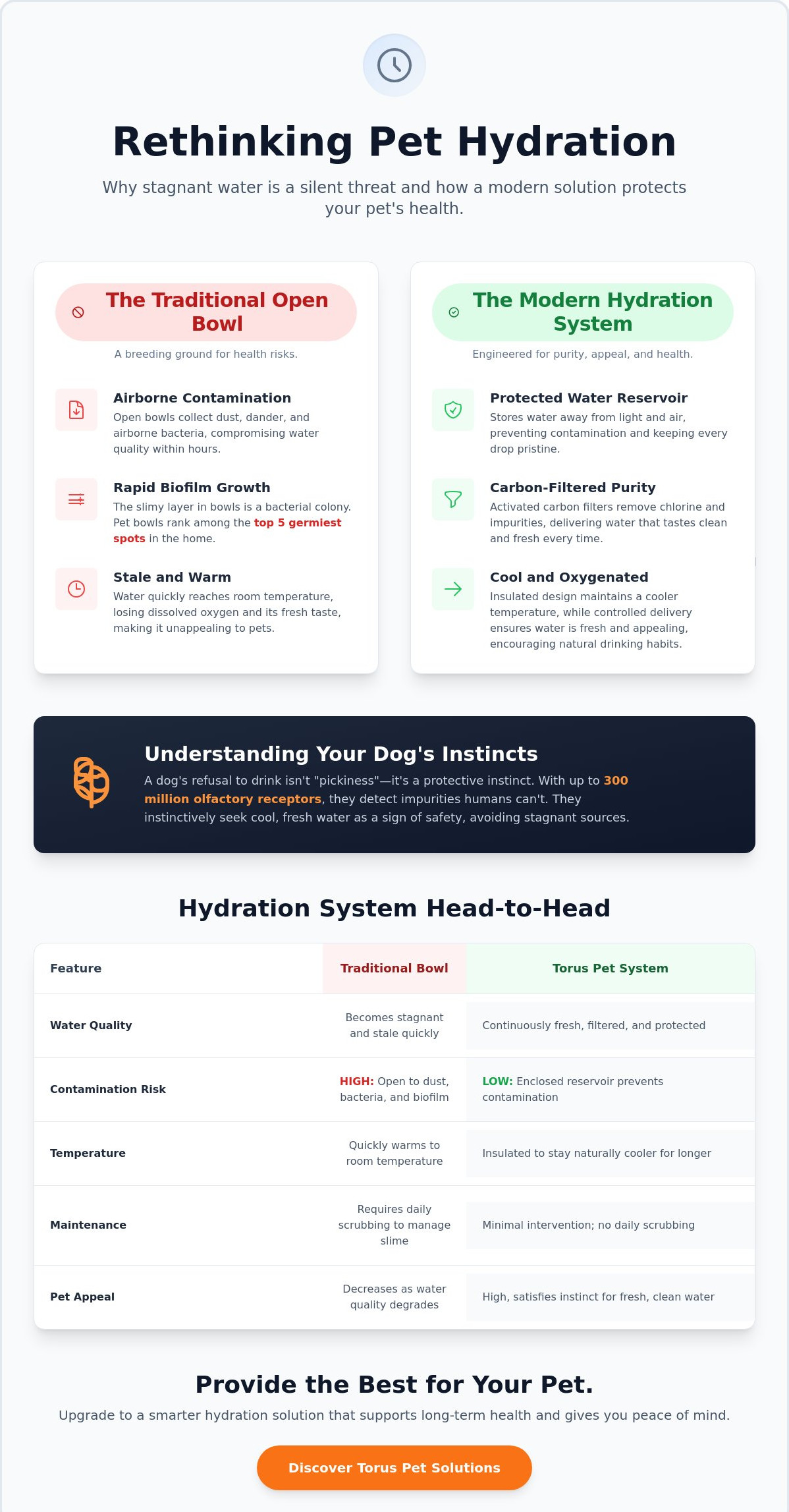
Many pet parents assume a standard bowl is sufficient. It isn't. Stagnant water in open containers attracts dust and promotes biofilm growth. A 2011 study by NSF International ranked pet bowls as the fourth most contaminated item in the average household. To effectively manage how to encourage a dog to drink more water, you must first address the quality of the delivery system.
Start by evaluating your current setup. If the bowl feels slimy, biofilm has already taken hold. Transition to a filtered hydration solution that protects water from environmental contaminants. Systems like Torus use activated carbon filters to remove impurities while the reservoir shields the supply from light and air. This helps reduce exposure to bacteria and keeps the water cool. No stagnant pools, no slime, no refills every hour.
Maintain a strict freshness schedule. Replace filters every 30 days to ensure peak performance and clean all components weekly. Consistency is vital, especially during travel. Dogs often experience hydration stress in new environments; bringing your own hydration station ensures the water tastes familiar. This is a proven way to maintain intake levels away from home. No batteries, no power, no tipping. No problem.
Monitoring Intake and Recognizing Dehydration
Monitoring intake is the only way to verify if your strategy for how to encourage a dog to drink more water is working. Use a water journal or a volume-marked bowl to track daily consumption accurately. Watch for these subtle signs of dehydration:
- Dry or sticky gums: Gums should be moist and slippery.
- Loss of skin elasticity: Perform a turgor test by gently lifting the skin on the neck; it should snap back instantly.
- Thick saliva: Saliva should be thin and watery, not ropey.
Urine color serves as a primary indicator of hydration success. A well-hydrated dog should produce urine that is a pale straw color. If the urine is dark yellow or concentrated, it's time to increase water exposure through more frequent stations or moisture-rich food transitions.
Creating Positive Associations with Drinking
Reward your dog with quiet verbal praise when they visit their hydration station. This positive reinforcement builds a habit without the need for high-calorie treats. During long walks, try hand-watering to build a bond and reinforce the drinking habit in varied settings. It makes hydration feel like an interactive, rewarding experience rather than a chore.
Ensure the environment is hassle-free; your dog should never encounter an empty bowl. A reliable system that autofills ensures water is available anytime and anywhere. By removing the physical and sensory barriers to drinking, you create a home where hydration is a natural, effortless part of the day. Effective hydration is a sophisticated element of modern pet care that prioritizes long-term wellbeing.
Modern Hydration Solutions for the Thoughtful Pet Parent
Many pet parents assume a standard ceramic or plastic bowl is the only way to provide water, but stagnant water is rarely the most effective way how to encourage a dog to drink more water. Traditional bowls often collect dust, hair, and bacteria within minutes of being filled. Modern hydration requires a shift from static vessels to intelligent systems that manage water quality and delivery automatically. A sophisticated hydration solution does more than hold liquid; it protects the integrity of the water your dog consumes.
No batteries. No power cords. No noisy pumps. No tipping. These are the hallmarks of a gravity-fed hydration system designed for the modern home. By utilizing the physics of a vacuum-sealed reservoir, systems like Torus ensure a fresh supply of water is always available in a shallow, easy-to-access well. This design limits the surface area exposed to the air, which significantly reduces the risk of environmental contamination and evaporation.
For the active pet parent, portability is a non-negotiable requirement. A premium hydration solution should transition seamlessly from a minimalist kitchen to the back of a vehicle. High-quality systems are engineered with thick, insulated walls that keep water cool even during travel. This level of design aesthetic ensures that your pet's equipment complements your home rather than cluttering it, reflecting a commitment to both style and functional pet wellness.
The Role of Filtration in Long-Term Health
Activated carbon filters play a vital role in maintaining the palatability of water. These filters are designed to remove up to 90% of chlorine and common sediments found in municipal tap water. When you remove the chemical odors that dogs find off-putting, you naturally improve their interest in drinking. This consistent access to cleaner water is a foundational element of the science behind long-term canine health. It is particularly beneficial for dogs with sensitive urinary systems that require high-purity hydration to function optimally.
Travel and Mobility: Maintaining Consistency Anywhere
Consistency is often the missing link in a dog's hydration routine. When pets are forced to drink from unfamiliar or stagnant outdoor sources, they risk "traveler’s tummy" caused by bacteria or parasites. Using a spill-proof, portable reservoir ensures your dog drinks the same filtered water they have at home, whether you are on a hike or a road trip. You can learn more about how it works to see how a mobile-ready design maintains a steady flow without the mess. Hydration is not a chore to be managed; it's a sophisticated, everyday commitment to the health and vitality of your pet.
Elevating Your Dog's Daily Hydration
Effective hydration is a pillar of canine health that extends far beyond a simple bowl on the floor. By focusing on the science of water quality and the benefits of a controlled routine, you can significantly improve your dog's intake. Remember that fresh, filtered water is more appealing than stagnant sources which can quickly accumulate environmental debris.
When you're looking at how to encourage a dog to drink more water, the delivery method is the most important variable. Traditional bowls often lead to messy spills and inconsistent supply. A sophisticated pet hydration solution addresses these issues through an innovative gravity-fed design and advanced antimicrobial and filtration technology. This ensures your pet has access to clean water anytime, anywhere.
The transition to a modern, spill-proof system supports a clean home aesthetic and provides peace of mind during travel. It's a simple yet powerful upgrade to your pet's lifestyle. Explore Torus Hydration Solutions for your dog to discover a more intelligent way to manage your pet's wellbeing. You're making a thoughtful choice for their long-term health.
Frequently Asked Questions
How much water should my dog drink daily?
A healthy dog typically requires 1 ounce of water for every pound of body weight each day. For a 50 pound dog, this means consuming approximately 1.5 liters of fluid to maintain essential metabolic functions. Factors like high activity levels or a dry kibble diet can increase this requirement by 20 percent.
Monitoring daily intake is a simple way to learn how to encourage a dog to drink more water if they fall below these baseline metrics. Consistent tracking helps pet parents identify hydration patterns before they become health concerns.
Is it safe to add chicken broth to my dog’s water bowl?
Adding low sodium chicken broth is safe as long as it contains no onions, garlic, or excessive salt. While this adds flavor, it can lead to rapid bacterial growth if left in a standard bowl for more than 2 hours. This requires frequent cleaning to prevent the buildup of harmful microbes.
To maintain a clean environment, consider using hydration solutions that protect the water supply from external contaminants. If you use flavor enhancers, ensure the vessel is sanitized daily to maintain the high standards of a modern home.
Can my dog drink tap water, or should it be filtered?
Filtered water is generally the superior choice because it reduces exposure to chlorine, lead, and common sediments. A 2023 report identified various contaminants in many municipal water systems that can affect the taste and safety of the water. Using a system with active carbon filtration ensures your pet consumes cleaner water.
Cleaner hydration supports long-term kidney health and makes the water more palatable for sensitive drinkers. It's a thoughtful step for pet parents who prioritize quality and long-term wellbeing in their pet care routines.
Why does my dog prefer drinking from puddles instead of their bowl?
Dogs often choose puddles because the water is highly oxygenated or contains organic scents they find instinctively appealing. However, stagnant bowl water can develop a "biofilm" of bacteria in as little as 24 hours. This slime makes the water taste stale and unappealing to a discerning pet.
Transitioning to a system that stores water in a reservoir, like the Torus hydration solution, keeps the supply fresh and shielded. This technology reduces the dust and saliva contamination that often drives dogs to seek alternative, albeit less safe, water sources outdoors.
Does the temperature of the water affect how much a dog drinks?
Temperature significantly impacts consumption, as most dogs prefer water between 15 and 20 degrees Celsius. In warmer climates, water left in a standard bowl can reach 30 degrees Celsius within an hour, which often discourages drinking. Cooler water is more refreshing and helps regulate their internal body temperature.
Modern hydration systems with insulated walls help maintain a consistent, cool temperature for up to 4 hours. This design-led approach provides a more refreshing experience that naturally increases your pet’s daily fluid intake without the need for constant ice cube refills.
What are the signs of severe dehydration in dogs?
Severe dehydration manifests through clinical signs like a loss of skin elasticity and dry, tacky gums. If you gently pinch the skin between the shoulders and it takes more than 2 seconds to return to its original position, your pet needs immediate attention. This is a clear indicator that their fluid levels are dangerously low.
Other indicators include sunken eyes and a capillary refill time of over 2 seconds when pressing on the gums. Maintaining a reliable hydration schedule is the best way to prevent these serious symptoms from developing.
How often should I clean my dog’s water filtration system?
You should replace the active carbon filters in your hydration system every 30 days to ensure optimal performance. The main unit requires a thorough cleaning with warm, soapy water once per week to prevent mineral buildup and ensure the mechanics remain functional. Regular maintenance is a small investment in your pet's health.
Systems designed with antimicrobial materials can help reduce surface bacteria, but they aren't a substitute for regular care. Providing clean hydration is a sophisticated element of modern pet care that requires consistent attention to the equipment used.
Will a fountain encourage my dog to drink more than a still bowl?
Moving water often attracts interest, but the complexity and noise of traditional electric fountains can be a deterrent for some pets. Systems that control water exposure, such as Torus, provide a silent and mess-free alternative. These solutions are a reliable way to learn how to encourage a dog to drink more water by ensuring every sip is filtered.
By providing fresh, filtered water on demand without the need for power or batteries, you create a calm drinking environment. This supports a lifestyle of modern convenience while ensuring your pet remains hydrated throughout the day.