
How to Stop a Puppy from Tipping the Water Bowl: A Guide to Controlled Hydration

Does your puppy view their water bowl as a swimming pool rather than a hydration source? Many owners assume tipping is a behavioral issue that requires intensive training, but it is often a natural response to the visual stimulation of open water. If you're tired of warped hardwood floors and the tedious cycle of cleaning up biofilm, you aren't alone. You want a home that remains pristine and a pet that stays hydrated without the mess.
Learning how to stop puppy from tipping water bowl habits starts with understanding the logic behind the splash. We'll show you how to transition from floor puddles to a sophisticated, spill-proof routine. This guide explores why puppies are drawn to water play and how systems that control water exposure can provide a dry, clean environment. You'll discover how to move toward an intelligent hydration system that offers peace of mind while you're away from home.
Key Takeaways
- Identify tipping as a natural exploratory response to visual stimulation rather than a behavioral flaw.
- Discover how to stop puppy from tipping water bowl setups by transitioning to systems that minimize open-water surface area and contamination risks.
- Evaluate why traditional heavy bowls often fail to deter determined diggers and how silicone mats can inadvertently harbor moisture and mold.
- Implement a sophisticated hydration routine that prioritizes consistent water delivery while redirecting the puppy’s play drive toward environmental enrichment.
- Learn how low-profile, gravity-fed reservoirs ensure stability and maintain water purity in modern, design-conscious homes.
##Table of Contents
##Understanding Why Puppies Tip Their Water Bowls
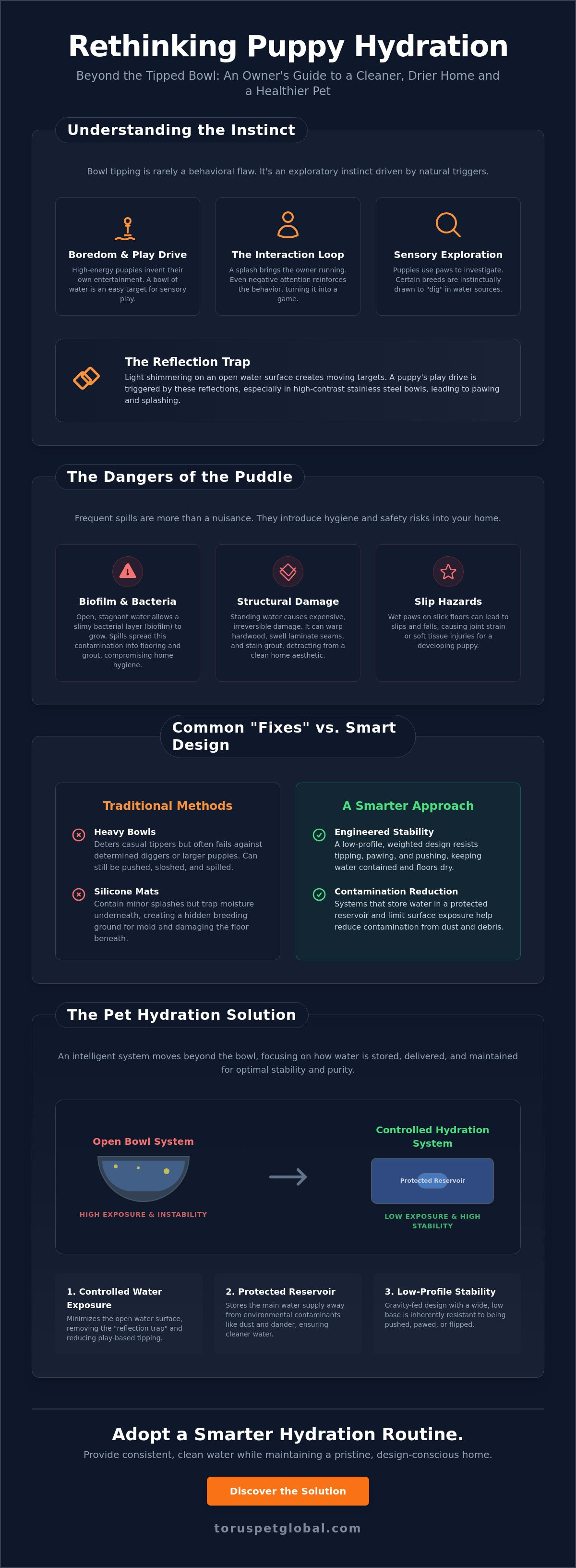
Many owners view a flipped bowl as a sign of defiance or a lack of training. In reality, this behavior is rarely a "bad" habit. It is a manifestation of curiosity. Puppies use their paws to explore textures, temperatures, and movement. When they encounter a large, open surface of water, it becomes a sensory playground rather than a simple utility.
Understanding canine behavioral science helps us see that water tipping is often driven by a puppy's developmental need for environmental feedback. Breeds like Labradors, Golden Retrievers, and Spaniels possess a deep-seated instinctual urge to "dig" in water. To them, the bowl isn't just for drinking; it is a miniature pond waiting to be explored. Learning how to stop puppy from tipping water bowl habits requires addressing these triggers at the source.
Common triggers for bowl tipping include:
-
Boredom: High-energy puppies look for ways to entertain themselves.
-
Attention-Seeking: A splash often brings the owner running, creating an immediate social reward.
-
Temperature Preference: Paws can sense cooler water at the bottom of a container.
Visual Triggers and the Reflection Trap
Light hitting an open water surface creates a dynamic environment. Reflections move, shimmer, and dance across the bottom of the bowl. This creates moving targets that a puppy feels compelled to "catch" or investigate. Stainless steel bowls are particularly problematic because their high-contrast, mirror-like finish amplifies every ripple.
This visual "noise" triggers a puppy's play drive. They see a reflection, paw at it to investigate, and the resulting splash only increases the excitement. Transitioning to systems that control water exposure, like Torus, reduces this visual stimulation. By limiting the amount of water visible at any given time, you eliminate the "reflection trap" that leads to floor puddles. Torus Maxi and Mini bowls use PET Polypropylene which offers a less reflective surface and less light disturbance to the pet.
The Interaction Loop: Why Scolding Doesn't Work
When a bowl flips, the immediate reaction is often to scold the puppy and rush to clean the mess. To a bored puppy, this is a win. Even negative attention is a form of engagement. You have inadvertently entered an interaction loop where the splash results in a game of "chase the mop."
Instead of reacting, the most effective strategy is to ignore the behavior and proactively change the environment. If the bowl provides no feedback, the puppy loses interest. Play-based tipping is essentially a search for sensory feedback. When you replace an open bowl with a stable, gravity-fed reservoir, the sensory reward disappears. This shifts the focus from the water surface back to actual hydration, maintaining a clean aesthetic in your home.
The great thing about Torus Pet water bowls and dispensers is that they are simply almost impossible to tip. Cats can lie in them, drogs rest their heads on then and stand on the edges, and they stay upright meaning no spills.
##The Hidden Risks of Spilled Water and Open Bowls
A spilled bowl is often dismissed as a minor inconvenience or a simple cleanup task. In a modern home, however, these frequent puddles represent more than just a chore. They compromise the hygiene of your living space and the wellbeing of your pet. Understanding the secondary consequences of a flipped bowl is a vital step in learning how to stop puppy from tipping water bowl habits permanently.
Open bowls are inherently prone to environmental contamination. Dust, dander, and household insects settle on the surface, creating a stagnant environment. When a puppy tips this water, they aren't just making a mess; they are distributing accumulated contaminants across your flooring. This creates a cycle of cleaning that often fails to address the underlying hygiene issues.
With Torus Pet, most of the water is always stored in the walls of the bowl and only released to the drinking well as the pet drinks. That means that there is always extra weight in the bowl to hold it steady and any possible wobbling does not result in tipping or splashing.
Biofilm and Bacterial Proliferation
Biofilm is the slippery, translucent layer that forms on the surface of traditional water bowls. It is a complex colony of bacteria protected by a "slime" layer. In stagnant water, these colonies thrive. When a bowl is flipped, this biofilm is spread into floorboard gaps or porous grout lines, where it can be difficult to fully eliminate.
Cleaning the floor surface doesn't always reach the bacteria trapped in these deep crevices. Utilizing a pet hydration solution designed to minimize water exposure helps reduce the risk of these colonies forming in the first place. By storing the primary water supply in a protected reservoir, you maintain a cleaner environment for both your home and your pet.
Structural Damage and Slip Hazards
The impact on modern flooring materials is often irreversible. Standing water can cause hardwood to "cup" or laminate to swell at the seams. These are expensive repairs that detract from the clean aesthetic of a well-maintained home. Beyond the architecture, there is the immediate safety of the puppy to consider.
Wet paws on slick surfaces like tile or polished wood can lead to sudden slips. For a developing puppy, these incidents can cause unnecessary joint strain or soft tissue injuries. Maintaining proper hydration for dogs should not come at the cost of their physical safety or the integrity of your home.
There is also the critical risk of dehydration. If a puppy tips their entire daily supply shortly after you leave for work, they are left without water for several hours. This is why a non-tipping, stable design is a safety standard, not just a convenience. For those seeking a more reliable way to manage these risks, exploring advanced hydration systems can provide the necessary stability and peace of mind.
##Evaluating Common Solutions: Heavy Bowls vs. Smart Design
When searching for how to stop puppy from tipping water bowl setups, the most frequent advice is to "go heavy." Many owners invest in thick ceramic or weighted steel, assuming that sheer mass will deter a determined puppy. This approach addresses the symptom of a flipped bowl but fails to solve the underlying motivation for the behavior. A heavy bowl might stay upright, yet it remains an open invitation for digging, splashing, and sensory play.
Effective pet care requires moving beyond primitive fixes toward intelligent engineering. We must distinguish between a container that is simply difficult to move and a system designed to regulate how water is accessed. Smart design prioritizes controlled water exposure, which naturally reduces the puppy's urge to interact with the water as a toy. This transition maintains the clean, intentional aesthetic of a modern home while ensuring the pet’s needs are met with precision.
The Limitations of Weighted Ceramic and Steel
Traditional materials come with inherent compromises. Ceramic bowls are often recommended for their weight, but they are fragile. A puppy pawing at a heavy ceramic edge can cause micro-cracks or full breaks, creating sharp edges and porous surfaces that harbor bacteria. Stainless steel, while durable, often amplifies the "reflection trap" mentioned earlier, and the noise of metal tags hitting the rim can startle or overstimulate a young dog.
Even if the puppy cannot flip the vessel, they can still "empty" it by digging. Water is displaced onto the floor, leading to the structural risks discussed in previous sections. Modern veterinary guidance on bowls suggests that material choice and stability are only part of the equation; the depth and surface area of the water also play critical roles in hygiene and behavior. Systems that store water within the walls of the bowl itself, rather than in an open pool, offer a superior alternative by removing the visual and physical depth that encourages digging.
Why Silicone Mats Are Only a Band-Aid
Large silicone mats are a common sight in kitchens, used to catch the inevitable overflow from open bowls. While they protect the floor in the short term, they are a reactive measure rather than a solution. Mats often trap moisture underneath, creating a dark, damp environment where mold and mildew thrive against your flooring. They also occupy significant floor space, detracting from a streamlined interior design.
A truly sophisticated hydration routine eliminates the need for these external "catch-alls." Instead of managing the mess, the goal is to prevent it through self-contained systems. By utilizing a low-profile pet hydration solution, you address the root cause of the spill. This shift from "mess management" to "controlled delivery" ensures your home remains pristine and your puppy remains focused on drinking rather than splashing.
-
Weighted bowls: Stop the flip but not the splash.
-
Silicone mats: Protect the floor but harbor hidden bacteria.
-
Smart design: Eliminates the play-trigger by controlling water exposure.
##Practical Strategies to Manage Puppy Hydration
A common but misguided suggestion for how to stop puppy from tipping water bowl setups is to restrict access to water. Some suggest offering water only every 30 minutes to minimize the chance of a mess. This approach is counterproductive and potentially stressful for a developing pet. Hydration should be a constant, passive resource, not a scheduled event that creates anxiety around the bowl.
Instead of limiting intake, the focus should shift toward managing the environment and the puppy's energy. When you provide a stable, controlled hydration source like Torus water bowls, you remove the opportunity for play without compromising the pet's health. This allows you to maintain a clean home aesthetic while ensuring your puppy remains well-hydrated throughout the day.
Environmental Enrichment and Redirection
Puppies often tip bowls because they lack appropriate outlets for their instinctual digging and splashing behaviors. If a puppy is bored, the water bowl becomes the most interactive object in the room. Providing "legal" outlets for these instincts can significantly reduce unwanted behavior at the hydration station.
-
Designated Digging Zones: Use sandboxes or specific toys to satisfy the urge to dig in a controlled area.
-
Interactive Feeding: Use lick mats or puzzle toys to provide mental stimulation that tires the puppy out.
-
Visual Calm: Reducing the surface area of the water minimizes the "moving targets" that trigger play.
Enrichment-based management is the key to behavioral change. By addressing the underlying need for sensory feedback elsewhere, the water bowl returns to its intended purpose as a utility rather than a toy.
Transitioning to a Controlled Hydration System
Moving from a traditional open bowl to a more sophisticated system requires a thoughtful transition. A puppy used to splashing may be confused by a low-profile, gravity-fed reservoir at first. Start by placing the new system next to the old bowl for a few days, allowing the puppy to investigate it without pressure.
Use positive reinforcement by praising the puppy whenever they drink from the new source. You can also temporarily add a small amount of low-sodium broth to the water to encourage interest. This transition is easier when you are understanding the science of pet hydration and how controlled water levels benefit the pet's natural drinking posture.
Placement is the final element of a successful strategy. Position the hydration system in a low-traffic, calm area of the home. High-traffic zones can overstimulate a puppy, leading to frantic drinking or redirected play-biting at the bowl. A quiet corner reinforces the idea that the station is a place for calm replenishment, not high-energy interaction. For a more stable and hygienic approach to daily water delivery, systems that prioritize controlled water exposure like Torus water bowls, offer a long-term solution for the modern home.
##The Modern Hydration Solution: Stability and Purity
Reframing the water bowl as a piece of household technology changes the way we approach pet care. Standard vessels are often an afterthought, but for a design-conscious owner, every object should serve a purpose without creating friction. The answer to how to stop puppy from tipping water bowl setups isn't found in heavier materials. It's found in smarter engineering. Storing water within a protected, low-profile reservoir transforms hydration from a messy chore into a seamless, reliable system.
Traditional bowls rely on height and open surface area. This design is inherently unstable. A puppy's paw on the rim creates leverage, making it easy to flip the entire supply. By contrast, a low-profile design like Torus stores the bulk of the water in the base and walls. This significantly lowers the center of gravity. Even the most active puppies find it nearly impossible to gain the leverage needed to tip the system. You can learn more about how these systems work to deliver fresh water through gravity-fed technology.
Engineering Stability: Why Low-Profile Works
Stability in a modern home is about more than just weight. It is about how a product interacts with the environment. A top-heavy ceramic bowl is a liability on slick floors. A low-profile pet hydration solution remains grounded because its weight is distributed across a wider, lower base. This design doesn't just stop the flip; it eliminates the visual depth that triggers the puppy's urge to dig in the first place.
Filtered Water and Reduced Contamination
Maintaining water purity is just as critical as stability. Open bowls are magnets for dust, hair, and household contaminants. Systems that control water exposure, like Torus, utilize internal filtration to maintain freshness. Active carbon filters help remove impurities and common tastes that might discourage a puppy from drinking. When water tastes fresh and remains at a consistent level, the puppy is more likely to view the station as a resource rather than a toy.
For those prioritizing long-term wellbeing, our comprehensive guide on dog bowls offers further insights into choosing materials that support a clean lifestyle. A sophisticated hydration routine is about more than just preventing puddles. It's about integrating pet care into the modern home with high-quality, durable materials that reflect your commitment to quality. Hydration is no longer a logistics problem; it is a refined element of your pet's daily health.
##Elevating Your Puppy's Hydration Standards
Shifting from reactive cleanup to proactive management is the final step in creating a harmonious home. You have moved beyond the assumption that tipping is a behavioral flaw; you now recognize it as a response to an outdated vessel. By prioritizing engineering over mass, you ensure that hydration remains a constant, passive resource rather than a source of overstimulation.
The definitive answer to how to stop puppy from tipping water bowl setups lies in the logic of controlled water exposure. When the visual and physical triggers of open water are removed, the urge to play disappears. This transition protects your interior design and supports your pet's wellbeing. It is a sophisticated approach that aligns with the standards of a modern, intentional household.
Ultimately, hydration is about the entire system of storage, filtration, and delivery. Choosing a solution that prioritizes stability such as the Torus Pet water bowl range, allows you to maintain a clean aesthetic while providing cleaner water for your pet. You can explore advanced hydration systems designed to integrate seamlessly into the contemporary home. True peace of mind comes from knowing your environment remains pristine and your pet remains healthy.
##Frequently Asked Questions
Is it normal for puppies to dig in their water bowls?
Digging is a standard developmental behavior in young dogs. Puppies use their paws to investigate the temperature and movement of the water. Breeds with an instinctual affinity for water, such as Labradors, are particularly prone to this. While normal, it can lead to chronic floor damage, which is why many owners seek advice on how to stop puppy from tipping water bowl setups through better design. Solid, well designed water bowls like Torus are great for the diggers like Labradors.
Can tipping a water bowl be a sign of a medical issue?
While usually behavioral, frequent tipping combined with excessive drinking can sometimes indicate underlying health concerns. If your pet seems obsessed with the water supply or shows signs of extreme thirst, consult a veterinarian to rule out conditions like diabetes or kidney issues. Most tipping, however, is simply a result of play-based curiosity or boredom rather than a medical emergency that requires clinical intervention.
What is the best material for a non-tipping dog bowl?
The ideal material is a high-quality, BPA-free food-grade plastic or weighted stainless steel. Ceramic is often too fragile for active puppies and can develop sharp edges if pawed aggressively. A modern pet hydration solution uses durable, non-toxic materials designed to withstand impact. Look for designs that prioritize a wide base and a low profile to ensure the vessel remains grounded during daily use. Torus Pet is a great solution.
Should I take my puppy's water away at night to stop the tipping?
Restricting access to water is not a recommended solution for behavior management. Puppies require consistent hydration to support their metabolic needs and healthy development. Instead of removal, utilize a stable, non-tipping system that prevents spills while keeping water available. This ensures your pet stays hydrated overnight without risking a flooded kitchen or damaged floorboards while you are sleeping.
How do I clean a non-spill water bowl properly?
Proper hygiene involves regular maintenance to prevent the buildup of biofilm and bacteria. Most high-end systems can be cleaned with mild soap and warm water. For more complex designs, a dedicated cleaning kit ensures that internal reservoirs and valves remain free from environmental contaminants. Regular cleaning helps reduce exposure to bacteria and maintains the fresh taste that encourages calm drinking habits rather than play. Torus Pet water bowls are easily cleaned with soap, a cleaning kit with descaling tablets is available, and top-shelf diswasher is also ok.
Will my puppy grow out of tipping their water bowl?
Many puppies eventually lose interest in water play as they mature and their curiosity settles. However, waiting for them to grow out of it can lead to months of ruined flooring and inconsistent hydration. Proactive management with a stable hydration system like Torus is more effective. It teaches the puppy that the bowl is a utility, not a toy, preventing the behavior from becoming a lifelong habit.
How does a gravity-fed water bowl prevent tipping?
A gravity-fed system, such as those used in Torus, stores the primary water supply in a reservoir within the walls of the bowl. This lowers the center of gravity significantly compared to a standard open vessel. Because the weight is distributed at the base rather than the rim, it's nearly impossible for a puppy to gain the leverage required to flip the unit during play.
Are filtered water bowls safe for young puppies?
Yes, filtered systems like Torus Pet are safe and often beneficial for young pets during their development. Active carbon filters are designed to help remove impurities and common tap water odors. This leads to cleaner water that tastes better, which can encourage proper drinking habits early in life. Ensuring the water is fresh and free from contaminants supports long-term health and reduces the urge to play with stagnant water.