
The Best Water Bowl for Messy Drinkers: A 2026 Guide to Cleaner Hydration

What if the persistent puddles around your kitchen island aren't just a quirk of your pet's personality, but a flaw in the design of their equipment? Most of us accept wet socks and slippery floors as a price of pet ownership, yet the traditional open reservoir often works against a clean home. Finding the best water bowl for messy drinkers is no longer about buying a larger mat to catch the spills. It's about rethinking the delivery of hydration.
You likely value a home that feels organized and serene, but constant cleaning of biofilm and water trails disrupts that peace. No more slippery tiles. No more bulky, unattractive mats. You deserve a solution that maintains a dry floor while ensuring your pet has access to fresh, filtered water. This 2026 guide will help you transition from passive reservoirs to active, controlled-delivery systems.
We'll examine the latest trends in material safety and no-splash engineering that prioritize both health and aesthetics. You'll learn how advanced hydration systems, like Torus Pet, manage water exposure to limit mess and help reduce contamination risks. Let's move beyond basic bowls and into a lifestyle of cleaner, more intentional pet care.
Key Takeaways
- Identify the specific mechanics behind your pet's drinking habits, from deep-plunging splashes to the water trails left across your flooring.
- Discover how the best water bowl for messy drinkers uses controlled water exposure to minimize overflow without sacrificing essential hydration.
- Learn why traditional open reservoirs encourage biofilm growth and how sealed delivery systems maintain cleaner water for longer periods.
- Evaluate the role of ergonomic design and material integrity in creating a hydration station that complements a modern, design-conscious home.
##Table of Contents
##The Mechanics of Messy Drinking: Why Standard Bowls Fail
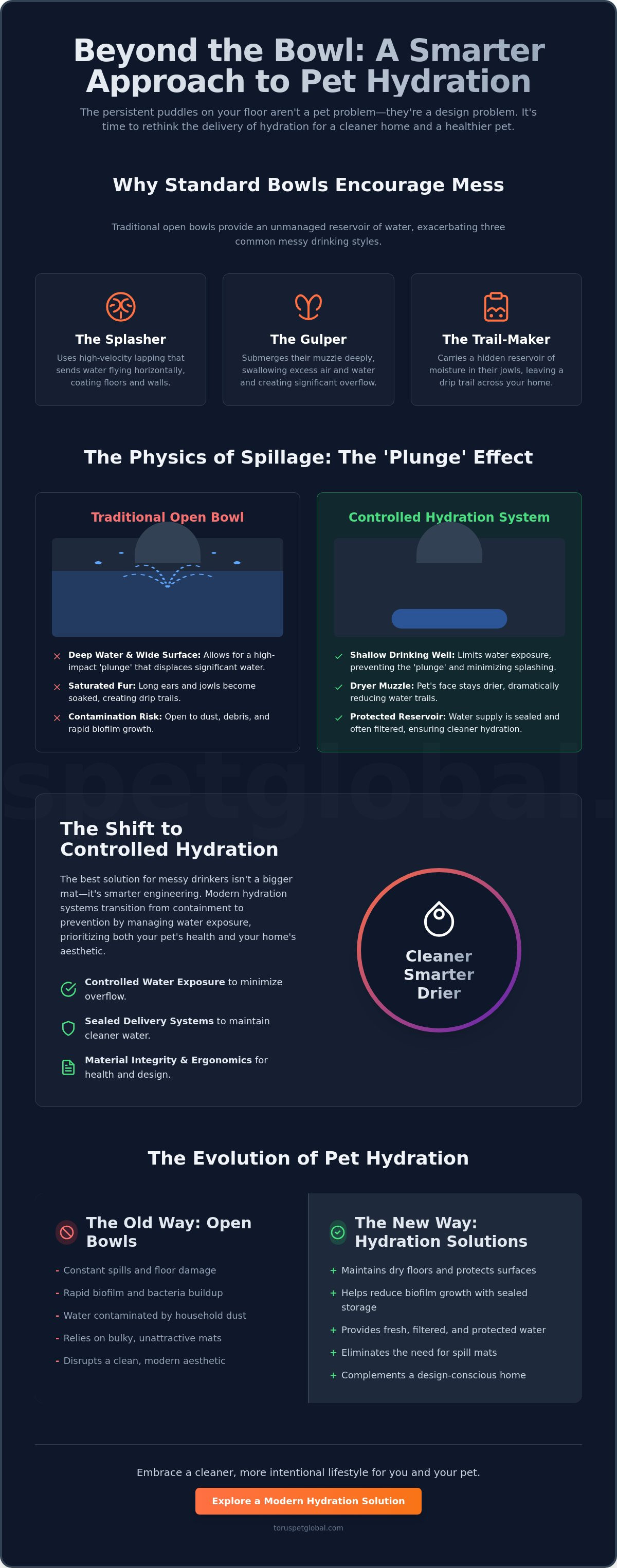
Many homeowners believe that a wet kitchen floor is an unavoidable part of living with certain breeds. We often categorize messy drinking as a personality trait or a biological inevitability. However, the root of the problem usually lies in the vessel, not the pet. Traditional open bowls provide a deep, unmanaged reservoir that actually encourages the very behaviors we find frustrating. To solve the issue, we must first understand the physics of how pets interact with water.
Messy drinkers generally fall into three distinct categories. The Splashers use high-velocity lapping that sends water flying horizontally. The Gulpers submerge their muzzles deeply, often swallowing excess air and water simultaneously. Finally, the Trail-Makers carry a hidden reservoir of moisture in their jowls that deposits across your home as they walk away. Each of these behaviors is significantly exacerbated by deep, open water sources that offer no resistance or regulation.
Surface Area and the 'Plunge' Effect
Pets don't drink like humans. They use their tongues to create a liquid column, effectively acting as a high-speed ladle. When a bowl is deep, it allows for a 'plunge' effect. The pet strikes the surface with significant force, and the resulting upward splash is proportional to the depth of the water. It's a simple matter of displacement. A larger surface area allows for more movement, meaning more water ends up on your walls instead of in your pet's mouth.
Deep water also ensures that long ears or thick facial fur become saturated. This trapped moisture is what leads to the long trails of drips across your living room. By utilizing a shallow water level, you can reduce the 'lapping' force. This is why the best water bowl for messy drinkers isn't just a larger container. It's a system like Torus Pet that limits the volume of water exposed at any single moment.
The Social and Aesthetic Cost of Open Bowls
The impact of this constant moisture extends beyond simple inconvenience. Water trails can lead to the warping of premium hardwood floors or the staining of tile grout over time. While many owners rely on bulky silicone mats, these only catch the spill. They don't address why the spill happens. These mats often become a secondary source of clutter and grime in a modern, streamlined kitchen. Maintaining high standards for canine health and hygiene means looking for a more sophisticated approach to how we deliver hydration.
Transitioning to a dedicated pet hydration solution, such as the systems designed by Torus Pet, shifts the focus from containment to prevention. By implementing controlled water exposure, you remove the opportunity for the 'plunge' to occur. A low-profile drinking well ensures that only a small amount of water is accessible, keeping the rest of the supply sealed away from dust and debris. It's a smarter, cleaner way to manage the daily needs of your pet while protecting the aesthetic of your home.
##Elevated Water Bowl Pros and Cons: Does Height Help?
Many owners assume that raising a bowl off the floor is the definitive answer to a tidier kitchen. The logic seems sound: bringing the water closer to the pet should, in theory, reduce the distance for drips to travel. While elevation offers clear ergonomic advantages, it often fails as a standalone strategy for managing spills. In some cases, height can actually expand the radius of the mess.
For large breeds and senior pets, elevation is frequently a medical recommendation rather than a simple lifestyle choice. Reducing neck strain and promoting better digestive alignment are valid reasons to reconsider a floor-level setup. However, when searching for the best water bowl for messy drinkers, it's vital to distinguish between ergonomic comfort and splash prevention.
The Ergonomic Argument for Elevation
Senior pets often struggle with arthritis or joint stiffness, making the reach to a floor-level bowl uncomfortable. For these animals, an elevated station provides a more natural posture. Large breeds also benefit from a higher drinking surface to avoid excessive crouching. These are essential considerations for long-term pet wellbeing.
The problem arises when a standard open reservoir is placed in an elevated stand. Without a way to regulate water volume, the 'plunge' effect we discussed earlier still occurs. The stand itself often becomes a 'mess magnet,' trapping moisture and food particles in the crevices between the bowl and the frame. This creates a hidden environment where bacteria can thrive, undermining the clean aesthetic of a modern home.
The Splash Radius Factor
Physics introduces a specific challenge to elevated drinking: the gravity splash. When a pet lifts its head from a higher bowl, any water trapped in the jowls or fur has more momentum as it falls toward the floor. This increased height often results in a wider splash zone. Instead of a concentrated puddle, you find a fine mist of water trails extending further into your living space.
Furthermore, elevated systems that use deep inserts often hide the formation of 'slime' or biofilm underneath the bowl. Owners may clean the visible surface but neglect the dark, damp areas where the bowl meets the stand. A more sophisticated approach involves combining the benefits of height with a system that manages water delivery.
Finding a middle ground is key for the design-conscious owner. You can achieve ergonomic benefits without the gravity splash by choosing hydration systems that utilize low-profile wells. Designs like Torus ensure that even at an elevated height, the amount of water available to be splashed or trailed is strictly limited. This keeps your pet comfortable and your floors dry, proving that smart engineering is more effective than height alone.
##Beyond the Splash: The Hidden Risks of Standing Water
While water on the floor is a visible nuisance, the quality of the water remaining in the bowl is often a more significant concern. Many owners assume that a quick daily rinse is sufficient to maintain hygiene. In reality, messy drinking habits accelerate the degradation of water quality through constant interaction with the environment. Finding the best water bowl for messy drinkers involves looking beyond spill prevention and focusing on how the system manages bacterial growth.
Traditional open bowls act as passive reservoirs, collecting everything from airborne dust to pet dander throughout the day. For a pet that splashes or plunges their muzzle, this exposure is compounded. The result isn't just a wet floor; it's a contaminated water supply that compromises the very hydration your pet requires for long-term wellbeing.
Understanding Biofilm and Bacterial Load
Biofilm is the technical term for the slippery "slime" often found on the surface of pet bowls. It isn't just a residue; it's a complex, organized colony of bacteria that adheres to surfaces and creates a protective matrix. This matrix makes the bacteria much harder to remove through simple rinsing. Even premium materials like stainless steel or ceramic aren't self-cleaning and can harbor these colonies if the water remains stagnant.
Without a design that prioritizes The Science of Hydration, these colonies thrive in the warm, open environments of traditional bowls. Messy drinkers contribute to this by frequently disturbing the water surface, which helps oxygenate the supply and encourages faster bacterial replication. Antimicrobial materials and smart flow designs as integrated within the Torus Pet range are essential to help reduce the formation of these biological layers.
The Problem with 'Backwash' Contamination
The mechanics of messy drinking introduce a specific challenge known as backwash. When a pet drinks from an open reservoir, saliva and food particles are inevitably pushed back into the main water supply. This isn't just a localized issue near the surface. In a standard two-liter bowl, a single drinking session can contaminate the entire volume, turning the reservoir into a breeding ground for bacteria within hours.
Modern hydration solutions, like the systems designed by Torus Pet, address this by isolating the main water supply from the drinking well. These fresh-release systems only allow a small, controlled amount of water to enter the drinking area at once. This isolation prevents backwash from reaching the bulk of the stored water, keeping it cleaner for much longer. It also reduces the frequency of total water changes, as the sealed supply remains protected from the external environment.
By passing water through an active carbon filter before it reaches the drinking well, you ensure that impurities are captured before they reach your pet. This sophisticated approach transforms hydration from a simple chore into a managed element of modern pet care. It prioritizes health and cleanliness without requiring the constant maintenance of an open, messy bowl.
##Criteria for Selection: What to Look for in a 2026 Solution
Selecting the best water bowl for messy drinkers often involves a compromise between durability and aesthetic appeal. It's a common assumption that a heavy, stationary object is the only way to prevent a mess. But modern standards for pet hardware have evolved. We now prioritize systems that combine material safety with intelligent engineering to manage how water is stored and delivered. A sophisticated solution should disappear into your home's design while performing a complex mechanical task.
Material Science in Pet Hardware
Heavy ceramic bowls are a traditional choice, but they are often porous and prone to chipping. In contrast, high-tech polymers offer a lightweight yet exceptionally durable alternative. These materials must be food-grade and BPA-free to ensure they are compliance-safe for long-term use. A key feature to look for is "non-tipping" stability. This isn't just about raw weight; it's about a low center of gravity and a non-slip base that prevents enthusiastic drinkers from sliding the unit across the floor.
Capacity shouldn't dictate a bulky footprint. For large breeds, a 68oz reservoir is often necessary, but it should be designed to maintain a clean, minimalist aesthetic. Systems that utilize internal storage allow for a high capacity without the visual clutter of a massive open tank. This balance ensures your pet has ample water while your kitchen remains an organized, serene space.
Filtration and Water Maintenance
A sophisticated hydration system does more than just hold water. It actively maintains it. Active carbon filtration is essential for removing impurities and improving the overall taste of the supply. When water tastes better, pets are naturally encouraged to maintain higher intake levels. This is particularly important for messy drinkers who may otherwise be deterred by the stale smell of standing water in a traditional bowl.
To keep the system functioning at its peak, you should understand How Controlled Hydration Works. Regular maintenance is simple but necessary. Consistent care prevents the buildup of minerals and ensures the mechanical release remains fluid.
-
Replace standard filters every 30 days to ensure optimal filtration performance.
-
Use specialized cleaning tools to maintain the internal mechanics of the reservoir.
-
Monitor the water level to ensure the gravity-fed system can continue to release fresh water into the drinking well.
Portability is another critical criterion. A consistent hydration routine helps reduce stress during travel or transit. Choosing a system that can move from the kitchen to the car without spilling ensures your pet remains hydrated regardless of the environment. This continuity of care is a hallmark of thoughtful, modern pet ownership. If you're ready to upgrade your home's setup, you can view our range of advanced hydration dispensers to find the perfect fit for your space.
##Controlled Hydration: A Sophisticated Approach to Clean Living
Managing the aftermath of a drinking session is a reactive habit. Most owners assume that the best water bowl for messy drinkers is simply the one with the tallest walls or the largest silicone mat. However, a more effective strategy involves addressing the volume of water available at the point of contact. By shifting to a controlled hydration model like Torus Pet, you move from constant cleanup to active prevention through intelligent design.
Low-profile drinking wells are the cornerstone of this sophisticated approach. By strictly limiting water depth, these systems remove the opportunity for pets to plunge their muzzles or create significant liquid displacement. This managed delivery ensures that water stays within the well rather than being transferred to the floor or the pet's facial fur. It's a mechanical solution to a behavioral frustration that significantly reduces the "drip zone" in your home.
The Logic of the Torus System
A gravity-fed reservoir acts as a protected vault for your pet's water supply. Unlike open bowls that expose the entire volume to the air, systems like Torus keep the bulk of the water sealed within the walls of the unit. This isolation protects the supply from airborne dust, dander, and the backwash contamination discussed earlier in this guide. It ensures that the water remains fresh and cool until the moment it's released.
The auto-replenish feature maintains a consistent, shallow level in the drinking well without any manual intervention. As your pet drinks, the system releases a small amount of filtered water to replace what was consumed. This creates a friction-free experience for the pet while maintaining the dry, organized environment you desire. Because the design is non-electric and portable, it offers a level of sophisticated utility that fits seamlessly into both modern kitchens and active travel lifestyles.
-
Reduced Drip Zone: Less water on the muzzle means fewer trails across your premium flooring.
-
Environmental Protection: Sealed reservoirs keep the water supply cleaner for longer periods by blocking debris.
-
Passive Regulation: Gravity-fed mechanics provide consistent hydration without the clutter of power cords or batteries.
Final Takeaway: Hydration as a Design Element
Reframing a water bowl as a piece of functional home technology changes how we view daily pet care. It's no longer just a plastic or ceramic dish; it's a managed system that prioritizes hygiene and home aesthetics. The long-term benefits of a drier, cleaner hydration station extend to the health of your floors and the overall quality of your pet's water intake. It allows you to focus on the joy of ownership rather than the logistics of maintenance.
When you invest in high-level engineering, you aren't just buying equipment. You're choosing a more intentional, sophisticated way to live with your pet. The transition from a passive reservoir to an active hydration solution represents a commitment to quality and long-term wellbeing. Hydration is a sophisticated element of modern pet care, and your choice of delivery system should reflect the standards of your home. Torus Pet does just that.
##Advancing Your Pet's Hydration Standards
The transition from managing spills to preventing them marks a significant shift in modern pet care. You've learned that the best water bowl for messy drinkers isn't just a container; it's a sophisticated system that regulates flow and isolates the main supply from contamination. By prioritizing controlled water exposure, you protect your home's aesthetic while ensuring your pet receives cleaner, filtered hydration.
True innovation in pet hardware balances functionality with material integrity. Look for solutions that integrate advanced carbon filtration and non-tipping, gravity-fed designs to maintain a dry floor and a fresh supply. Using antimicrobial, BPA-free materials ensures that your hydration station remains a safe, long-term asset for your household. It's a smarter way to manage the daily needs of your pet without the logistics of constant maintenance.
It's time to replace the frustration of wet floors with the peace of mind that comes from intelligent engineering. You can explore our range of smart hydration solutions to discover how design can transform your daily routine. Elevate your home and your pet's wellbeing with a system built for the contemporary lifestyle.
##Common Questions About Pet Hydration
Why does my dog make such a mess when drinking water?
Messy drinking is primarily caused by the physics of the canine tongue and the depth of the water source. Dogs use their tongues as high-speed ladles to pull liquid upward into a column. If the water reservoir is deep, the force of their lapping causes significant displacement and splashing. This "plunge" effect is what sends water onto your floors and walls during every hydration session.
Are elevated water bowls actually better for messy drinkers?
Elevation provides ergonomic benefits for large breeds but often increases the splash radius for messy drinkers. While raising the bowl helps senior pets with neck strain, it creates a greater "drip distance" for water falling from the mouth. Without a way to control water volume, an elevated stand can actually lead to more widespread water trails across your living space as your pet walks away.
How do I stop my pet from leaving water trails across the floor?
You can stop water trails by limiting the amount of water your pet can access at one time. The best water bowl for messy drinkers utilizes a low-profile well that keeps the muzzle and jowls dry. By reducing the volume of water exposed, you prevent the pet from soaking their face. This simple change in delivery addresses the root cause of trailing drips rather than just catching them. This is where Torus water bowls make a big difference.
What is the best material for a dog bowl to prevent bacteria buildup?
Non-porous, food-grade materials like high-quality stainless steel or BPA-free, antimicrobial polymers are the most effective options. These materials resist the microscopic scratches where bacteria often hide. However, even the best materials require a design that isolates the main water supply from contaminants. This isolation is what truly helps reduce the formation of slippery biofilm or slime in the drinking area. Again, Torus Pet includes these main anti-bacteria tools in all of its bowls as well as in it's Advanced Filters.
Can a specific type of bowl reduce the amount of water trapped in a dog's beard?
Yes, systems that manage water depth through controlled release are specifically designed to keep facial fur dry. By maintaining a shallow, consistent water level, the pet only dips their tongue into the supply rather than submerging their entire muzzle. This significantly reduces the moisture trapped in beards or long ears. It's a more sophisticated way to keep your home cleaner and your pet more comfortable.
How often should I clean a filtered water bowl compared to a standard one?
You should perform a deep clean every few weeks, though daily maintenance is much lower than standard bowls. Because a filtered hydration solution protects the water in a sealed reservoir, it stays cleaner for longer. While standard bowls require daily scrubbing to remove biofilm, a filtered system primarily needs regular filter replacements and a routine rinse of the drinking well to maintain peak performance.
Do 'floating disk' bowls actually work for sloppy drinkers?
Floating disks can help by limiting surface area, but they often lack the filtration and storage benefits of more advanced systems. While they reduce immediate splashing, many designs still allow saliva and debris to contaminate the water underneath the disk. A gravity-fed hydration solution offers a more comprehensive approach. It seals the main supply and filters the water before it ever reaches the drinking surface.
Is it safe to use a portable water bowl as my pet's primary hydration source?
It is safe and often beneficial if the unit is designed for permanent home use with high-capacity reservoirs. A high-quality portable system ensures your pet has a consistent, familiar hydration routine whether at home or traveling. Using a filtered, non-electric solution like Torus as a primary source helps maintain water quality. It also reduces the risk of exposure to environmental impurities during daily use.