
The Pet Parent’s Guide to Hydration Systems: Choosing the Best Water Dispenser for Dogs in 2026

What if the traditional open water bowl is actually the least effective way to hydrate your dog? Research indicates that biofilm can begin forming on a bowl's surface in as little as 24 hours, yet many pet parents treat wet floors and stagnant water as an unavoidable part of pet ownership. Whether you're searching for the best pet water dispenser or a specific water bowl for messy drinkers, the goal is the same: clean, effortless hydration that fits a modern lifestyle.
It's time to move beyond basic containers to a more sophisticated pet hydration system. In this guide, you'll discover how to choose a solution that ensures your dog has access to filtered, cool water without the constant maintenance. We'll examine how a no spill dog water bowl can protect your flooring and why a dedicated dog water dispenser for car / travel is essential for active days.
We'll explore the science of controlled water exposure and the practical benefits of a premium water dispenser for dog health. Whether you need a reliable travel water bowl for dogs or a "set and forget" home solution, you'll find that hydration is a sophisticated element of modern pet care that prioritizes both design and well-being.
Key Takeaways
- Transition from basic open bowls to a sophisticated hydration solution that manages water exposure and maintains modern hygiene standards.
- Compare the safety and reliability of gravity and electric dispensers to understand why non-electric, "no power" designs are the superior choice for both home and travel.
- Learn how to select a professional pet hydration system, specifically the best pet water dispenser for your home or a dog water dispenser for car / travel that functions as a no spill dog water bowl.
- Apply a professional selection framework to determine the ideal capacity for your household, including why a 2-liter reservoir is the essential benchmark for medium-to-large breeds.
- Discover how to integrate high-quality hydration gear into your home’s aesthetic while strategically placing systems to suit your dog's specific temperament.
Beyond the Bowl: Why Pet Hydration is a Modern Design Challenge
The traditional ceramic or stainless steel bowl has remained unchanged for decades, yet our understanding of canine health and home hygiene has evolved. A modern pet hydration system is more than just a container; it's a sophisticated solution that stores, filters, and delivers water on demand. Relying on an open bowl assumes that water remains fresh simply because it's visible. In reality, an open surface acts as a magnet for environmental contaminants that compromise the quality of every sip. For the design-conscious pet parent, the goal is to minimize environmental exposure while maximizing water purity.
Modern homes require systems that prioritize "Controlled Exposure." This concept involves keeping the bulk of the water supply sealed in a reservoir, away from dust, hair, and light, and only releasing small amounts as the dog drinks. This approach represents the best pet water dispenser strategy for 2026, moving away from stagnant pools toward managed, fresh delivery. No open surfaces, no stagnant pools, no contamination risk.
The Hidden Risks of Stagnant Water
Water quality begins to degrade the moment it hits an open vessel. Exposure to light and air triggers chemical changes and encourages the growth of microscopic organisms. While high-capacity gravity bins provide volume, they often lack the filtration necessary to keep that volume safe over several days. Without active movement or protection, the water becomes a breeding ground for pathogens.
Biofilm is the slippery microbial layer that forms on poorly designed pet hardware. This sticky matrix of bacteria adheres to surfaces, making it difficult to remove with a simple rinse. Understanding how water dispensers work in professional environments reveals that isolation is key to purity. By adopting a system that utilizes internal storage, pet parents can shield their dog's water from the 20 to 30 different types of bacteria commonly found in household dust.
Reframing the "Messy Drinker" Problem
Many owners search for a water bowl for messy drinkers thinking the dog's behavior is the primary issue. However, the mess is often a result of hardware design. When a dog faces a high-volume, deep-water source, they naturally "deep-dive" to get a satisfying drink. This action splashes water onto ears, muzzles, and floors. It's a mechanical problem, not a behavioral one.
Low-profile, auto-filling reservoirs change the drinking dynamic. These systems provide a shallow pool that encourages smaller, more controlled laps. This design naturally fosters tidier habits without requiring any training. You can explore the science behind these delivery mechanics to see how flow-restriction prevents the typical household flood. Transitioning to a managed system means moving away from the "bucket" mentality toward a more ergonomic, managed approach to hydration that keeps your living space dry and your pet healthy.
Comparing Hydration Systems: Gravity vs. Electric vs. Traditional
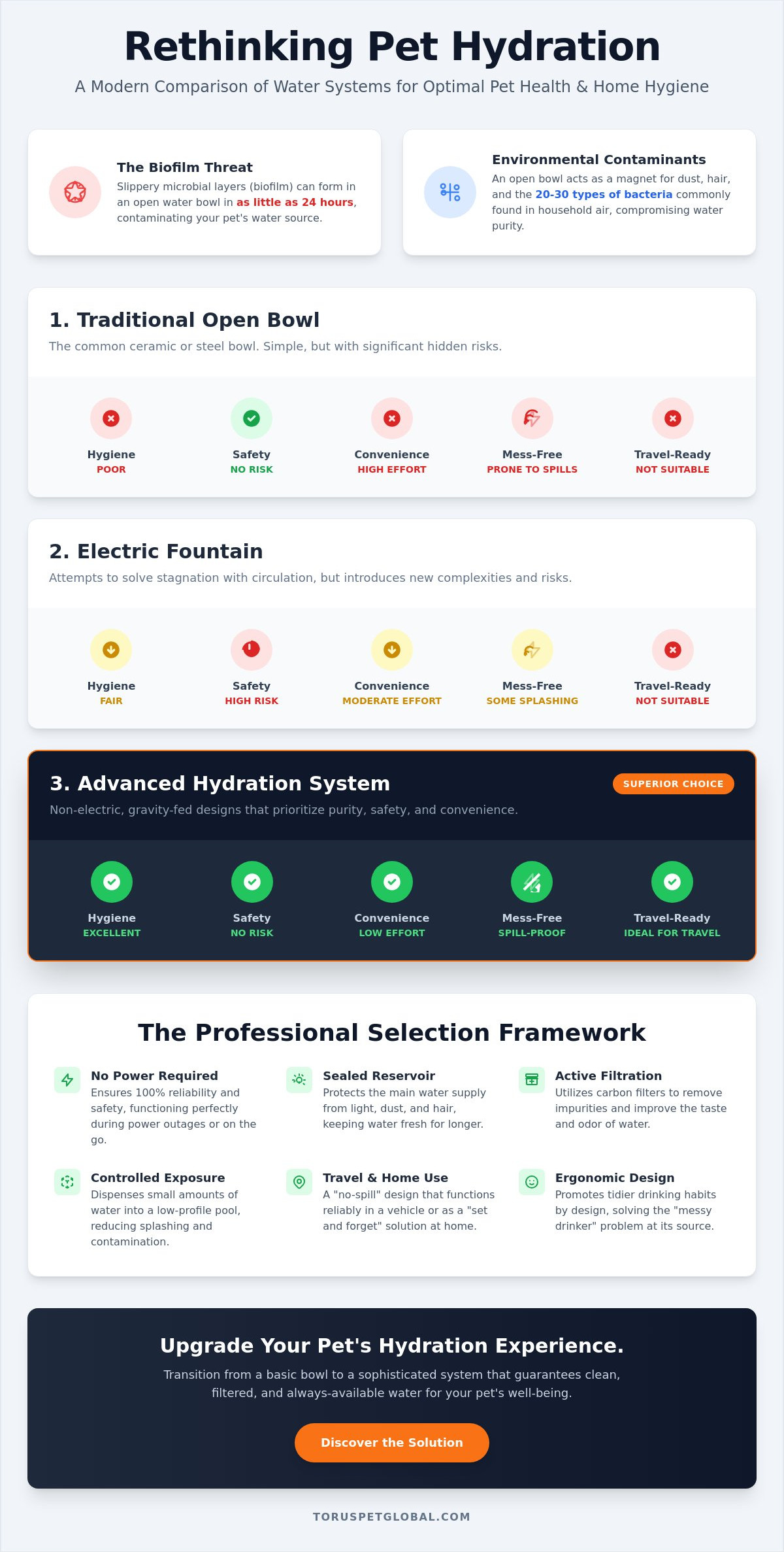
Traditional bowls are the baseline for most homes. They're simple, but they often act as magnets for dust, hair, and bacteria. Electric fountains attempt to solve this by keeping water moving. However, they introduce mechanical complexity and safety risks. A sophisticated water dispenser for dog owners today shouldn't rely on a wall outlet to function. Choosing the best pet water dispenser involves balancing maintenance with reliability. Understanding the importance of proper hydration means recognizing that access to water must be constant, not conditional on a power grid.
Materials play a significant role in long-term health. Stainless steel is durable, but it lacks the active filtration found in advanced systems. Modern antimicrobial, food-grade plastics provide a lighter, more versatile alternative. These materials are specifically designed to inhibit bacterial growth, often reducing surface pathogens by 99% compared to standard porous plastics. This is particularly vital for a no spill dog water bowl that stays in a fixed position for long periods.
The Problem with Power-Dependent Fountains
Electrical cords are a significant hazard for pets that chew. Beyond safety, there's the stagnant trap. If a power outage occurs, many electric fountains stop dispensing entirely. The water stays locked in the reservoir, leaving your pet without access. Gravity-fed systems avoid this mechanical failure. They maintain a consistent flow whether the lights are on or off. For a dog water dispenser for car / travel use, the absence of cords isn't just a convenience; it's a necessity. No batteries, no power, no noise. Just clean water.
Filtration Efficiency and Maintenance
Effective filtration is about more than just a simple carbon sponge. Advanced systems use ion-exchange media to soften water and remove impurities. This ensures the water is cleaner and more palatable for your pet. Maintenance must be intuitive. If a system is difficult to take apart, it won't be cleaned often enough. Systems that prioritize an easy-clean design, like those found in the Torus dispenser range, ensure long-term hygiene without the frustration.
- Traditional Bowls: High contamination risk, zero filtration, low cost.
- Electric Fountains: Constant movement, requires power, difficult to clean, noise levels often exceed 40 decibels.
- Gravity Systems: Constant access, no power required, portable, and often feature a no spill dog water bowl design.
A pet hydration system should adapt to your life. Whether you need a water bowl for messy drinkers at home or a travel water bowl for dogs during a weekend hike, the goal is controlled water exposure. By choosing a system that manages how water is stored and delivered, you're investing in your pet's long-term wellbeing. Consider exploring a filtered hydration solution that works anywhere you do.
The Mechanics of Mess-Free Travel: Choosing a Car-Safe Dispenser
Hydration on the move presents a unique set of physics problems. Standard bowls are designed for static environments; they fail the moment a vehicle enters motion. Sudden braking or sharp cornering turns a simple drink into a cabin-wide mess. This is why a dedicated dog water dispenser for car / travel is a necessity for modern pet parents who value both cleanliness and pet wellness.
Many travelers rely on collapsible bowls or hand-held bottles used only during rest stops. This intermittent approach isn't ideal. It forces dogs to drink large amounts at once, which can lead to bloating or discomfort. A true pet hydration system provides constant access without the risk of flooding your vehicle's interior. It moves the focus from "stopping for water" to "continuous hydration."
The secret lies in the center of gravity. High-sided bowls tip easily when a car swerves. A travel-optimized dispenser uses a low, wide profile and a weighted base to stay anchored. It's about managing kinetic energy. No spills, no wet upholstery, no dehydration. Just clean water when they need it. No batteries, no power, no tipping. No problem.
Why "Spill-Proof" is Not Just a Marketing Term
True spill-proof engineering goes beyond a simple lid. It involves internal storage walls that act as stabilizers. These walls break the surface tension of the water, preventing it from sloshing over the rim during 0.5g lateral turns. It's a sophisticated way to keep the water level low in the drinking well while holding a larger reserve in a protected reservoir. This design ensures your dog has a "cool, clean drink" anytime, anywhere.
Safety First: Non-Slip and Non-Tipping Features
A no spill dog water bowl must also stay put. Grip is essential on slick boot liners or leather upholstery. High-quality systems use medical-grade silicone or heavy-duty rubber feet to create friction. This prevents the dispenser from becoming a projectile during a sudden stop at 60 mph. It provides the peace of mind that comes with professional-grade gear.
Robust construction is equally vital for RV living and outdoor adventures. You need a build that withstands the vibrations of the road and the ruggedness of a campsite. Choosing a durable water dispenser for dog usage ensures the system won't crack or leak under pressure. For those seeking a high-tech lifestyle upgrade, it's worth exploring the variety of advanced hydration dispensers designed for modern travel.
Modern travel demands smarter solutions. Hydration shouldn't be a logistical hurdle that requires pulling over every hour. By choosing a system designed for the road, you ensure your pet remains refreshed and your car remains dry. It transforms a messy necessity into a streamlined part of your journey.
A Buying Framework: Selecting the Right Capacity and Features
Many pet parents select a water dispenser for dog based on how it looks in their kitchen. This approach often leads to maintenance headaches or inadequate hydration. A professional selection hierarchy prioritizes functional utility: Size and Capacity come first, followed by Portability Needs, and finally Filtration Requirements. By treating hydration as a managed system rather than a simple bowl, you ensure your dog has consistent access to clean water without constant intervention.
Capacity is the foundation of any best pet water dispenser. For medium-to-large breeds, a 2-liter (68oz) system is the industry benchmark. A 25kg dog typically requires approximately 1.5 to 2 liters of water daily to maintain metabolic health. Choosing a system that matches this daily requirement means you aren't constantly refilling, which reduces the risk of the reservoir running dry while you are at work or traveling.
The "Mini" versus "Maxi" debate is often about the footprint. In smaller urban apartments, a compact system prevents the hydration station from becoming a tripping hazard. However, even for smaller spaces, the internal reservoir volume should not be sacrificed. A smart no spill dog water bowl uses a low profile with high internal storage to balance space-saving design with high-volume capacity. Always check the availability of replacement parts like filters and caps before purchasing. A hydration system is a long-term investment; if you cannot easily source replacement components, the system becomes obsolete the moment a part is misplaced.
Sizing Up: Matching Capacity to Breed
Matching the right volume to your dog's size is essential for a "hands-off" experience. For small dogs or cats, a 1-liter system provides ample hydration for 24 to 48 hours. Larger companions require the 2-liter standard to ensure they don't outpace the refill rate. Systems like the Torus Maxi and Mini allow pet parents to choose a size that fits their dog's specific biological needs while minimizing the daily chore of monitoring water levels.
The Role of Advanced Filtration
Filtration isn't just about taste; it's about reducing exposure to contaminants. A standard carbon filter is sufficient for most municipal water sources. However, if you live in a high-sediment area or use well water, an advanced filter is a necessary upgrade to protect your pet's internal health. Investing in recurring filter replacements is a proactive health strategy that prevents the buildup of bacteria and minerals. To determine which setup fits your environment, you can take The Quiz to identify your specific hydration needs.
Integrating a Hydration System into Your Modern Home
Your home is a curated environment where every piece of furniture serves a purpose. There is no reason your dog’s water station should be the exception. In 2026, the shift toward integrated pet tech means moving away from clunky, brightly colored plastic and toward a pet hydration system that complements a minimalist aesthetic. A well-designed dispenser doesn't just hold water; it acts as a functional piece of home decor that signals a commitment to quality and cleanliness.
Placement is the first step in a successful hydration strategy. You don't have to hide the water bowl in a laundry room. For social dogs, a central location in the kitchen or living area ensures they drink frequently. If you have an anxious drinker, consider a quiet corner away from the hum of appliances. This provides the security they need to hydrate without distraction. For those who travel, a dog water dispenser for car / travel use should be just as sleek as your home unit, ensuring your pet feels a sense of familiarity whether they are in the living room or at a rest stop.
The "set and forget" lifestyle is about reclaiming your time. Traditional bowls require constant monitoring for refills and scrubbing to remove slime. A high-capacity, filtered system reduces the daily chore of maintenance while ensuring the water remains fresh. No power cords, no stagnant pools, and no constant refilling. It is a sophisticated upgrade that aligns with the fast-paced nature of modern life, giving you peace of mind that your pet is cared for even when you’re focused on work.
Maintenance Without the Headache
High-end dispensers are designed for pet parents who value efficiency. You don't need a complex toolkit to keep a premium system running perfectly. Follow this simple 3-step routine to maintain peak performance:
- Weekly Wipe: Use a soft, damp cloth to clean the exterior and the drinking well.
- Monthly Filter Swap: Replace the active carbon filter every 30 days to remove impurities and odors.
- Deep Rinse: Perform a thorough internal rinse every four weeks to ensure the reservoir remains pristine.
Modern systems often utilize antimicrobial materials that naturally inhibit the growth of bacteria. This science-backed approach reduces the frequency of deep-cleans and prevents the buildup of biofilm. A clean aesthetic in the home reflects a thoughtful approach to pet care, proving that functionality and beauty can coexist.
Next Steps for Your Pet’s Hydration Strategy
Take a moment to audit your current setup. If you see a slimy residue on the bottom of the bowl or notice water damage on your floors, it’s time for a change. Traditional bowls are often a water bowl for messy drinkers' worst enemy, leading to spills and contamination. Transitioning to sophisticated hydration solutions is a proactive move for your dog's health.
The best water dispenser is the one that provides peace of mind through clean, accessible water. Hydration is a pillar of wellbeing that starts with the right delivery system. By choosing a solution that controls water exposure and filters out contaminants, you aren't just buying a bowl; you’re investing in your pet's long-term vitality.
Elevating the Standard for Modern Pet Care
Choosing a sophisticated pet hydration system is about more than just providing water. It's about adopting a design-led approach that protects water from environmental contaminants while fitting seamlessly into a minimalist home. Moving away from open bowls reduces the risk of stagnant water and limits the mess often created by enthusiastic drinkers.
Modern solutions prioritize safety through antimicrobial, BPA-free construction and functional independence. Systems designed in New Zealand, such as those from Torus, operate without the need for batteries or external power. This ensures that whether you're at home or on the road, the water remains fresh, filtered, and accessible at all times without the hum of an electric pump.
Hydration is a fundamental pillar of long-term health that deserves a sophisticated solution. By focusing on controlled water exposure and smart storage, you're providing a cleaner environment for your pet and a more organized space for yourself. It's a simple change that yields significant benefits for your pet's wellbeing.
Explore the Torus Collection of Intelligent Hydration Systems
Your journey toward a more thoughtful and efficient home starts with the small details that make a daily difference.
Frequently Asked Questions
How often should I change the filter in my pet water dispenser?
You should replace the filter every 30 days or after approximately 150 liters of water flow to maintain peak performance. Biofilm can begin to develop in stagnant environments within 48 hours; active filtration helps mitigate this risk by capturing impurities. Regular replacement ensures the activated carbon continues to reduce chlorine and particulates effectively for a cleaner hydration experience.
Are non-electric water dispensers better than electric fountains?
Non-electric systems provide superior reliability and safety by eliminating cords, pumps, and the risk of motor failure. These low-maintenance designs, such as the Torus pet hydration system, use gravity and vacuum pressure to deliver fresh water without noise or power. It's a sophisticated choice for modern homes where silence and safety are essential priorities. No batteries, no power, no hassle.
What makes a dog water bowl "no-spill" for car travel?
A true no spill dog water bowl utilizes a low center of gravity and a concealed reservoir to maintain a shallow water level in the drinking well. By storing the bulk of the water in a protected internal chamber, these designs prevent sloshing even during 90-degree turns or sudden braking. This architecture keeps your vehicle interior dry while ensuring your pet has constant access to water.
How do I clean a filtered water dispenser without using harsh chemicals?
Use a mixture of 50% white vinegar and 50% warm water to dissolve mineral deposits and scale effectively. This natural solution is safe for animals and breaks down the 700 types of bacteria that can inhabit unfiltered containers. Rinse the unit thoroughly with fresh water once a month to keep the reservoir and drinking surface pristine and free of debris.
Can a water dispenser help with a dog that is a messy drinker?
Yes, a water bowl for messy drinkers reduces splashing by strictly limiting the volume of water available at the surface. Systems that use auto-replenishing technology keep only a few millimeters of water in the well, which prevents dogs from submerging their entire snout. This controlled exposure can reduce the "drip zone" around the bowl by up to 80% compared to traditional deep dishes.
Is it safe to leave a gravity-fed water dispenser outside?
Outdoor use is safe if the unit features UV-resistant materials and a sealed reservoir to block contamination from insects or dust. Standard open bowls can lose 15% of their volume to evaporation on a 25-degree Celsius day; however, insulated systems protect the water from temperature spikes. Always place the unit in a shaded area to ensure the water remains at a palatable temperature for your pet.
Do filtered water dispensers really remove heavy metals from tap water?
High-quality activated carbon filters are designed to reduce up to 99% of lead and copper commonly found in aging municipal pipes. While these systems don't make water sterile, the best pet water dispenser options significantly lower the concentration of dissolved solids and chemicals. This provides a cleaner source of hydration that supports long-term health by reducing exposure to common tap water contaminants.
What is the best size water dispenser for a multi-pet household?
Select a system with at least a 2-liter capacity for households with two or more animals to ensure a consistent 24-hour supply. Larger reservoirs reduce the frequency of refills and ensure that even highly active pets have access to filtered water throughout the day. Whether you need a dog water dispenser for car trips or daily home use, the size should reflect the combined daily intake of all pets.