
When to Replace Charcoal Water Filter for Pets: A 2026 Maintenance Guide

Could your pet’s water bowl be hosting a colony of coliform bacteria in as little as twelve hours? While the water might appear pristine, invisible biofilm and emerging contaminants often linger just beneath the surface. It is a common frustration for the design-conscious owner. You want to ensure the highest standards of health without the waste of premature replacements or the risk of neglected maintenance.
Learning exactly how to change pet water bowl filter elements is about more than just a monthly chore; it is a sophisticated approach to controlled water exposure. This maintenance guide will help you master the science of pet water filtration so your companion always enjoys cleaner, safer hydration. We will move past the guesswork to establish a clear, science-based schedule and a streamlined routine that integrates seamlessly into your modern home.
Key Takeaways
- Understand the distinction between mechanical debris removal and the chemical adsorption process that eliminates invisible microscopic contaminants.
- Recognize why every filter has a finite lifespan based on its total surface area and the specific contaminant load of your environment.
- Master the precise steps for how to change pet water bowl filter elements, including proper rinsing techniques to ensure immediate filtration performance.
- Apply the multi-pet multiplier to customize a maintenance schedule that reflects the unique hydration needs of your specific household.
- Evaluate the benefits of advanced filtration versus standard options to better manage your pet's exposure to heavy metals, pesticides, and modern pollutants.
Table of Contents
-
The Science of Adsorption: Why Filters Eventually Stop Working
-
When to Replace Charcoal Water Filter for Pets: The 2026 Framework
Understanding Charcoal Filtration: More Than Just a Mesh
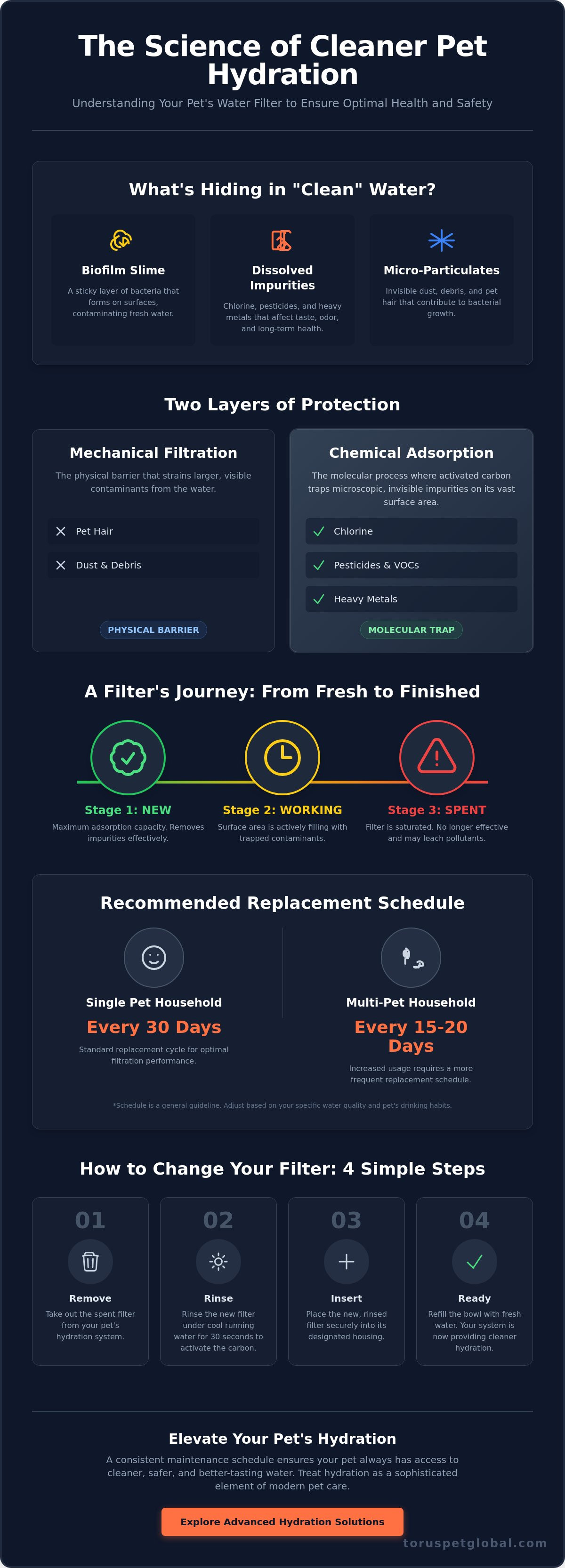
Visual clarity is a deceptive metric for water quality. While your pet's water may appear transparent, it often contains invisible chemical signatures and microscopic particulates that a simple mesh screen cannot capture. True filtration relies on activated carbon, a highly porous material treated to expand its internal structure. This material doesn't just block debris; it actively engages with the water on a molecular level.
The core of this process is The Science of Absorption. Unlike absorption, where a substance is soaked into a volume, adsorption involves impurities sticking to the massive surface area of the carbon particles. A single gram of activated carbon can have a surface area exceeding 3,000 square meters. This vast network of microscopic traps allows a high-quality hydration solution to strip away contaminants that affect taste and safety. This is exactly how Torus Pet applies its filtration solution - clearly backed by science.
It's helpful to distinguish between the two layers of protection occurring within your filter:
-
Mechanical Filtration: This is the physical act of straining. It captures visible contaminants like pet hair, dust, and environmental debris before they settle in the reservoir.
-
Chemical Filtration: This is where the charcoal performs its primary work. It targets dissolved impurities, including chlorine, pesticides, and volatile organic compounds (VOCs) that bypass standard screens.
The Role of Activated Carbon in Pet Health
Pets possess olfactory senses far more acute than our own. The presence of chlorine or metallic undertones in tap water can lead to subtle dehydration as pets avoid drinking. By neutralizing these odors, carbon filtration encourages consistent intake. This is particularly vital when implementing cat hydration solutions for discerning drinkers who are sensitive to water freshness. Systems that control water exposure, like Torus Pet, help reduce exposure to heavy metals that can accumulate over time, supporting long-term physiological wellbeing. What's more, Torus Pet adds a more advanced filtration option with its Advanced Filters that include antimicrobial technology in addition to the carbon layer meaning more contaminants removed. This is great for questionable water sources especially in the outdoors.
Why "Spent" Filters Can Be Counterproductive
A common mistake is assuming a filter continues to work as long as it isn't physically clogged. In reality, once the carbon's surface area is fully saturated with contaminants, the adsorption process stops. At this stage, the filter can actually become a liability. Saturated filters often harbor biofilm, a sticky layer of bacteria that thrives in the damp, nutrient-rich environment of trapped organic matter.
When you delay learning how to change pet water bowl filter elements, you risk a process known as "desorption." This occurs when the filter is so full that it begins leaching captured pollutants back into the water stream. Modern pet care treats hydration as a sophisticated system of storage and delivery. Maintaining a strict replacement schedule ensures your filtration remains a guardian of health rather than a source of contamination. Torus ensures that you always have filters with affordable 6-packs providing 180-days of filtration, and a subscribe-and-save service so you never run out.
The Science of Adsorption: Why Filters Eventually Stop Working
Many owners assume a filter is functional as long as water continues to flow through it. This is a common misconception that overlooks the chemical reality of activated carbon. Unlike a sponge that absorbs liquid into its volume, charcoal works through adsorption. This process involves a molecular attraction where impurities are trapped on the vast, microscopic surface area of the carbon particles. Think of it as a complex network of microscopic "parking spots" for contaminants; once every spot is occupied, the filter can no longer perform its primary job.
Every charcoal filter possesses a finite capacity. This capacity is dictated by the total surface area available within the carbon media. Over time, organic compounds, chlorine, and microscopic pollutants fill these structural voids. When the filter reaches this saturation point, it becomes inert. While it may still provide basic mechanical screening for large debris like hair or grit, it loses the ability to provide chemical purification. Understanding these technical limits is the first step in mastering how to change pet water bowl filter units effectively to maintain a high standard of hydration.
Biofilm and the Risk of Contamination
When a filter remains in a hydration solution past its prime, it doesn't just stop cleaning; it can actively harbor bacteria. Biofilm is the slippery, protective layer that bacterial colonies create on surfaces in constant contact with water. A spent filter, filled with trapped organic matter, provides the perfect architecture for these colonies to thrive. Incorporating regular filter maintenance into your broader pet care routine ensures that you are providing a clean resource rather than a protected breeding ground for pathogens.
Environmental Factors That Exhaust Filters Faster
Not every home follows the same maintenance timeline because environmental variables differ significantly. Several factors can accelerate the depletion of your filter's adsorption capacity:
-
Hard Water: High concentrations of calcium and magnesium minerals can physically block carbon pores, leaving fewer spots for chemical contaminants.
-
Ambient Temperature: Warmer environments accelerate the metabolic rate of bacteria, leading to faster biofilm formation within the filter media.
-
Airborne Debris: Seasonal pollen or high levels of household dust increase the mechanical load, which can prematurely "blind" the filter surface.
Sophisticated hydration solutions are designed to mitigate these risks through controlled water exposure. To better understand the mechanics behind these systems, you can explore the technical logic of pet hydration. By monitoring these environmental cues, you can adjust your replacement routine to ensure your pet always receives the cleanest water possible.
When to Replace Charcoal Water Filter for Pets: The Torus Pet framework.
Many owners rely on visual cues to determine water quality. If the reservoir looks clear, the assumption is that the filter remains effective. This logic is flawed because the most significant contaminants are invisible. A robust maintenance framework prioritizes chemical integrity over mere appearance. For a single-pet household, a baseline replacement interval of 30 days is the gold standard. This window ensures the activated carbon remains within its peak adsorption phase before saturation occurs.
Managing a household with multiple animals requires a dynamic approach. You can use a "multi-pet multiplier" to adjust your schedule. Each additional pet increases the organic load and saliva enzymes introduced to the system. For two pets, consider a 22-day cycle. For three or more, a 15-day replacement is often necessary to maintain water purity. Beyond the calendar, you should watch for specific red flags. A slight metallic scent, cloudy water, or a slippery texture on the filter housing indicates that biofilm has formed and the carbon is spent.
Proactive maintenance is always more efficient than reactive fixes. Replacing a filter on schedule is a minor logistical task that prevents the larger, more costly issues associated with poor hydration. When you prioritize the timing of how to change pet water bowl filter elements, you ensure your pet never encounters the "desorption" phase where contaminants leach back into their drinking supply.
Pet-Specific Variables
Individual drinking habits play a significant role in filter longevity. Large dogs with "slobbery" drinking styles introduce high levels of organic matter, which clogs carbon pores faster than a "clean" drinker. Conversely, cats are exceptionally sensitive to the taste and smell of water. Even a slightly spent filter can alter the water's profile enough to deter a cat from drinking entirely. To better understand these nuances, you might take a hydration quiz to identify the unique requirements of your specific companion.
The "Torus Standard" for Maintenance
Peak performance is the result of intentional design and consistent care. The Torus recommendation of a 30-day replacement cycle is specifically calibrated for its high-efficiency adsorption media. The Torus filtration system is engineered to minimize contamination risk by controlling water exposure. This design ensures that the water remains fresh and protected until the moment of consumption. A structured, documented maintenance plan removes the guesswork and provides the peace of mind that comes from knowing your hydration solution is functioning at its absolute best. Understanding how to change pet water bowl filter components is a simple yet vital part of this sophisticated care routine.
How to Change Pet Water Bowl Filter: A Step-by-Step Guide
Maintaining a sophisticated hydration system is a straightforward process that respects your time. When you master how to change pet water bowl filter elements, you ensure the transition from a spent filter to a fresh one is seamless and effective. This routine is the final step in closing the loop on a high-standard hydration strategy for your home. It isn't just about maintenance; it's about preserving the integrity of the water your pet consumes every day.
The process begins with preparation. Before the new filter enters the system, it requires a thorough rinse under cold, running water. This step is essential to remove any loose carbon dust that naturally occurs during shipping. Once rinsed, access the filter compartment. In systems that control water exposure, like the Torus solution, this usually involves a simple twist of the reservoir cap. After removing the old media, responsibly dispose of it and seat the fresh filter firmly into the dedicated slot. A correct fit is vital for ensuring optimal water flow through the carbon media rather than around it.
Finally, lock the system back into place. For gravity-fed designs, perform a quick flow test by ensuring water moves freely into the drinking well. This confirms the vacuum seal is intact and the filtration cycle is active. A properly seated filter prevents bypass and ensures that every drop of water is treated before it reaches your pet.
Priming Your Filter for Purity
Priming is the process of hydrating the carbon to activate its adsorptive properties. Skipping this step can lead to a temporary release of carbon "fines" or black dust into the water. While harmless, it detracts from the clean aesthetic of a modern home. If your local tap water has a high mineral content, consider using filtered or distilled water for this initial rinse. This prevents hard water minerals from immediately occupying the carbon's microscopic traps before the filter even enters service.
Cleaning the Bowl During Replacement
Changing the filter provides the perfect opportunity for a full sanitization of the water reservoir. While systems like Torus reduce contamination risk by storing water in a protected internal reservoir, a regular deep clean prevents any environmental dust from accumulating in the drinking well. Using a specialized cleaning kit helps maintain peak performance and ensures the mechanical components remain friction-free. Understanding how to change pet water bowl filter units is more effective when paired with a clean environment. You can find the necessary maintenance tools and replacement filters to keep your hydration solution running at its highest standard.
Elevating Hydration: The Torus Pet Filtration Solution
Hydration is a sophisticated pillar of modern pet care. It involves more than just providing water; it requires managing how that water is stored, delivered, and maintained. A dedicated Pet Hydration Solution replaces the traditional open basin with a protected reservoir system. This design minimizes environmental contact, ensuring the resource remains fresh until the moment of consumption.
The design-conscious owner understands that aesthetics and functionality must coexist. A premium hydration system should complement the clean lines of a modern home while providing the technical validation required for peace of mind. These systems are engineered to help reduce exposure to external contaminants through controlled water exposure, ensuring that the water hasn't been sitting in an open well for hours, collecting environmental debris or household pollutants.
Standard vs. Advanced Filtration
Different environments demand specific levels of intervention. A standard filter is ideal for daily purity, effectively neutralizing the chlorine and odors found in municipal supplies. In areas with high sediment or complex runoff, an advanced version offers heavy-duty protection against heavy metals and pesticides. The gravity-fed design ensures water only engages the filter during active drinking, preserving the lifespan of the carbon media.
Choosing the right level of filtration is a simple decision based on your local water quality. When you understand how to change pet water bowl filter components, switching between these options becomes a seamless part of your maintenance routine. This adaptability is essential for maintaining high living standards, whether you are at home or utilizing the system's portability for travel.
Practical Takeaways for the Modern Owner
Consistency is the foundation of long-term health. A structured maintenance plan removes the guesswork and ensures your companion never encounters the risks of a spent filter. Utilizing bulk filter packs ensures you always have a fresh unit on hand for your monthly replacement, turning a technical necessity into a simple, manageable habit.
Sophisticated systems, like Torus Pet, are designed to help reduce exposure to external contaminants without compromising the aesthetic of a clean home. Ultimately, refined hydration is about peace of mind. It is a manageable commitment to quality that integrates into your lifestyle while prioritizing the long-term wellbeing of your companion. By treating hydration as a technical element of care, you ensure a higher standard of health for years to come.
Mastering the Art of Pure Hydration
Managing water quality is a dynamic responsibility that extends far beyond the initial purchase of a hydration system. By moving from a passive approach to one of active oversight, you ensure that your companion's most vital resource remains an asset to their health. The intersection of design and science allows for a cleaner home environment and a safer drinking experience, provided the maintenance schedule remains a priority.
Understanding the mechanics of how to change pet water bowl filter elements is the final step in a sophisticated care strategy. Used by professional breeders and owners globally, this New Zealand designed innovation integrates antimicrobial technology to help reduce exposure to harmful pathogens. Consistency in maintenance prevents the accumulation of biofilm and ensures the carbon media functions at its peak capacity.
Ultimately, refined hydration is a manageable pillar of pet longevity. It is about the intentional delivery of clean resources within a modern, well-maintained home. When you prioritize the quality of the water your pet consumes, you are investing in a future of sustained health and vitality. This commitment to detail reflects the philosophy behind Torus Pet, where every element of the environment is optimized for the wellbeing of those who share it.
Frequently Asked Questions
Is it okay to use a pet water filter for longer than 30 days?
Extending the use of a filter beyond 30 days is not recommended for maintaining peak hydration standards. While the filter may look intact, the activated carbon's microscopic pores become saturated with contaminants over time. Once full, the filter stops removing chemical impurities and may begin to harbor biofilm. Sticking to a monthly cycle ensures your pet's water remains cleaner and free from the taste of chlorine or organic compounds.
Can I wash and reuse a charcoal pet water filter?
Charcoal filters cannot be washed or reused because the adsorption process is chemical rather than purely mechanical. Rinsing the filter might remove surface debris like hair, but it cannot clear the microscopic internal traps that have already captured dissolved pollutants. Attempting to wash a spent filter is ineffective and can inadvertently introduce detergents into your pet's hydration solution. Fresh media is the only way to ensure continued purification.
Why is there black dust in my pet’s water after changing the filter?
The appearance of black dust is caused by carbon fines that break loose during shipping and handling. This is why learning how to change pet water bowl filter elements properly involves a thorough initial rinse under cold water. While these particles are not harmful if consumed, a preliminary 30-second rinse primes the carbon and prevents these fine particles from settling in the drinking well of your hydration system. This is no different to flushing through a refridgerator filter.
Does my pet really need filtered water if I drink tap water?
Pets often benefit more from filtered water than humans due to their heightened sensitivity to taste and odor. Tap water frequently contains chlorine, fluoride, and trace heavy metals that can deter pets from drinking enough. Using a filtration system helps reduce exposure to these elements, encouraging consistent hydration. A dedicated solution ensures the water is stored and delivered in a way that minimizes environmental contamination after it leaves the tap.
What happens if my pet drinks water from a bowl with a very old filter?
Drinking from a bowl with a severely expired filter exposes your pet to accumulated bacteria and desorption, where trapped pollutants leach back into the water. An old filter acts as a bridge for biofilm to grow and spread throughout the reservoir. Instead of protecting the water, a spent filter becomes a source of contamination that can lead to digestive discomfort or a refusal to drink. Timely replacement is a simple way to safeguard their health.
How do I know if my charcoal filter is "full" or spent?
Identifying a spent charcoal filter often requires monitoring subtle changes in water quality and pet behavior. If you notice a faint metallic scent, cloudy water, or a slippery texture on the filter housing, the carbon is likely saturated. Another indicator is a sudden decrease in your pet's water consumption, as they may detect chemical tastes that we cannot. Since adsorption happens on a molecular level, a calendar-based replacement is more reliable than visual inspection.
Can I use a charcoal filter if I have a water softener at home?
You can and should use a charcoal filter even if your home has a water softener. While softeners remove minerals like calcium, they often leave behind sodium or don't address chlorine and organic pollutants. A charcoal filter provides the final stage of purification, ensuring the water is not only soft but also free from the chemical signatures that affect taste. This dual approach is common in modern homes to achieve the highest hydration quality.