
Beyond the Spaniel Bowl: Intelligent Hydration for Long-Eared Dogs in 2026

What if the depth of your dog's bowl isn't the solution, but part of the problem? For owners of Spaniels, Bassets, or Hounds, the search for the perfect water bowl for dogs with long ears often leads to narrow, conical designs that still leave ears damp and floors messy. It's a frustrating cycle of constant towel-drying and floor mopping that feels out of place in a modern, curated home.
You likely prioritize your dog's health and your home's cleanliness, yet persistent moisture continues to invite the risk of ear infections like Otitis externa. With U.S. pet spending projected to hit $165 billion in 2026, the shift toward proactive wellness and sophisticated design is clear. This article explores how sophisticated hydration management prevents the frustrations of wet ears and damp floors while improving water quality.
We will examine how systems that control water exposure, like Torus, provide a drier, cleaner experience through intelligent design. You'll discover how to transition from basic maintenance to a high-tech hydration solution that fits your lifestyle. No more soggy ears. No more water trails. Just a clean, intelligent way for your dog to stay hydrated.
Key Takeaways
- Understand how capillary action in long fur creates a cycle of dampness and increases the risk of bacterial ear infections.
- Learn why a specialized water bowl for dogs with long ears should focus on controlled water exposure rather than just bowl depth.
- Discover how antimicrobial surfaces and advanced filtration systems help reduce exposure to harmful pathogens and biofilm.
- Identify how to select the appropriate hydration system capacity and portability features to maintain dry ears during daily walks or travel.
- Shift your perspective from using simple water containers to implementing intelligent hydration solutions that align with modern design and preventative care.
Table of Contents
-
The Anatomy of the Problem: Why Long Ears and Standard Bowls Don't Mix
-
The Future of Pet Hydration: Sophisticated Solutions for Modern Owners
The Anatomy of the Problem: Why Long Ears and Standard Bowls Don't Mix
The standard water bowl is a relic of simple design that fails to account for the unique physiology of certain breeds. For dogs like Cocker Spaniels, Basset Hounds, or Setters, drinking is more than a simple act of hydration; it's a mechanical challenge. Their long, pendulous ears naturally fall forward when they lower their heads. In a wide bowl, these ears float on the surface. Capillary action then takes over, pulling moisture up the fur and creating a persistent 'soggy ear' cycle that lasts long after the dog has finished drinking.
This isn't just an aesthetic issue. It's a matter of hygiene and health. When fur remains damp, it creates a warm, humid environment perfect for bacterial and yeast overgrowth. This often leads to Otitis externa, a painful inflammation of the external ear canal. Wet fur also acts as a magnet for dust and environmental contaminants from your floors. These particles are then carried directly into the ear canal or onto your furniture. Keeping the drinking environment separate from the pet's physical features is a critical step in preventative wellness.
The Health Implications of Damp Ears
Chronic moisture is the primary enemy of ear health. Dogs with heavy, drooping ears already have limited airflow to their ear canals. Adding constant moisture from a standard water bowl for dogs with long ears exacerbates this vulnerability. It creates a breeding ground for pathogens that thrive in dark, wet spaces. Beyond the risk of infection, the constant dampness can lead to skin irritation and a persistent, unpleasant odor that is difficult to eliminate through bathing alone.
Why Traditional Bowls Fail the 'Spaniel Test'
Many owners believe a narrow, deep bowl is the ultimate solution. This is a common misconception. While a narrow opening may keep some fur out, the depth forces the dog to dip their head further. This can lead to whisker fatigue and increased head-dipping, which actually splashes more water. Traditional bowls also suffer from several design flaws:
-
Excessive surface area: Even narrow bowls allow ears to dip if the water level is high.
-
Biofilm accumulation: Stagnant water in deep reservoirs becomes a breeding ground for slime and bacteria.
-
Lack of exposure control: High-volume open water is inherently messy and prone to contamination.
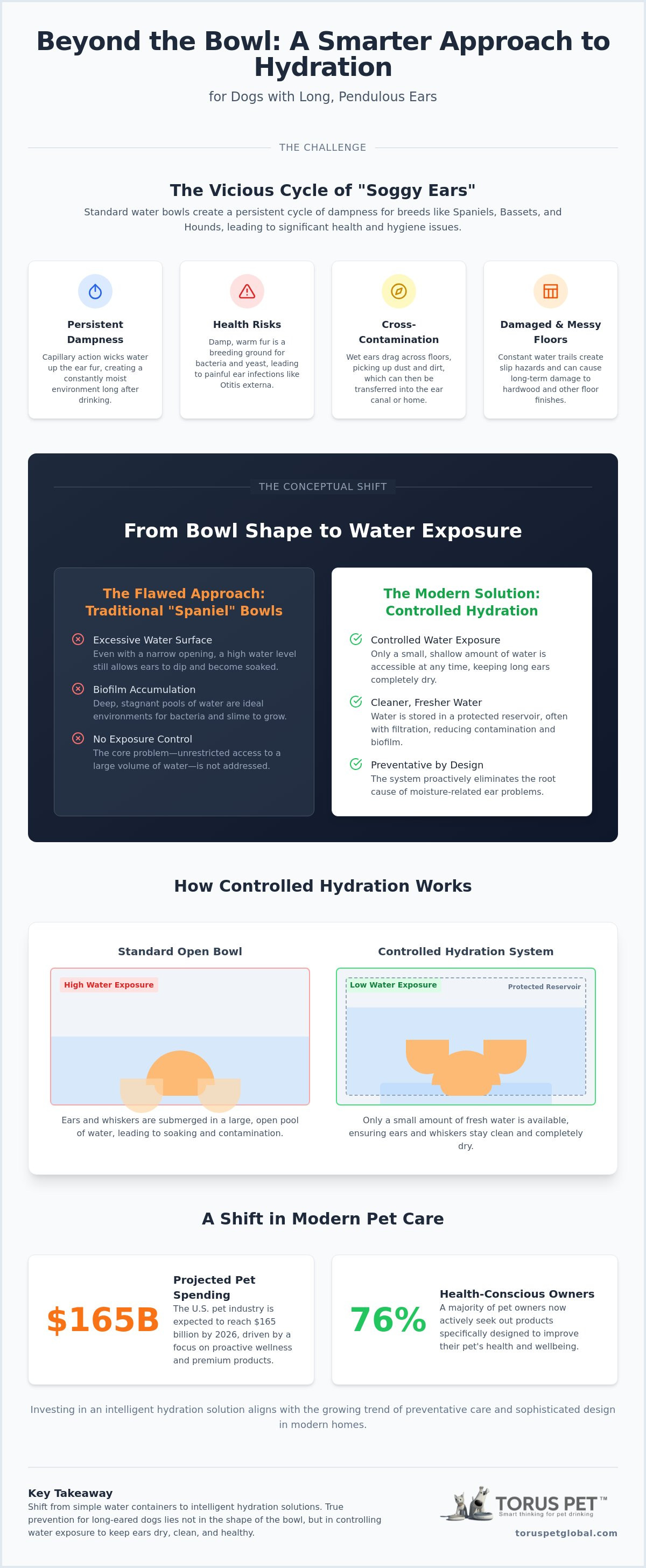
A modern home requires a solution that addresses these mechanics. Water trails across hardwood or tiled floors aren't just a nuisance; they can cause long-term damage to high-quality finishes and create slip hazards. True hydration management requires a shift in perspective. We must move from asking how much water is in the bowl to asking how much water is actually exposed to the dog at any given time. By controlling the water's surface area, you can protect both your dog's health and your home's aesthetic.
Rethinking the Spaniel Bowl: Shape vs. Controlled Hydration
Traditional design logic assumes that a narrow opening is the only way to protect long ears. This approach is incomplete. It focuses entirely on the container's geometry while ignoring how a dog actually interacts with the water. A truly effective water bowl for dogs with long ears doesn't just change the shape of the vessel; it changes how the water is delivered and maintained. This shift moves us from simple containers to a comprehensive Pet Hydration Solution like Torus Pets range.
By storing the bulk of the water supply within the antimicrobial walls of the device, you eliminate the large, open pool found in standard bowls. Only a shallow, fresh amount is released into the drinking well at any given time. This controlled water exposure limits how deep a dog can submerge their snout. It effectively prevents the ears from ever making contact with the liquid, breaking the cycle of dampness before it begins. This is a sophisticated remedy for a daily frustration.
This method is grounded in preventative health. When ears remain dry, the skin's natural barrier remains intact. Expert resources on Avoiding the Damp Ear Trap highlight how excessive moisture is a primary catalyst for bacterial and yeast overgrowth. By managing access to the water's surface, you proactively defend your pet's wellbeing. It's a high-tech upgrade for both the user and their environment, aligning with the 76% of pet owners who now actively seek products that improve health.
Traditional Deep Bowls vs. Controlled Reservoirs
Standard deep bowls are static and prone to contamination. They collect dust, saliva, and environmental debris throughout the day. In contrast, systems that control water exposure, like Torus, use a gravity-fed mechanism to provide 'just-in-time' delivery. The water stays cool and filtered in a protected reservoir until the moment it's needed. This ensures a cleaner drinking experience without the need for constant manual refilling or cleaning of a messy, deep bucket. Torus offers two sizes - The Torus Mini for smaller long-eared dogs and the Maxi for larger long-eared dogs. Both have a low water profile, but the Maxi offers a larger internal water reservoir.
The Science of Managed Access
Intelligent design guides the dog to the center of the drinking well, which naturally reduces lateral splashing. A shallow pool utilizes surface tension to keep water contained within the reservoir's rim. Enthusiastic drinkers often tip light, narrow bowls, but a weighted, low-profile system remains stable on your floors. It protects your hardwood and tiles from the typical water trails associated with long-eared breeds. To see these principles in action, you can explore the Torus range of hydration systems designed for modern living.
Hygiene and Health: Avoiding the Damp Ear Trap
Reactive ear cleaning is a tiring routine for many owners. You likely spend significant time drying, wiping, and applying treatments to manage the aftermath of a simple drink. This approach addresses the symptom rather than the cause. A sophisticated hydration strategy focuses on the quality and delivery of water. By upgrading from a basic water bowl for dogs with long ears to an intelligent system, you move toward proactive prevention.
Stagnant water in deep, open containers is a primary risk factor. Within hours, a thin layer of biofilm began to form on the surface and sides of the bowl. This is a complex colony of bacteria that thrives in moist environments. When long ears dip into this water, they don't just get wet. They become coated in these microorganisms. This creates a direct path for pathogens to enter the ear canal, complicating the health issues discussed in previous sections.
Proactive management means reducing the opportunity for bacterial growth. It involves choosing systems that isolate the main water supply from environmental exposure. This keeps the water fresh, cool, and significantly cleaner than an open bucket. It's a shift from merely providing a resource to managing a health-critical environment. This level of care reflects a lifestyle that values both design and long-term pet wellbeing.
The Role of Filtration in Modern Pet Care
Carbon filtration is essential for maintaining water purity. It removes chlorine and sediment that can affect both taste and safety. For long-eared breeds, this is vital because they often pick up dust and debris from the floor. A filtered system ensures these contaminants are removed before they reach the drinking well. You can learn more about the science of cleaner hydration to understand how these layers of protection work together to support a healthy home.
Antimicrobial Protection in Hydration Systems
The material of your hydration system is just as important as the water inside it. High-quality, BPA-free materials infused with antimicrobial properties help reduce the risk of bacterial colonization. This isn't about creating a sterile environment, which is nearly impossible in a home. It's about providing cleaner water by design. By using systems that control water exposure, you ensure that every sip supports your dog's health rather than challenging it. This intelligent approach to hydration is the ultimate solution for the modern, design-conscious owner.
Selecting a Hydration System for Your Home and Lifestyle
Choosing the right system requires balancing your dog's physiological needs with your daily schedule. It's no longer enough to place a heavy ceramic or metal container in a corner. These options lack the portability and advanced filtration required for a modern lifestyle. A sophisticated system should be as mobile as you are, ensuring dry ears whether you're in your living room or at a weekend retreat. This is where a specialized water bowl for dogs with long ears becomes a central part of your pet care kit.
Design-conscious owners often find that traditional solutions clash with a curated home. Ceramic is heavy and breakable; metal can be noisy and industrial. A premium hydration system should offer a clean, minimalist aesthetic that complements modern interiors while providing the technical functionality your dog requires. It's about finding a balance between form and function that respects both your home's design and your pet's health.
Capacity and Breed Considerations
Sizing is the first step in creating a friction-free experience. Larger long-eared breeds, such as Basset Hounds, require higher volumes of water to stay healthy throughout the day. For these dogs, a 2L (Maxi) capacity ensures they have access to fresh, filtered water without the need for constant refilling. Smaller breeds, like Cavalier King Charles Spaniels, benefit from more compact 1L (Mini) solutions that fit into smaller spaces while maintaining the same ear-protecting technology.
Finding the perfect balance between capacity and footprint doesn't have to be guesswork. You can take the Pet Hydration Quiz to identify the precise system tailored to your dog's weight and activity level. This ensures you aren't over-sizing for your space or under-serving your dog's needs.
Portability for Active Owners
Maintaining dry ears away from home is a common pain point. Traditional bowls are difficult to transport and often lead to spills in the car or at your destination. A non-electronic, travel-friendly system is essential for owners who value mobility. Because these systems don't require power, they provide consistent, clean hydration during walks, road trips, or outdoor adventures. This eliminates the need to carry separate towels just to dry your dog's ears after a quick drink on the trail.
Consistency is the foundation of long-term wellness. Implementing a dedicated hydration routine ensures your dog remains comfortable and healthy regardless of the environment. Finally, consider the maintenance requirements of your choice. Systems that are easy to disassemble and clean save time for busy owners. You can view the full collection to find the hydration solution that best fits your home's aesthetic and your dog's active lifestyle.
The Future of Pet Hydration: Sophisticated Solutions for Modern Owners
The transition from a simple water bowl for dogs with long ears to a comprehensive hydration system represents a significant shift in pet care standards. We no longer view pet hardware as mere utility items. In 2026, these tools are recognized as critical components of a dog's health environment. This evolution is driven by owners who demand better results than the traditional "Spaniel bowl" of the past.
Thoughtful design is the ultimate solution for owners who refuse to compromise on their home's aesthetic or their dog's comfort. It's a move away from reactive fixes toward proactive, intelligent management. By controlling how water is stored, filtered, and delivered, you eliminate the daily frustrations of wet ears and damp floors. This isn't just about convenience. It's about a commitment to long-term pet wellbeing through cleaner hydration.
As the total spending in the U.S. pet industry is projected to climb to $165 billion in 2026, the demand for high-quality, human-grade products continues to grow. Owners are becoming more intentional with their spending. They prioritize essential items that offer clear value and functionality. Investing in a sophisticated hydration system is a reflection of this smart spending trend, where quality is chosen over temporary, messy fixes.
Design-Conscious Pet Ownership
Modern pet hardware should enhance your home, not detract from it. The intersection of technology and clean aesthetics allows for systems that fit seamlessly into high-end living spaces. You don't have to hide your pet's water supply in a mudroom or laundry area. Instead, you can explore modern hydration dispensers that serve as functional design elements. These systems reflect a lifestyle where every detail is considered and every health risk is mitigated through smart innovation.
A Proactive Approach to Wellbeing
How water is delivered is just as important as the quality of the water itself. A stagnant pool is a liability, while a managed flow is an asset. Building a sustainable, healthy routine for 2026 and beyond starts with choosing the right tools. When you invest in a system that helps reduce exposure to contaminants and moisture, you are investing in your dog's future. It's a choice that respects the $1,445 average annual spend per pet by focusing on preventative care rather than reactive treatments.
The lasting value of a dry-ear, clean-water lifestyle is felt in every interaction with your pet. You spend less time cleaning floors and more time enjoying the bond you share. This sophisticated approach to care ensures that hydration is never an afterthought. It is a fundamental pillar of modern pet ownership that prioritizes quality, reliability, and the joy of a friction-free home environment.
Mastering the Art of Modern Hydration
Transitioning to a sophisticated hydration system is about more than just floor maintenance. It's a commitment to your dog's long-term health and your home's aesthetic integrity. By choosing a specialized water bowl for dogs with long ears that manages surface exposure, you break the cycle of chronic dampness and bacterial growth. This proactive approach ensures that every drink is as clean as the first, supporting a lifestyle of wellness and design.
The Torus system is designed for the modern home, featuring a spill-proof and non-tipping base that eliminates water trails. Its antimicrobial, BPA-free construction is trusted by professional breeders globally to provide a reliable, quiet solution. You don't have to settle for the logistics of constant cleaning when a high-tech upgrade is available. It's time to focus on the joy of pet ownership rather than the mess of traditional bowls.
Ready to upgrade your dog's hydration routine? Explore the Torus range of intelligent hydration solutions today. Your pet deserves the clarity of filtered water, and you deserve the peace of mind that comes with a drier, cleaner home.
Frequently Asked Questions
Why do long-eared dogs need a specific type of water bowl?
Long-eared dogs require specialized designs to prevent their pendulous ears from dipping into the water during drinking. When ears fall into a standard wide bowl, capillary action pulls moisture up the fur, creating a persistent dampness. This "soggy ear" cycle isn't just messy; it significantly increases the risk of bacterial and yeast infections by creating a humid environment within the ear canal.
Can a deep water bowl actually make my dog's ears wetter?
Yes, deep bowls often exacerbate the problem by forcing your dog to dip their head further to reach the water. This increased head-dipping can cause ears to swing forward and submerge more deeply than they would in a shallow well. While narrow deep bowls are a traditional Spaniel-style choice, the depth itself often leads to more splashing and a larger "splash zone" on your floors.
How does a controlled-flow water system help keep ears dry?
A controlled-flow system maintains a very shallow pool of water in the drinking well at all times. This design limits the depth a dog can submerge their snout, effectively preventing their ears from ever making contact with the liquid. It's an intelligent water bowl for dogs with long ears because it manages surface exposure rather than just relying on the shape of the container.
Are filtered water systems better for dogs with long ears?
Filtered systems are superior because they provide cleaner water by removing sediment and impurities that can affect ear health. Long-eared dogs often pick up dust and floor debris on their fur, which can then be transferred into their water. A system with carbon filtration helps reduce exposure to these contaminants, ensuring the hydration environment stays fresh and supports overall pet wellbeing.
How often should I clean a hydration system compared to a standard bowl?
You should rinse the drinking well daily, but the main reservoir requires much less maintenance than a standard open bowl. Because the bulk of the water is stored within antimicrobial walls, it's protected from dust, saliva, and environmental biofilm. A thorough clean every few weeks with a specialized cleaning kit is usually enough to maintain high performance and ensure a cleaner drinking experience.
Is it safe to use a portable hydration system for long-eared dogs during travel?
It's highly recommended to use a portable water bowl for dogs with long ears to maintain consistency during travel. Non-electronic, gravity-fed systems are particularly safe for use in cars or hotels because they are non-tipping and spill-proof. They allow your dog to stay hydrated on the move without the frustration of wet ears or messy upholstery, making travel much more efficient.
What is the best material for a dog bowl to prevent ear infections?
Antimicrobial, BPA-free materials are the most effective choice for preventing the bacterial growth that leads to infections. While ceramic and stainless steel are common, they don't actively inhibit the formation of biofilm. Advanced hydration systems use food-grade materials designed to help reduce the colonization of pathogens, providing a much higher standard of hygiene for breeds prone to chronic ear moisture.
How do I transition my dog from a traditional bowl to a gravity-fed system?
Most dogs transition naturally because the low-profile design and quiet, non-electronic operation are very inviting. You can encourage your dog by placing the new system in the same location as their old bowl and perhaps adding a few treats nearby. The lack of whisker fatigue from the shallow well usually makes the new hydration solution their preferred choice within just a few drinking sessions.


