
Solving Cat Water Intake Problems for Better Health

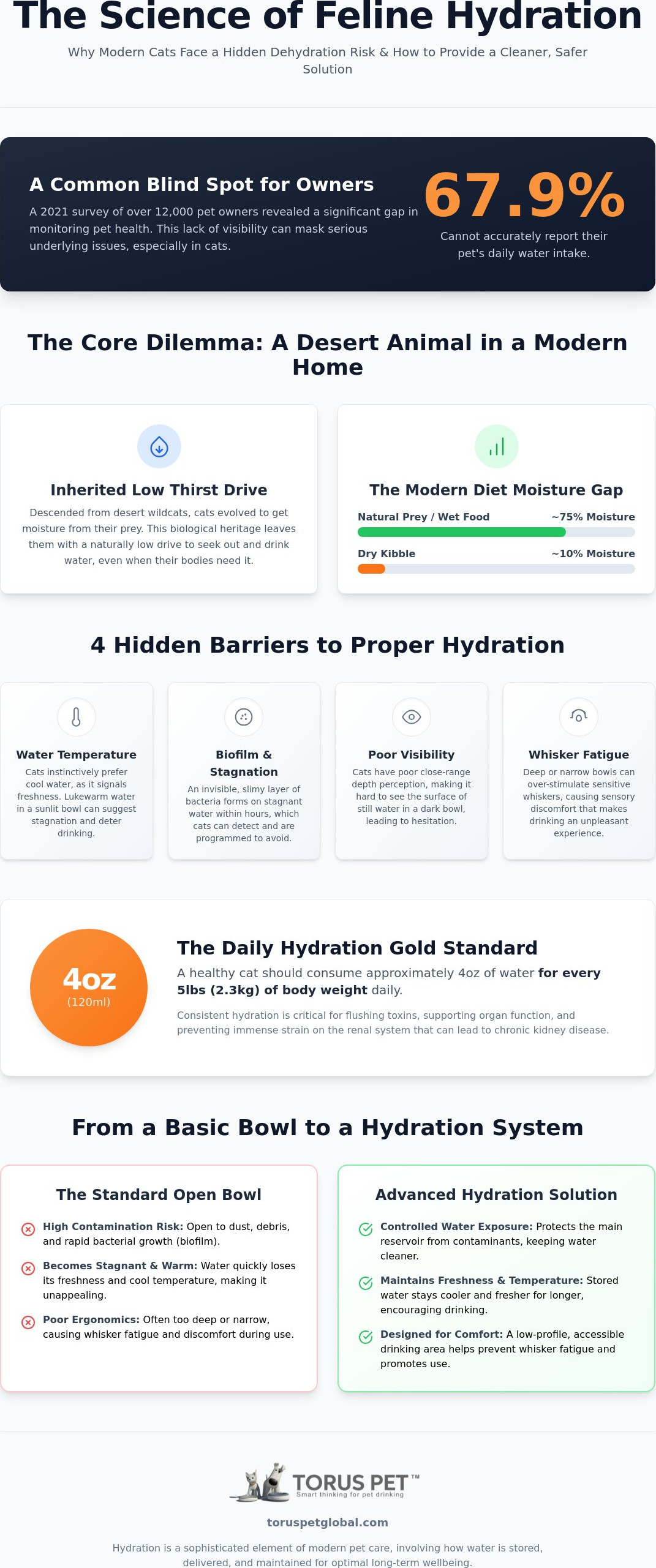
A 2021 survey of over 12,000 owners revealed that 67.9% cannot accurately tell their veterinarian how much water their pet drinks daily. This lack of visibility often masks underlying cat water intake problems that can lead to significant health concerns like chronic kidney disease. For many owners, the frustration isn't just about the volume; it's the slimy biofilm in standard bowls or the distracting hum of electronic fountains that makes hydration feel like a constant maintenance struggle.
You want your home to be a sanctuary of health, yet the logistics of feline hydration often feel like a battle against stagnant water and hidden bacteria. It's natural to feel concerned when your cat seems disinterested in their current setup. You deserve a solution that matches the clean aesthetic and high standards of your modern lifestyle.
In this guide, you'll discover the biological and environmental reasons behind feline dehydration and how to implement a professional hydration system at home. We'll explore how systems that control water exposure, like Torus, help reduce exposure to contaminants while maintaining a quiet environment. By the end, you'll have a reliable routine that provides cleaner water and genuine peace of mind regarding your cat's long-term wellbeing.
Key Takeaways
- Understand why your cat’s desert ancestry creates a naturally low thirst drive and how this biological heritage affects their daily hydration needs.
- Identify the environmental triggers and invisible barriers that contribute to common cat water intake problems in modern, design-conscious homes.
- Learn how to prevent "Whisker Fatigue" by utilizing a drinking vessel designed to reduce sensory overload and physical discomfort during use.
- Discover the benefits of professional hydration systems that utilize controlled water exposure to maintain freshness and reduce the risk of contamination.
- Explore how advanced storage and filtration designs can keep water at an optimal temperature without the noise or maintenance of electronic fountains.
The Biology of Feline Thirst: Why Cats Are "Low-Drive" Drinkers
Your cat is a biological desert dweller. Despite centuries of domestication, their physiology remains closely tied to their ancestor, the Near Eastern wildcat. In the arid landscapes of their origin, water was a scarce resource. Evolution solved this by creating a predator that extracts nearly all its necessary moisture from prey. This heritage has left the modern domestic cat with a remarkably low thirst drive. They don't feel "thirsty" in the same way humans or dogs do; instead, they are biologically programmed to wait for moisture to come to them through their diet.
This evolutionary quirk is the primary driver of most cat water intake problems. Because their bodies are designed to concentrate urine to conserve every drop of fluid, they can exist in a state of chronic dehydration without showing obvious distress. You might notice subtle signs like lethargy or "tented" skin that takes a second to snap back, but often, the damage occurs internally long before it's visible. Understanding the science of feline hydration is the first step in moving from a passive bowl to a proactive hydration strategy.
The Thirst Threshold and Kidney Health
A cat's thirst threshold is significantly higher than their actual physiological need. By the time a cat actively seeks out a water source, they are often already clinically dehydrated. This chronic, low-level dehydration puts immense strain on the renal system. Without enough fluid to flush toxins, the kidneys must work harder, increasing the risk of urinary crystals and renal stress. A fundamental benchmark for feline health is ensuring your cat consumes approximately 4oz of water for every 5lbs of body weight daily. Consistent hydration isn't just about comfort. It's a critical preventative measure against the most common health issues facing senior cats.
Challenges of the Modern Domestic Diet
The transition from moisture-rich prey to processed pet food has created a dangerous "moisture gap." Consider the numbers. Natural prey and most wet foods consist of roughly 75% water. In contrast, dry kibble contains as little as 10% moisture. Cats on a kibble-heavy diet are at a distinct disadvantage. They don't naturally drink more water to compensate for the dryness of their food. Instead, they simply remain dehydrated.
Relying on a standard bowl is rarely enough to bridge this gap. Modern homes require a more sophisticated approach. Systems that control water exposure, like Torus, ensure that the water available is fresh and appealing enough to overcome a cat's natural reluctance to drink. Moving away from stagnant, open-air storage helps align your cat’s environment with their biological needs, ensuring they receive the hydration their ancestors once found in the wild.
Common Environmental Triggers for Cat Water Intake Problems
While the biological "low-drive" discussed previously explains why cats don't feel thirsty, environmental triggers often turn a natural trait into a health risk. Many cat water intake problems stem from invisible barriers that humans rarely consider. For instance, water temperature significantly influences feline preference. In the wild, cool water often signifies a moving, safer source, whereas lukewarm water suggests stagnation and bacterial growth. If a bowl sits in a sunlit corner of a modern kitchen, the rising temperature alone can be enough to discourage a cat from drinking.
Visibility is another factor. Cats have excellent motion detection but struggle with depth perception at close range. They often rely on light reflecting off the surface or the slight movement of ripples to "see" where the water begins. A static, dark bowl in a poorly lit area makes it difficult for them to gauge the surface level, leading to the hesitant "paw-dipping" behavior many owners observe. When the water is hard to see or unappealingly warm, your cat is likely to simply walk away.
The Problem with Biofilm and Stagnation
Stagnant water in a standard bowl is an open invitation for contamination. Within hours, an invisible layer known as biofilm begins to form. This bacterial colony creates a "slimy" feel that cats are biologically programmed to detect and avoid. According to research from Cornell University on feline hydration, providing fresh, clean water is essential to prevent dehydration and support renal health. Cleaner hydration starts with reducing surface area exposure. By shielding the water supply from dust, hair, and airborne debris, you can maintain a standard of cleanliness that matches your own home's aesthetic.
Location and the "Safety" Factor
The placement of a water source is just as vital as its cleanliness. In nature, a drinking predator is a vulnerable predator. If a water bowl is tucked into a tight corner, it forces the cat to drink with their back to the room, creating a "cornering" effect that triggers their survival instincts. Proximity also matters. Cats instinctively avoid water sources near their "kill" (food) or their elimination area (litter) to prevent cross-contamination. To optimize your home's layout, consider these placement strategies:
- Open Sightlines: Position the water so the cat can scan the room while drinking.
- The Separation Rule: Keep water stations at least three feet away from food and in a completely different room from the litter box.
- Quiet Zones: Avoid placing hydration stations near noisy appliances like dishwashers or laundry machines.
Addressing these environmental triggers is simpler when you move away from basic open-air storage. Choosing systems that control water exposure allows you to maintain the freshness and temperature that cats instinctively crave, ensuring hydration becomes a seamless part of their daily routine.
Whisker Fatigue and the Psychology of the Drinking Vessel
Whiskers, or vibrissae, are among the most sensitive tactical organs in a cat's body. These specialized hairs are deeply rooted in follicles packed with nerve endings, acting as a high-resolution radar system that detects minute changes in air currents and proximity. When a cat approaches a standard deep bowl, these sensors are forced into constant contact with the vessel's edges. This repetitive stimulation creates a neurological state of sensory overload known as whisker fatigue. It’s a physical stressor that can turn a simple drink into an exhausting ordeal, often contributing to persistent cat water intake problems.
This discomfort often explains why a cat might seem "finicky" or hesitant at their water station. They aren't disinterested in hydration; they're avoiding the irritation of their whiskers brushing against a narrow rim. In many modern homes, the choice of a drinking vessel is the difference between a cat that drinks confidently and one that remains in a state of chronic, low-level dehydration. Moving toward a design that respects feline biology is a hallmark of thoughtful pet ownership.
Sensory Overload at the Water Bowl
Every time a whisker touches the side of a dish, it sends a burst of tactile data to the brain. In a narrow vessel, this data stream becomes a flood. You might notice your pet "pawing" at the water or splashing it onto the floor before drinking. This behavior isn't play. It's a calculated strategy to test the water's depth and surface location without submerging their sensitive whiskers. By creating ripples, they gain the visual feedback their eyes struggle to provide at close range.
According to Cornell University's guide to feline hydration, understanding these behavioral cues is essential for identifying when an environment is working against a pet’s biological needs. When a cat feels sensory overload, they may only take small, insufficient sips to minimize the time spent in contact with the bowl. This subtle avoidance is easy to overlook but has long-term implications for renal health.
The Importance of Water Visibility
Feline vision is optimized for motion and low light, but it has a significant blind spot directly under the chin. Still, clear water in a glass or polished metal bowl is virtually invisible to them. Harsh light reflections off these surfaces can be startling, especially for more anxious pets. When the water level fluctuates wildly between refills, the cat loses confidence in the source, never quite sure where the surface begins.
A sophisticated hydration solution addresses this by maintaining a steady-state water level. Systems that control water exposure, like Torus, ensure the drinking surface remains consistent and accessible at all times. This stability removes the psychological guesswork for the cat, allowing them to drink comfortably without the need to "test" the water first. By prioritizing a vessel's geometry and surface consistency, you eliminate the sensory barriers that often lead to dehydration in modern homes.
Implementing a Professional Hydration System: Beyond the Basic Bowl
Managing feline health requires moving beyond the concept of a simple water dish. For many owners, cat water intake problems are treated with more frequent refills or a change in bowl material. While these efforts are well-intentioned, they don't address the underlying issue of water degradation. A professional hydration system shifts the focus from passive storage to active management. It prioritizes how water is protected from the environment before it ever reaches your pet.
Open-air storage is inherently flawed. Dust, hair, and airborne contaminants settle on the surface within minutes of a fresh pour. By implementing a system that utilizes a sealed reservoir, you ensure that the bulk of the water supply remains protected from household pollutants. This controlled exposure ensures every sip is as fresh as the first, reducing the biological reluctance cats feel toward stagnant sources. It’s a sophisticated upgrade for both your pet’s health and your home's cleanliness.
The Science of Filtered Hydration
Tap water often contains chlorine and mineral odors that are undetectable to humans but off-putting to a cat's sensitive palate. Active carbon filtration addresses this by stripping away chemical residues, significantly improving the water's taste and smell. Systems that control water exposure, like Torus, integrate these filters directly into the flow path. This design prevents debris from entering the reservoir while utilizing antimicrobial materials to inhibit bacterial growth on the vessel's surfaces. No more slimy biofilm. No more daily scrubbing. Just clean, filtered water that encourages natural drinking habits.
Maintenance Without the Noise
A common friction point with active hydration is the intrusive hum of electronic fountains. These devices often require proximity to power outlets and constant motor maintenance. They can be startling to sensitive pets and distracting in a quiet, modern home. Non-electric, gravity-fed systems provide a sophisticated alternative. They offer the benefits of filtration and large-capacity storage without the mechanical noise or the risk of failure during a power outage. This reliability is essential for optimizing pet care for modern living.
Whether you are at home or traveling, a portable system ensures your cat has access to clean resources without a complex setup. It's about creating a friction-free experience for both the owner and the pet. No cords to trip over, no motors to burn out, and no constant cleaning. Explore advanced hydration solutions to see how a design-forward approach can transform your cat's daily routine into a reliable pillar of their long-term wellbeing.
The Torus Solution: A Design-Forward Approach to Feline Health
A modern home is a curated environment where every element serves a purpose. Traditional pet accessories often disrupt this aesthetic, offering messy, noisy, or visually unappealing compromises. The Torus Pet Hydration Solution represents a departure from these outdated standards. By integrating advanced storage technology with a clean, minimalist design, it addresses the root causes of cat water intake problems without sacrificing the sophistication of your living space.
The core innovation lies in the "walls-as-storage" design. Unlike standard bowls that expose the entire water supply to the air, Torus stores water within its insulated walls. This reservoir protects the liquid from dust, light, and temperature fluctuations. It keeps the water cool and fresh for longer periods, appealing to a cat's biological preference for "safe" water sources. It's a guardian of health that acts as a smart companion in your daily routine.
Safety is never an afterthought. Every unit is constructed from antimicrobial, BPA-free materials designed for long-term durability. This choice of material helps reduce the risk of bacterial colonies and ensures that the water remains untainted by chemical leaching. It provides the peace of mind that comes with knowing your pet's most vital resource is stored in a professional-grade environment.
Controlled Delivery for Cleaner Water
Torus utilizes a gravity-fed system that maintains a consistent, shallow pool of water. This steady-state level is specifically designed to prevent whisker fatigue, allowing your cat to drink comfortably without sensory overload. The science behind the filtration and storage mechanism ensures that as your cat drinks, fresh, filtered water is automatically replenished from the reservoir. This reduced surface area exposure is a critical factor in maintaining the purity required to keep cats hydrated and healthy over the long term.
Versatility for the Modern Lifestyle
The practical benefits of this system extend to the logistics of modern pet ownership. Both the Torus Maxi and Mini models feature a low center of gravity and a non-tipping, spill-proof design. This stability is essential for maintaining a clean home environment. Because the system is non-electric and highly portable, it adapts to your lifestyle, whether you're at home or traveling. You don't have to worry about power outages or finding an outlet in a hotel room.
Implementing this "set and forget" hydration strategy removes the friction of constant maintenance. It allows you to focus on the joy of ownership rather than the logistics of cleaning and refilling. Ultimately, sophisticated hydration is about more than just a bowl; it’s about a commitment to a standard of care that values design, quality, and your cat’s long-term wellbeing. Reliable hydration becomes a seamless, invisible pillar of a healthy feline life.
Elevating Feline Hydration Standards
Feline hydration is more than a simple matter of providing a bowl; it is a sophisticated element of modern pet care that requires an understanding of evolutionary biology and sensory psychology. By identifying environmental barriers like whisker fatigue and stagnant water temperatures, you can effectively resolve persistent cat water intake problems. Prioritizing a system that offers controlled water exposure ensures your pet receives cleaner hydration without the intrusive noise or maintenance of electronic fountains.
Investing in a professional hydration solution allows you to maintain a clean, design-conscious home while acting as a guardian of your pet's long-term health. The final impression of a healthy home is one where hydration is a managed system, involving how water is stored, filtered, and delivered. By choosing systems that protect the resource from contaminants, such as Torus, you align your environment with feline biology. Ultimately, the goal is to provide a friction-free experience that allows you to focus on the joy of ownership while ensuring your cat's wellbeing is maintained with quiet, sophisticated efficiency.
Frequently Asked Questions
How can I tell if my cat is dehydrated at home?
You can check for dehydration by gently pinching the skin between your cat's shoulder blades; it should snap back instantly. If the skin remains "tented" or moves back slowly, your cat is likely dehydrated. Other signs include dry, tacky gums and a lack of energy, which are often the first indicators of significant cat water intake problems.
Why does my cat paw at the water before drinking?
Cats paw at water to create ripples that help them visually locate the water's surface. Because cats have a blind spot directly under their chin and poor depth perception at close range, still water is nearly invisible to them. Splashing the surface provides the tactile and visual feedback they need to drink with confidence.
Is tap water safe for cats, or should I use filtered water?
While tap water is generally safe, filtered water is significantly more palatable to cats due to the removal of chlorine and mineral odors. Utilizing a system with advanced carbon filtration ensures the water remains fresh and free from chemical residues that might discourage a sensitive pet. This is a simple way to address common cat water intake problems related to taste preference.
What is whisker fatigue, and does it affect all cats?
Whisker fatigue is a state of neurological stress caused by the sensitive nerve endings in a cat's whiskers repeatedly touching the sides of a narrow bowl. It affects almost all cats to some degree, though the severity of their reaction varies. Providing a wide, shallow drinking surface is the most effective way to eliminate this sensory overload.
How often should I clean my cat’s hydration system?
You should clean your cat's hydration system at least once a month to ensure optimal performance and hygiene. While antimicrobial materials help reduce bacterial growth, a dedicated cleaning kit can remove mineral buildup from tap water. Systems that control water exposure require less frequent daily maintenance than open-air bowls but still benefit from regular deep cleans.
Why does my cat prefer drinking from a dripping faucet?
Cats prefer dripping faucets because their instincts associate running water with freshness and a lower risk of contamination. In the wild, stagnant water is often a breeding ground for bacteria. A faucet provides the movement and cool temperature that signals a safe, high-quality resource to their predatory brain.
Can I use a dog bowl for my cat, or are they different?
Cat bowls are specifically designed with wider, shallower geometries to prevent whisker fatigue, whereas dog bowls are often too deep for feline comfort. Using a vessel specifically engineered for cats ensures they can access water without their whiskers touching the rim. This subtle design difference is vital for long-term drinking consistency.
What is the best location for a cat water bowl in a multi-story home?
In a multi-story home, the best strategy is to place at least one hydration station on every level in a quiet, low-traffic area. Ensure these stations are far from food bowls and litter boxes to respect feline instincts. Providing multiple sources reduces the physical effort required for your cat to stay hydrated, especially as they age.


