
Can Dogs Drink Tap Water Safely? A 2026 Guide to Pet Hydration

What if the annual water quality report sitting in your inbox is only telling you half of the story? Many pet parents assume that if water meets human standards, it's perfectly safe for their companions. However, the journey from the municipal treatment plant to the bowl is where the real risks often hide. You might wonder, can dogs drink tap water safely when faced with complex local reports or the persistent slimy residue that appears in traditional bowls.
The reality is that tap water safety is a two-part equation: the quality of the source and the integrity of the delivery system. While the EPA proposed adding microplastics to the Contaminant Candidate List in April 2026, the way we store and serve that water at home matters just as much. Stagnant water and open exposure can introduce contaminants even after the water leaves your faucet. No slime, no stagnant water, no uncertainty.
By shifting the focus from simple tap water to a managed pet hydration solution, you can control these environmental variables. This guide explores the scientific reality of 2026 water standards and how systems that control water exposure, like Torus, protect your pet's health. You'll gain a clear understanding of domestic risks and a practical framework for ensuring your pet's long-term wellbeing through cleaner, smarter hydration.
Key Takeaways
- Understand why municipal safety standards don't always guarantee that the water reaching your pet’s bowl is free from contaminants introduced by aging domestic infrastructure.
- Learn to navigate 2026 water quality reports and analyze Total Dissolved Solids to answer the critical question: can dogs drink tap water safely in your specific zip code?
- Discover how open water exposure leads to the rapid development of biofilm and why the design of your hydration system is as critical as the water source itself.
- Explore how shifting to a sophisticated hydration solution with protected reservoirs and point-of-use filtration can help reduce your pet's exposure to airborne debris and domestic contaminants.
Municipal Standards vs. Canine Biology: Is Tap Water Sufficient?
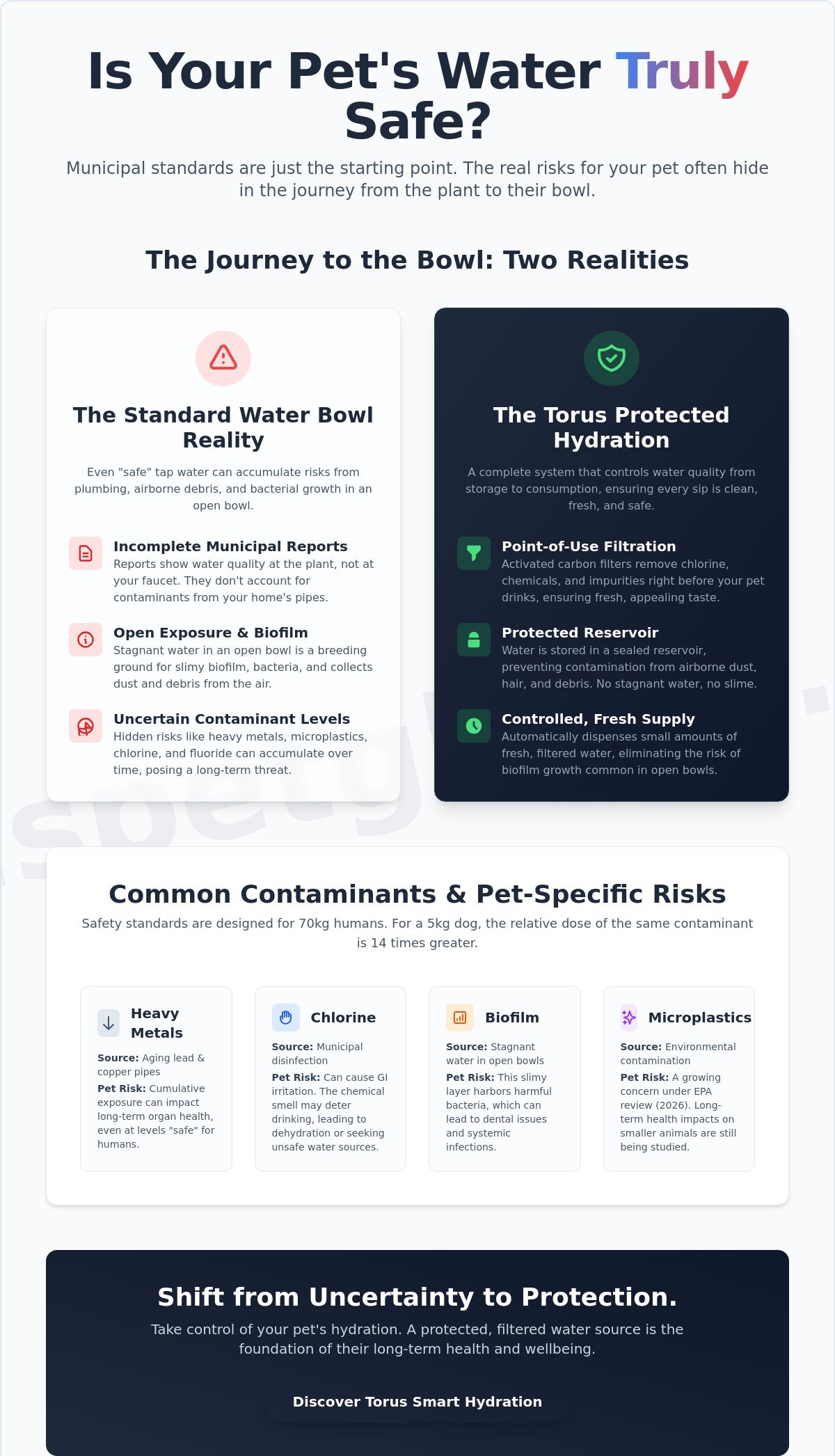
We often equate legal compliance with biological optimization. In most developed regions, water is treated to meet strict municipal tap water standards, ensuring it is free from immediate pathogens. However, these regulations are calibrated for adult humans, usually weighing 70 kilograms or more. When questioning if can dogs drink tap water safely, we must look beyond the "safe for humans" label. A trace amount of a contaminant that is negligible for an adult can represent a much higher relative dose for a 5-kilogram dog.
Modern pet care is shifting toward a philosophy of "controlled exposure." This approach treats hydration as a precision element of health rather than a background utility. Because dogs have a smaller body mass and different metabolic pathways, they're more sensitive to the cumulative effects of trace elements. Over several years, these small exposures can impact long-term organ health in ways that human safety data might not fully predict. It's about cumulative load, not just immediate toxicity.
The Role of Chlorine and Disinfectants
Municipalities rely on chlorine or chloramine to neutralize waterborne pathogens. While essential for public health, these disinfectants can cause gastrointestinal irritation in sensitive dogs. The sharp, chemical scent of chlorinated water can disrupt a dog's olfactory-driven drinking habits, often leading them to seek out less safe but better-smelling water sources like garden puddles or stagnant ponds. No chlorine smell, no chemical taste, no hesitation. Utilizing a pet hydration solution that filters these chemicals at the point of use ensures the water is both safe and appealing to their heightened senses.
Fluoride: Dental Benefit or Biological Risk?
The debate over water fluoridation involves a complex balance between dental health and systemic impact. While fluoride is added to many municipal supplies to prevent human cavities, its effects on canine skeletal health are a point of ongoing study. It's important to distinguish between natural fluoride found in groundwater and the synthetic fluoride added by cities. When assessing if can dogs drink tap water safely, fluoride concentrations are a key metric to monitor. Dogs often consume fluoride through their diet, particularly in some processed kibbles, so additional intake through water can lead to overexposure.
To understand your pet's intake, you can check your local Consumer Confidence Report (CCR). As of 2026, many water systems are required to provide more frequent, accessible summaries of these specific concentrations. By understanding the science of hydration, you can move from passive consumption to active health management. Hydration isn't just about quantity; it's about the quality of every drop your pet consumes.
Identifying Hidden Contaminants in Domestic Water Supplies
Water quality is often viewed as a binary state: it is either safe or it isn't. In reality, water quality is a moving target that fluctuates based on geography, season, and the age of your home's plumbing. While municipal facilities might release water that meets federal standards, that same water travels through miles of infrastructure before reaching your kitchen faucet. This "last mile" of delivery is where many hidden risks reside.
When asking if can dogs drink tap water safely, we must consider that the water's profile changes as it moves. Contaminants aren't always the result of poor treatment; they're often the result of the delivery journey. For the modern pet parent, hydration management requires moving away from the assumption of static water quality and toward a strategy of consistent, point-of-use protection.
Heavy Metals and Aging Pipes
The Lead and Copper Rule Improvements (LCRI), enacted in October 2024, mandate the replacement of lead service lines by 2037. However, for a dog with a 10 to 15 year lifespan, the current presence of these metals is a more immediate concern. Even at the lowered action level of 10 parts per billion (ppb), cumulative exposure to lead or copper can be significant for smaller animals. You might notice a subtle metallic odor or see blue-green staining on fixtures, which are clear indicators that your home's internal plumbing is leaching minerals into your pet's water supply.
Microorganisms and Seasonal Runoff
Geography plays a major role in water stability. In regions with heavy agricultural activity, seasonal rainfall can wash nitrates and pesticides into the groundwater. While municipal systems work to filter these, private wells are particularly vulnerable to these fluctuations. Persistent microorganisms like Giardia and Cryptosporidium can survive standard treatments in certain water tables. The EPA also proposed adding microplastics to the Contaminant Candidate List in April 2026, highlighting a new era of emerging domestic contaminants that traditional open bowls fail to address.
Managing these variables doesn't require complex whole-house systems. Instead, it involves choosing a pet hydration solution that acts as a final barrier against domestic contaminants. By utilizing systems that store water in protected reservoirs and filter it just before consumption, you can ensure that seasonal spikes in runoff or aging pipe issues don't compromise your pet's long-term health. No heavy metals, no seasonal spikes, no worries.
The Biofilm Factor: Why the Bowl Matters as Much as the Water
Most homeowners assume that if the source is pure, the drink is safe. However, the vessel is often where the most significant contamination occurs. While we've discussed municipal standards, the question of if can dogs drink tap water safely depends heavily on what happens after the water leaves the faucet. Once water is poured into an open dish, it immediately begins to interact with the environment, transforming from a clean resource into a biological collection point for dust, saliva, and airborne debris.
Biofilm is a complex, multi-species community of microorganisms that adheres to surfaces. These bacteria secrete a sticky, glue-like substance that anchors them to the bowl's surface. This matrix acts as a shield, protecting the bacteria from both physical scrubbing and chemical cleaners. Within a few hours, a clean surface can host millions of microbes, creating a hidden layer of contamination that simple water changes won't remove. No slime, no bacteria, no problem.
The Science of Stagnant Water
Stillness is an invitation for microbial growth. In nature, moving water is often cleaner because oxygenation inhibits the growth of certain anaerobic bacteria. Inside a modern home, the warmth of the environment and exposure to light create a perfect incubator for algae and pathogens. In a standard pet bowl, a single bacterium can multiply into a colony of over 16 million in just eight hours, completing a full cycle of proliferation before the next morning's refill. This 24-hour cycle of bacterial growth turns a simple bowl into a persistent health risk.
Why Traditional Open Bowls Fail
Traditional materials like ceramic or stainless steel are often marketed as premium choices. While they are durable, their open-air design is a fundamental flaw in a modern home. Every lap of the tongue introduces "backwash"—a mix of saliva, food particles, and oral bacteria—directly into the remaining water. This organic material provides the essential nutrients necessary for biofilm to thrive and spread across the entire surface of the dish.
To truly address the question of if can dogs drink tap water safely, we must shift toward "reservoir storage" to protect water integrity. Systems that control water exposure, such as the Torus hydration solution, use a protected internal reservoir to shield the bulk of the water from air and light. This design ensures that only a small amount of water is exposed at any time, significantly reducing the risk of contamination from backwash and airborne debris. It's a sophisticated way to maintain water integrity from the first drop to the last.
Evaluating Your Local Water Safety: A Pet Parent’s Framework
Evaluating your local water quality shouldn't be a reactive task triggered by a health scare. While the EPA's April 2024 PFAS regulations provide a federal safety net, the question of if can dogs drink tap water safely requires a more granular, localized assessment. A smart framework begins with your annual Consumer Confidence Report (CCR), but it doesn't end there. It requires looking at the specific mineral and chemical load that enters your home daily.
Starting in January 2027, reports covering the 2026 calendar year will include a new mandatory summary section to help consumers quickly identify health risks. Look specifically for "Total Dissolved Solids" (TDS), which represents the combined content of all inorganic and organic substances in the liquid. While high TDS isn't always toxic, it often indicates hard water levels that can be taxing on a dog's kidneys over several years of consumption. No ambiguity, no hidden risks, no stress.
Testing Your Home Supply
A municipal report only measures water at the treatment plant. To understand what's happening at your kitchen faucet, use a simple at-home testing kit to check for pH and hardness levels. Ideally, your pet's water should fall between a pH of 6.5 and 8.5. If you suspect lead or copper leaching from your home's pre-1986 plumbing, professional laboratory testing is a worthwhile investment. For a deeper look at how water purity impacts metabolic health, explore The Science of Hydration.
Signs of Water Quality Issues in Dogs
Your dog's behavior is often the most reliable indicator of water quality. Identifying "red flags" like a sudden refusal to drink or excessive paw licking can point to high chlorine levels or chemical irritants. In specific breeds prone to urinary issues, such as Miniature Schnauzers, the high calcium and magnesium found in hard water can contribute to the formation of bladder stones. If you notice persistent skin irritation or lethargy, consult a veterinarian to rule out water-borne contaminants or sensitivity to municipal additives.
Moving from passive consumption to a managed hydration strategy gives you peace of mind. By integrating a sophisticated pet hydration solution into your home, you eliminate the variables of local water fluctuations and infrastructure issues. This proactive approach ensures that your pet's long-term health is never a matter of chance. It's about taking control of the most fundamental element of their daily care.
Implementing a Sophisticated Hydration Strategy
Ensuring that can dogs drink tap water safely is no longer just about the municipal source; it is about the precision of the delivery system at the point of consumption. While whole-house filters are a common choice for modern homes, they don't protect water once it sits in a bowl. A sophisticated hydration strategy focuses on point-of-use filtration, which addresses contaminants, disinfectants, and odors at the final stage before your pet drinks.
Active carbon filtration is particularly effective for this purpose. It helps reduce exposure to chlorine and chloramine, which we previously identified as potential gastrointestinal irritants. By removing these chemicals and their associated odors, you create a more appealing hydration experience that encourages consistent drinking habits. No chemical taste, no stagnant odors, no hesitation.
The Benefits of Controlled Water Exposure
Traditional bowls allow for constant environmental interaction, but gravity-fed systems that control water exposure, like Torus, ensure water is only released when your pet is ready to drink. This design protects the bulk of the water within a shielded reservoir, preventing air, light, and dust from degrading the water quality. Explore how Torus dispensers work to maintain this integrity through the use of antimicrobial materials that inhibit the growth of biofilm on internal surfaces.
- Reduced Contamination: Shielded reservoirs prevent airborne debris from entering the water supply.
- Antimicrobial Protection: Specialized materials help maintain a cleaner environment for stored water.
- Consistent Freshness: Water remains cool and protected from the light exposure that fuels algae growth.
Maintaining Optimal Hydration Anywhere
Water quality risks aren't confined to the home. The question of can dogs drink tap water safely becomes even more complex when you move between different municipal systems or private wells. When traveling or visiting new environments, the local water profile can shift significantly, potentially leading to digestive upset or a refusal to drink. Relying on single-use plastic bottles is neither sustainable nor ideal for a modern, design-conscious lifestyle.
A portable hydration solution allows you to maintain the same high standards of filtration and protection on walks, trips, or at the office. This consistency is vital for maintaining a healthy routine, as pets are often sensitive to the taste and mineral variations of unfamiliar water sources. Anytime. Anywhere. You provide a familiar, filtered resource that protects their health regardless of the destination.
Ultimately, a sophisticated hydration strategy is a cornerstone of modern pet care. It involves a shift in perspective, moving from seeing a water bowl as a simple container to viewing it as a managed health system. By prioritizing controlled exposure and point-of-use filtration, you provide your pet with a consistent, high-quality resource that supports their long-term wellbeing. Clean hydration is a lifestyle choice that reflects a deep commitment to quality and thoughtful care.
Refining Your Pet’s Hydration Strategy
Asking if can dogs drink tap water safely involves looking far beyond the municipal report. As we've explored, legal compliance for human consumption doesn't account for the "last mile" of domestic plumbing or the rapid growth of biofilm in open dishes. By shifting to a managed hydration system, you eliminate these environmental variables. No stagnant water, no slime, no uncertainty.
Sophisticated care involves protecting water from air and light while removing disinfectants like chlorine that disrupt natural drinking habits. An innovative gravity-fed design eliminates the need for batteries or electricity; it works with the natural flow of your home. Advanced carbon filtration removes impurities and odours from standard tap water, while antimicrobial construction helps reduce the risk of bacterial growth. It's a precise solution for a modern home.
Discover the Torus Hydration Solution for your home and take the final step in securing your pet's long-term health. When you control the delivery, you control the quality. It's a small change that reflects a thoughtful, modern approach to pet parenting. You're now equipped to turn hydration into a cornerstone of your pet's wellbeing.
Frequently Asked Questions
Can dogs get sick from drinking tap water with high chlorine levels?
High chlorine levels can cause gastrointestinal irritation and red, itchy eyes in sensitive dogs. Beyond physical discomfort, the strong chemical scent often deters dogs from drinking enough, which leads to dehydration. Using a system that filters these disinfectants at the point of use ensures the water is both palatable and gentle on their digestive system. No chemical scent, no irritation, no problem.
Is hard water safe for dogs to drink long-term?
Hard water is usually safe for healthy dogs, but the high concentrations of calcium and magnesium can contribute to urinary tract issues in specific breeds. For dogs prone to bladder stones, such as Dalmatians or Pugs, reducing mineral intake through filtration is a proactive health measure. It's a simple way to manage their long-term renal wellbeing without relying on reactive medical treatments.
Should I boil my dogs tap water if there is a local advisory?
You must boil your dog's water for at least sixty seconds during a local advisory to kill pathogens like Cryptosporidium. While municipal systems are generally reliable, infrastructure failures can occur. If you are questioning if can dogs drink tap water safely during an advisory, the answer is no until the water is sterilized or properly filtered through a certified system.
What are the symptoms of fluoride toxicity in dogs?
Symptoms of fluoride toxicity include excessive drooling, restlessness, vomiting, and muscle weakness. While municipal levels are kept low for human dental health, a dog's smaller mass makes them more susceptible to overexposure from combined food and water sources. If you suspect toxicity, seek veterinary care immediately to address potential neurological or skeletal impacts. Consistent filtration helps reduce this cumulative risk significantly.
How often should I clean my dogs water bowl to prevent biofilm?
Traditional open bowls require thorough cleaning with hot, soapy water every 24 hours to prevent biofilm from taking hold. Biofilm reforms within hours of a dog drinking due to the introduction of organic backwash. Using a pet hydration solution with a protected reservoir and antimicrobial materials can extend the cleaning interval while maintaining higher water integrity than a standard dish.
Is filtered water actually better for dogs than regular tap water?
Filtered water is superior because it removes trace contaminants, heavy metals, and disinfectants that meet legal human limits but may not be optimal for pets. Consistent filtration reduces the cumulative toxic load on a dog’s liver and kidneys over their 15 year lifespan. It offers a level of protection that regular tap water simply cannot provide, especially in areas with aging infrastructure.
Can tap water cause skin allergies or itching in dogs?
Tap water can contribute to skin irritation and itching if it contains high levels of chlorine or specific minerals. These chemicals strip natural oils from a dog's coat, leading to dry, flaky skin and excessive paw licking. Many pet parents find that switching to cleaner, filtered water helps reduce these localized allergic reactions and improves overall coat health and shine.
What is the best way to ensure my dog stays hydrated while traveling?
The most effective way to ensure hydration during travel is to use a portable hydration solution that maintains familiar water quality. Sudden changes in water mineral content can cause digestive upset or lead to a refusal to drink. A system that offers the same filtration and protection as your home setup ensures your dog stays hydrated anytime, anywhere, regardless of the local source.


