
Stylish Pet Products That Elevate Your Interior Design

What if the most essential tools for your animal's health were designed to complement your home rather than clutter it? Many owners believe they must choose between high-end aesthetics and practical care. Finding pet products that don't ruin your interior design is no longer about hiding gear. True design integration solves functional problems while maintaining visual harmony.
You have spent years curating a space that reflects your personal style. It is frustrating to find it disrupted by neon plastic or water splashes on hardwood. High-performance pet care should integrate seamlessly with clean, modern aesthetics.
We will explore how to achieve this through intelligent design and controlled hydration systems. This approach eliminates visual noise and reduces daily maintenance. Sophisticated pet care focuses on the logistics of health without compromising your environment.
By focusing on systems that control water exposure, you can create a friction-free home. This improves your pet's health through cleaner technology. Modern hydration is a sophisticated element of home design rather than a maintenance burden.
Key Takeaways
- Shift your perspective from hiding pet gear to integrating architectural elements that complement a modern aesthetic.
- Identify pet products that don't ruin your interior design by prioritizing antimicrobial materials and stable, low-profile silhouettes.
- Protect expensive flooring and reduce maintenance by utilizing advanced systems that provide controlled water exposure.
- Master the "Golden Triangle" of pet care to strategically place hydration and rest stations without disrupting your home's natural flow.
- Transition from standard bowls to sophisticated hydration solutions that offer engineered filtration and cleaner water delivery.
Table of Contents
-
Strategic Placement: Integrating Pet Stations into Home Flow
-
The Torus Philosophy: Sophisticated Engineering for Design-Minded Owners
The Evolution of Pet Aesthetics in Modern Interiors
Hiding pet gear is a common compromise. Many owners tuck bowls into corners or under cabinets, hoping to minimize the visual impact of bright plastic. This approach assumes that pet care is inherently messy or unattractive. True design integration moves away from this "hide and seek" mentality. This shift treats pet essentials as permanent, functional features of the floor plan. It is a move from seeing equipment as a nuisance to viewing it as a sophisticated part of the modern home.
Modern homes demand a higher standard of material integrity. We have moved past the era of disposable accessories. Today, the focus is on architectural integration. This means selecting items that share the same design language as your cabinetry and furniture. Historically, the concept of Animal furniture has evolved from simple crates to bespoke pieces that enhance a room's flow. When you choose pet products that don't ruin your interior design, you're investing in the long-term structural health of your home. Instead of clashing textures, we look for harmony. Instead of temporary fixes, we seek permanent solutions. Understanding the science behind these materials helps explain why certain designs resist daily wear.
Beyond Camouflage: Why Integration Beats Hiding
Visible, well-designed systems signal thoughtful pet care. There is a profound psychological benefit to a cohesive, clutter-free environment. When your home feels organized, your daily routine feels lighter. Avoiding the "clutter trap" of multiple low-quality accessories allows you to reclaim your space. A single, high-performance station is always superior to a collection of mismatched bowls and mats. By choosing pet products that don't ruin your interior design, you demonstrate that your pet's wellbeing is an integrated part of your lifestyle rather than a disruption to it.
The Aesthetic Cost of Traditional Pet Gear
Traditional gear often carries a hidden visual and olfactory price. Porous plastics absorb odors over time, ruining the "clean home" scent you have worked to maintain. Visual fatigue is another factor. Neon colors and repetitive paw-print patterns clash with contemporary palettes. These elements create a "cheap" look that contradicts the investment you have made in your interior design. Moving toward a selection of neutrals and high-performance finishes ensures your home remains a sanctuary of clean aesthetics. The goal is to eliminate the visual noise of pet ownership while maintaining the highest standards of hygiene and care.
Selection Criteria for Design-Forward Pet Products
Choosing pet products that don't ruin your interior design requires looking beneath the surface finish. While color is important, true value lies in material integrity and structural stability. Objects should mirror the quality of high-end kitchenware or architectural hardware for a cohesive look.
Stability is a critical, often overlooked factor for modern homes. Lightweight containers are easily tipped, leading to water damage on expensive hardwood or stone. High-performance systems prioritize a low center of gravity to ensure they remain stationary. This prevents the physical drift of gear that often leads to a disorganized appearance.
These criteria have clearly been considered seriously in the design of the Torus water bowl range. Torus are beautifully designed, very well engineered and functionally simple yet smart. Torus will always be a conversation starter in any modern home.
Material Integrity: From Antimicrobial to BPA-Free
Surface-level beauty fails if the material allows biofilm to develop. Porous plastics often develop a slimy coating that carries an unpleasant odor. Modern pet care utilizes high-grade, food-safe resins to ensure surfaces remain easy to sanitize. These materials are designed to help reduce exposure to environmental contaminants.
Advanced systems, such as the Torus Pet hydration range, utilize these resins to achieve a balance between hygiene and aesthetics. These materials are designed to resist the wear of daily use. Investing in quality materials protects both the home environment and the animal's long-term health.
Functional Minimalism: Form Following Purpose
The "less is more" philosophy is particularly effective for urban environments. Clunky dispensers consume valuable square footage and create visual noise. Identifying features that simplify care allows you to reduce the number of accessories in your home. A single, well-engineered hydration system can replace multiple open bowls.
-
Stability: Look for weighted bases or silicone grips that prevent floor scratches.
-
Silhouettes: Choose rounded, geometric shapes that blend with modern furniture.
-
Maintenance: Prioritize designs with fewer crevices where hair can collect.
-
Longevity: Invest in materials that resist UV fading and impact damage.
By evaluating the maintenance footprint of an item, you ensure the product stays as clean as the day you bought it. True design-forward products work to keep your home environment organized. Sophisticated equipment like Torus Pet should enhance your lifestyle while reducing the effort required for daily care.
Controlled Hydration: Protecting Your Surfaces and Your Pet
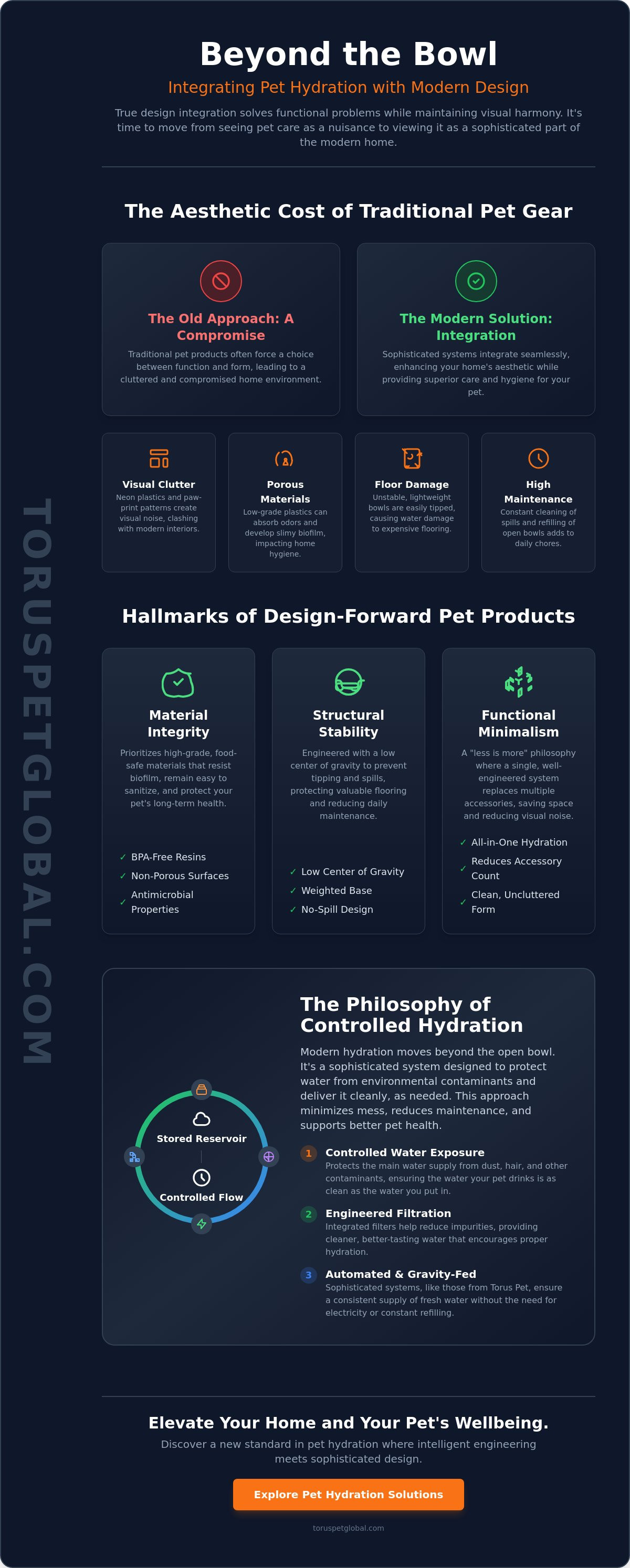
Many designers consider water damage a primary threat to the longevity of a home's interior. While we often focus on the visual appeal of accessories, the functional impact of water is far more significant. Traditional open bowls aren't just an aesthetic mismatch; they are functional hazards. Splashes from enthusiastic drinking can warp expensive hardwood, ruin custom cabinetry, and create slip hazards on stone flooring. These issues represent a failure of design that impacts both the beauty and safety of your living space.
Choosing pet products that don't ruin your interior design means looking for systems that manage water delivery with precision. This approach moves away from the "open pool" concept toward controlled hydration like that offered by Torus. By limiting the surface area of the water, you reduce the "splash zone" and protect your home's most valuable surfaces from moisture damage.
The Problem with Open-Water Bowls
Open water is a natural "dust magnet." It constantly collects airborne particles, pet hair, and environmental debris, creating a visible film that contradicts a clean, modern aesthetic. This contamination isn't just a visual issue; it encourages the growth of biofilm and bacteria. Constant evaporation also leads to mineral deposits and the need for frequent, manual refilling. For a comprehensive look at how different designs impact your home, consult The Ultimate Guide to Dog Bowls.
Gravity-Fed Solutions for the Modern Home
Intelligent, gravity-fed systems like Torus Pet water dispensers solve these problems by storing the bulk of the water internally. This keeps the resource hidden and fresh while protecting it from light and dust. It's a "freshness on demand" model that functions silently. Unlike electronic fountains, these systems require no cords or power sources, eliminating the visual clutter of wires and the hum of a motor. This silence is essential for maintaining a calm, premium atmosphere in your home.
These systems maintain a consistent, shallow water level in the drinking well. This low-profile design is far more stable than a tall, top-heavy bowl. It's less likely to be tipped over in high-traffic zones like kitchens or entryways. By integrating a Pet Hydration Solution that utilizes internal storage, you ensure your pet has access to cleaner water without the mess associated with traditional alternatives. The result is a cleaner floor, a healthier pet, and a home that remains uncompromised by the logistics of daily care.
Strategic Placement: Integrating Pet Stations into Home Flow
Design is as much about placement as it is about the objects themselves. Even the most sophisticated accessories can feel like clutter if they obstruct the natural movement of your home. Integrating pet stations requires an architectural eye. You must identify zones that allow your pet to access resources without turning your living room into a storage locker. By choosing pet products that don't ruin your interior design, you can treat hydration and rest areas as intentional design elements rather than afterthoughts.
Consider the "Golden Triangle" of pet care. This concept focuses on the spatial relationship between food, water, and rest. These three pillars should be accessible but not necessarily grouped together. Separating the hydration station from the feeding area often leads to a cleaner environment. It reduces the chance of food debris contaminating the water and keeps the "messy" zone contained to a smaller footprint.
Creating a Dedicated Hydration Station
The kitchen is the default choice for many, but it is also the highest-traffic area in most homes. Placing a water bowl in a narrow kitchen walkway is a recipe for spills and kicked containers. Transitioning hydration to a mudroom, a quiet hallway, or a dedicated nook under a console table offers better aesthetics and a calmer experience for your pet. This move protects your primary entertaining spaces from visual noise. For more insights on refining these habits, explore Optimizing Your Pet Care Routine.
Maintaining the Aesthetic: A Daily Routine
A pristine environment requires more than just good looks; it requires a maintenance-light design. Filtered systems play a hidden role in decor by reducing the "hard water" mineral buildup that creates white, crusty rings on dark flooring or stone tiles. These stains can be permanent if left untreated. A two-minute daily check ensures the area remains curated and dry. Because systems like Torus are designed to be non-tipping and low-profile, they naturally support a "clean floor" policy.
-
Low-Traffic Nooks: Use dead space under entryway benches or side tables.
-
Architectural Flow: Ensure stations don't break the sightlines of your room.
-
Surface Protection: Even with non-spill designs, placing stations on non-porous surfaces adds a layer of safety.
Thoughtful placement ensures that your pet's needs are met without compromising the sophisticated atmosphere you've built. If you're ready to upgrade your home's flow, you can view our range of advanced hydration solutions designed for modern living.
The Torus Philosophy: Sophisticated Engineering for Design-Minded Owners
A water bowl is often the most overlooked piece of furniture in a home. While many view it as a simple utility, it has a significant impact on daily aesthetics. True innovation occurs when we reframe this utility as a Pet Hydration Solution. Choosing pet products that don't ruin your interior design involves selecting systems that prioritize mechanical reliability.
The Torus Pet philosophy treats hydration as a sophisticated element of modern care. It focuses on how water is stored, delivered, and maintained within a premium environment. A high-tech upgrade should respect the clean lines of your home while ensuring resources are managed efficiently.
Engineered for the Modern Lifestyle
Traditional dispensers often rely on bulky plastic jugs that create visual clutter. Advanced systems eliminate this by utilizing internal storage walls to keep water hidden and protected from light. Maintaining water quality through integrated filtration removes the need for noisy, corded fountains. You can explore the science behind the filtration to see how this supports a calm atmosphere.
A Solution for Every Room
Scale and proportion are vital in interior design. A large dispenser can overwhelm a compact apartment, while a tiny bowl feels lost in a spacious kitchen. Selecting the appropriate capacity for your space ensures the hydration station remains a subtle architectural feature.
Options like the Maxi or Mini versions allow for this flexibility without the bulk of traditional dispensers. Choosing a size that aligns with your pet's needs and your room's dimensions preserves the integrity of your floor plan.
Modern hydration is a sophisticated element of home design that supports long-term wellbeing. By choosing a system that manages water exposure with precision, you create a seamless living environment. A refined home allows you to focus on the joy of your lifestyle rather than the logistics of maintenance.
Refining Your Home for a Shared Lifestyle
Your home is a reflection of your personal standards. Your pet's essentials should meet that same criteria. By moving away from temporary gear and toward architectural integration, you protect the structural and visual integrity of your space. True design-forward care prioritizes stability, antimicrobial surfaces, and controlled hydration to eliminate the friction of daily maintenance. Finding pet products that don't ruin your interior design is about shifting from disposable accessories to engineered solutions that work with your floor plan.
The Torus range offers a high-tech upgrade for the modern owner. New Zealand designed for contemporary homes, these systems utilize antimicrobial and BPA-free materials to ensure a cleaner environment. Because the technology is non-electric and silent, it provides gravity-fed hydration without the clutter of cords or the hum of a motor. It's a sophisticated remedy for the logistics of pet care.
Explore our range of sophisticated pet hydration solutions to bring a sense of peace and order back to your living space. You can focus on the joy of your shared lifestyle while we handle the mechanics of maintenance.
Frequently Asked Questions
How do I choose a pet bowl that matches my minimalist decor?
Focus on geometric silhouettes and neutral tones that mimic architectural hardware. Minimalist design relies on clean lines; therefore, you should avoid bright plastics or distracting patterns. Selecting pet products that don't ruin your interior design involves finding matte finishes that blend seamlessly with your existing furniture and cabinetry. Torus Pet is a leader here.
What are the best materials for pet products that don’t absorb odors?
High-grade, food-safe resins and stainless steel are superior choices because they're non-porous. Unlike cheap plastics that harbor bacteria and biofilm, these materials resist the accumulation of organic matter. This prevents the "pet smell" from permeating your home and ensures the equipment remains easy to sanitize over the long term. The Torus Pet antimicrobial ingredients make it a leader in the pet watering space.
How can I stop my dog from splashing water on my hardwood floors?
Transitioning to a controlled hydration system is the most effective solution for protecting your floors. These systems maintain a shallow water level in the drinking well, which naturally discourages the heavy splashing associated with deep, open pools. This technical approach keeps the "splash zone" contained and prevents moisture from warping expensive hardwood or stone surfaces. Once again Torus Pet comes out on tip here. Low water profile for lapping, not splashing.
Are there pet water dispensers that don’t require loud electric pumps?
Gravity-fed systems like Torus provide a silent alternative to electronic fountains. They utilize internal storage and pressure to deliver water without the need for buzzing motors or unsightly power cords. This allows you to maintain a calm, premium atmosphere in your home while ensuring your pet has access to fresh water on demand.
How do I hide my pet’s water bowl without making it hard for them to find?
Integration is more effective than concealment for a modern floor plan. Instead of hiding the bowl in a hard-to-reach spot, place it in a low-traffic nook like a mudroom or a quiet hallway. This keeps the station accessible for your pet while ensuring it doesn't disrupt the visual flow of your primary entertaining areas. However, with Torus Pet water bowls, why hide them? They are a stylish addition to any modern home with neutral colors that blend with modern decor.
What is the difference between a standard pet bowl and a hydration system?
A standard bowl is a simple open container that exposes water to dust and environmental contaminants. A Pet Hydration Solution, such as the Torus system, is an engineered tool that manages storage, filtration, and delivery. It protects the water supply within internal walls, keeping it cleaner and cooler until the moment it's needed.
Can a filtered water bowl actually help keep my home cleaner?
Yes, filtered systems play a significant role in maintaining your home's aesthetic by removing minerals that cause hard water stains. These impurities often leave white, crusty rings on dark flooring or stone tiles. It's an essential feature when looking for pet products that don't ruin your interior design, as it reduces the need for aggressive scrubbing on delicate surfaces.
How do I clean a design-forward pet hydration system?
Maintaining high-performance gear requires a simple but specific routine. You should use a dedicated cleaning kit that includes descaling tablets to reach the internal components and storage walls where mineral buildup can occur. Regular maintenance ensures the antimicrobial properties remain effective and the system continues to look as pristine as the day you purchased it. Wiping the drinking well with citric acid will help remove hard water stains. Just like our own dishes, pet water bowls do need maintenance to maximize performance.


