
The Hidden Science of Pet Hydration: Exploring Filtered Water for Dogs Benefits

What if the most significant risk to your dog’s health isn't their food, but the invisible contaminants hiding in their water bowl? You likely spend hours researching premium nutrition, yet the tap water that makes up 70 percent of a dog's biological profile often goes unexamined. Understanding the filtered water for dogs benefits is no longer a luxury for the few. It is a fundamental requirement for modern canine wellness.
It's natural to feel concerned about how local tap water affects long term kidney function or frustrated by the persistent, slimy biofilm found in traditional vessels. You deserve a solution that matches your home's clean aesthetic and your high standards for care. No slime. No toxins. No guesswork. The Environmental Protection Agency regulates over 90 contaminants in public water, yet many harmful particulates still reach the home through aging infrastructure.
This article explores the hidden science of water purity and how professional-grade filtration protects your dog from environmental hazards. We will examine how systems that control water exposure, like Torus, help reduce toxin intake and support improved longevity. You will gain a clear understanding of how sophisticated hydration management serves as a cornerstone of a healthy, modern lifestyle.
Key Takeaways
- Understand the critical role water plays in cellular function and why a dog’s biological sensitivity makes water quality more impactful for them than for humans.
- Identify the invisible risks hiding in municipal tap water, from digestive-disrupting chlorine to heavy metals leaching from aging infrastructure.
- Learn why "fresh" water in traditional bowls can develop harmful bacterial biofilms within hours and how to prevent stagnation through smarter delivery systems.
- Explore the measurable filtered water for dogs benefits, including improved palatability that encourages voluntary intake and supports long-term digestive wellness.
- Implement a sophisticated hydration strategy based on the three pillars of storage, filtration, and delivery to ensure water remains protected from environmental exposure.
Understanding the Biological Role of Water in Canine Health
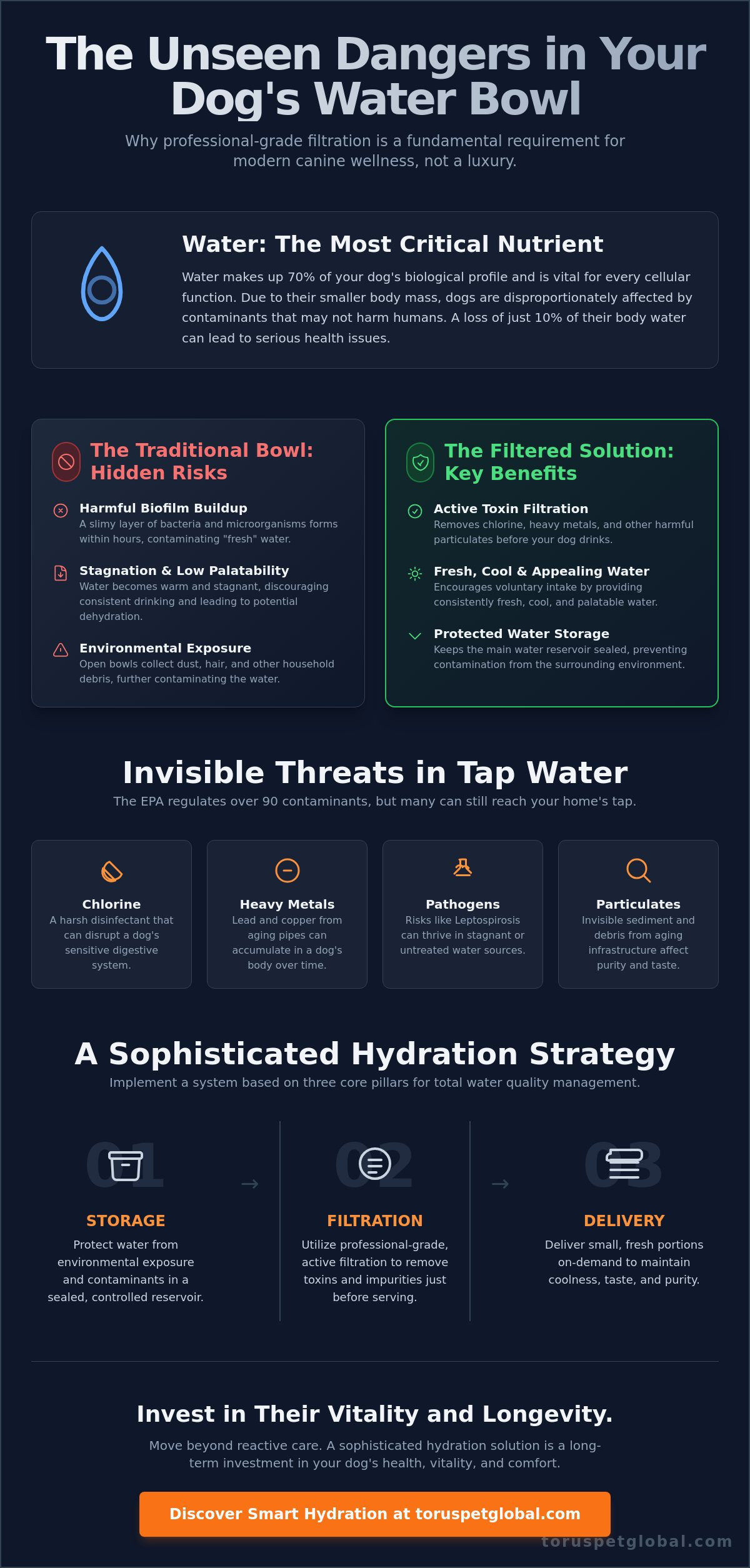
Most pet parents view the water bowl as a simple utility, yet water is the most critical nutrient in a dog's daily life. It serves as the primary solvent for every cellular function, facilitating the transport of oxygen and essential nutrients throughout the body. While a dog can lose nearly all its body fat and half its protein and survive, a loss of just 10% of its body water can lead to serious physical distress. This biological dependence makes the quality of what they drink a fundamental component of long-term wellness.
The filtered water for dogs benefits extend far beyond simple thirst quenching. For active breeds, hydration is the engine behind thermoregulation and joint health. Dogs don't sweat like humans; they rely on panting to release heat, a process that requires significant moisture levels to be effective. Additionally, water maintains the viscosity of synovial fluid, which cushions joints during high-impact activities. In aging dogs, consistent hydration is a key factor in maintaining cognitive function, as even mild dehydration can lead to reduced cerebral blood flow and increased confusion.
The Physiology of Thirst and Hydration
A healthy dog typically requires between 50ml and 70ml of water per kilogram of body weight each day to maintain homeostasis. This volume allows the kidneys to effectively filter metabolic waste and flush toxins from the bloodstream. Without adequate intake, these waste products concentrate, placing undue stress on the renal system. Optimal canine hydration stands as a non-negotiable pillar of preventative health, ensuring that biological systems remain resilient against the stressors of aging and environment.
Advanced Pet Hydration Solutions are designed to support this physiological need by ensuring water is always available and enticing. When water is fresh and cool, dogs are more likely to meet their daily intake requirements voluntarily. This proactive approach to hydration helps prevent the "dehydration-rehydration" cycle that can tax a dog's internal organs over time.
Why Water Quality is Not a Luxury
The common misconception that dogs can safely drink from puddles ignores the realities of modern environmental biology. While ancestral canines may have relied on natural springs, modern municipal water often contains chlorine, fluoride, and trace heavy metals that were never part of a dog's evolutionary diet. Because dogs have a smaller body mass than humans, the impact of these contaminants is disproportionately high. Small amounts of toxins that might not affect an adult human can accumulate in a dog's system over a 15-year lifespan.
Exposure to untreated outdoor sources also carries the risk of pathogens like Leptospirosis, which can thrive in stagnant or contaminated water. No chemicals, no pathogens, no stagnant odors. Systems that control water exposure, like Torus, provide a sophisticated way to manage these risks in a modern home. By prioritizing filtered water for dogs benefits, pet parents move away from reactive care and toward a lifestyle of intentional, health-focused design. High-quality hydration is a long-term investment in a dog's vitality and comfort.
Assessing Common Contaminants in Municipal Water Supplies
Most pet parents assume that if tap water is safe for human consumption, it is perfectly suited for their dogs. This oversight ignores the physiological differences between species. While municipal plants treat water to prevent acute illness, the process introduces chemicals that may impact long-term canine health.
Understanding the contaminants in municipal water supplies is the first step in optimizing pet wellness. Treatment facilities rely on chlorine and chloramines to kill pathogens. These disinfectants are effective for safety but can be harsh on a dog's internal systems. Heavy metals like lead and copper also pose a silent threat, often leaching from aging infrastructure and pipes installed before 1986.
Fluoride is another common additive with a debated impact. Research suggests high fluoride levels may influence canine thyroid function and bone density over time. Additionally, modern urban water cycles often contain pharmaceutical runoff, including traces of antibiotics and hormones. These substances bypass standard filtration, making the case for localized, high-quality hydration management.
The Impact of Chlorine on the Canine Microbiome
Dogs possess a sense of smell up to 100,000 times more sensitive than humans. The pungent, chemical scent of chlorine is often enough to discourage a dog from drinking. When water smells like a swimming pool, pets often consume only the bare minimum required for survival. This leads to chronic, low-level dehydration that affects kidney function and energy levels.
One of the primary filtered water for dogs benefits is the removal of these disinfectant by-products. By eliminating the chemical "scent," you encourage higher voluntary hydration. Beyond taste, reducing chlorine exposure protects the delicate balance of the canine microbiome. A healthy gut requires a stable environment, and consistent ingestion of disinfectants can disrupt beneficial bacteria.
Hard Water and Urinary Health
Hard water contains high concentrations of minerals, specifically calcium and magnesium. While these are necessary nutrients, excessive levels can contribute to the formation of urinary crystals and stones. Certain breeds, such as Dalmatians, Pugs, and Miniature Schnauzers, show a higher susceptibility to these painful urinary complications.
Advanced hydration solutions help soften the mineral profile before the water reaches the pet. Consistent filtration ensures that mineral intake remains at a balanced, safe level. No sediment. No scale. No buildup. By managing mineral exposure, you provide a sophisticated level of care that supports long-term renal health. Pet parents looking to upgrade their home environment often start by exploring the science of controlled water delivery.
The Risks of Stagnation and Biofilm in Traditional Bowls
Many pet parents assume that filling a standard bowl once a day provides sufficient hydration. In reality, water begins to change the moment it hits an open container. Within 12 to 24 hours, standing water becomes a breeding ground for microscopic life. One of the primary filtered water for dogs benefits is the active mitigation of this rapid biological degradation. When water sits, it isn't just waiting; it's reacting to its environment.
Biofilm is the technical term for the slimy layer often felt on the bottom of a pet bowl. It's a complex, structured colony of bacteria that adheres to surfaces and protects itself with a glue-like substance. This isn't just a cosmetic issue. Saliva, hair, and household dust fall into the bowl; providing the organic matter bacteria need to thrive. As water evaporates, the concentration of minerals and contaminants increases, which can alter the taste and discourage your pet from drinking enough.
The Invisible Threat of Bacterial Slime
The pink or orange film frequently seen in water dishes is often Serratia marcescens. This common bacterium thrives in moist environments and can cause urinary tract infections or gastrointestinal distress in vulnerable animals. Research from the NSF International suggests that pet bowls are often the fourth germiest place in a home. Simply rinsing a bowl under the tap is rarely enough to disrupt an established biofilm; these colonies require vigorous scrubbing or high-heat sanitization to remove.
- Mechanical Adhesion: Biofilms use proteins to "hook" onto plastic and ceramic surfaces.
- Protective Shield: The slime layer protects bacteria from light cleaning.
- Risk Management: Using systems that control water exposure, such as Torus, helps limit the surface area available for bacterial colonization.
Airborne Contaminants and Secondary Pollution
Open-air water bowls act as a collection point for everything circulating in your home's air. Microscopic droplets from household cleaning products, hairspray, and deodorizers settle on the water's surface throughout the day. These chemical traces, while small, impact the palatability of the drink. A dog’s sense of smell is roughly 10,000 to 100,000 times more acute than a human's; they can detect these subtle chemical shifts that we ignore.
Stagnant water also loses its dissolved oxygen over time, making it taste "flat." When water is stored in a protected reservoir and dispensed on demand, it remains shielded from these environmental pollutants. Understanding The Science of Hydration reveals that how water is stored is just as vital as the source itself. By reducing open-air exposure, you ensure the filtered water for dogs benefits remain intact from the first sip to the last. This thoughtful approach to hydration supports long-term health and encourages more frequent drinking habits.
Measurable Benefits of Transitioning to Filtered Hydration
A dog's sense of smell is roughly 10,000 to 100,000 times as acute as a human's. While we might find tap water perfectly acceptable, a pet detects a complex chemical profile including chlorine, fluoride, and dissolved minerals. This sensory intensity often leads to water avoidance, where pets drink only the bare minimum required for survival rather than the amount needed for optimal health. One of the primary filtered water for dogs benefits is the immediate improvement in palatability, which encourages consistent, voluntary intake.
Encaging Proper Hydration Habits
Dogs are biologically programmed to seek out water sources that smell and taste "natural." In a domestic setting, the presence of synthetic treatment chemicals can trigger a subtle rejection reflex. By removing these deterrents, you create a more inviting hydration environment. A consistent, fresh water source also provides a psychological benefit; the pet learns to trust the quality of their water, reducing the anxiety associated with stagnant or chemically heavy sources.
- Odor Neutralization: Removing chlorine gas prevents the "bleach" smell that often lingers in standard bowls.
- Consistency: Filtered systems ensure the water tastes the same every time, regardless of seasonal changes in local water treatment.
- Mimicking Nature: Carbon filtration mimics the purity of spring water by effectively neutralizing chemical residues while maintaining essential freshness.
Supporting Long-Term Organ Function
The transition to cleaner hydration isn't just about taste; it is a proactive step in protecting internal health. Every contaminant present in tap water must be processed by the liver and kidneys. By providing a pet hydration solution that pre-filters these elements, you significantly reduce the metabolic stress placed on these vital organs. This reduction in filtration load is a critical component of long-term wellness, particularly for breeds predisposed to renal issues.
For pets managing existing conditions, controlled water exposure is essential. Filtered hydration helps reduce the intake of heavy metals like lead or copper that can accumulate in older plumbing systems. You can learn more about the mechanics of these protective layers by exploring How Filtered Systems Work to see how contaminants are captured before they reach the pet.
The external benefits are equally measurable. Chlorine is a known drying agent that can strip natural oils from a dog's skin and coat. Pets that consume filtered water often exhibit less dander and a more resilient, shiny coat. This is because the body can direct its resources toward cellular repair and skin health rather than neutralizing ingested toxins.
Modern pet care requires a sophisticated approach to how water is stored and delivered. To provide your pet with the highest standard of clean, consistent water, explore our advanced hydration solutions designed for the modern home.
Implementing a Sophisticated Hydration Strategy at Home
Many pet parents view a water bowl as a static object. They fill it, place it on the floor, and walk away. This "set and forget" mentality overlooks the biological reality of how water quality degrades when exposed to open air. High-performance hydration requires a strategy built on three distinct pillars. When you transition to a system that actively manages these elements, the filtered water for dogs benefits become immediately apparent. You aren't just providing a drink; you're maintaining a vital health resource.
Stagnant water in traditional open containers allows for the rapid development of biofilm. This slimy layer of bacteria can form in as little as 24 hours. Modern pet care demands hardware constructed from antimicrobial materials to inhibit this growth. By choosing a system that controls water exposure, you reduce the risk of contamination and ensure every sip is fresh. It's a shift from reactive refilling to a proactive hydration strategy. Consider these three pillars:
- Storage: Protecting the water source in a reservoir to block out dust, dander, and UV light.
- Filtration: Using active media to remove impurities and odors at the moment of consumption.
- Delivery: Providing a consistent, low-profile supply that prevents splashing and maintains a clean drinking surface.
Choosing the Right Filtration Media
Not all filters are created equal. Standard carbon filters are effective for basic chlorine removal, but advanced media can target specific heavy metals found in various municipal supplies. Maintaining efficacy requires discipline. A filter's performance can drop by 30 percent or more once it reaches its absorption limit. Regular replacement is the only way to ensure your dog continues to receive the full range of filtered water for dogs benefits. If you aren't sure which setup fits your home, you can Find the Right Solution for Your Dog through a guided assessment.
Modern Solutions for Modern Homes
The modern home values aesthetics and efficiency. While electric fountains were once popular, they often introduce humming noises and require proximity to power outlets. Gravity-fed, filtered systems offer a superior alternative for design-conscious owners. They operate without batteries or cords. No noise. No mess. No power needed. Systems like Torus utilize the weight of the water to self-fill, keeping the main supply protected within the walls of the dispenser. This design mirrors a clean, hassle-free lifestyle where the logistics of care don't interrupt the joy of companionship.
Final Takeaway: Hydration is a sophisticated element of modern pet care. It's no longer just about the vessel, but how water is stored, delivered, and maintained. By focusing on these details, you provide a foundation for long-term wellbeing. To understand the mechanics behind these systems, you can explore the science of advanced hydration solutions.
Elevating the Standards of Daily Hydration
Modern pet care requires moving beyond the simple plastic bowl. Understanding the filtered water for dogs benefits means recognizing that water quality directly influences cellular health and organ function. Environmental studies indicate that municipal tap water can contain over 90 different regulated contaminants; including lead and chlorine; which may accumulate in a pet's system over many years.
Transitioning to a sophisticated hydration strategy involves more than just a basic filter. It requires a system that actively manages how water is stored and delivered to prevent the buildup of biofilm. Torus utilizes integrated antimicrobial technology and a gravity-fed design that operates without electricity or batteries. This ensures your pet has access to fresh, cool water whether you're at home or traveling across the globe with your companion.
Choosing a high-performance hydration solution is a proactive investment in your pet's long-term vitality. It's about providing peace of mind through science-backed design that fits a modern lifestyle. Discover how Torus provides cleaner hydration for your pet parent lifestyle.
Your commitment to a cleaner and more thoughtful home environment starts with the very foundation of health. You're making a choice that supports their wellbeing for years to come.
Frequently Asked Questions
Is filtered water actually better for dogs than tap water?
Filtered water is superior because it removes chemical additives and heavy metals commonly found in municipal supplies. While the EPA allows up to 4.0 parts per million of chlorine in tap water, these levels can irritate a dog's sensitive digestive system over time. Providing cleaner water ensures your pet avoids the cumulative effects of these common additives, supporting better long-term health.
Can tap water cause kidney stones or urinary issues in dogs?
High mineral content in tap water can contribute to the formation of urinary crystals and stones in predisposed dogs. Data from pet insurance providers indicates a correlation between hard water areas and a 10 percent increase in urinary health claims. Using a pet hydration solution helps manage the mineral load your dog consumes daily, which is a key step in preventative care.
How often should I change the filter in my dog’s water bowl?
You should replace the filter in your dog's hydration system every 30 days to maintain peak performance. Most activated carbon filters lose approximately 50 percent of their efficacy after processing 150 liters of water. Regular replacement ensures the removal of impurities remains consistent and your dog's water stays fresh, clean, and free from the odors that discourage drinking.
Do dogs prefer the taste of filtered water over tap water?
Many dogs prefer filtered water because they can detect chemical odors that humans often miss. Dogs possess up to 300 million olfactory receptors, making them highly sensitive to the smell of chlorine in tap water. One of the primary filtered water for dogs benefits is increased voluntary intake, as the water lacks the harsh chemical scent found in standard municipal supplies.
What are the specific contaminants in tap water that affect dogs?
Tap water often contains chlorine, fluoride, and trace heavy metals like lead or copper. A 2021 investigation by the Environmental Working Group identified more than 300 different contaminants across various US water systems. Filtration effectively reduces these substances, providing a more controlled environment for your pet's daily hydration and reducing the risk of exposure to potentially harmful industrial runoff.
Is it safe for dogs to drink hard water long-term?
While drinking hard water isn't immediately toxic, the high calcium and magnesium levels can lead to health complications over time. Approximately 85 percent of US homes utilize hard water, which can cause skin dryness or contribute to urinary issues in sensitive breeds. Using a filtered system helps balance these mineral levels for better long-term health and a more comfortable lifestyle.
How does a filtered water bowl help reduce biofilm?
A filtered water bowl reduces biofilm by removing the organic matter that bacteria feed on while maintaining water movement. Systems that control water exposure, like Torus, use antimicrobial materials and active filtration to prevent the slimy buildup known as biofilm. This design ensures the water remains clean even when the bowl isn't cleaned daily, protecting your pet from harmful bacteria.
Can filtered water help with my dog’s skin allergies?
Filtered water can support dogs with skin allergies by removing chlorine, which is known to strip natural oils from the coat. Chlorine exposure can lead to dry, itchy skin and exacerbate existing dermatological conditions. By providing cleaner hydration, you help maintain the skin's natural barrier and reduce the risk of environmental irritation, leading to a healthier coat and a happier pet.


