
Why Torus Water Bowls are the Best Dog Water Bowl for Flat Faced Breeds in 2026

What if the standard bowl sitting in your kitchen is actually making it harder for your companion to breathe? For many, the simple act of drinking water is a struggle that leads to gasping, coughing, and a saturated face. Finding a specialized dog water bowl for flat faced breeds is no longer a matter of convenience; it's a necessary step in managing the unique ergonomic needs of brachycephalic anatomy.
You likely feel the frustration of constant cleanup and the worry that comes with hearing your pet struggle for air. We understand that you value a home that is both clean and functional. In this article, you'll discover how modern hydration systems support better airflow and significantly reduce the risk of bacterial contamination.
We'll examine the latest shifts in veterinary standards, including the 2026 AVMA policy updates, and explore how controlled water exposure protects your dog's health. You'll learn why moving away from deep, open-access water is the most sophisticated choice for your pet's long-term wellbeing.
Key Takeaways
- Understand how brachycephalic anatomy interacts with standard bowl depths and why ergonomic designs are essential for unobstructed breathing.
- Identify the risks associated with "face-smearing" and learn how to reduce bacterial biofilm through systems that control water exposure.
- Evaluate the ideal dog water bowl for flat faced breeds by prioritizing stability, filtration, and anatomical suitability over traditional open-access designs.
- Discover specialized strategies for maintaining hydration during travel to mitigate the increased risk of heatstroke in respiratory-sensitive breeds.
- Reframe hydration as a sophisticated pillar of pet care that supports long-term comfort and cleaner living environments.
Table of Contents
The Biomechanics of Brachycephalic Hydration
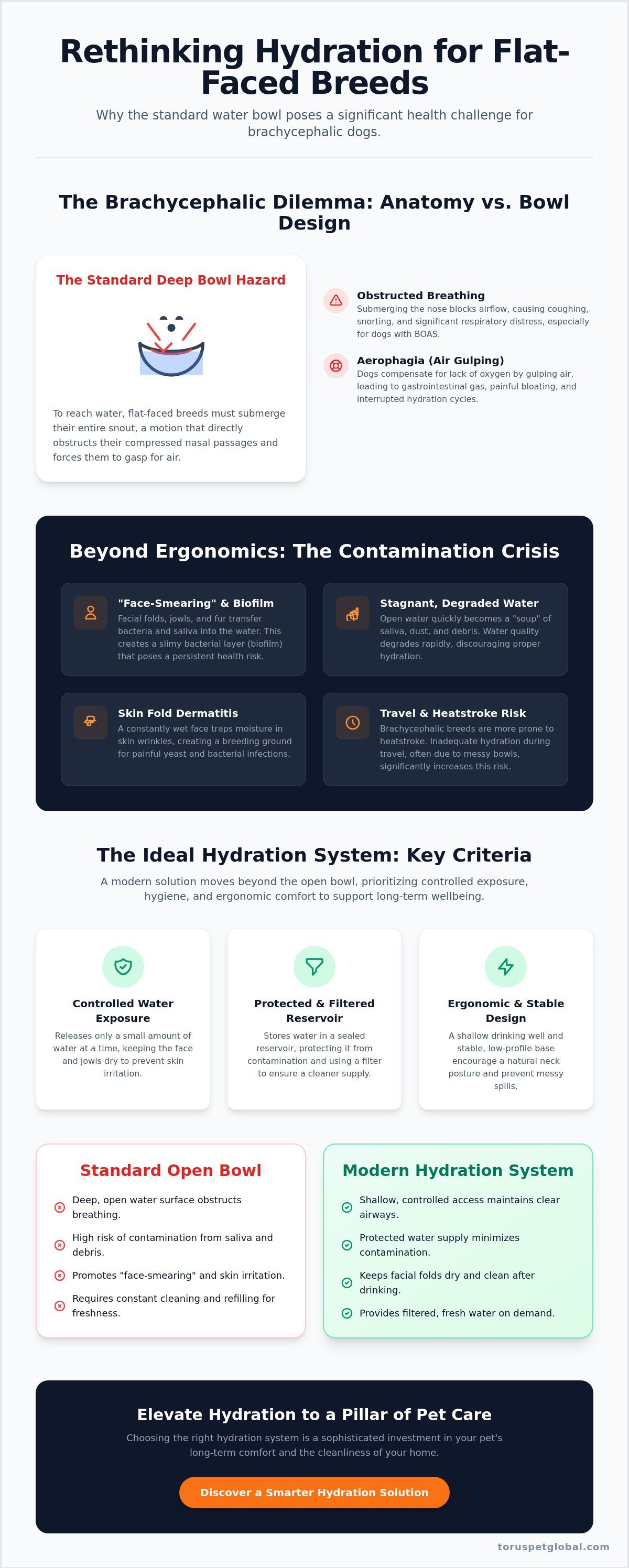
Brachycephalic anatomy is defined by a shortened facial structure that presents unique physiological challenges for daily activities. While most dogs use their long muzzles to reach into deep vessels, breeds like French Bulldogs and Pugs possess a compressed upper airway. This anatomical reality means that a standard deep bowl often becomes a barrier rather than a resource. When selecting a dog water bowl for flat faced breeds, understanding these biomechanics is the first step toward better pet care.
The primary struggle lies in the mechanics of lapping. To reach the water in a traditional bowl, these dogs must often submerge their entire snout. This action frequently leads to the involuntary inhalation of water or the total obstruction of the nasal passage. For dogs already managing Brachycephalic Obstructive Airway Syndrome (BOAS), this added respiratory stress can be significant and distressing.
Aerophagia, or the excessive ingestion of air, is another common side effect of poor hydration ergonomics. When a dog cannot drink with a clear airway, they often resort to gulping to compensate for the lack of oxygen. This leads to several avoidable issues:
-
Increased gastrointestinal gas and abdominal bloating.
-
Interrupted hydration cycles due to physical discomfort or coughing.
-
Heightened anxiety during what should be a routine and refreshing activity.
Airflow and the Nasal Bridge Challenge
Deep water levels force flat-faced dogs to submerge their nostrils to reach the bottom of the bowl. This creates a physical blockage of the nasal bridge, leading to the familiar snorting or coughing sounds heard after drinking. Systems designed to provide shallow, controlled water levels help preserve clear breathing. By maintaining a thin layer of water, the dog can lap comfortably without ever submerging their nose or restricting their oxygen intake.
The Ergonomics of the Drinking Posture
Neck angle plays a critical role in how the soft palate functions during swallowing. In breeds like Bulldogs, a steep diving motion into a deep bowl can further compress the airway and make swallowing difficult. Specialized hydration solutions, such as those that control water exposure, allow for a more natural reach. Drinking should be a low-effort, low-stress activity that fits into a modern, healthy lifestyle. Transitioning to a dog water bowl for flat faced breeds that prioritizes a neutral neck position ensures that hydration remains a supportive element of their overall wellbeing.
Beyond Ergonomics: The Contamination Risk in Open Bowls
Most pet owners view a water bowl as a simple, static container. However, for brachycephalic breeds, the traditional open bowl is a primary source of environmental contamination. The unique facial structure of these dogs leads to a phenomenon known as "face-smearing." Because they must press their faces deep into the water to drink, their skin folds, jowls, and fur constantly come into contact with the supply. This transfers bacteria, saliva, and organic debris directly into the water they consume.
When choosing a dog water bowl for flat faced breeds, hygiene is as critical as physical comfort. In a standard open-access bowl, this mix of organic material quickly leads to the development of biofilm. Biofilm is the slimy layer of bacteria that adheres to the surface of the container, posing a persistent health risk. For dogs already prone to respiratory sensitivities, consuming water from a contaminated source can lead to unnecessary secondary health challenges.
Proper hydration is a cornerstone of Nutritional management for brachycephalic dogs, as it supports digestive health and reduces the strain of air ingestion. Constant moisture also exacerbates skin fold dermatitis. When a dog's face remains wet after drinking, the moisture trapped in their wrinkles becomes a breeding ground for yeast and infections. A sophisticated hydration system helps mitigate this by controlling water exposure and keeping the face dry.
The Problem with Stagnant Water and Saliva
Stagnant water begins to break down chemically the moment it's exposed to air. When you add the high volume of saliva typically deposited by flat-faced breeds, the water quality degrades rapidly. Unlike long-snouted dogs, brachycephalic breeds tend to leave more debris behind during the lapping process. To maintain a clean environment, water should be stored in a protected reservoir and only released at the moment of consumption. This prevents the "soup" of saliva and dust that often characterizes standard bowls.
Antimicrobial Solutions for Modern Homes
Modern homes demand a higher standard of cleanliness and aesthetic appeal. Transitioning from standard plastic to high-quality, antimicrobial-infused materials is a significant upgrade. These materials are designed to inhibit the growth of bacteria on the surface of the hydration solution. When paired with active filtration, the result is water that tastes better and is free from the heavy scent of chemicals like chlorine, which can often discourage sensitive dogs from drinking.
A specialized dog water bowl for flat faced breeds should act as a guardian of health. By utilizing systems that help reduce exposure to environmental contaminants, you ensure your pet has access to cleaner hydration throughout the day. You can explore the science behind these systems to understand how they maintain water quality while fitting seamlessly into a contemporary living space.
Evaluating the Ideal Hydration System: Key Criteria
Choosing a hydration system for a brachycephalic dog requires a departure from the "one size fits all" approach. Many pet owners assume that a simple tilted dish is the ultimate dog water bowl for flat faced breeds. While an angled surface helps with neck alignment, it doesn't address the volume of water exposed to the snout. A sophisticated framework for selection must balance anatomical reach with long-term hygiene and material safety.
Heavy-set breeds like English Bulldogs and Bullmastiffs exert significant physical pressure when they lean in to drink. A lightweight plastic dish or a thin ceramic bowl often lacks the stability required for these powerful dogs. A non-tipping design with a low center of gravity is essential to prevent spills and protect the aesthetics of a modern home. Beyond physical stability, the materials themselves must meet rigorous safety standards. In 2026, premium hydration solutions should carry BPA-free and toxin-free certifications, aligning with the EU’s General Product Safety Regulations regarding chemical safety.
Contrast the three most common delivery methods to find the best fit for your lifestyle:
-
Open Bowls: Provide easy access but lead to facial soaking and rapid contamination.
-
Tilted Dishes: Improve neck posture but still allow for deep-water submersion of the nostrils.
-
Gravity-Fed Controlled Systems: Maintain a constant, shallow pool that protects the airway while keeping the water supply isolated from debris.
Controlled Water Depth vs. Tilted Angles
A tilted bowl is often only a partial solution. While it reduces the "diving" motion, it typically still contains a deep reservoir that forces a flat-faced dog to submerge their nose. The most effective dog water bowl for flat faced breeds utilizes a "low-pool" design. This mechanism maintains a constant, shallow level of water regardless of how much is in the main reservoir. It prevents the facial soaking that leads to skin fold dermatitis and ensures the nasal bridge remains above the surface at all times.
The Role of Filtration in Encouraging Hydration
Brachycephalic breeds are frequently more sensitive to water temperature and purity than other dogs. Stagnant water in an open bowl quickly absorbs household odors and develops a chemical "taste" from chlorine or heavy metals. Carbon filtration plays a vital role here by actively removing these impurities and odors before the water reaches the drinking well. You can explore the science of pet hydration to see how filtered, oxygenated water encourages more frequent drinking. Systems that control water exposure, like Torus, ensure that every lap is as fresh as the first, supporting the respiratory and digestive health of your companion.
Managing Hydration During Travel and Outdoor Activity
Travel introduces a layer of complexity for owners of brachycephalic breeds. These dogs are at a significantly higher risk of heatstroke because they cannot pant as efficiently as long-snouted breeds to cool down. In a moving vehicle, this risk is amplified by the stress of transit and the difficulty of accessing water. Finding a reliable dog water bowl for flat faced breeds that functions effectively on the road is a critical safety requirement.
Standard bowls are unsuitable for travel. They tip easily, create messes on upholstery, and often leave the dog without water for long stretches between stops. Providing consistent access is the goal. When water is available throughout the journey, the dog remains calmer and their internal temperature stays more stable. This proactive approach reduces the likelihood of respiratory distress caused by dehydration or overheating.
Follow this 5-step checklist for safe travel hydration:
-
Pre-hydrate: Offer water 30 minutes before departure to ensure baseline hydration.
-
Shallow Access: Use a hydration system that provides a shallow pool to prevent choking during vehicle movement.
-
Frequent Intervals: Plan stops every two hours to allow for a calm drinking environment if the dog won't drink while moving.
-
Shaded Placement: Keep the hydration source in a shaded area of the vehicle, away from direct sunlight.
-
Monitor Breathing: Watch for signs of excessive panting or distress, which indicate a need for immediate cooling.
Spill-Proof Solutions for the Modern Traveler
Traditional travel dishes are often collapsible or open-topped, making them prone to spills and instability. A more sophisticated approach involves systems that store water within the walls of the unit itself. This design creates a low center of gravity that prevents tipping, even in dog car seats or during sudden turns. For larger companions, the Torus Maxi offers the stability and capacity needed for extended journeys without the mess.
Hydration Frequency and Environmental Factors
It's better to encourage small, frequent sips rather than allowing one large gulping session. Large amounts of water consumed quickly can lead to bloating or air ingestion, which are significant risks for these breeds. Modern hydration solutions are designed to keep water cool using insulated walls, maintaining a refreshing temperature without the need for electricity or ice. Consistent water access in high-temperature zones is essential for maintaining a stable internal temperature. You can ensure your pet remains safe and refreshed by choosing advanced hydration solutions designed for the modern traveler.
A Sophisticated Approach to Brachycephalic Wellbeing
Hydration is often overlooked as a passive activity. For brachycephalic dogs, it's a critical component of respiratory management. Choosing the right dog water bowl for flat faced breeds isn't just about aesthetics or price; it's a long-term investment in their daily comfort. When we prioritize ergonomic and hygienic delivery, we reduce the physiological stress on their already taxed systems. This thoughtful approach ensures that a basic biological need doesn't become a source of physical distress.
The choice of a hydration system reflects a commitment to quality and long-term health. By moving away from deep, open-access bowls, you mitigate the risks of air ingestion and respiratory strain. A sophisticated solution acts as a guardian of health, ensuring that water is delivered in a way that respects the unique anatomy of your pet. This shift in perspective allows you to focus on the joy of your lifestyle rather than the logistics of maintenance or the worry of a struggling pet.
Reframing the Traditional Water Bowl
The transition from a simple vessel to a hydration solution is a hallmark of modern pet care. A bowl is no longer just a static container. It's a delivery system that should actively protect the health of your companion. Smart features, such as auto-replenishment and integrated filtration, ensure that water remains fresh and debris-free. Understanding how Torus works helps illustrate the benefit of automating these processes to maintain a clean, consistent supply without manual intervention.
By integrating technology with design, Torus Pet provides a solution that fits the aesthetic of a contemporary home while meeting rigorous technical needs. This balance ensures your pet’s hydration is managed with the same level of sophistication as their nutrition or veterinary care. It's about providing a friction-free experience that supports the wellbeing of both the user and the animal.
Long-Term Health Benefits of Cleaner Hydration
Consistent use of a specialized dog water bowl for flat faced breeds offers cumulative benefits. By controlling water exposure, you significantly reduce the moisture that typically saturates facial skin folds during drinking. This reduction helps lower the risk of yeast infections and dermatitis, keeping your pet more comfortable and hygienic between grooming sessions.
Proactive monitoring of water intake also becomes simpler with a reliable system. When you don't have to worry about spills, contamination, or constant cleaning, you can focus on the broader aspects of your pet's health. Ultimately, peace of mind comes from knowing their hydration routine is designed to support their unique anatomical needs. Modern pet care is about thoughtful, engineered solutions that respect the biology of the animals we love.
Elevating Hydration Standards for Your Companion
Integrating a sophisticated hydration routine is a fundamental shift toward better health for respiratory-sensitive breeds. By prioritizing systems that control water exposure, you protect your dog's respiratory path and maintain a cleaner home environment. We've explored how a specialized dog water bowl for flat faced breeds addresses the biomechanical challenges of lapping while reducing the risk of bacterial contamination from facial skin folds.
Modern pet care involves more than just basic equipment; it requires engineered solutions that adapt to your lifestyle. Whether you're at home or on the road, your pet deserves access to cleaner water that supports their unique anatomy. A spill-proof design ensures that hydration remains a friction-free experience, regardless of your environment.
Peace of mind comes from knowing your companion's needs are met with precision and care. You can explore the range of Torus Pet Hydration Solutions for your breed to find a system that balances design with technical utility. Investing in thoughtful hydration today ensures a more comfortable and vibrant future for the pet you love.
Frequently Asked Questions
Why do flat-faced dogs struggle with deep water bowls?
Flat-faced dogs have a compressed facial structure where the nose is positioned very close to the mouth. In a deep bowl, they must submerge their entire snout to reach the water, which often blocks their nostrils and leads to gasping or coughing. Providing a shallow, controlled pool allows them to lap water while keeping their airways completely unobstructed.
Is a tilted bowl better than a flat bowl for a French Bulldog?
A tilted bowl helps improve the neck angle, but it's only a partial solution for a French Bulldog. If the water remains deep within that tilted dish, the dog still faces the risk of submerging their nose. A superior dog water bowl for flat faced breeds combines an ergonomic posture with a system that maintains a constant, shallow water level.
How can I stop my dog from making a mess when they drink?
Messy drinking is usually the result of "face-smearing," where the dog's jowls and skin folds become saturated in deep water. You can eliminate this by switching to a hydration solution that limits water exposure. By providing only a thin layer of water at a time, you keep the dog's face dry and prevent water from dripping onto your floors.
Are plastic water bowls safe for Pugs and Bulldogs?
Standard plastic bowls can develop microscopic scratches that harbor bacteria, leading to chin acne or skin fold infections. It's essential to choose high-quality, food-grade materials that are BPA-free and infused with antimicrobial protection. These advanced materials help reduce exposure to environmental contaminants and are much easier to maintain in a hygienic, modern home.
How often should I change the filter in a pet hydration system?
To ensure maximum water purity, you should replace the filter approximately every 30 days. Regular replacement keeps the activated carbon effective at removing odors and impurities like chlorine. This consistency ensures the water remains appealing to sensitive breeds, encouraging them to stay hydrated throughout the day without the "chemical" taste of unfiltered tap water.
Can a specialized water bowl help with my dog’s breathing?
Yes, a dog water bowl for flat faced breeds helps by allowing for a more natural drinking posture. When a dog can lap water from a shallow source without submerging their nose, they don't have to hold their breath or gulp air. This reduces the risk of respiratory distress and aerophagia, which is the primary cause of drinking-induced bloating.
What is the best way to provide water for my dog during long car trips?
The safest method is using a spill-proof hydration solution with a low center of gravity that can be secured in the vehicle. Systems that store water within their walls prevent tipping and sloshing during turns. This allows your dog to take small, frequent sips throughout the journey, which is much safer than allowing them to gulp large amounts during rest stops.
How does a gravity-fed water bowl work without electricity?
These systems utilize a vacuum-action valve to manage water flow. As your dog laps water from the drinking well, the change in pressure automatically releases a fresh supply from the internal reservoir. It maintains a constant, shallow pool without the need for noisy pumps or power cords, making it a reliable and portable choice for contemporary pet owners.