
How to Find a Water Dispenser for Senior Dogs with Mobility Issues

What if the standard water bowl is actually a barrier to your dog's health rather than a resource? For a senior dog with stiff joints or spinal discomfort, the simple act of bending down can be a source of daily pain. If you're asking, "How do I find a water dispenser for senior dogs with mobility issues?" you're already moving toward a more sophisticated approach to pet care.
You've likely noticed your companion hesitating before drinking or struggling with unsteady paws on slick floors. It's difficult to watch a loyal pet choose between hydration and physical comfort. Instead of messy spills and painful bending, your dog deserves a stable and accessible water source that respects their changing physical needs.
This article will show you how to evaluate hydration systems that support senior health, reduce physical strain, and ensure consistent access to clean water. We'll examine why ergonomic height and stability are essential. You'll also learn how advanced hydration solutions, like Torus, provide silent and filtered water delivery to ensure your dog remains hydrated without the stress of noisy electronics.
Key Takeaways
- Understand the mechanical impact of standard bowls on senior dogs, specifically how lowering the head can exacerbate cervical and spinal discomfort.
- Learn to identify stability features, such as a low center of gravity, that prevent accidental tipping from pets with unsteady paws or front-limb weakness.
- Discover the answer to "How do I find a water dispenser for senior dogs with mobility issues?" by focusing on ergonomic height and high-performance filtration.
- Evaluate the benefits of non-electric, controlled hydration systems that provide fresh water without the noise or electrical hazards of traditional fountains.
- Shift your perspective from basic bowls to sophisticated hydration solutions that reduce daily maintenance while supporting long-term pet wellbeing.
The Mechanics of Senior Hydration: Why Standard Bowls Fail
Many owners assume a simple ceramic or stainless steel bowl is sufficient for a dog's entire life. This assumption ignores the significant physiological shifts that occur during aging in dogs. A standard bowl sitting on the floor creates a mechanical barrier. It forces an older pet to shift their weight forward, straining the neck and front joints. When you start wondering, "How do I find a water dispenser for senior dogs with mobility issues?" you're recognizing that hydration is a health management task, not just a chore.
Traditional open bowls are passive tools. They don't account for the physical limitations of a dog with reduced range of motion. Instead of a simple vessel, a modern home requires a Pet Hydration Solution. This approach treats water delivery as a controlled process that prioritizes ergonomics and water purity. It's about moving away from the "spill and refill" cycle toward a system that adapts to the dog's physical reality.
Postural Strain and Joint Pressure
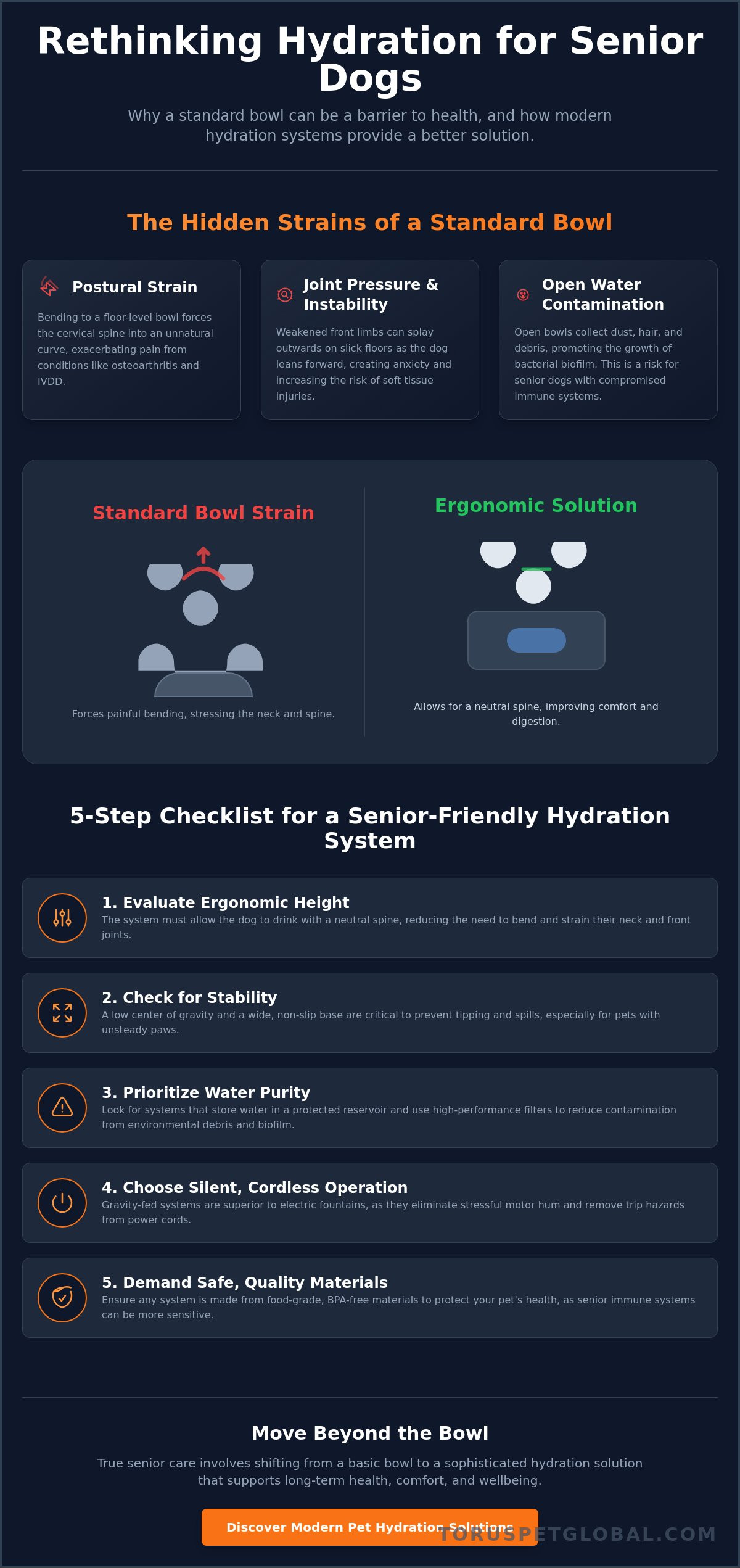
Bending down to reach a low bowl is often painful for dogs with osteoarthritis or Intervertebral Disc Disease (IVDD). This posture forces the cervical spine into an unnatural curve, which can lead to hesitation or reduced water intake. Beyond the neck, we must consider the "splaying" phenomenon. Weakened front limbs often slide outward on smooth surfaces like tile or hardwood as the dog leans forward. This lack of traction creates anxiety and increases the risk of soft tissue injuries.
Comfortable drinking height is also linked to digestive health. When a dog can maintain a more neutral spine, the swallowing process is more efficient. This reduces the amount of air ingested, which is particularly helpful for older dogs with sensitive digestive systems. A well-designed hydration system supports the dog's natural posture rather than forcing them to compensate for a poorly placed bowl.
The Risk of Open Water Contamination
Open water sources are magnets for dust, hair, and airborne debris. This creates an environment where biofilm, a complex colony of bacteria, can thrive. You've likely seen this as a slippery residue on the bottom of a bowl. Senior dogs often have compromised immune systems, making them more vulnerable to the bacteria present in stagnant water. They need water that stays fresh without constant manual intervention.
Systems that control water exposure, like Torus, significantly reduce these risks. By storing the main water supply in a protected reservoir and only releasing a small amount at a time, the risk of contamination is minimized. This ensures that every sip is as clean as the first. Transitioning to a sophisticated system means you're no longer just providing water; you're protecting your dog's internal health through better hardware.
What is a Mobility-Friendly Hydration System?
If you're asking, "How do I find a water dispenser for senior dogs with mobility issues?" you need to look beyond simple storage. A mobility-friendly system is an integrated hardware solution designed to minimize physical effort while maximizing water purity. It prioritizes ergonomics and stability over basic volume. For an aging pet, every movement should be efficient and pain-free.
True mobility support means the dog doesn't have to fight their environment to stay hydrated. It involves a shift from passive bowls to active hydration management. This approach ensures that water remains accessible, fresh, and easy to consume, regardless of the dog's physical limitations or cognitive changes.
Gravity-Fed vs. Electric Systems
Many owners look toward electric fountains, but these often introduce new stressors. The constant hum of a motor can cause anxiety in senior dogs with heightened sensory sensitivities. Power cords also present a significant trip hazard in high-traffic areas where an unsteady dog might struggle. Gravity-fed hydration is a reliable, zero-maintenance method for constant fresh water.
- Silent operation respects the calm environment older dogs require.
- Cordless design eliminates electrical risks and physical obstacles.
- Mechanical simplicity ensures water is always available, even during power outages.
Material Science and Antimicrobial Protection
For an aging pet, the quality of the surface they drink from is critical. Food-grade, BPA-free materials are non-negotiable standards for modern pet care. As immune systems weaken, protection against microscopic threats becomes a priority. High-quality materials don't just protect health; they maintain the clean aesthetic of a modern home by resisting stains and odors.
Antimicrobial technology integrated into the system walls helps prevent the rapid accumulation of biofilm. This invisible layer of bacteria is often overlooked in traditional bowls but can pose health risks to vulnerable seniors. By choosing systems that prioritize delivery quality, you ensure that the water remains cleaner for longer periods without requiring aggressive scrubbing.
We should shift our focus from "how much water the tank holds" to "how well that water is protected." A large, open tank that allows water to sit and stagnate is counterproductive. Instead, look for advanced hydration solutions that keep the bulk of the water shielded from the environment until the moment it is needed. This ensures the water stays cool and free from airborne contaminants.
Stability and Footprint: Preventing the "Spill Cycle"
Most owners attempt to solve the problem of sliding water bowls by placing a non-slip mat underneath a standard dish. While this provides traction for the floor, it does nothing to address the physics of the bowl itself. When an older dog with front-limb weakness stumbles or leans too heavily on the rim, a lightweight bowl will tip. If you're asking, "How do I find a water dispenser for senior dogs with mobility issues?" you must look for a design that prioritizes a low center of gravity over simple aesthetics.
Stability is not just about preventing a mess; it's about preserving the dog's confidence. A dog that has experienced a bowl flipping or clattering loudly may become hesitant to approach it again. By choosing a Pet Hydration Solution with a wide, stable footprint, you eliminate the mechanical failures that lead to "splash zones." This creates a safer environment for both the pet and the owner, reducing the risk of slips on wet floors.
The Importance of a Non-Tipping Design
A wide base is the first line of defense against accidental spills. Senior dogs often experience "splaying," where their legs slide outward on smooth surfaces. If the water source is narrow or top-heavy, any contact from a sliding paw can send water across the room. A non-tipping design ensures the vessel remains stationary even if the dog uses the rim for partial support while drinking.
- Wide-base geometry distributes weight evenly to prevent flipping.
- Low-profile walls allow for easy access without requiring the dog to lean at extreme angles.
- Secure placement reduces the anxiety a dog feels when their equipment moves during use.
Integrated Storage and Weight
Lightweight plastic bowls are easily kicked or pushed across the room. Ceramic options offer more weight but present a breakage risk if they are moved for cleaning. A sophisticated alternative is a system that uses its own water supply as ballast. By storing water within the walls of the dispenser, the unit maintains a heavy, "weighted" feel without unnecessary bulk.
This internal ballast system, found in designs like Torus, ensures the dispenser stays exactly where you place it. Even as the drinking well is used, the reservoir remains full, providing consistent stability. You don't need a heavy concrete bowl or a bolted-down stand. You simply need a system that uses intelligent design to stay grounded, ensuring a cleaner home and a more reliable hydration experience for your dog.
5 Steps to Selecting the Right Senior Water Dispenser
Finding the right equipment for an aging pet requires a shift from convenience-led shopping to health-led selection. If you're wondering, "How do I find a water dispenser for senior dogs with mobility issues?" you must look for features that address both physical and sensory decline. A successful choice integrates seamlessly into your daily routine while removing obstacles for your dog.
The selection process should follow a logical path. First, measure the ideal height for your dog’s specific spinal alignment. This is typically the distance from the floor to the base of their chest. A dispenser at this height allows for a neutral neck position, which is essential for dogs with chronic joint stiffness. Second, prioritize a system that offers stability without requiring permanent installation or heavy lifting.
Advanced Filtration Requirements
Senior dogs often become finicky about their water as their senses change. Chlorine, heavy minerals, and sediments can create an unappealing taste that leads to dehydration. High-quality carbon-activated filtration is necessary to remove these impurities and encourage regular intake. Systems that control water exposure, like Torus, often include integrated filtration to ensure every sip is fresh and free from common tap water contaminants.
Consistent water quality supports long-term kidney health and overall vitality. By removing the chemical odors often found in municipal water, you make the hydration process more inviting. This is a critical step for dogs with underlying conditions that require high daily fluid intake.
Sensory-Friendly Features
Dogs with cognitive decline or hearing loss can be easily startled by the intermittent hum of an electric motor. A whisper-quiet, non-electric operation is the gold standard for senior care. It maintains a peaceful home environment and prevents the dog from developing a fear of their water source. Additionally, consider the visual clarity of the drinking well. Dogs with failing eyesight benefit from a clear, high-contrast drinking area that is easy to locate.
A consistent water level reduces the "searching" behavior in senior dogs. When the water is always at the same depth, the dog doesn't have to navigate changing levels, which can be disorienting for pets with cataracts. Finally, ensure the design is portable enough for travel. Consistency in their equipment helps reduce anxiety during vet visits or transitions between rooms. Explore advanced hydration dispensers designed for senior care to find a solution that balances these technical requirements with a modern aesthetic.
Integrating Advanced Hydration into Modern Senior Care
Thoughtful pet ownership involves more than just meeting basic requirements. It requires a sophisticated integration of health management into the home environment. When you ask, "How do I find a water dispenser for senior dogs with mobility issues?" you're looking for a solution that respects the aesthetics of your space while addressing the biological needs of an aging pet.
The right hardware reduces the daily logistics that often complicate senior dog ownership. Instead of constantly monitoring water levels or cleaning up after spills, you can focus on the quality of time spent with your companion. A reliable system ensures that hydration is no longer a source of stress but a seamless part of a modern care routine.
The Torus Approach to Senior Needs
The Torus Maxi is designed to meet these specific ergonomic and hygiene standards. It utilizes a non-tipping, gravity-fed mechanism that provides a constant supply of filtered water without the need for electricity. This silent operation is essential for maintaining a calm environment for dogs who may be sensitive to noise or vibration.
The 68oz capacity does more than just store water. It provides significant stability through its unique water-walled design. This internal ballast ensures the dispenser remains stationary, even if an unsteady dog leans against it. To determine which system best suits your home and pet's specific requirements, you can take the Torus Hydration Quiz for a personalized recommendation.
Final Takeaways for Thoughtful Owners
Investing in advanced hydration provides a level of peace of mind that traditional bowls cannot match. You gain the assurance that your dog's water remains fresh, filtered, and easily accessible throughout the day. This proactive approach to health can help reduce the exposure to contaminants that often plague open water sources.
For more insights on modernizing your home for an aging pet, you can reference our guide on Optimizing Your Pet Care Routine. This resource offers a broader look at 2026 trends in pet wellness and home design. Ultimately, hydration is a sophisticated element of care defined by how water is delivered and maintained, not just the volume provided.
By prioritizing stability, filtration, and ergonomic access, you're not just buying a product. You're implementing a health management tool that supports your dog's longevity. This thoughtful selection ensures that as your dog's mobility changes, their access to life-sustaining resources remains unwavering.
Elevating Your Senior Dog's Hydration Standard
Supporting a senior dog's health requires more than just affection; it demands a thoughtful assessment of their daily environment. By prioritizing ergonomic height and unwavering stability, you remove the physical barriers that often lead to dehydration and discomfort. Shifting from a basic bowl to a sophisticated Pet Hydration Solution ensures that your dog's access to water remains a source of relief rather than strain.
If you've been asking, "How do I find a water dispenser for senior dogs with mobility issues?" the answer lies in hardware that respects both their physical limitations and their sensory needs. Look for systems that offer silent operation and high-performance filtration to maintain consistent water quality. This approach honors the dignity of your pet while simplifying the logistics of their daily care.
Explore the Torus range of smart hydration solutions to discover a system designed for the modern home. With antimicrobial technology integrated into every bowl and gravity-fed, non-electric silent operation, it's a trusted choice used by veterinary clinics and professional breeders globally. Providing cleaner, accessible water is a simple yet profound way to support your dog's long-term wellbeing.
Frequently Asked Questions
Is an elevated water bowl better for a senior dog with arthritis?
Elevated bowls are often beneficial because they minimize the distance a dog must bend, which protects the cervical spine. By aligning the water source with the base of the chest, you reduce the mechanical load on arthritic front joints. This neutral posture supports more comfortable hydration and helps prevent the splaying of weak limbs on slick surfaces.
How can I encourage my senior dog to drink more water?
Consistency and water quality are the most effective ways to encourage hydration. Older pets often become sensitive to the chemical taste of tap water, so using a system with activated carbon filtration can improve palatability. Placing multiple hydration points near their favorite resting areas also reduces the physical effort required to reach water throughout the day.
Are electric water fountains safe for older dogs with anxiety?
Electric fountains often present challenges for anxious seniors due to motor vibrations and persistent noise. If you're asking, "How do I find a water dispenser for senior dogs with mobility issues?" a silent, gravity-fed system is usually the superior choice. Eliminating power cords also removes a significant trip hazard for dogs with unsteady gaits or failing vision.
How often should I clean a gravity-fed water dispenser for a senior pet?
You should perform a thorough cleaning of your hydration system at least once a week to prevent the accumulation of biofilm. While advanced systems like Torus use antimicrobial materials to inhibit bacterial growth, regular maintenance ensures all mechanical components function correctly. Replacing filters every 30 days is also necessary to maintain the effective removal of chlorine and sediment.
What is the best material for a senior dog water bowl to prevent bacteria?
Food-grade, BPA-free materials integrated with antimicrobial technology offer the best protection against bacteria. These materials are designed to inhibit the microscopic growth that leads to slippery residues and unpleasant odors. Unlike cheap plastics, premium materials maintain a clean aesthetic and are less likely to harbor pathogens that could affect a senior dog's immune health.
Can a water dispenser help if my dog has trouble swallowing?
A dispenser set at the correct ergonomic height can significantly improve the swallowing process. When a dog doesn't have to crane their neck downward, they're less likely to ingest excess air, which supports better digestion. This postural alignment allows the esophagus to function more naturally, making the mechanics of drinking much easier for dogs with physical limitations.
Do senior dogs need filtered water more than younger dogs?
Filtered water is highly recommended for seniors because it reduces the intake of heavy minerals and chemical additives. As kidney function and immune responses decline with age, providing cleaner water helps support internal health and vitality. Systems that control water exposure, like Torus, ensure that the water remains fresh and free from airborne contaminants until the moment it's consumed.