
My dog is scared of the water fountain

What if the very device meant to improve your dog's health is actually causing them daily distress? It is a common frustration for modern pet owners who invest in high-tech solutions only to find their companion avoids the kitchen corner entirely. If my dog is scared of the water fountain, the issue is rarely the water itself. Instead, it is often a sensory response to mechanical noise and unpredictable movement. Research indicates that over 25% of dogs are triggered by unfamiliar objects or domestic sounds, making that bubbling dispenser a source of anxiety rather than a resource for health.
We understand the worry that comes with potential dehydration and the annoyance of a noisy, splashing device disrupting your home's calm aesthetic. You deserve a hydration strategy that aligns with a sophisticated lifestyle and respects your dog’s natural instincts. This article explores the specific triggers behind fountain phobia and provides a clear path toward restoring your pet’s drinking confidence.
You will learn how to transition away from over-stimulating electronics toward a more peaceful environment. We will examine how systems that control water exposure, like Torus, offer a silent and filtered alternative. No humming motors. No erratic splashing. Just a reliable, low-impact approach to cleaner water that fits seamlessly into a modern home.
Key Takeaways
- Identify the hidden sensory triggers, such as ultrasonic humming and visual flickering, that explain why my dog is scared of the water fountain.
- Understand why the "thirst will eventually win" mentality is a misconception that can lead to chronic dehydration in anxious pets.
- Learn a sophisticated desensitization plan that removes mechanical variables to rebuild your dog's confidence at the water source.
- Evaluate the difference between dynamic splashing and static hydration to determine which delivery method suits your home’s aesthetic and your dog’s temperament.
- Discover how silent, gravity-fed systems provide the benefits of advanced filtration without the stress of electronic components.
Understanding Hydration Anxiety: Why Dogs Fear the Fountain
If you find yourself searching for answers because my dog is scared of the water fountain, you aren't dealing with a stubborn pet. You're observing a complex sensory response. Hydration anxiety is a sensory-driven hesitation to drink from sources that feel unpredictable, mechanical, or loud. It is a protective instinct, not a behavioral flaw.
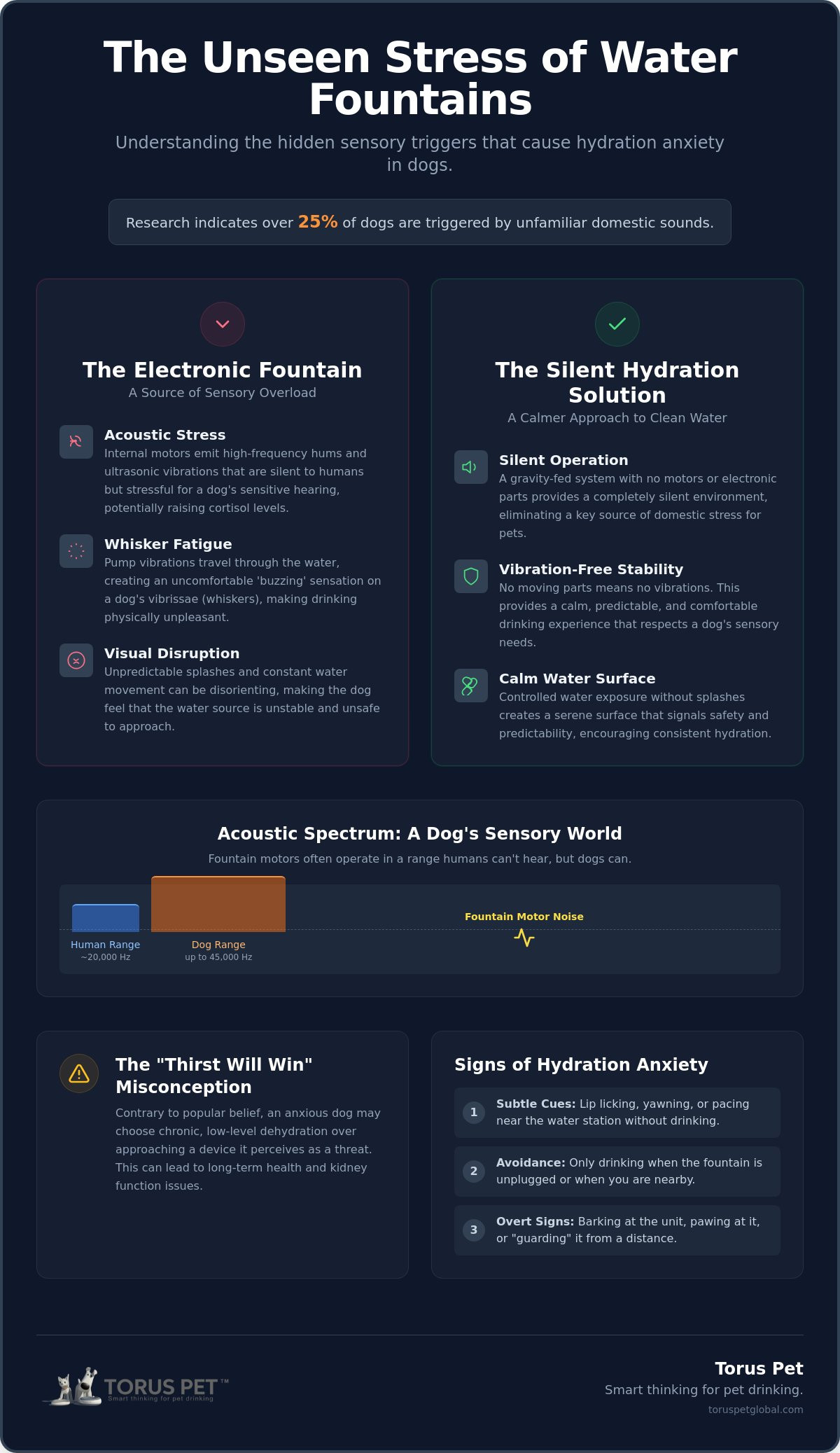
A common misconception in pet ownership is that "thirst will eventually win." Many assume a dog will simply drink when they get thirsty enough. This isn't always true. Anxious dogs may choose to remain in a state of mild dehydration rather than approach a device they perceive as a threat. This creates a cycle of stress that impacts their long-term health and kidney function.
In a dog’s mind, the drinking station is a place of profound vulnerability. To lap water, they must lower their head, breaking eye contact with the room and exposing their neck. When this position is combined with the mechanical hum of a pump or the erratic splash of a fountain, the environment feels unsafe. They aren't just refusing water; they're avoiding a perceived predator.
The Role of Instinct in Water Selection
Wild ancestors of the domestic dog often favored running water because it signaled freshness and a lower risk of stagnation. However, there is a significant difference between the rhythmic babble of a stream and the artificial vibration of a motor. Mechanical humming often mimics the sounds of buzzing insects or distant machinery, which can trigger neophobia in dogs.
A dog's whiskers, or vibrissae, are incredibly sensitive tactile organs. They detect microscopic changes in air currents and vibrations. When a dog approaches an electronic fountain, the pump’s vibration can cause a physical "buzzing" sensation in their whiskers. This sensory overload makes the act of drinking physically uncomfortable before they even touch the water.
Identifying the Signs of Stress
Recognizing the early indicators of fear allows you to intervene before the aversion becomes permanent. Stress isn't always expressed through loud barking. Often, it is found in the quiet moments of hesitation. Common signs include:
- Subtle cues: Lip licking, yawning, or pacing near the water station without drinking.
- Avoidance: Only drinking from the fountain when it is unplugged or when you are standing directly next to it.
- Overt signs: Barking at the unit, pawing at the base, or "guarding" the area from a distance.
Understanding your pet's unique sensory profile is the first step toward a better hydration strategy. You can take the Torus Hydration Quiz to assess your pet’s specific needs and identify the best path forward. By reframing the problem from "stubbornness" to "sensory management," you can begin to build a more peaceful home environment.
Sensory Overload: The Hidden Triggers of Electronic Fountains
Manufacturers often market their products as "whisper quiet." While this might be true for human ears, it rarely accounts for the canine experience. If my dog is scared of the water fountain, the reason often lies in frequencies we cannot detect. Dogs are finely tuned to their environment. A device that seems like a modern convenience to us can feel like a mechanical intrusion to them.
When we introduce electronics into a dog’s drinking space, we reframe a natural resource as a machine. This shift is often accompanied by subtle triggers that overwhelm a dog's senses. From ultrasonic vibrations to visual disorientation, the "smart" features of a fountain can inadvertently create a hostile environment for a sensitive pet.
Acoustic Stress and High-Frequency Sound
Dogs hear frequencies up to 45,000 Hz, nearly twice the range of a human. Most electronic fountain motors emit high-pitched whines or ultrasonic vibrations within this range that are entirely silent to us. This constant background noise isn't just a minor annoyance. It can actively increase cortisol levels, leading to a state of chronic domestic stress. For nervous breeds or those sensitive to sound, a truly silent hydration environment is essential for maintaining a calm, balanced home.
The visual "flicker" of splashing water can also be disorienting. Certain dogs have vision profiles that make moving water look erratic or strobe-like under domestic LED lighting. This creates a confusing visual field that makes it difficult for them to judge depth. Additionally, poorly grounded units may emit low-level stray voltage or static electricity. Even a microscopic "zap" is enough to create a lasting negative association. In these cases, the fountain is no longer a resource; it's a machine that bites.
Chemical and Material Odours
Electronic fountains often utilize budget plastics that off-gas as the motor warms the water reservoir. Your dog’s superior sense of smell detects these "mechanical" and chemical notes long before they take a sip. You can learn more about the science of clean hydration to understand how material choices and motor heat impact water quality. If the water smells like a factory or a circuit board, your dog will naturally seek out a cleaner, more organic-smelling source.
Addressing these triggers requires more than just patience. It often involves desensitization and counterconditioning to help your pet feel safe again. By moving away from complex machinery toward smart hydration solutions that prioritize silence and material integrity, you can eliminate these sensory hurdles entirely. The goal is to restore the drinking station to a place of peace rather than a source of overload.
Restoring Confidence: A Step-by-Step Desensitisation Plan
When you realize my dog is scared of the water fountain, the most effective response is a slow, methodical return to basics. Many owners attempt to "flood" the dog with the stimulus by removing all other water options. This is a mistake. Forced exposure often leads to permanent aversion and heightened domestic stress. A sophisticated approach focuses on rebuilding trust through controlled, low-impact interactions.
The goal is to move your pet from a state of alarm to a state of indifference. This requires removing the primary triggers—noise and movement—before asking the dog to engage with the device. By controlling the environment, you allow your dog to investigate the hydration station on their own terms, without the sensory overload discussed in previous sections.
Phase 1: Neutral Association
Neutral association is the process of removing the "threat" status from an object by integrating it into the environment as a non-interactive element. Place the unit in a high-traffic area, such as a living room or kitchen, but leave it completely empty and unplugged. It should essentially become a boring piece of furniture that requires no attention.
Reward calm behavior near the unit with quiet praise or a small treat. It is vital to avoid over-excitement during this phase. High-energy praise can increase a dog's arousal levels, making them more suspicious of the object you are trying to normalize. If they walk past the unit without looking at it, they are succeeding.
Phase 2: Low-Impact Interaction
Once your dog is indifferent to the empty unit, move to low-impact interaction. Add fresh water to the reservoir but leave the power disconnected. This allows the dog to investigate the water without the humming or vibration of a motor. Encourage them to sniff the rim, but do not push their head toward the water.
Monitor their body language closely. You are looking for signs of relaxation, such as a soft tail, neutral ears, and steady breathing. If the dog shows any signs of tension, such as lip licking or pacing, go back to Phase 1. Patience at this stage prevents the "two steps forward, one step back" cycle common in pet training.
During this entire transition, you must maintain a secondary, "safe" water source. A traditional, silent bowl should always be available in a separate location. Forcing a pet to choose between hydration and fear is a health risk that can lead to urinary issues or dehydration. A secondary source provides the safety net your dog needs to feel secure enough to eventually explore the new system.
You can also use "scenting" techniques to bridge the familiarity gap. Lightly wipe a cloth on your dog’s bedding and then rub it onto the base of the fountain. This transfers familiar pheromones to the hydration station, signaling that the object belongs in their personal territory. Combined with gradual proximity training—such as moving their meal bowl closer to the unit over several days—this creates a positive, multi-sensory association with the area.
Static vs. Dynamic Hydration: Choosing the Right System for 2026
The pet industry has long promoted the idea that moving water is the only way to ensure freshness. This marketing has led many owners to believe that a motorized fountain is a necessity for health. However, if my dog is scared of the water fountain, the dynamic nature of these devices is often the primary barrier to hydration. In 2026, the standard for pet care is shifting toward systems that prioritize sensory comfort without compromising on water quality.
Dynamic hydration refers to any system that uses pumps to create a constant stream, splash, or bubble. While this can encourage some pets to drink, it introduces the noise and vibration triggers we have explored. Static hydration, by contrast, provides still, silent water delivery. The myth that water must move to stay fresh ignores the role of modern storage and filtration. By choosing a system that utilizes controlled water exposure, you can maintain high standards of cleanliness while respecting your dog’s need for a quiet environment.
The Benefits of Controlled Water Exposure
Controlled water exposure is a design philosophy that limits the amount of water sitting in an open basin at any given time. In traditional bowls or large fountains, the entire water supply is exposed to airborne dust, saliva, and bacteria. This leads to the rapid development of biofilm, that slippery layer of bacteria often found on pet dishes. Static systems that release water only as the pet drinks help reduce exposure to these contaminants.
Static delivery also prevents the "splatter" and unpredictable movement that many sensitive dogs find aversive. For a dog with sensory processing issues, a calm surface is easier to navigate than a moving stream. For more information on selecting materials that support this high-level hygiene, you can refer to The Ultimate Guide to Dog Bowls. Choosing a system that balances design with biology ensures your pet feels safe every time they approach the station.
Filtration Without the Fireworks
Achieving cleaner water does not require a power outlet. Advanced filtration systems now utilize activated carbon and antimicrobial protection within gravity-fed designs. These non-electric systems provide the same level of purification as high-end fountains but operate in total silence. This "silent filtration" removes the high-frequency whines and vibrations that lead to domestic stress.
In a modern, eco-conscious home, non-electric systems also offer a lower environmental footprint. They eliminate the need for constant power consumption and the waste associated with disposable plastic pumps. Silence should be a non-negotiable feature of any pet care routine. By removing the mechanical "fireworks" of traditional fountains, you create a hydration station that feels like a natural resource rather than a piece of hardware. To explore how these silent systems can integrate into your lifestyle, browse our collection of smart hydration solutions.
Transitioning to a Sophisticated Hydration Solution
If the realization that my dog is scared of the water fountain has left you with a noisy, unused appliance, it's time to re-evaluate the hardware. You don't have to choose between filtered water and a calm pet. A silent, gravity-fed system offers a sophisticated alternative that bridges the gap between mechanical fountains and basic bowls. This approach provides the constant freshness pets need without the sensory triggers that cause them to retreat.
The transition to a non-electric pet hydration solution simplifies your home environment. There are no cords to manage, no motors to burn out, and no splashing to clean up. This results in a cleaner aesthetic that fits seamlessly into modern living spaces while providing peace of mind for the owner. Most importantly, it restores the drinking station to a place of safety and reliability.
Why Torus is the Choice for Anxious Pets
Systems like Torus are specifically designed to meet the sensory needs of sensitive pets. The "silent wall" storage design holds water within the walls of the bowl, protecting the supply from light, dust, and airborne contaminants. Because the water is delivered via gravity rather than a pump, it remains perfectly still. There is no humming, no vibration, and no unpredictable movement to startle a dog mid-sip.
The low-profile design also respects a dog’s natural drinking posture. Unlike tall fountains that can feel imposing, these systems allow a dog to maintain a neutral neck position and keep their peripheral vision clear. This small design detail significantly reduces the feeling of vulnerability during drinking. You can see a full breakdown of this silent filtration process by visiting how it works.
Integrating Hydration into Modern Pet Care
Modern pet care involves more than just providing resources; it's about optimizing the environment for long-term well-being. Integrating hydration into a thoughtful daily routine ensures that your dog’s physical needs are met without compromising their psychological comfort. This includes selecting systems made from high-quality, antimicrobial materials that help reduce exposure to bacteria without requiring the "scrubbing" cycles often needed for complex electronic units.
Hydration should be a source of comfort, not a source of stress. A smart owner recognizes that a dog’s hesitation isn't a sign of stubbornness but a request for a more peaceful environment. By transitioning to a system that aligns with canine psychology, you restore their confidence and ensure their health is maintained through a refined, low-impact approach. The final result is a home that remains a sanctuary for both the owner and the pet.
Elevating the Standards of Domestic Hydration
Realizing that my dog is scared of the water fountain is the first step toward a more thoughtful pet care routine. We have identified that the issue isn't stubbornness; it's a valid response to mechanical triggers. By choosing a silent, gravity-fed system, you eliminate the buzzing motors and erratic splashes that disrupt your home's peace. You replace mechanical noise with a reliable, natural resource.
Hydration should be a seamless part of your pet's day. High-level filtration and antimicrobial protection provide the water quality you demand without the sensory overload your dog fears. The result is a healthier pet and a more serene environment. You move away from complex machinery and toward a system that respects canine psychology. It's a shift from domestic stress to long-term well-being.
Explore the Torus range of silent hydration solutions to find a non-electric, spill-proof, and portable alternative. Our systems are designed to fit your aesthetic while protecting your dog's health through advanced, silent filtration. You are now equipped to restore their confidence. A stress-free drinking environment is just a smart choice away.
Frequently Asked Questions
Is it normal for a dog to be scared of a water fountain?
Yes, it is entirely normal. Many dogs experience neophobia or sensory overload when introduced to mechanical devices in their drinking area. Because dogs hear frequencies up to 45,000 Hz, the ultrasonic hum of a pump can be overwhelming. It is important to recognize this as a valid fear rather than stubbornness.
Can a water fountain give my dog a shock?
While rare in high-quality units, stray voltage or static electricity can occur in poorly grounded electronic fountains. Even a microscopic "zap" is enough to ensure that my dog is scared of the water fountain for the long term. This is why many owners prefer non-electric systems that eliminate the risk of electrical discharge entirely.
How long should I try to get my dog used to a fountain?
You should prioritize your dog's comfort over a specific timeline. If you don't see progress after two to three weeks of gradual desensitization, the device’s sensory profile might be too intense for your pet. Never force exposure, as this can lead to chronic dehydration or permanent aversion to the drinking station.
Are there water fountains that do not make noise?
Most electronic models claim to be "whisper quiet," but they still rely on vibrating motors. Truly silent hydration is only achieved through non-electric, gravity-fed designs. These systems provide the benefits of filtered water without the mechanical noise that triggers anxiety in sensitive breeds.
Why does my dog bark at the water dispenser?
Barking is a defensive response to a perceived threat. Your dog may be reacting to the unpredictable "glugging" sound of air bubbles or the vibration of the motor. They perceive the dispenser as an intruder or a machine that "bites," rather than a safe, natural resource for hydration.
What is the best alternative to an electronic water fountain for an anxious dog?
A silent, gravity-fed hydration solution is the superior choice for an anxious pet. Systems like Torus offer advanced filtration and antimicrobial protection without the need for electricity or batteries. These designs provide cleaner water in a low-profile, spill-proof format that fits a modern home aesthetic without the stress of moving parts.