
Pet Sitter Instructions for Water Bowl Maintenance: A Modern Hydration Checklist

What if the traditional bowl you leave for your pet sitter is actually a breeding ground for bacteria within hours of your departure? Most owners assume that a full reservoir is enough. However, standing water often invites biofilm, a slimy layer of microorganisms that can compromise your pet's health and lead to periodontal issues.
We understand the anxiety of leaving your companion's wellness in someone else's hands. You deserve the peace of mind that comes with knowing their hydration remains fresh and filtered. By providing clear pet sitter instructions for water bowl maintenance, you eliminate the guesswork and ensure your home stays a sanctuary of health while you are away.
In this article, you will learn how to structure a professional hydration checklist that prioritizes cleanliness over simple refills. We will explore the logic behind systems that control water exposure, like Torus, to reduce contamination risks. From managing filtration to preventing bacterial buildup, this guide provides the practical framework needed for sophisticated pet care and long-term wellbeing.
Key Takeaways
- Understand why simply topping up water is insufficient and how stagnant environments promote harmful biofilm growth.
- Create a clear hierarchy for your pet sitter instructions for water bowl maintenance to ensure consistent hygiene and filtration.
- Discover how hydration solutions that control water exposure can significantly reduce a sitter's maintenance workload.
- Learn to organize your home for seamless transitions by centralizing filters and providing visual guides for the hydration station.
- Reframe water delivery as a sophisticated component of long-term health rather than a basic household chore.
The Hidden Risks of Standard Pet Hydration
Many pet owners believe a large, open bowl is the simplest way to keep a pet hydrated while they are away. They assume that as long as the water level remains high, the pet is safe. This "topping up" mentality is a common mistake. In reality, an open pool of water begins to degrade the moment it is poured. Stagnant water in an open environment isn't just a drink; it's an ecosystem for microscopic growth.
The biological reality of an open bowl is often overlooked. Without movement or filtration, water becomes a magnet for contaminants. Traditional containers allow for constant air exposure, which accelerates the degradation of water quality. For the modern owner, hydration is no longer about volume. It's about maintaining a controlled environment that prioritizes purity over simple availability.
Understanding Biofilm and Contamination
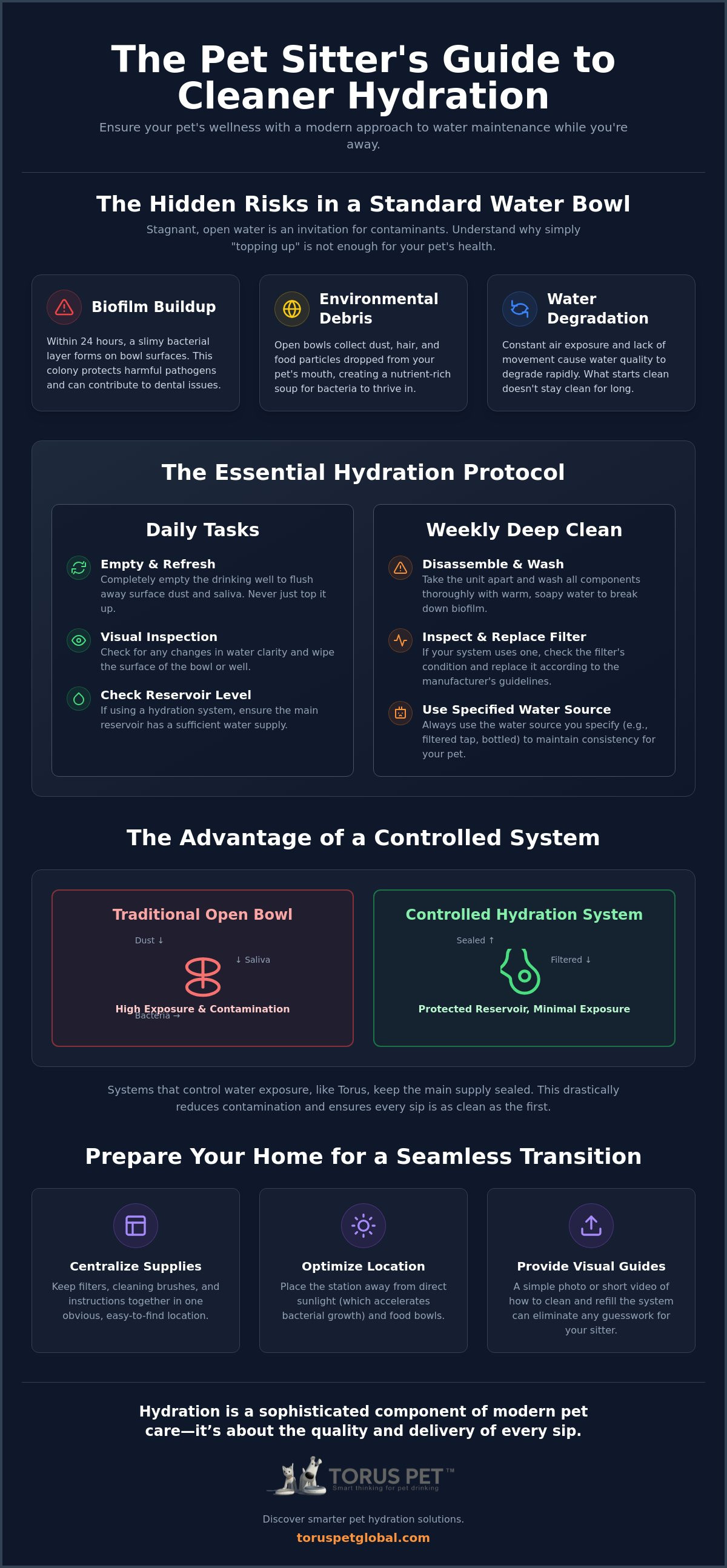
Within 24 hours, a slimy layer known as biofilm begins to form on the surface of standard bowls. This isn't just a nuisance. It's a complex colony of bacteria that adheres to surfaces and protects pathogens from light rinsing. When pets drink, saliva and food particles drop into the bowl, providing the nutrients these bacteria need to thrive. Dust and household debris settle on the surface, further compromising the supply.
Neglecting water hygiene during travel can lead to serious health implications, ranging from dental issues to systemic infections. While you might leave detailed animal welfare standards for feeding and exercise, hydration often gets overlooked in the transition. A quick rinse by a sitter isn't enough to break down the bond of a mature biofilm. True cleanliness requires a more rigorous approach to maintenance.
The Myth of the 'Self-Cleaning' Bowl
There is no such thing as an open bowl that stays clean without intervention. Air exposure is the primary enemy of water quality, allowing for rapid bacterial colonization. When you prepare your pet sitter instructions for water bowl care, it's vital to reframe the conversation. You aren't just asking them to refill a dish. You are asking them to manage a biological environment that directly impacts your pet's long-term health.
Modern pet care is moving away from open reservoirs toward sophisticated hydration solutions. Systems that control water exposure, like Torus, protect the main water supply from the elements. By keeping the bulk of the water sealed and only dispensing a small amount at a time, you drastically reduce the risk of contamination. This shift ensures that every sip your pet takes is as clean as the first one, even when you aren't there to supervise the process.
Essential Pet Sitter Instructions for Water Maintenance
Professional pet care requires more than a general note to "refill the water." Effective pet sitter instructions for water bowl maintenance establish a precise hierarchy of care. This ensures that hydration remains a pillar of health rather than a risk factor while you are away. By providing a structured protocol, you give your sitter the tools to maintain your home's high standards of hygiene.
Start by specifying the water source. If your home uses a filtration system, ensure the sitter knows to use that specific tap or pitcher. Consistency in water quality is vital for pets with sensitive systems. You should also define the "refresh" process. Instruct your sitter to empty the drinking well entirely before adding fresh water. Simply topping up an existing pool allows contaminants to concentrate over time.
Environmental management is equally important. Instruct your sitter to keep the hydration station away from direct sunlight. Heat accelerates bacterial growth and can lead to algae formation in open reservoirs. Additionally, keeping water separate from the feeding area reduces the amount of food debris that enters the drinking well. This simple placement strategy significantly lowers the risk of contamination.
Daily Hydration Checklist
The daily routine should be low-friction but thorough. Your sitter should perform a visual check for debris, hair, or changes in water clarity. If you use a system that controls water exposure, the sitter only needs to ensure the main reservoir is sufficient. This reduces their workload while maintaining a high standard of purity.
- Empty the drinking well to flush away surface dust and saliva.
- Perform a visual inspection of the water's clarity and the bowl's surface.
- Check the reservoir level to ensure a consistent supply.
Learn more about the science of clean hydration to understand why this controlled delivery is superior to traditional methods.
Weekly Deep-Clean Protocol
Even with advanced systems, a weekly deep clean is non-negotiable. This process breaks down the biofilm that begins to form within 24 hours. Sitters should use fragrance-free, mild detergents. Harsh chemicals or heavy scents can deter a pet from drinking, leading to dehydration. Mechanical scrubbing is essential; a simple rinse won't remove microscopic bacterial layers.
Research from the Texas A&M School of Veterinary Medicine highlights the risks of communal water bowls and stagnant reservoirs. After scrubbing, all components must be thoroughly dried before reassembly. This prevents moisture from being trapped in crevices where bacteria could thrive. For owners who prioritize these high standards, investing in advanced hydration solutions ensures the process is streamlined for both you and your sitter.
Beyond the Bowl: Managing Water Storage and Delivery
Most pet owners focus exclusively on the drinking dish. They forget that the quality of hydration is dictated by how the water is stored before it ever reaches the pet. When you prepare your pet sitter instructions for water bowl maintenance, you must address the storage mechanism itself. Traditional reservoirs are often open to the air, allowing for rapid degradation. Systems that control water exposure, like Torus, protect the main supply from dust and airborne contaminants. This design choice shifts the sitter's responsibility from constant scrubbing to simple monitoring. It ensures the water remains fresh, even if the sitter only visits once or twice a day.
Storage is the first line of defense against contamination. An open bowl is a passive target for household debris. A sealed reservoir, however, acts as a protective barrier. This reframing of the problem allows you to focus on the delivery of the water rather than just the vessel. By managing the storage, you maintain a higher standard of purity. This approach is essential for modern homes where design and health are equally prioritized. It transforms a basic chore into a sophisticated hydration strategy that your sitter can easily follow.
Managing Reservoirs and Filters
Explain to your sitter that the carbon filter acts as a guardian, capturing impurities and odors to keep the water fresh and enticing. This simple explanation helps them understand why the filter shouldn't be bypassed. If you are away for an extended period, show them how to swap the filter in seconds. Ensuring the reservoir is locked is also a critical step. It prevents accidental spills during active play, keeping your floors dry and your pet's supply secure. View our range of advanced hydration dispensers to see how these components work together to provide peace of mind.
The Benefits of Gravity-Fed Hydration
Gravity-fed systems provide a consistent flow without the need for electronic pumps. No noise. No cords. No risk of failure during a sudden power outage. Leaving clear pet sitter instructions for water bowl care ensures that your sitter understands this "no-power" benefit. They won't need to troubleshoot complex electronics or worry about a pump burning out if the water level drops. The system remains reliable and passive, allowing the sitter to focus on your pet's companionship rather than technical maintenance.
The low-profile water surface in these systems also minimizes whisker fatigue. This is a common discomfort for pets with sensitive facial nerves when drinking from deep or narrow vessels. By providing a shallow, consistent drinking well, you encourage natural drinking habits. Your sitter will appreciate the reduced splashing and mess, while your pet enjoys a more comfortable hydration experience. It is a smart, efficient solution that aligns with the needs of a fast-paced, modern lifestyle.
Preparing Your Home for Seamless Sitter Transitions
A seamless transition for your pet sitter is built on organization and clarity. It isn't enough to provide a list of chores; you must create a friction-free environment that prioritizes your pet's needs. When your pet sitter instructions for water bowl care are supported by a well-organized station, you eliminate the stress of the unknown. Group all necessary supplies, such as replacement filters and cleaning kits, in a single, visible location. No search and rescue missions. No skipped maintenance. Just a clear, organized path to consistent hydration.
Visual aids are a powerful tool for professional care. A quick photo of the "properly set" hydration station serves as a definitive reference for the sitter. It confirms the correct water level, the position of the lock, and the overall hygiene of the area. Additionally, establish a clear communication protocol. Ask for a "water status" update in every report. This creates accountability and ensures that hydration remains a top-of-mind priority rather than a background task.
The Hydration Station Setup
The placement of your hydration solution matters as much as the device itself. A clean, non-slip surface provides stability and maintains the aesthetic of a modern home. For many owners, separating the food and water stations is now a standard practice. This reduces the risk of food debris entering the drinking well and keeps the water supply significantly cleaner. For a deeper dive into optimizing this environment, see The Ultimate Guide to Dog Bowls for Health and Lifestyle.
Troubleshooting for the Sitter
Unexpected issues shouldn't cause panic. If a sitter notices your pet isn't drinking as much as usual, they need a simple troubleshooting guide. For gravity-fed systems, an airlock can occasionally occur. Instruct the sitter to perform a quick tilt or cap check to restore the flow. They should also know how to identify a clogged filter that may need a quick rinse. If you use portable systems, ensure the sitter understands how to use the lock feature to prevent spills during walks. Providing these solutions in advance ensures your pet's hydration is never interrupted. To keep your system in peak condition, explore our advanced hydration solutions today.
The Future of Pet Hydration: Why Sophisticated Systems Matter
Modern pet care is evolving beyond the reactive habits of the past. It is no longer enough to simply provide water; we must manage the environment in which that water is delivered. This "Reliable Innovator" approach to pet care treats hydration as a managed resource rather than a static chore. By choosing systems that prioritize controlled water exposure, you transition from a cycle of constant maintenance to a standard of consistent health. This isn't just about convenience for a weekend away. It's about a commitment to long-term wellbeing through superior design.
Sophisticated hydration systems eliminate the common frustrations of pet ownership. No more worrying about stagnant pools. No more anxiety over bacterial slime. Instead, you provide a continuous stream of filtered, clean hydration that supports your pet's vitality. When your home is equipped with intelligent hardware, your pet sitter instructions for water bowl maintenance become a simple confirmation of a high-functioning system. This shift allows both you and your sitter to focus on the joy of companionship rather than the logistics of sanitation.
Investing in Long-Term Wellbeing
The transition toward premium pet care involves moving away from cheap, porous plastics that harbor bacteria and degrade over time. Modern homes demand materials that align with clean aesthetics and functional health. Antimicrobial materials and sealed reservoirs represent the intersection of design and biology. When you invest in advanced hydration solutions, you drastically reduce the risk of contamination and the long-term health issues associated with poor water quality. For a deeper look at how these standards are changing, explore Optimizing Your Pet Care Routine for Modern Living.
Final Takeaway for the Smart Owner
Your sitter's success is a direct reflection of your system's design. If the hardware is intuitive and the supply is protected, the margin for error disappears. You don't need to leave pages of complex pet sitter instructions for water bowl care when the system does the heavy lifting for you. A well-designed hydration station acts as a silent guardian of your pet's health, maintaining purity through filtration and controlled dispensing. It allows you to step away with total peace of mind, knowing that your pet's hydration is automated, filtered, and secure.
Hydration is a sophisticated element of modern pet care that involves how water is stored, delivered, and maintained. By choosing a lifestyle where these elements are integrated into your home's design, you ensure your pet thrives in every season. If you are ready to upgrade your current setup, take our hydration quiz to find your pet's ideal solution. The future of pet care is clean, filtered, and effortlessly maintained.
Elevating Your Pet's Hydration Standards
Professional pet care is an extension of your home's commitment to quality and health. You now understand that hydration is more than just a full dish; it is a biological environment that requires precise management. By identifying the risks of biofilm and providing structured pet sitter instructions for water bowl maintenance, you protect your companion from unnecessary exposure to contaminants. Eliminate the uncertainty of open reservoirs and embrace a proactive strategy that prioritizes long-term wellbeing.
The transition to a managed hydration system simplifies life for everyone involved. Your sitter gains a reliable, low-maintenance routine while your pet enjoys a consistent supply of cleaner water. This is the hallmark of the modern owner. You choose design that serves a sophisticated functional purpose. Our spill-proof, gravity-fed design and advanced antimicrobial technology provide a level of security that standard bowls simply cannot match.
Join the global community of thoughtful owners who have redefined their daily care routines. Discover the Torus Pet Hydration Solution and experience the peace of mind that comes with innovative care. Your pet deserves a lifestyle where wellness is built into every element of their environment.
Frequently Asked Questions
How often should a pet sitter change the water in a bowl?
A pet sitter should refresh the drinking well at least once every 24 hours. While a large reservoir may hold several days of water, the exposed surface in the drinking well quickly accumulates saliva, dust, and hair. Daily refreshes ensure that surface contaminants don't have the opportunity to settle or encourage bacterial growth.
Is it safe to leave a pet sitter in charge of an automatic waterer?
It is safe as long as the system is a passive, gravity-fed design rather than an electronic fountain. Electric systems can fail during power outages or suffer from pump burnouts if the water level drops. A non-electric Pet Hydration Solution provides consistent delivery without the technical risks, making it much easier for a sitter to manage reliably.
What is the best way to explain a filtered water bowl to a sitter?
Explain the system as a protected reservoir that filters water as it is dispensed. You should emphasize that the internal carbon filter removes impurities and odors, which keeps the water fresh without the need for constant scrubbing. Clear pet sitter instructions for water bowl maintenance should simply focus on checking the reservoir level and performing a quick daily rinse of the well.
Can biofilm make my pet sick while I am on vacation?
Yes, biofilm can compromise your pet's health in as little as one week. This slimy layer protects colonies of bacteria that can lead to periodontal disease or systemic infections. Pets often find the smell of biofilm off-putting and may reduce their water intake, which increases the risk of dehydration during your absence.
Should I ask my sitter to use tap water or filtered water for my pet?
Filtered water is the preferred choice to reduce your pet's exposure to chlorine, lead, and other heavy metals found in municipal supplies. If your home has a filtration system, instruct your sitter to use that specific source. Consistency in water quality helps prevent digestive upset and ensures your pet remains attracted to their water source.
How do I know if my pet is drinking enough while I'm away?
Monitoring the water level in the reservoir is the most accurate way to track consumption. Ask your sitter to note the approximate volume of water added during each visit in their daily report. This data allows you to identify any significant changes in drinking habits that might indicate stress or a health concern.
What are the signs that a water bowl hasn't been cleaned properly by a sitter?
The most obvious sign is a slimy texture on the surface of the bowl, which indicates mature biofilm growth. You might also notice a pink or orange residue, often caused by the bacteria Serratia marcescens. If the water appears cloudy or contains floating debris, the sitter hasn't followed the proper daily refresh protocol.
Are spill-proof bowls better for house sitters to manage?
Spill-proof designs are significantly better for sitters because they eliminate the risk of water damage to your flooring. Systems that feature a low-profile drinking well also reduce splashing and mess during active drinking sessions. This allows the sitter to focus on quality care and companionship rather than cleaning up puddles after every visit.