
The Science of Summer Hydration: How to Keep Dog Water Cool in High Temperatures

Dropping ice cubes into your dog's bowl might feel like a refreshing solution, but it's actually one of the least efficient ways to manage summer hydration. While the initial chill is satisfying, the rapid melting cycle often leaves behind a lukewarm breeding ground for bacteria. If you're searching for the best water bowl for dog crate setups or modern living spaces, you know the frustration of water that warms up faster than your pet can drink it.
It's exhausting to constantly monitor water levels only to find a slimy biofilm forming in the heat. You deserve a solution that prioritizes health over maintenance. This article explores the principles of thermal stability and controlled water exposure. You'll learn how to maintain a consistent, cool temperature that helps reduce the risk of heat-related illness without the need for constant intervention.
The secret isn't more ice; it's a better delivery method. By shifting to systems that control water exposure, you can minimize environmental heat transfer and keep resources fresh for hours. We're moving beyond basic containers to sophisticated hydration solutions that fit a modern, design-conscious home. Let's look at the science of keeping your pet hydrated when the temperature climbs.
Key Takeaways
- Learn why managing thermal mass is more effective than adding ice for maintaining long-term temperature stability in summer.
- Discover how strategic placement and convective cooling can naturally maintain lower water temperatures throughout your home.
- Understand the relationship between high temperatures and bacterial growth to select the best water bowl for dog crate environments that prioritizes purity.
- Identify clinical signs of dehydration beyond panting and master simple at-home tests to monitor your pet's wellbeing.
- Explore how sophisticated hydration solutions use thick-walled insulation to shield water from external heat and ensure consistent freshness.
The Physics of Canine Hydration: Understanding Thermal Mass
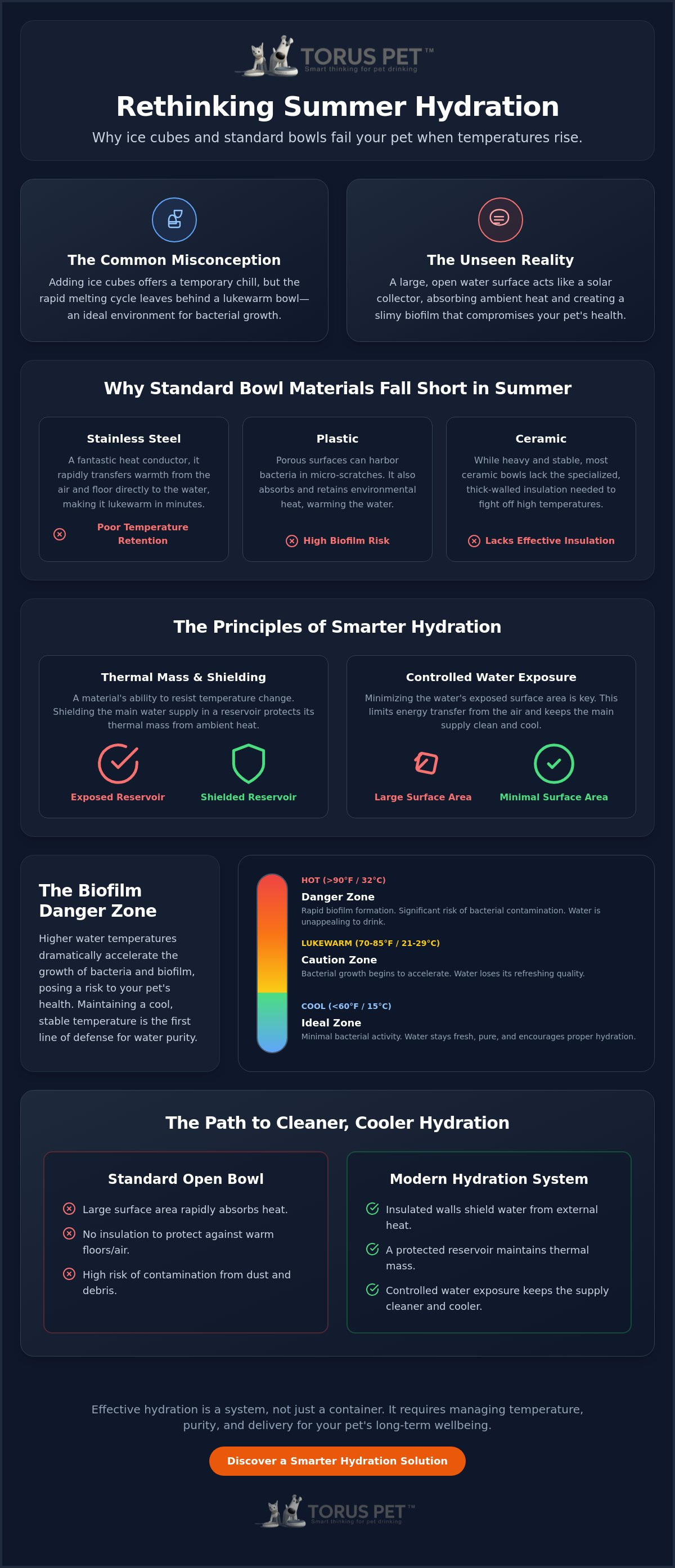
Many owners assume that filling a massive bowl with water is the best way to keep a pet hydrated during a heatwave. They believe the sheer volume will resist warming. This is a common misconception. In reality, a large, open surface area acts like a solar collector, drawing in ambient heat and accelerating the growth of bacteria. When you're looking for the best water bowl for dog crate environments, the focus should be on thermal stability rather than volume.
Standard open bowls allow the entire water supply to reach thermal equilibrium with the room temperature almost immediately. This means if your home or kennel is 80 degrees, the water is 80 degrees. Stored water behaves differently. By keeping the primary water source shielded within a reservoir, you limit the energy transfer from the hot summer air to the liquid your pet actually drinks.
Thermal mass is a material's capacity to absorb and store heat energy; high thermal mass materials resist temperature changes, keeping water cooler for longer periods. Understanding this principle is the first step in moving away from reactive cooling methods, like ice cubes, toward a proactive hydration strategy. Controlled water exposure ensures that only a small portion of water is subject to the environment at any given time.
Why Standard Bowl Materials Fail in Summer
Standard bowl materials often work against your pet's health. Single-wall stainless steel is a fantastic conductor, meaning it transfers heat from the air to the water almost instantly. Plastic is even more problematic; it absorbs heat and provides a porous surface where the science of biofilm shows bacteria can thrive. Ceramic bowls are heavy but often lack the specialized insulation needed to fight off triple-digit temperatures.
Open-air exposure is the primary reason water turns lukewarm within minutes. Without a barrier, there's nothing to stop the energy transfer. This creates an environment that isn't just unappealing for your dog to drink; it's a safety risk. High temperatures combined with organic material from your dog's mouth create a perfect storm for microbial growth.
The Evaporative Cooling Myth
Some suggest that leaving water in a breeze will cool it through evaporation. This is a myth in high-humidity summer conditions. While dogs use panting as a biological cooling mechanism, water sitting in a bowl doesn't have the same efficiency. In fact, high humidity prevents evaporation, leaving the water stagnant and warm. For a deeper dive into material choices, see The Ultimate Guide to Dog Bowls.
Effective hydration in summer requires a shift in thinking. You aren't just providing a drink; you're managing a resource. By choosing the best water bowl for dog crate setups that utilizes thick-walled insulation and a protected reservoir, you can ensure the water stays at a refreshing, safe temperature regardless of the external heat index.
Environmental Strategies for Thermal Preservation
Most owners believe that placing a bowl in the shade is enough to keep water cool. Unfortunately, shade only addresses direct solar radiation. It doesn't account for radiant heat from nearby walls or conduction from a warm floor. To truly preserve water temperature, you must consider the entire micro-climate where your pet drinks. Strategic placement is the first line of defense against rapidly warming water.
Airflow also plays a significant role through convective cooling. When air moves across a surface, it helps dissipate heat. However, in a stagnant corner, heat builds up and stays trapped. Placing hydration stations in areas with consistent cross-breezes can help maintain a lower baseline temperature. It's about working with the physics of your home to create a stable environment.
Strategic Indoor Hydration Placement
Modern homes often feature large windows that invite significant solar gain. Even if a bowl isn't in a sunbeam, the ambient temperature near south-facing glass can be several degrees higher than the rest of the room. Tiled or stone floors are ideal locations because they have high thermal mass and stay naturally cooler than carpet or wood. These surfaces help draw heat away from the bottom of the bowl.
You might be tempted to place multiple bowls around the house to ensure access. This often leads to water stagnation, as your pet may favor one location while the others sit and warm. Instead, focus on one or two high-quality stations in the coolest zones of the home. Elevating the station slightly can also prevent heat transfer from subfloor heating systems or warm foundations. You can learn more about the mechanics of these environments by exploring the science of pet hydration.
Managing Hydration During Travel and Crating
Crates and vehicles present the most difficult thermal challenges. These enclosed spaces can become heat traps where temperatures rise much faster than the surrounding environment. When you're looking for the best water bowl for dog crate use, insulation is more important than capacity. A standard bowl in a crate will reach ambient temperature in minutes, leaving your pet with lukewarm water that doesn't provide the necessary cooling relief.
Direct sunlight through car windows is another major risk. Even a short trip can turn a metal bowl into a heat conductor. Using a non-tipping, insulated system ensures that water remains protected from these external spikes. For those on the move, explore advanced hydration dispensers that are designed to withstand these environmental pressures while maintaining a clean, cool supply.
- Place stations on high-thermal-mass surfaces like tile or stone.
- Avoid proximity to south-facing windows or heat-sync appliances.
- Ensure the area has active airflow to promote convective cooling.
- Use insulated, low-profile designs to minimize heat absorption in crates.
- Monitor floor temperatures, especially in homes with radiant heating.
Managing Water Purity and the Biofilm Risk
Summer hydration is often discussed only in terms of temperature. This is a narrow view. While cool water is essential, the purity of that water is equally critical. In high temperatures, a standard bowl isn't just a container; it's a petri dish. Heat acts as a catalyst for biological activity, turning a refreshing drink into a health hazard within hours.
Stagnant water is the primary culprit. When water sits still in the heat, it loses oxygen and becomes a breeding ground for pathogens. Most dogs are instinctively wary of stagnant resources. They might sniff a warm, still bowl and walk away, leading to voluntary dehydration. This isn't pickiness; it's a survival instinct designed to avoid contaminated water.
The Relationship Between Heat and Contamination
Bacteria thrive in the biological danger zone, which ranges from 40°F to 140°F. During summer, most open-air bowls sit squarely in this bracket. When you add canine saliva and environmental debris like dust or hair, you provide the exact nutrients needed for bacterial colonies to explode. The result is a compromised supply that can lead to digestive upset.
This process leads to the formation of biofilm, that slippery, translucent layer often found on the floor of a bowl. Biofilm is a complex structure of bacteria that protects itself from being easily rinsed away. For those seeking the best water bowl for dog crate environments, choosing a system that minimizes water surface exposure and incorporates filtration is vital. You can explore the mechanics of this in detail on The Science page.
Why Ice Cubes are a Temporary Fix
Relying on ice cubes creates a cycle of thermal inconsistency. The water moves from freezing to tepid in a matter of minutes, creating a seesaw effect. This rapid fluctuation can sometimes cause digestive discomfort or even temperature shock in sensitive pets. It's a high-maintenance approach that fails to address the underlying issue of how water is stored and protected.
A more sophisticated approach involves maintaining a stable, controlled environment. Instead of reactive cooling, systems like Torus Pet use active filtration to remove impurities before they can colonize. This ensures that every sip is as clean as the first. When evaluating the best water bowl for dog crate setups, prioritize designs that shield the majority of the water supply from both heat and airborne contaminants. Moving from a simple bowl to a managed hydration solution is the hallmark of modern pet care.
Clinical Signs of Dehydration and Heat Stress
Many owners associate heat stress solely with heavy panting. This is a dangerous simplification. By the time a dog is panting heavily, they are already deep into the process of trying to shed excess heat. Hydration is the primary driver of canine thermoregulation; without adequate water, the body's ability to cool itself through respiratory evaporation fails completely.
Understanding the physiological link between water intake and temperature control is vital for summer safety. When a dog is dehydrated, their blood thickens, making it harder for the heart to pump and for heat to be released through the skin and tongue. Monitoring subtle changes in behavior and physical condition allows you to intervene before a situation becomes a veterinary emergency.
Subtle Behavioral Indicators
Lethargy and a sudden loss of appetite are often the first signs that a pet is struggling with the heat. You might notice your dog seeking out the coolest floor surfaces or refusing to move from a shaded spot. A dry, crusty nose can be a clue, though it is not a definitive diagnostic on its own. Interestingly, a dehydrated dog may actually refuse water if it is too warm or stagnant, as their instincts prioritize purity when their system is under stress.
The skin turgor test is a reliable way to check hydration at home. Gently pinch the skin between your dog's shoulder blades and pull it upward into a "tent" shape. In a well-hydrated animal, the skin will snap back into place instantly. If the skin remains peaked or retreats slowly, it indicates a significant loss of elasticity due to fluid depletion. This is a clear sign that your pet needs immediate access to a refreshing, clean resource.
The Capillary Refill Test
Checking your dog's gums provides a direct window into their circulatory health. Lift the lip and examine the color; gums should be a healthy pink and feel slick or "wet" to the touch. If they feel tacky, sticky, or appear pale, dehydration is likely. When you're assessing the best water bowl for dog crate environments, remember that easy access to cool water is the most effective way to maintain these healthy metrics.
The capillary refill time (CRT) is a professional-grade metric you can perform easily. Press your finger firmly against the gum until the area turns white. Release your finger and count how many seconds it takes for the pink color to return. In a healthy dog, this should happen in under two seconds. If it takes longer, their circulation is sluggish due to heat or fluid loss. To ensure your pet has access to a reliable supply that encourages drinking, invest in a professional-grade hydration solution that maintains water quality in any environment.
- Lethargy: Reluctance to engage or move from cool surfaces.
- Tacky Gums: A loss of moisture in the mouth.
- Skin Tenting: Skin that does not immediately return to its flat state.
- Delayed CRT: A refill time of more than two seconds after pressure.
If your dog exhibits severe signs such as vomiting, dark urine, or a bright red tongue, seek professional veterinary intervention immediately. While home tests are valuable for monitoring, they are not a substitute for clinical care in cases of acute heatstroke. Providing cleaner water throughout the day is the best preventative measure to ensure these symptoms never develop.
Implementing a Sophisticated Hydration Management System
Modern pet care has evolved beyond basic necessities. We no longer settle for makeshift solutions like paddling pools or garden hoses to manage summer heat. These external cooling methods are often messy and fail to address the core physiological need for internal hydration. A sophisticated approach treats hydration as a pillar of health, focusing on the quality, temperature, and delivery of every drop your pet consumes.
Ensuring your pet remains hydrated throughout the summer isn't just about quantity. It's about maintaining a stable resource that remains appealing even during the hottest hours of the day. By moving away from reactive cooling and toward a managed system, you provide your pet with the thermal consistency they need to regulate their internal temperature effectively.
Controlled Water Exposure vs. Open Bowls
Traditional open bowls are inefficient in high temperatures. They allow the entire water supply to interact with the warm environment, leading to rapid heating and contamination. Self-dispensing systems that control water exposure, like Torus, offer a superior alternative. By keeping the bulk of the water stored in an insulated reservoir, the system protects the supply from both ambient heat and airborne debris.
Thick-walled thermal insulation is the key to maintaining water temperature without the need for electricity or batteries. This passive cooling method utilizes the thermal mass of the hydration solution to resist external temperature spikes. When combined with antimicrobial materials, these systems help reduce the risk of bacterial colonization, ensuring cleaner water is available at all times. This design is particularly effective when searching for the best water bowl for dog crate use, where space and airflow are often limited.
Integrating Hydration into a Modern Lifestyle
A truly modern hydration system should complement your home's aesthetic while providing functional reliability. You shouldn't have to choose between a clean living space and your pet's wellbeing. Spill-proof, non-tipping designs ensure that water remains in the bowl rather than on your floors, even in high-traffic areas or during travel. This level of utility supports a friction-free lifestyle for both the owner and the pet.
Proper hydration hardware is an investment in long-term health. Whether you are at home or on a summer excursion, having a portable and reliable system ensures consistency in your pet's routine. To understand how these choices fit into broader trends, explore Optimizing Your Pet Care Routine for Modern Living. Selecting the best water bowl for dog crate environments or travel kits is a decision that impacts your pet's comfort every single day.
Sophisticated hydration is not a luxury; it's a fundamental element of preventative health. By controlling water exposure and utilizing thermal insulation, you move from merely providing water to actively managing a vital resource. The result is a healthier pet, a cleaner home, and the peace of mind that comes from professional-grade care.
Mastering the Future of Pet Hydration
Summer safety is a science of prevention. We've moved beyond the limits of open bowls and the inconvenience of melting ice. By managing thermal mass and reducing surface exposure, you protect your pet from the cycle of warm, stagnant water. High temperatures don't have to mean compromised health or constant maintenance.
A sophisticated hydration system is the foundation of a modern pet care routine. Whether you're at home or searching for the best water bowl for dog crate environments, the priority remains the same: stability and purity. Utilizing insulated walls for thermal stability and antimicrobial, BPA-free materials ensures that your pet's water stays refreshing. Advanced filtration further reduces the risk of contamination, providing peace of mind through even the most intense heatwaves.
Hydration is a dynamic element of your pet's wellbeing. You can explore the Torus Pet Hydration Solution for cleaner, cooler water to experience a smarter way to manage summer resources. Your pet deserves a consistent, protected supply that supports their health and matches your lifestyle. Stay proactive and enjoy the season with confidence.
Frequently Asked Questions
Does putting ice in a dog’s water bowl actually help?
Ice cubes offer only a momentary drop in temperature and don't address the underlying issue of insulation. As the ice melts, the water rapidly returns to ambient temperature, creating an inconsistent drinking experience. Relying on ice requires constant maintenance and can sometimes lead to temperature shock. A better approach is using a system with thick, insulated walls that maintains a steady, cool temperature throughout the day.
How often should I change my dog’s water in the summer heat?
In traditional open bowls, you should change the water at least two to three times daily during summer. Heat accelerates bacterial growth and the formation of biofilm, making stagnant water unappealing and potentially harmful. If you use a managed hydration solution that keeps the bulk of the supply stored and filtered, you can maintain freshness for longer while reducing the need for constant manual intervention.
Can a dog get sick from drinking warm water?
While warm water itself isn't toxic, the bacterial colonies that flourish in it certainly are. Warm, stagnant water is the ideal environment for pathogens to multiply, leading to digestive upset or more serious infections. Dogs may also refuse to drink warm water, which increases the risk of dehydration. Prioritizing cleaner water through filtration and thermal protection is the most effective way to prevent these heat-related health issues.
Is there a risk of temperature shock if the water is too cold?
Introducing ice-cold water to a dog that is already suffering from heat stress can cause the blood vessels to constrict, which actually hinders the body's ability to shed heat. A stable, refreshing temperature is much safer and more effective for thermoregulation than extreme cold. Aim for water that is cool to the touch rather than freezing to ensure your pet remains comfortable and hydrated without the risk of physiological shock.
How much water should a dog drink daily during a heatwave?
Most dogs require approximately one ounce of water per pound of body weight daily, but this need can double during a heatwave. Factors like activity level, coat thickness, and environmental humidity all play a role in fluid loss. When selecting the best water bowl for dog crate use, ensure it has enough capacity to provide a continuous supply without needing constant refills, allowing your pet to drink as needed.
Why does my dog refuse to drink water when we are outside?
Dogs often refuse to drink outside because the water has become too warm or has been contaminated by environmental debris. Their instincts warn them against stagnant or unappealing resources that might harbor bacteria. Providing a familiar, protected hydration solution that maintains a consistent temperature can encourage them to drink even in unfamiliar or high-heat outdoor environments, ensuring they stay safe during excursions.
What is the best material for a dog bowl to keep water cool?
The best material for maintaining cool water is a high-thermal-mass composite with insulated, double-walled construction. While single-wall stainless steel or ceramic can feel cool initially, they lack the insulation to fight off rising ambient temperatures. Choosing materials that are antimicrobial and BPA-free, like those used in the Torus hydration solution, ensures the water remains clean and safe while the thick walls provide a natural barrier against external heat.
Can I use a travel bowl for everyday summer hydration?
Most travel bowls are designed for temporary use and lack the insulation or filtration required for long-term summer hydration. They often have thin walls that allow water to warm up almost instantly. For consistent daily care, it's better to use a professional-grade hydration solution that works both at home and on the go. This ensures your pet always has access to the same high-quality, cool water regardless of the setting.