
The Silent Cat Water Dispenser: A Guide to Low-Stress Feline Hydration in 2026

What if the "whisper-quiet" motor in your pet's fountain is actually the loudest thing in your home? Most owners accept the persistent hum of electric pumps as a necessary trade-off for fresh water. However, switching to a high-quality gravity-fed cat water bowl allows you to maintain hydration while reclaiming the peace of your living space.
True silence in feline hydration isn't about dampening a motor; it's about eliminating it entirely. You don't need vibration or electrical cords to provide a constant supply of fresh water. Sophisticated pet hydration solutions, like Torus Pet, offer a smarter way to manage water quality and storage without the messy look of traditional plastic jugs.
You'll learn why moving to a non-electric, filtered system like Torus Pet, creates a calmer environment for both you and your cat. We'll examine how modern materials and intelligent storage reduce maintenance while ensuring your pet has access to cleaner, cooler water. This is your guide to a more peaceful, professional approach to pet care in 2026.
Key Takeaways
-
Learn how low-frequency hums from electric pumps create sensory stress for cats and why true silence is essential for a calm home.
-
Understand why a sophisticated gravity-fed cat water bowl provides a reliable, noise-free alternative to mechanical fountains that inevitably vibrate.
-
Discover how biofilm and mineral buildup impact the sound levels of electric systems and how motor-free designs avoid these common maintenance frustrations.
-
Identify the optimal placement for hydration stations in modern homes to satisfy your cat's natural preference for high-visibility drinking spots.
-
Explore the logic of vacuum-stored reservoirs that maintain water quality while eliminating the need for electricity or noisy pumps.
Table of Contents
-
Beyond the Pump: Evaluating True Silence in Hydration Systems
-
The Torus Approach: Sophisticated, Silent, and Electricity-Free
The Sensory Impact of Feline Hydration and Acoustic Stress
Many pet owners believe cats require the audible splash of a fountain to encourage drinking. This assumption often leads to the purchase of electric fountains that, while functional, introduce a constant mechanical hum into the home. For a species evolved for stealth and acute awareness, this background noise isn't just a nuisance; it's a sensory intrusion. A high-quality gravity-fed cat water bowl such as Torus provides a sophisticated alternative by prioritizing visual freshness over acoustic disruption.
True silence is a luxury in a modern home. We curate our environments to be peaceful, yet we often overlook the low-frequency vibrations emitted by pet appliances. These sounds can disrupt the very tranquility we try to create. By removing the motor, we remove the stress associated with artificial movement.
The Biology of Feline Hearing
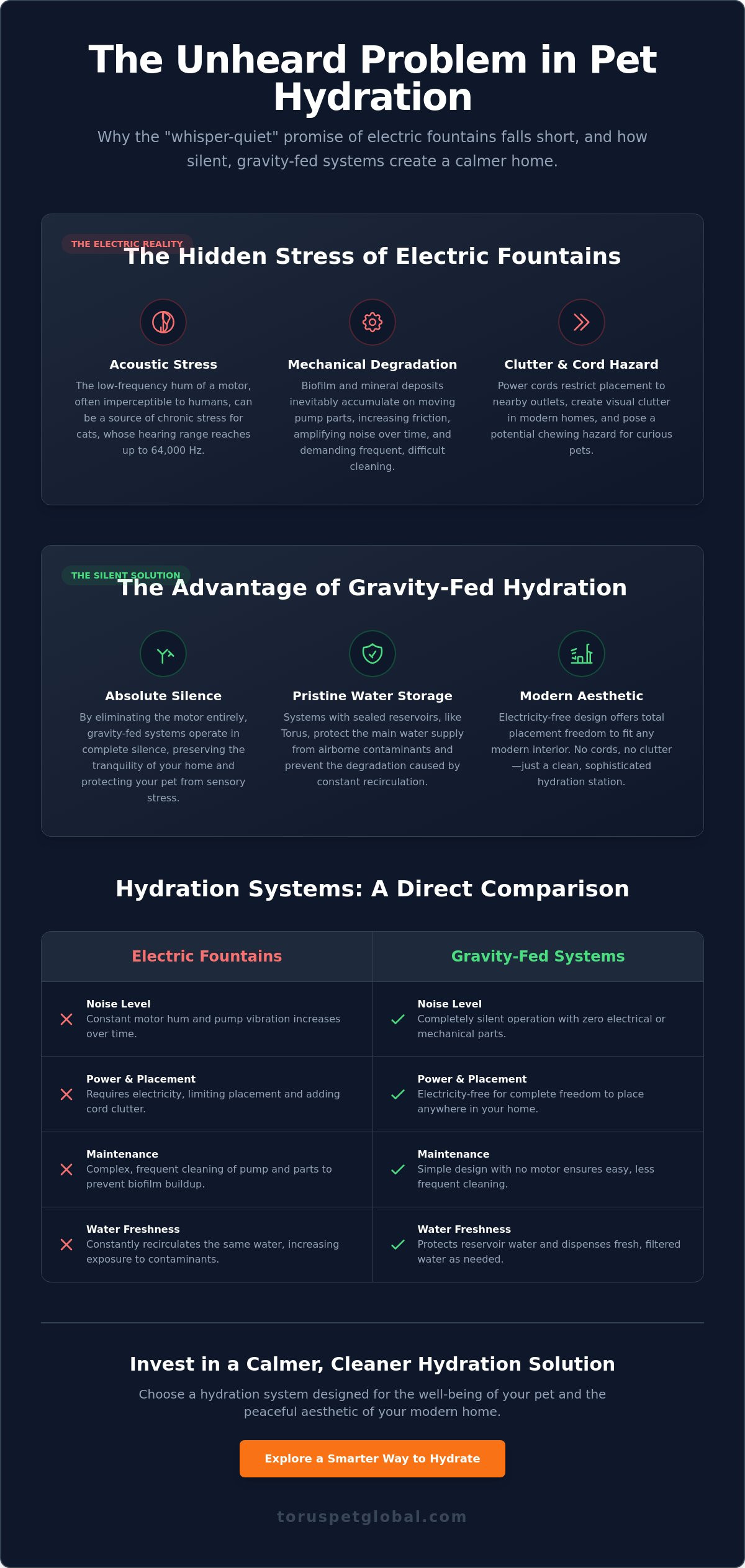
Understanding feline behavior requires acknowledging their superior sensory capabilities. Cats can detect frequencies far beyond human limits, reaching up to 64,000 Hz. This means the low-frequency vibration of an electric pump, which humans might filter out, can sound like a persistent roar to a cat. It's a constant digital footprint in their environment.
Constant exposure to mechanical vibration can prevent a cat from reaching a true "rest and digest" state. Acoustic stress often manifests in subtle ways. You might notice your cat exhibiting specific behaviors near their water source:
-
Hesitating or "scoping" the area before approaching the bowl.
-
Drinking quickly and retreating immediately to a quieter zone.
-
Preferring secondary water sources, like a dripping tap, in rooms without appliances.
-
Paw-tapping the water surface to check for movement without getting too close to a vibrating base.
Reframing Running Water for the Modern Home
Modern living spaces are designed for tranquility and clean aesthetics. The evolution of pet care has moved from basic plastic dishes to complex machinery; however, we're now seeing a shift back toward elegant, passive systems. Visual cues of fresh, clean water are far more influential to a cat's hydration habits than the sound of a motor. They seek clarity and lack of contamination, not just movement.
Systems that control water exposure, like Torus, focus on the science of storage and delivery rather than mechanical agitation. By using a gravity-fed cat water bowl, owners can eliminate the risk of biofilm-induced pump noise and electrical cord hazards. This approach ensures the water remains fresh through vacuum-sealed storage rather than constant recirculated splashing.
Prioritizing a calm environment is a long-term investment in feline wellbeing. It ensures that the hydration station is a place of security, not a source of low-level anxiety. Transitioning to electricity-free solutions allows the modern home to remain a sanctuary for both the owner and the pet. Hydration becomes a seamless, silent part of the daily routine.
Why Quiet Electric Fountains Often Fail to Deliver Silence
The marketing promise of a "whisper-quiet" pet fountain often dissolves within weeks of use. While a new electric pump may start with a barely perceptible hum, the laws of mechanics eventually take over. Every electric motor relies on moving parts that create friction, and friction inevitably produces vibration. For those prioritizing a truly serene home, the mechanical reality of these devices often falls short of expectations.
Maintaining optimal feline hydration needs doesn't have to come at the cost of your peace. Beyond the motor itself, the sound of trickling water can become a persistent household nuisance. While some cats are drawn to movement, the constant splashing can be distracting in open-plan living spaces or bedrooms. A gravity-fed cat water bowl eliminates this acoustic footprint by delivering water through a silent, passive flow.
Aesthetic and safety concerns also play a role in the shift away from electric systems. Power cords are a significant drawback in minimalist, design-conscious homes. They create clutter, limit where you can place the hydration station, and present a chewing hazard for curious pets. Moving to a cordless, motor-free solution allows for cleaner lines and greater flexibility in your home's layout.
The Lifecycle of an Electric Pump
The initial silence of a fountain is rarely permanent. Over time, calcium and mineral deposits from tap water accumulate on the internal impeller. This scaling creates an uneven rotation, turning a soft hum into a noticeable rattle. Biofilm, a slimy layer of bacteria, can also clog the intake, forcing the motor to work harder and louder. To keep an electric fountain truly quiet, owners must commit to a rigorous schedule of deep cleaning and part replacement. Without this constant maintenance, the "whisper" quickly becomes a roar.
Vibration and Surface Resonance
The surface where you place your cat's water source acts as a sounding board. Hard flooring materials like hardwood, tile, or polished concrete are highly reflective and amplify mechanical vibration. Even when using rubber mats, the low-frequency hum often bypasses the padding and resonates through the floor. This creates a subtle but constant vibration that can be felt across a room. Exploring The Science of Feline Hydration reveals that these vibrations can be a deterrent for sensitive cats who prefer a still, stable drinking surface.
Choosing a gravity-fed cat water bowl avoids these resonance issues entirely. By removing the electricity and the motor, Torus Pet has removed the source of the noise whilst maintaining function. If you're looking for a way to upgrade your home's tranquility, consider exploring sophisticated pet hydration solutions that rely on physics rather than power. The result is a cleaner aesthetic and a significantly calmer environment for your household.
Beyond the Pump: Evaluating True Silence in Hydration Systems
Many pet owners assume that "freshness" requires mechanical agitation. In reality, water quality depends on how it is stored and filtered, not how much it splashes. Proper hydration is essential for a variety of vital bodily functions, and the delivery method shouldn't interfere with your home's acoustic environment. Moving away from motors allows for a more sophisticated, passive approach to pet care.
The physics of a gravity-fed cat water bowl is remarkably simple and effective. These systems utilize a vacuum-sealed reservoir to hold the main water supply. As your cat drinks and the water level in the bowl drops, the change in pressure allows a fresh amount of water to flow into the basin. This process is entirely silent, relying on natural forces rather than electricity to maintain a consistent water level.
Evaluating the total cost of ownership also reveals the benefits of motor-free systems. Electric fountains require a constant power source and eventually need replacement pumps when the motors fail. Static systems eliminate these mechanical failure points, offering a more reliable, long-term solution. You don't have to worry about power outages or the recurring expense of repairing a vibrating pump.
Electric vs. Electricity-Free Hydration
Choosing between an electric fountain and a gravity-fed system often comes down to lifestyle and sensory preferences. Stored-water systems maintain freshness by shielding the main supply from dust, hair, and environmental contaminants. This is a significant upgrade over open fountains that constantly recirculate exposed water.
| Feature | Electric Fountain | Gravity-Fed Bowl |
|---|---|---|
| Noise Level | Low-frequency hum | Zero decibels |
| Safety | Cord chew risk | Cordless and safe |
| Portability | Limited by outlets | Highly portable |
Modern pet hydration solutions like Torus also incorporate antimicrobial materials into their construction. These materials help reduce the growth of bacteria on the bowl's surface. Because the system is static, there is no vibration to encourage the spread of biofilm across the basin, making it easier to maintain a clean environment.
The Role of Advanced Filtration
Effective filtration doesn't require a powered pump. High-density carbon filters can remove impurities as water passes from the reservoir to the drinking area. This passive method ensures your pet receives cleaner water without the noise associated with active filtration. It's a more efficient way to manage water quality while maintaining a peaceful home.
Systems that control water exposure, like Torus, use a specialized filter design that cleans the water as it is pulled from the reservoir by gravitational force. This ensures that every sip is filtered just before it reaches the bowl. If you want to dive deeper into the mechanics, you can explore how it works to see the science behind silent, filtered hydration.
Designing a Low-Stress Hydration Station for Felines
Many owners hide pet fountains in laundry rooms or closets to mask the noise of a vibrating motor. This approach prioritizes human convenience over feline instinct. A high-quality gravity-fed cat water bowl allows you to place the hydration station in the heart of your home without acoustic disruption. Silent hydration isn't about hiding the bowl; it's about choosing a system that doesn't need to be hidden.
Cats are naturally vigilant and prefer drinking in spots where they have high visibility of their surroundings. In an open-plan modern home, the best location is often a low-traffic corner of a main living area. This gives your pet a clear line of sight while they're in a vulnerable drinking posture. Choosing a dispenser with a heavy-duty, non-tipping base ensures the station remains stable and silent even if it's accidentally bumped.
Maintaining a clean aesthetic is equally important for the modern home. You don't have to settle for bulky plastic jugs or messy cords. Sophisticated pet hydration solutions are designed to complement interior design, using clean lines and premium materials that look like integrated home accessories rather than utility items. This thoughtful approach to design reflects a commitment to both your pet's wellbeing and your home's visual harmony.
Creating a Calm Drinking Environment
To encourage natural drinking behavior, it's best to separate food and water stations. In the wild, cats avoid water near their prey to reduce contamination risk; this instinct remains strong in domestic felines. Providing a wide-basin design also helps reduce the risk of whisker fatigue, a sensory overload that occurs when a cat's sensitive whiskers touch the sides of a narrow bowl. You can find more strategies for enhancing your pet's lifestyle in our guide on Optimizing Your Pet Care Routine.
Practical Maintenance for Silent Systems
Traditional gravity jugs often produce a loud "glug" sound as air bubbles enter the reservoir, which can startle sensitive pets. Modern systems, like Torus, utilize a vacuum-stored reservoir that delivers water silently without the disruptive bubbling. Maintenance is also significantly simpler without the need to scrub complex pump parts or descale motors. Regular cleaning helps reduce exposure to bacteria and ensures the system operates at peak efficiency.
For the best results, a consistent cleaning schedule is essential. Using a dedicated Torus Cleaning Kit allows you to maintain the internal pathways of your dispenser without the need for harsh chemicals. This ensures the water remains fresh and the delivery system stays completely silent. If you're ready to upgrade your home's tranquility, you can explore our range of hydration solutions designed for the modern pet owner.
The Torus Approach: Sophisticated, Silent, and Electricity-Free
Many owners assume that water storage is simply about volume. It's actually about protection. Traditional reservoirs often expose the entire water supply to the air, which invites environmental contaminants and requires mechanical pumps to keep the water "moving." A sophisticated gravity-fed cat water bowl like Torus changes this dynamic by shielding the water within its own structure. This design prioritizes silence and quality over mechanical agitation.
True peace of mind comes from a system that doesn't demand your attention. By removing the motor, you remove the primary source of household acoustic stress. This isn't just about a quieter home; it's about a smarter way to manage your pet's resources. The transition from active machinery to passive, intelligent design reflects a higher standard of modern pet care.
Engineering Silence
The core of this hydration solution is its unique vacuum-stored reservoir. Water is held inside the thick walls of the basin rather than in an external jug or an exposed tank. This internal storage releases water only as it is needed, maintaining a constant level without the disruptive bubbling or "glugging" sound common in traditional systems. You can explore the technical logic behind this design in our overview of How It Works.
Because the system is electricity-free, it is inherently silent. There are no motors to wear out, no mineral deposits to rattle, and no cords to clutter your living space. The antimicrobial construction helps maintain water quality without the need for constant recirculated splashing. This design also makes the system highly portable. You can move the hydration station from a modern kitchen to a travel bag without losing the silent benefit or the filtration quality.
Choosing the Right Solution for Your Space
Every home has different requirements for capacity and placement. The Torus Maxi, with its 68oz capacity, is ideal for multi-pet households where high-volume hydration is a priority. For smaller spaces or single-cat homes, the Torus Mini offers a compact 34oz capacity that fits seamlessly into minimalist aesthetics. Both models feature a heavy-duty, non-tipping base that ensures the station remains stable and silent even during active use.
Hydration is no longer just a basic utility. It is a sophisticated element of modern pet care that involves how water is stored, delivered, and maintained. By choosing a system that eliminates noise and electrical hazards, you create a home environment that respects the sensory needs of your feline. The final result is a calmer, cleaner, and more thoughtful approach to long-term pet wellbeing.
Elevating Your Home’s Hydration Standards
True silence in the home is achieved by removing the motor, not just dampening it. By choosing a sophisticated gravity-fed cat water bowl, you eliminate the mechanical vibration that often deters sensitive felines. You've seen how vacuum-stored reservoirs and passive flow provide a cleaner, more reliable hydration experience without the noise or hazards of electric cords.
This shift toward electricity-free systems is about more than just peace. It's about a smarter, more aesthetic approach to pet care. You can discover the science behind the silent Torus Pet Hydration Solution to see how our antimicrobial, BPA-free construction and advanced carbon filtration system work together without the need for electricity or batteries.
Modern pet ownership is defined by these thoughtful choices. When you prioritize your cat's sensory needs, you create a sanctuary that supports their long-term health and your home's tranquility. It's a sophisticated step toward a more balanced, low-stress lifestyle for your household.
Frequently Asked Questions
Is a silent cat water dispenser better for anxious cats?
Yes, a silent dispenser is significantly better for anxious cats because it eliminates low-frequency acoustic stress. Cats hear frequencies up to 64,000 Hz, making "quiet" motors sound like a constant roar. Removing the vibration allows your pet to enter a calm "rest and digest" state while drinking. This creates a more secure environment that encourages consistent hydration without the fear of mechanical noise.
How does a water dispenser work without a noisy electric pump?
These systems operate using simple physics rather than mechanical agitation. A vacuum-stored reservoir holds the water supply securely within the walls of the dispenser. As your pet drinks and the water level in the basin drops, the change in air pressure allows a fresh supply to flow into the bowl. It's a passive, silent process that replaces the need for a noisy electric pump.
Can a silent water bowl still filter out impurities like an electric fountain?
A silent dispenser can provide effective filtration through passive carbon systems. High-density filters are placed in the path between the reservoir and the drinking basin. As gravity pulls the water through, the carbon removes impurities and odors. This ensures your cat receives cleaner water with every sip, matching the filtration benefits of electric fountains without the associated motor noise.
Why does my quiet cat fountain get louder over time?
Mechanical fountains get louder because of mineral scaling and biofilm accumulation. Calcium deposits from tap water build up on the internal impeller, causing it to spin unevenly and rattle. Additionally, a slimy layer of bacteria can clog the pump intake, forcing the motor to work harder. This increased strain produces the loud hum or buzzing sound that often develops after a few months of use.
Do cats actually need moving water to be encouraged to drink?
Cats are primarily attracted to the visual cues of fresh, clear water rather than the sound of splashing. While running water signals safety in the wild, a gravity-fed cat water bowl provides the same reassurance through constant replenishment. By keeping the water level consistent and the supply shielded from dust and hair, you satisfy their instinct for fresh resources without introducing artificial acoustic stress.
What is the best silent cat water dispenser for a modern apartment?
The best solution for an apartment is a cordless, compact dispenser that complements modern interiors. Because it doesn't require a power outlet, you can place it in the most optimal spot for your cat's visibility. The Torus Mini (34oz) is designed for smaller spaces, offering a heavy-duty, non-tipping base that maintains a clean aesthetic while providing silent, filtered hydration.
How often do I need to clean an electricity-free water dispenser?
You should perform a thorough cleaning every few days to prevent the growth of bacteria. Maintenance is much simpler for electricity-free systems because you don't have to disassemble or descale a complex pump. Rinsing the basin and using a specialized cleaning kit for the internal reservoir ensures peak performance. This keeps the water fresh and the delivery system operating silently and efficiently.
Is it safe to leave a silent cat water dispenser alone during a power outage?
It's perfectly safe and reliable during a power outage. Electric fountains fail the moment the grid goes down, leaving your pet without access to their main water supply. A gravity-fed cat water bowl continues to function regardless of the electrical status of your home. This provides essential peace of mind, knowing your cat will stay hydrated even if you're delayed or the power is out.