
Best Water Bowls for Flat-Faced Dogs: A 2026 Guide to Brachycephalic Hydration

What if the standard wide-rimmed bowl is actually the biggest hurdle to your dog's respiratory health and your home's hygiene? For many owners, finding the best water bowl for flat faced dogs feels like an endless cycle of mopping up puddles and worrying about that distressing post-drink gasp. It isn't just about the mess on the floor; it's about the physics of how a brachycephalic dog interacts with deep, open water.
You're likely tired of the constant biofilm buildup from excessive drooling and the fear that comes when your companion chokes or regurgitates after a simple drink. We understand that you want a home that stays dry and a pet that breathes easily. Discover how to select a hydration system that accommodates the unique anatomy of flat-faced breeds while maintaining water purity and respiratory comfort.
Modern hydration requires a shift toward systems that control water exposure, prioritizing shallow, filtered delivery over deep, stagnant pools. We'll examine the technical logic behind ergonomic designs and how the right setup can finally offer you a cleaner home and your dog a more sophisticated, safe way to stay hydrated.
Key Takeaways
- Understand how brachycephalic anatomy complicates hydration and why deep water levels can lead to respiratory distress or aspiration risks.
- Identify the essential design criteria, such as shallow water depth and wide entry points, that define the best water bowl for flat faced dogs.
- Learn how to mitigate the rapid buildup of biofilm and bacteria caused by the unique oral anatomy and excessive saliva of flat-faced breeds.
- Explore the benefits of shifting from traditional open-water sources to controlled-flow systems that prioritize low-volume, high-frequency delivery.
- Discover how to implement a sophisticated hydration strategy that maintains home hygiene and supports the long-term health of your companion.
Understanding the Brachycephalic Hydration Challenge
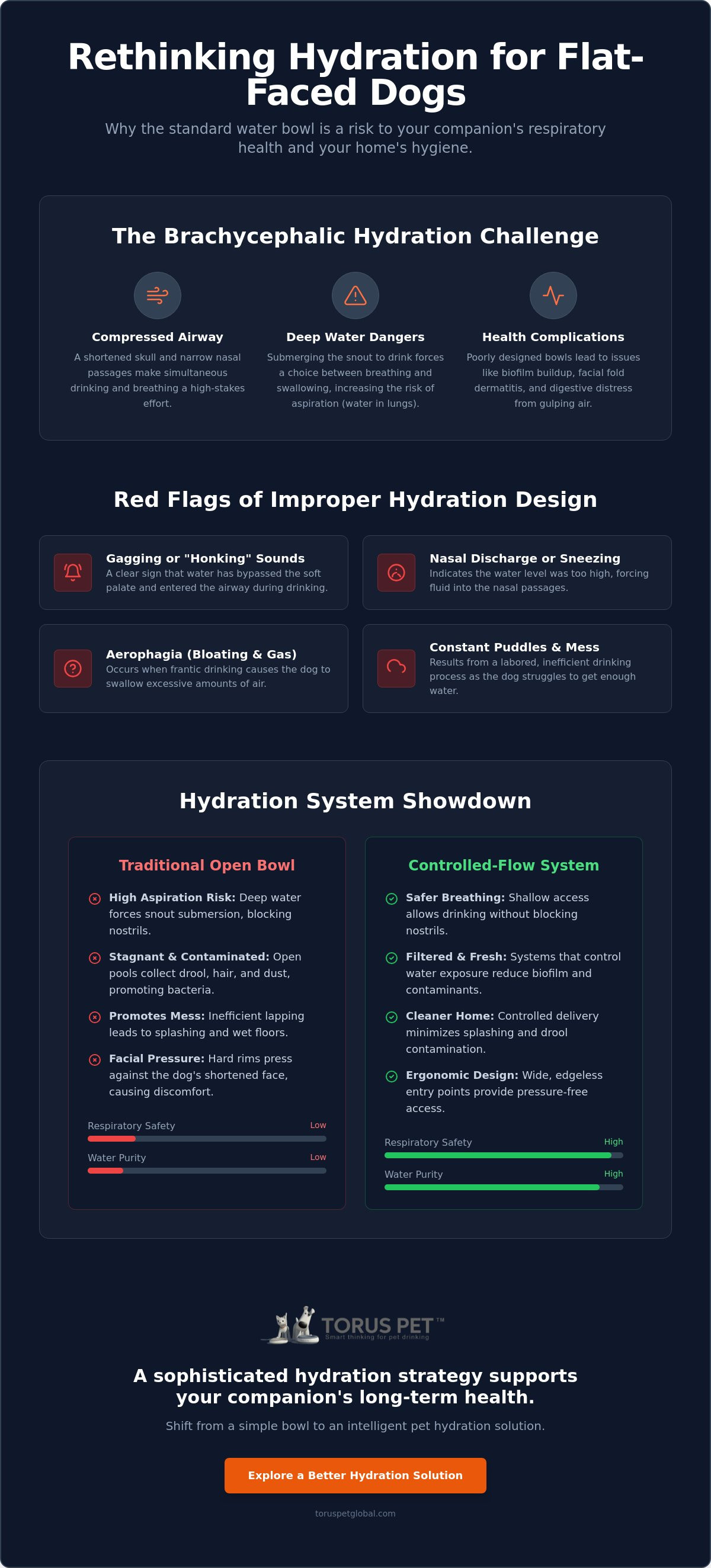
Brachycephalic anatomy is defined by a shortened skull and compressed upper respiratory tract. For breeds like French Bulldogs, Pugs, or Boston Terriers, this structure turns the simple act of drinking into a high-stakes coordination of breathing and swallowing. It isn't just about the shape of the snout; it's about the limited space available for air and water to move simultaneously. When the nasal passages are narrowed, any obstacle to clear airflow becomes a significant health concern.
Deep basins are inherently dangerous for these dogs. Submerging the snout to reach water increases the risk of accidental aspiration, which occurs when water is inhaled into the lungs. This can lead to "dry drowning" scares or chronic lung irritation. Selecting the best water bowl for flat faced dogs requires a focus on water depth management. If the water is deep enough to cover the nostrils while the dog is lapping, the risk of respiratory distress increases immediately.
The elongated soft palate, a core component of Brachycephalic obstructive airway syndrome, often obstructs the airway during hydration. This excess tissue can overlap the epiglottis, making it nearly impossible for the dog to drink and breathe simultaneously without distress. This anatomical challenge means that even a few seconds of drinking from an poorly designed source can lead to oxygen deprivation and physical exhaustion.
Don't assume a standard shallow dish is the complete answer. While it reduces depth, it doesn't solve the problem of water contamination or the mechanical pressure on the face. These dishes still allow for stagnant pools that collect debris, hair, and saliva. They don't offer the controlled water exposure necessary to keep facial folds dry and bacteria-free. A sophisticated hydration strategy moves beyond the basic bowl to consider how water is delivered, stored, and maintained for long-term health.
The Mechanics of Lapping and Airway Obstruction
Standard lapping mechanics involve a dog using the underside of their tongue to scoop water into a ladle shape. Brachycephalic dogs struggle with this because their anatomy limits their muzzle reach. In a deep basin, they must submerge their entire snout to gain access to the water. This creates a moment of physical stress where the dog cannot breathe through their nose while trying to swallow. The result is a messy, labored process that leaves the dog gasping. The pressure of a bowl's rim against their shortened face only adds to this respiratory burden.
Common Symptoms of Improper Hydration Design
Red flags include more than just a wet floor. Watch for gagging or a distinctive "honking" sound immediately after your dog drinks. These are signs that water has bypassed the soft palate and entered the airway. Nasal discharge or frequent sneezing after a drink also indicates that the water level was too high for their anatomy. Beyond respiratory issues, look for signs of aerophagia, such as a distended abdomen or frequent burping. These digestive problems often stem from the frantic way a dog is forced to drink from an open source. Chronic dampness in facial folds is another risk, often leading to painful dermatitis that requires medical attention.
Essential Design Criteria for Short-Snouted Breeds
Many owners assume that an ergonomic food bowl is interchangeable with a water source. This is a mistake. While a tilted food bowl may help with swallowing kibble, water requires a different mechanical approach to prevent airway obstruction. The best water bowl for flat faced dogs isn't just about a comfortable angle; it's about managing water volume at the point of contact to ensure breathing remains unhindered.
High-quality designs prioritize shallow water depth. This prevents the nose from being submerged, which is critical for breeds affected by Brachycephalic Obstructive Airway Syndrome. When a dog can lap without blocking their nostrils, they remain calm and hydrated. If the water level is too high, the dog is forced to choose between drinking and breathing, leading to the panicked gulping often seen in Bulldogs and Pugs.
Stability and entry points also matter. Look for wide, edgeless entry points that reduce facial pressure. Flat-faced dogs have wider heads; pressing against a narrow rim causes discomfort and discourages drinking. A low-profile, stable system ensures that even enthusiastic drinkers don't tip the reservoir. This maintains the clean aesthetics of your home while providing a reliable resource for your dog.
Width vs. Depth: Finding the Equilibrium
A wider surface area is far more effective than a deep reservoir for short-snouted breeds. Deep water encourages "gulping," which leads to gas and digestive discomfort. Aim for a water depth of 0.5 to 1 inch. This shallow level prevents facial fold irritation, a condition where constant contact with deep water or bowl edges causes skin dampness and sensory overload. A wide, shallow pool allows the tongue to function as a natural ladle without the face becoming saturated.
Material Selection for Health and Aesthetics
Porous materials like low-grade ceramic or cheap plastics are liabilities. They trap bacteria and drool, creating a slimy biofilm that is difficult to remove. Stainless steel is a common choice, but high-grade antimicrobial polymers offer superior hygiene for dogs that produce excessive saliva. You can explore the science of pet hydration to understand how material choice impacts water purity and long-term health.
For those who value a refined, mess-free environment, hydration systems that control water exposure, like Torus, offer a sophisticated alternative to open basins. These advanced dispensers maintain a shallow pool while protecting the bulk of the water from environmental contaminants and household dust.
Managing Secondary Risks: Biofilm, Bacteria, and Drool
Most owners assume that a quick daily rinse of a water dish is sufficient for hygiene. This assumption overlooks the biological reality of brachycephalic hydration. Finding the best water bowl for flat faced dogs requires an understanding of the relationship between oral anatomy and bacterial proliferation. Because these breeds often breathe through their mouths to regulate temperature, they produce higher volumes of saliva. This saliva acts as a catalyst, accelerating the growth of bacteria in stagnant water sources.
Biofilm is a complex community of microorganisms that requires physical disruption to remove. This slimy layer isn't just unappealing; it's a reservoir for pathogens that can compromise your dog's health. In multi-pet households, an open water source becomes a vector for cross-contamination. When one pet drinks, they introduce oral bacteria and organic matter into the communal supply. For flat-faced dogs, the "backwash" effect is intensified by their wide mouth structure and the way they lap water. Reframing the "messy drinker" stereotype as a "water exposure" problem allows us to look for solutions that minimize contact between the main water supply and the environment.
The Problem with Stagnant Open Basins
Open water acts as a magnet for dust, hair, and airborne contaminants that naturally settle in any modern home. For a brachycephalic dog, this debris often gets trapped in facial folds during the drinking process, leading to irritation. Traditional bowls become unhygienic within hours due to the constant introduction of organic material. Every time your dog drinks, they aren't just taking water out; they're putting contaminants in. This cycle creates a stagnant environment where bacteria thrive, forcing you into a constant loop of cleaning and refilling.
Cleaner Hydration Through Filtration
The most effective way to manage these risks is to use systems that keep the bulk of the water supply protected from the environment. By isolating the reservoir, you prevent the entire volume of water from being contaminated by a single drink. Systems that control water exposure, like Torus, ensure that only a small, shallow amount is available at any time. This design significantly helps reduce the risk of bacterial buildup and keeps the remaining supply fresh.
Integrated carbon filtration further enhances this process by helping reduce exposure to common tap water impurities like chlorine or heavy metals. Access to cleaner water encourages more frequent drinking, which is essential for maintaining kidney health and overall vitality. When water is stored in a protected, filtered environment, it remains more appealing to the dog and more hygienic for the home. This sophisticated approach to hydration ensures that your pet’s wellbeing is protected without requiring constant maintenance of a messy open bowl.
Comparing Traditional vs. Controlled-Flow Hydration Systems
When evaluating the best water bowl for flat faced dogs, the focus must shift from the size of the basin to the precision of the delivery mechanism. Traditional open bowls rely on volume; they provide a large, stagnant pool that encourages rapid gulping. Controlled-flow systems operate on a different logic: low-volume, high-frequency delivery. This approach ensures that your dog has access to fresh water without the risk of submerging their snout or inhaling liquid during a frantic drinking session.
Many owners assume that electronic fountains are the only high-tech alternative to a standard dish. However, these systems often introduce new complications. The constant hum of a motor can be unsettling for anxious breeds, and the reliance on power cords limits where you can place the unit. Silent, non-electronic systems provide a more sophisticated remedy. They offer the benefits of filtration and movement without the mechanical noise or the logistical burden of finding an outlet. No hum; no cords; just clean water at the right depth.
Why Gravity-Fed Systems Outperform Open Bowls
Gravity-fed hydration solutions represent a significant upgrade for modern homes. By storing the water supply within the insulated walls of the dispenser, these systems maintain a consistent temperature and protect the water from environmental contaminants. A self-leveling mechanism ensures that the drinking pool remains at a shallow, safe depth. This means a Pug or Bulldog never has to press their face into a deep reservoir to reach the last drop. You can use a hydration quiz to determine which capacity best suits your dog’s specific needs and lifestyle.
Unlike traditional ceramic bowls with curved interiors that still allow deep pools to form, controlled-flow systems manage the exact volume available at any given moment. This prevents the "backwash" effect discussed earlier and keeps the water supply fresh for longer periods. It's a logic-based design that prioritizes the dog's anatomy over simple container capacity.
The Aesthetic and Practical Benefits of Modern Design
Integrating a premium hydration solution is a key part of a modern pet care routine. These systems are designed to complement clean, contemporary interiors while offering practical advantages like non-slip bases. A stable base eliminates the "skating bowl" noise and prevents spills on hardwood or tile floors. For owners who travel, the ability to maintain a consistent hydration strategy on the road is invaluable. Systems that control water exposure, like Torus, are highly portable, ensuring your companion remains comfortable whether at home or in a new environment.
To provide your pet with the highest standard of care, consider upgrading to a sophisticated pet hydration solution that manages water delivery as effectively as it manages purity.
Integrating Sophisticated Hydration into the Modern Home
Selecting the best water bowl for flat faced dogs is often viewed as a simple purchase. However, for the discerning owner, it represents a shift from buying an accessory to implementing a comprehensive hydration strategy. In a modern home, pet care should not be an aesthetic compromise or a source of daily frustration. It should be a seamless integration of health-focused technology and clean design. When you prioritize how water is delivered, you aren't just managing a mess; you're safeguarding your dog's respiratory health and maintaining the sanctuary of your living space.
Strategic placement and accessibility are vital components of this plan. For brachycephalic breeds, hydration needs to be effortless. Placing a system in a quiet, low-traffic area allows your dog to drink without the distraction or anxiety that can lead to frantic gulping. By choosing a system that prioritizes shallow, controlled delivery, you ensure that water is always available at the correct depth. This consistency reduces the long-term risks of chronic facial fold dampness and respiratory fatigue, reflecting a higher standard of care that values long-term pet wellbeing.
A Checklist for the Design-Conscious Owner
- Material Integrity: Always check for BPA-free, food-grade materials. These should complement your interior while ensuring that no chemicals leach into the water supply.
- Precision Engineering: Verify that the system utilizes a controlled-flow mechanism. This technology is essential for reducing splashing and keeping the bulk of the water supply protected from household dust.
- Environmental Harmony: Prioritize quiet, electricity-free operation. A silent system maintains a calm environment and allows for flexible placement without the clutter of power cords.
The Final Takeaway: Quality Over Convenience
The decision to invest in a premium hydration solution is a commitment to quality over mere convenience. While a basic dish might seem cost-effective, it often proves to be the most "expensive" choice when you account for the time spent cleaning biofilm or the potential veterinary costs associated with respiratory distress. Sophisticated pet care is about preventing problems before they arise. By managing water exposure and contamination risks, you create a friction-free lifestyle for both you and your companion.
Hydration is a fundamental element of health, but it doesn't have to be a source of household disorder. Viewing water delivery as a vital component of your overall dog bowl strategy ensures that every aspect of your pet’s daily routine is optimized for health and modern living. The goal is a home where hydration is silent, clean, and perfectly adapted to the unique needs of your dog's anatomy.
Elevating the Standard of Brachycephalic Hydration
Modern pet care is defined by a shift from simple utility to thoughtful, anatomical support. You now understand that selecting the best water bowl for flat faced dogs is less about finding a container and more about implementing a system that respects the physics of brachycephalic breathing. By prioritizing shallow, controlled water levels, you mitigate the risk of aspiration while maintaining the clean aesthetics of a modern home.
A sophisticated hydration strategy integrates seamlessly into your lifestyle, replacing the mess of open basins with the precision of filtered, protected water delivery. It ensures that every drink is as fresh as the first, reducing the metabolic stress of bacterial exposure and the physical discomfort of respiratory obstruction. Adopting advanced hydration systems allows you to move from reactive cleaning to proactive management, a hallmark of the design-conscious owner.
Ultimately, hydration is a sophisticated element of modern pet care that involves how water is stored, delivered, and maintained. Choosing quality over convenience reflects a deeper commitment to long-term pet wellbeing, turning a basic necessity into a refined pillar of health and hygiene. It is an investment in a cleaner living environment and a more comfortable, balanced life for your companion.
Frequently Asked Questions
Why do flat-faced dogs choke when drinking water?
Choking occurs because the shortened snout forces the dog to submerge their nostrils to reach the water. This anatomy makes it difficult to coordinate breathing and swallowing simultaneously. When water is too deep, they often inhale liquid while attempting to lap, which triggers a distressing gagging reflex or coughing fit.
Is an elevated water bowl better for a French Bulldog or Pug?
Elevation can help reduce neck strain, but it doesn't address the primary respiratory challenge. The depth of the water pool is far more important than the height of the stand. The best water bowl for flat faced dogs is one that provides a shallow, consistent level of water to prevent nasal submersion.
How often should I clean my flat-faced dog’s water bowl to prevent biofilm?
Traditional open bowls require a thorough scrubbing every 24 hours to disrupt the bacterial colony known as biofilm. Flat-faced breeds produce higher volumes of saliva, which accelerates this slimy buildup. Using a hydration system like Torus helps reduce the frequency of maintenance by protecting the main water supply from oral contamination.
Can a deep water bowl cause respiratory issues in brachycephalic breeds?
Deep basins are a significant risk factor for aspiration and respiratory distress in short-snouted breeds. When a dog is forced to "dive" into a bowl, they're more likely to gulp air and liquid at the same time. Controlled water exposure is the most effective way to maintain airway safety and respiratory comfort during hydration.
What is the best material for a dog bowl if my pet drools a lot?
High-grade antimicrobial polymers and stainless steel are the superior choices for dogs that produce excessive saliva. Porous materials like cheap plastic or cracked ceramic trap bacteria and drool, making them nearly impossible to keep hygienic. Non-porous surfaces allow for more effective cleaning and help maintain a cleaner home environment.
Do flat-faced dogs need filtered water more than other breeds?
These breeds benefit greatly from filtered water because it encourages higher intake, which is vital for long-term kidney health. Removing common tap water impurities also helps reduce potential irritants for sensitive pets. A filtered hydration system ensures the water remains fresh and appealing, even for dogs with more discerning palates.
How can I stop my Bulldog from making a mess around the water bowl?
Messes are usually caused by the dog using their snout as a shovel in deep water. You can eliminate this behavior by switching to a controlled-flow hydration solution. By limiting the available water to a shallow, self-leveling pool, you prevent the splashing and facial soaking that typically leads to wet floors and damp facial folds.
Are electronic water fountains safe for flat-faced dogs?
Electronic fountains are generally safe, but they aren't always the ideal choice for a calm, modern home. The constant mechanical hum can be a source of anxiety for some sensitive breeds. Silent, non-electronic systems provide the same filtration and hydration benefits without the noise, cords, or reliance on a power outlet.