
Choosing the Best Dog Backpack and Hydration System for Hiking in 2026

What if the most critical factor for your dog's trail safety isn't the distance covered, but the specific way their water is stored and delivered? Many pet parents agree that traditional gear often leads to warm water and messy spills inside their packs. Selecting the best dog water bottle or a portable dog water system requires a balance of filtration and flow. Whether you need a dog water bottle for hiking, a portable dog water bottle, or a travel dog water bottle, the goal is consistent dog hydration on the go through a reliable travel dog water solution for backpack storage.
Discover how to evaluate these hydration systems and modern dog backpacks to ensure your pet remains healthy on any terrain. We'll examine the logic behind controlled water exposure and the technical features that define a premium, minimalist gear setup. No spills, no bacteria, no hassle. This guide provides the essential framework for selecting a 2026-ready kit that prioritizes water purity over bulk.
By the end of this article, you'll understand how a sophisticated hydration system and a well-fitted backpack work together to protect your pet's wellbeing. We're moving beyond basic gear to explore how smart design keeps water cool and clean, allowing you to focus on the joy of the journey. It's time to upgrade your trail experience with a solution that is as adventurous as you are.
Key Takeaways
- Understand the science of water integrity and how to prevent the formation of harmful biofilms in portable containers during long excursions.
- Evaluate the best dog water bottle for hiking based on capacity, filtration capabilities, and low-profile designs that fit efficiently inside a standard dog backpack.
- Learn professional protocols for managing hydration during high-exertion activities and the critical signs of canine dehydration every pet parent must recognize.
- Discover how integrated, antimicrobial hydration solutions ensure your pet has access to cleaner, filtered water while minimizing the weight of your trail kit.
The Evolution of Dog Hydration for Hiking and Outdoor Adventures
For years, pet parents relied on collapsible silicone bowls and standard plastic bottles. It was a messy, inefficient routine. Today, the landscape has shifted toward integrated hydration systems. These sophisticated setups prioritize the science of how water is stored and delivered during physical exertion. A high-quality dog water bottle for hiking is no longer just a container; it's a tool for maintaining physiological balance on the trail.
Standard rucksacks often lack the specialized compartments required to house pet-specific gear securely. Relying on any generic water container for long-duration hiking is a risk. True hydration for active animals requires controlled water exposure. This method ensures that water remains fresh, filtered, and free from environmental contaminants. It moves away from the "open bowl" concept toward a more hygienic, managed delivery system.
No more lukewarm water sitting in a porous bowl. No more dirt and debris mixing with your pet's only source of moisture. The modern approach focuses on systems that protect the water supply from the elements while making it accessible at a moment's notice. This evolution reflects a deeper understanding of canine health and the demands of rugged environments.
Why Traditional Portable Dog Water Bottles Often Fail
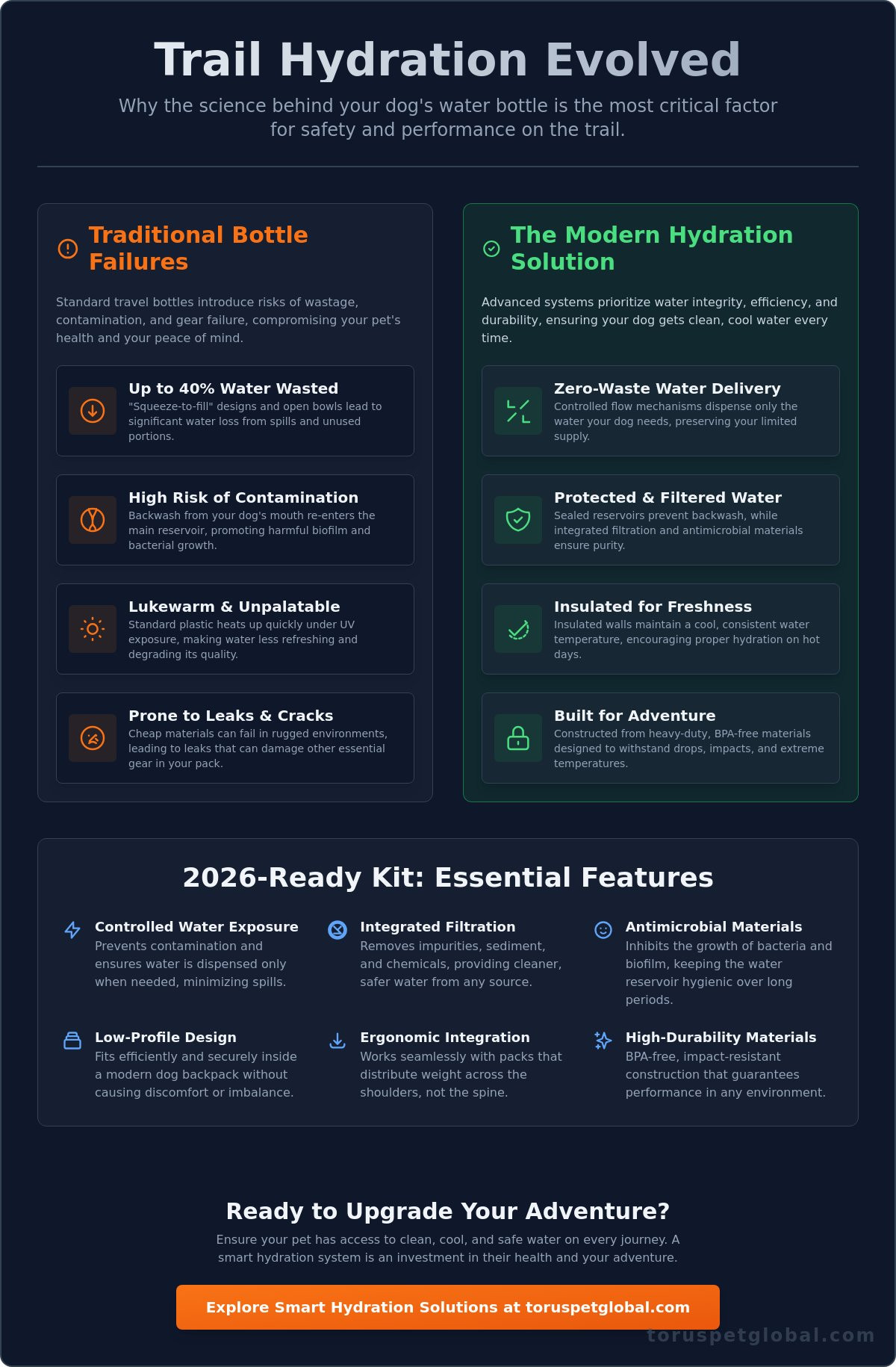
Traditional "squeeze-to-fill" designs are notoriously inefficient. Field tests often show that up to 40 percent of the water is lost to the ground during the drinking process. In remote areas where every ounce of weight matters, this level of wastage is unacceptable. These bottles also suffer from hygiene issues. Backwash from the pet's mouth frequently re-enters the reservoir, leading to bacterial growth and stagnant conditions within hours.
Durability is another common failure point. Cheap plastic materials often crack when dropped on granite or exposed to freezing temperatures. A portable dog water bottle must withstand the rigors of the trail without leaking. High-tech solutions now utilize BPA-free, heavy-duty materials that maintain structural integrity in extreme conditions. They are designed to eliminate the frustrations of leaks that can soak through a backpack and ruin essential gear.
- Wastage: Excessive loss of water during dispensing.
- Contamination: Saliva and dirt entering the main reservoir.
- Fragility: Material failure in high-impact environments.
The Role of the Dog Backpack in Modern Travel
There is a significant difference between a human-carry rucksack and a dog-worn backpack. When backpacking with dogs, ergonomics are the priority. A dog's pack must distribute weight across the shoulders rather than the lower back. This prevents spinal strain and allows for a natural range of motion during steep climbs.
Modern dog backpacks are designed to integrate with a travel dog water solution for backpack use. This allows the animal to carry their own hydration without compromising their comfort. For a deeper dive into selecting the right gear for yourself, see our guide on Choosing the Best Rucksack for Pet Parents: 2026 Travel Guide. Proper gear selection ensures that hydration is a seamless part of the adventure rather than a logistical burden.
Hydration is a sophisticated element of modern pet care. It involves how water is stored, delivered, and maintained. Choosing a system that offers controlled exposure is the smartest way to ensure long-term wellbeing on the trail.
Understanding Water Integrity: Beyond the Basic Portable Dog Water Bottle
Many pet parents select a portable dog water bottle based on how much it holds. This approach overlooks the critical science of water integrity. When water sits in standard, non-insulated plastic containers under the sun, it quickly loses its freshness. Heat and UV rays accelerate the breakdown of the water's molecular structure, which makes it less palatable and potentially unsafe for your companion.
Stagnant water in a travel container is a breeding ground for invisible threats. Without temperature control, bacteria multiply at an exponential rate once the liquid reaches 70 degrees Fahrenheit. This degradation happens faster than most owners realize. No sun-warmed plastic. No stagnant odors. No bacteria. A truly premium hydration solution ensures that the last drop of water is as clean as the first.
Antimicrobial protection is no longer an optional feature for outdoor gear; it's a necessity. High-quality systems use materials designed to inhibit the growth of microorganisms on the internal surfaces of the container. This proactive approach to hygiene is what separates a basic flask from a sophisticated dog water bottle for hiking.
The Hidden Dangers of Communal and Unfiltered Water
Natural trail sources like streams or ponds often appear refreshing but harbor significant risks. Runoff from wildlife can introduce pathogens such as Giardia and Leptospirosis into seemingly "fresh" water. These parasites cause severe gastrointestinal distress and long-term health issues for dogs. Biofilm is a complex colony of bacteria that thrives on untreated surfaces. Relying on filtered water carried from a trusted source is the only way to ensure your pet stays healthy during a long trek.
Filtration Technology in Travel Hydration
Evaluating filtration technology is essential for any modern pet parent. Standard mesh screens only stop large debris like sand or leaves. In contrast, activated carbon filters work on a molecular level to adsorb impurities and remove unpleasant odors. This keeps the water crisp and encourages your dog to drink more frequently. Constant filtration during movement also helps keep the water oxygenated, preventing the flat taste associated with stagnant bottles.
Sophisticated hydration systems, such as those discussed in the science of Torus Pet, utilize advanced filtration to maintain water quality in various environments. By choosing a system that controls water exposure, you provide a safer, cleaner experience for your pet. This focus on long-term wellbeing is a hallmark of thoughtful pet ownership. Hydration is not just about quenching thirst; it's about maintaining a high standard of care, anytime and anywhere.
Insightful Takeaway: High-performance hiking requires more than just volume; it requires a system that preserves the biological integrity of every drop.
Evaluating the Best Dog Water Bottle for Hiking and Backpacking
Many pet parents assume a standard plastic bottle is sufficient for the trail. It isn't. Effective hydration is about more than just volume; it's about maintaining water quality and accessibility throughout the journey. A high-quality dog water bottle for hiking should function as a comprehensive portable dog water system that protects the water from environmental contaminants and sun exposure.
When comparing options, focus on the weight-to-utility ratio. A heavy bottle that leaks is a liability. Look for systems that prioritize a low-profile design. This ensures the weight sits close to the dog's center of gravity when stored in a backpack. Proper weight distribution prevents muscle fatigue during 10-mile treks and ensures the dog remains balanced on uneven terrain.
The hike begins long before you hit the trail. Standard bowls tip over on winding mountain roads, leaving your vehicle damp and your dog thirsty. A non-tipping, spill-proof design is critical for travel. No spills, no mess, no dehydration. It ensures your pet has access to fresh water during the drive, arriving at the trailhead properly hydrated and ready to move.
Is a premium system too heavy for a day hike? It's a common concern. However, the efficiency of a filtered system often means you carry less "waste" water. Because these systems control water exposure, you only dispense what the dog actually drinks. The remaining water stays cool, filtered, and protected within the reservoir, providing better value per ounce than a standard open container.
Key Features of a High-Performance Hydration Solution
Traditional manual dispensers require constant attention and two hands to operate. Gravity-fed systems are superior. They provide a consistent, shallow pool of water without the need for manual squeezing or tilting. This allows your pet to drink naturally while you maintain your grip on the leash.
- Material Integrity: Choose BPA-free plastics or designs with antimicrobial-infused walls to help reduce the risk of bacterial buildup in 80-degree weather.
- Contamination Control: Auto-fill mechanisms are essential. They prevent backwash and debris from entering the main reservoir.
- Thermal Protection: Thick-walled designs help maintain a lower water temperature, which is vital for core cooling during summer ascents.
Sizing Your System: Maxi vs. Mini for Different Adventures
Capacity should be calculated based on the dog's weight, the trail's intensity, and the local climate. For a 70-pound breed on a multi-hour trek, a 68oz (2-liter) capacity is the standard for safety. This volume accounts for both metabolic needs and the water lost to panting during elevation gains.
Smaller breeds or shorter 2-mile loops are better served by compact versions that save space in a daypack. Selecting the right size ensures you aren't carrying unnecessary bulk while still providing a reliable travel dog water solution for backpack storage. You can explore the Torus Maxi and Mini collections to find the specific capacity that matches your dog's physical requirements and your typical trail duration.
Strategic Hydration: Managing Water on the Trail
Many pet parents assume that a dog will communicate their thirst clearly. By the time a dog is stopping or seeking shade, they're often already 3% to 5% dehydrated. Effective trail management requires a proactive protocol rather than a reactive response. Using a sophisticated dog water bottle for hiking allows for controlled, frequent intake that keeps core temperatures stable.
Professional handlers prioritize a "little and often" strategy. Offering small volumes of water every 20 to 30 minutes prevents the risk of gastric dilation-volvulus (GDV), commonly known as bloat. This is especially critical during high-exertion climbs. You should monitor your dog for early dehydration markers. These include tacky or dry gums, a loss of skin elasticity, and thick saliva. If you pinch the skin between the shoulder blades and it takes more than 1.5 seconds to return to its original position, your dog needs immediate, slow hydration.
Calculating Your Dog’s Water Needs
A standard baseline for canine hydration is 50ml to 70ml of water per kilogram of body weight. On the trail, this formula shifts. Humidity plays a massive role in safety. When humidity levels exceed 70%, a dog's ability to thermoregulate through panting is severely compromised because moisture cannot evaporate. It's a physiological reality that a dog may require up to double their normal water intake during strenuous uphill hiking to compensate for this strain.
- Baseline: 50ml per kg of body weight for daily maintenance.
- Activity Multiplier: Increase by 1.5x for moderate trails in temperate weather.
- Extreme Multiplier: Increase by 2x for steep inclines or temperatures above 25°C.
Preventing Contamination During the Hike
The quality of your travel dog water solution for backpack is just as important as the quantity. Storing hydration systems in the center of your rucksack, surrounded by soft gear, acts as natural insulation. This prevents the water from reaching unpalatable temperatures that discourage drinking. For shorter walks where a full pack isn't necessary, using a Tote Bag ensures the system remains upright, clean, and easily accessible.
Maintain your gear by flushing filters after any day spent on dusty or muddy trails. Fine particulates can clog advanced filtration membranes, reducing the flow rate and potentially harboring environmental bacteria. No mess, no contamination, no hassle. It's about maintaining a clean environment for your dog, even in the middle of the wilderness. This level of care ensures that every sip is as safe as the water they drink at home.
To ensure your dog always has access to clean, filtered water on your next adventure, explore our range of innovative hydration dispensers.
The Modern Solution: Integrating Torus into Your Hiking Kit
Many hikers believe that being prepared means carrying more gear. In reality, a cluttered backpack often leads to disorganized stops and increased contamination risks. A sophisticated hydration system replaces the need for a separate portable dog water bottle, a collapsible bowl, and various storage containers. By integrating storage, filtration, and delivery into a single unit, you streamline your kit and focus more on the terrain. Modern pet parents recognize that the best dog water bottle isn't just a vessel; it's a tool that manages how water is stored and maintained throughout the day.
Using a system that controls water exposure is essential for long-term health. When water sits in an open bowl or a cheap plastic reservoir, it quickly collects dust, insects, and bacteria. Advanced hydration solutions utilize antimicrobial materials and active carbon filters to keep the supply clean. This reduces the risk of your dog ingesting pathogens found in stagnant trail sources. It's a design-led approach that prioritizes the biological needs of the animal while fitting the clean aesthetic of an organized hiker.
Hassle-Free Hydration: Anytime, Anywhere
Remote trails rarely offer the luxury of power, which is why a mechanical approach to hydration is superior. The Torus design functions without batteries or external power sources. It utilizes a vacuum-activated valve to automatically replenish the drinking well as your dog drinks. This "always-full" mechanism ensures that fresh, filtered water is available whenever your dog needs it, without you needing to stop and unscrew a lid every mile. It's a seamless portable dog water system designed for the rhythm of the trail.
The system is engineered to maintain a low water level in the drinking well. This design choice prevents the messy splashes and deep-ear soaking common with deep bowls. Because there is less water exposed at any given time, there is less opportunity for dirt to settle in the supply. If you're unsure which capacity or style fits your specific hiking frequency, you can take the Pet Hydration Quiz to find your ideal setup. It’s a simple way to ensure your dog hydration on the go is as efficient as possible.
Investing in Long-Term Wellbeing
Sustainability is a core component of thoughtful pet ownership. Relying on disposable plastic bottles or low-quality gear that needs frequent replacement creates unnecessary waste. Investing in a permanent, filtered system is a better choice for the environment and your pet's health. A high-quality travel dog water solution for backpack use provides peace of mind, knowing that your dog isn't being exposed to the chemicals often found in cheap plastics. It turns a basic necessity into a reliable health safeguard.
Choosing the right equipment reflects a commitment to quality that extends beyond the trail. While portable solutions are vital for adventure, the principles of clean hydration apply to every environment. For more context on maintaining these standards at home, you can explore the Ultimate Guide to Dog Bowls to learn about choosing the best options for health and lifestyle. Ultimately, hydration is a pillar of responsible pet care. When you treat it as a sophisticated element of your dog's daily life, you ensure they remain healthy, hydrated, and ready for every adventure 2026 has to offer.
Elevating Your Trail Experience Through Intelligent Hydration
Success on the trail in 2026 depends on more than just distance; it's about the quality of resources you provide. Managing hydration effectively means moving beyond simple containers to systems that prioritize water integrity. Modern solutions focus on reducing exposure to environmental contaminants while ensuring water remains fresh throughout the journey. You're not just carrying water; you're managing a vital health resource for your companion.
High-performance gear now integrates advanced technology to protect your pet's health. Systems like Torus utilize antimicrobial-infused walls and advanced activated carbon filtration to maintain water quality. This design ensures that your travel dog water solution for backpack remains spill-proof and reliable, even on technical terrain. These systems are engineered to provide fresh, filtered water for up to 24 hours without the need for constant monitoring or manual refills.
Choosing a sophisticated hydration system is a commitment to long-term wellbeing. It's a shift from basic portability to a comprehensive approach that manages how water is stored, delivered, and protected. Explore the Torus range of advanced pet hydration solutions and discover how intelligent design supports your next outdoor adventure. Enjoy the peace of mind that comes with professional-grade preparation.
Frequently Asked Questions
What is the best way to carry water for my dog while hiking?
The most efficient way to carry water is through a portable dog water system that integrates seamlessly with your existing hiking gear. This method ensures that weight is distributed evenly across your back or the dog's harness. Systems that prioritize controlled water exposure, like Torus, prevent the mess and waste associated with traditional bowls. It's a professional approach that keeps your dog's hydration organized and accessible.
How much water should a dog drink during a 5-mile hike?
Most dogs require approximately 1.0 ounce of fluid per pound of body weight daily. During a 5-mile hike, a 50-pound dog may need an additional 20 to 30 ounces of water to maintain peak performance. If the trail elevation increases by 1,000 feet, you should increase this amount by 25 percent. Carrying a reliable dog water bottle for hiking allows you to monitor intake precisely throughout the journey.
Is it safe for my dog to drink from streams or lakes on the trail?
No, it's not safe to rely on natural water sources. Data from the CDC confirms that pathogens like Leptospira and Giardia are prevalent in 90 percent of backcountry streams. These contaminants can lead to severe gastrointestinal issues or long-term health complications. Using a travel dog water bottle ensures your pet only consumes a clean, controlled supply that you've personally vetted for safety.
Can I use a standard human water bottle for my dog?
You can use a human bottle, but it's rarely an efficient travel dog water solution for backpack users. Human bottles don't account for a dog's lapping mechanism, which often results in 40 percent of the water being wasted on the ground. A dedicated system provides a more sophisticated way to deliver fluids. It ensures your dog actually drinks the water you're carrying rather than just wearing it.
How do I keep my dog’s water cool in a backpack during summer?
To keep water cool, utilize a system with thick, insulated walls or place the bottle in the center of your pack. Research shows that burying a bottle deep within a backpack can keep the contents 10 degrees cooler than the exterior temperature. Avoid leaving your pack in direct sunlight during breaks. A high-quality portable dog water bottle is designed to maintain a consistent temperature for several hours of trekking.
What are the signs of dehydration in dogs during exercise?
Watch for signs like loss of skin elasticity, sticky gums, and a noticeable decrease in energy. If your dog's saliva becomes thick or ropey, they've likely reached a state of significant fluid loss. Maintaining consistent dog hydration on the go is the only way to prevent these symptoms. If the capillary refill time in their gums exceeds 2 seconds, it's time to stop and provide immediate, controlled hydration.
How often should I clean my dog’s portable water system?
You should clean your dog's portable water system after every outing to prevent the buildup of bacteria. Studies indicate that biofilm can begin to colonize plastic surfaces within 12 to 24 hours. Use warm water and a mild, fragrance-free detergent to ensure the environment remains hygienic. No dirt, no slime, no odors. Regular maintenance ensures that your pet's hydration remains a clean and healthy part of their routine.
Do I need a filtered water bottle for my dog?
A filtered water bottle is a smart investment for the design-conscious pet parent living a modern lifestyle. Filters remove trace heavy metals, chlorine, and sediment that can affect the taste and quality of the water. Systems like Torus offer integrated filtration that provides a cleaner hydration experience regardless of your location. It's a proactive way to reduce your dog's exposure to common environmental contaminants found in various water sources.