
How to Choose and Manage a Water Bowl for Cats and Dogs in Multi-Pet Households

What if your shared water bowl is doing more than just quenching thirst? Many pet parents assume that a high-capacity dish is the ultimate solution for a busy home, but volume often invites more gulping, splashing and even biofilm than benefit. Managing a water bowl for cats and dogs in multi-pet households requires more than just size; it requires a strategy to stop the cycle of splash, clean, fill, repeat.
You likely recognize the daily struggle of scrubbing away that stubborn, slimy layer or refilling small bowls every few hours. It is exhausting to watch your cat walk away from a bowl because your dog just finished a messy drink. No more slime. No more splashing. No more constant refilling. You deserve a clean, minimalist environment that doesn't revolve around floor spills and maintenance.
This article will teach you how to manage shared hydration and prevent cross-contamination in homes with both cats and dogs. We will explore how sophisticated pet hydration solutions, like the Torus Pet dispenser bowls, use controlled water exposure to keep water fresh for every pet. You will learn how to reduce maintenance and create a healthier, more organized home for your companions.
Key Takeaways
- Identify why standard open dishes often lead to feline dehydration and how to mitigate the impact of canine saliva on shared water quality.
- Compare the maintenance requirements of electronic fountains versus advanced filtration systems to select a more efficient hydration solution.
- Learn the optimal placement and leveling techniques for a water bowl for cats and dogs in multi-pet households to ensure consistent water delivery.
- Discover how antimicrobial materials and controlled water exposure can significantly reduce biofilm buildup and the risk of cross-contamination.
- Transition from a reactive cleaning routine to a proactive, design-led strategy that keeps your home's hydration station modern and hassle-free.
Table of Contents
-
Comparing Hydration Systems: Gravity-Fed vs. Electronic Fountains
-
Sophisticated Solutions: The Torus Approach to Multi-Pet Living
The Realities of Shared Hydration: Why Standard Bowls Fail
Many pet parents believe that a high-capacity bucket is the ideal water bowl for cats and dogs in multi-pet households. It seems logical. More animals require more volume. However, large open reservoirs often act as a collection point for debris rather than a source of fresh hydration. With 66% of U.S. households owning at least one pet as of 2024, the challenge of maintaining a clean, shared station is a common frustration for modern owners.
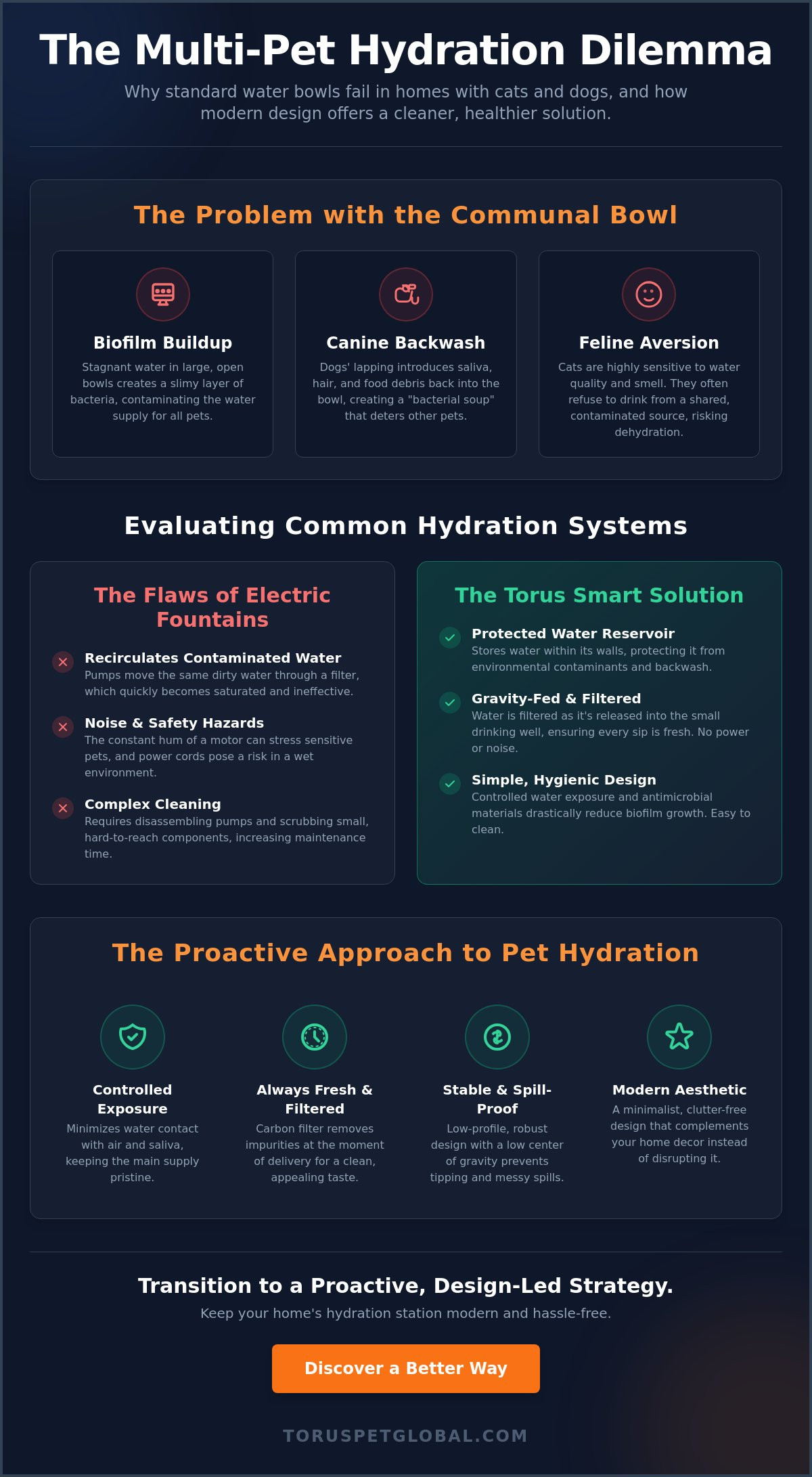
The primary issue in these homes is the "backwash" effect. Dogs drink by curling their tongues into a ladle shape, which inherently splashes water and introduces oral bacteria back into the source. While this is a standard part of canine health and diet, it creates a significant barrier for feline housemates. Cats are notoriously sensitive to scents and water quality; a bowl heavy with canine saliva often leads to a cat refusing to drink entirely.
Understanding Cross-Contamination in Multi-Pet Homes
Biofilm is a slimy layer of bacteria that adheres to the surface of a bowl. In multi-pet environments, this film forms faster because of the diverse range of microbes being introduced. When water sits stagnant in a large open dish, these bacteria colonies thrive. This is why a 2026 perspective on pet care views open reservoirs as a significant hygiene risk that requires constant, labor-intensive cleaning to manage.
A more sophisticated approach involves "controlled exposure." This means keeping the main water supply protected from the environment and only releasing small amounts for drinking. By limiting the volume of water exposed to the air and multiple mouths, you can significantly reduce the rate of contamination. Systems that control water exposure, like Torus, are designed to keep the bulk of the supply filtered and clean until the moment it is needed.
Species-Specific Drinking Habits
Dogs are "lapping" drinkers who use force to move water. Cats are precision drinkers. They use the tip of their tongue to pull a delicate column of water into their mouths. When a dog leaves hair or food particles behind, it disrupts the cat's natural preference for a pristine source. This mismatch often results in cats seeking water from less desirable places, like dripping faucets or even toilets.
There is also a psychological element to consider. Cats are biological skeptics that evolved to prefer fresh-feeling water to avoid illness. A messy hydration area doesn't just discourage drinking; it also disrupts the clean aesthetics of a modern home. You shouldn't have to choose between your pet's health and a clutter-free living space. Moving away from deep, stagnant buckets toward a streamlined hydration solution ensures every pet feels comfortable while keeping your floors dry and your maintenance minimal.
Comparing Hydration Systems: Gravity-Fed vs. Electronic Fountains
Choosing a water bowl for cats and dogs in multi-pet households often involves a choice between high-tech electronic fountains and traditional gravity-fed systems. While the pet water fountain market is projected to exceed $2.5 billion by 2026, a higher price tag doesn't always guarantee better hydration. In fact, many modern pet parents are discovering that mechanical complexity can introduce more problems than it solves.
Effective filtration is the cornerstone of shared hydration. In homes with multiple species, the water is under constant assault from saliva and debris. Recirculating fountains often move this contaminated water through a filter repeatedly, which can quickly saturate the media. A more logical approach is filtering the water at the moment of delivery. This ensures that every sip is as fresh as the first, regardless of how many pets share the station.
Space efficiency is another critical factor for design-conscious homes. Large external tanks are prone to tipping and take up valuable square footage. Advanced hydration solutions store water within the walls of the unit itself. This design maintains a low center of gravity and a minimalist footprint, fitting seamlessly into modern living spaces without the clutter of extra reservoirs.
The Limitations of Electric Pet Fountains
Electric fountains come with hidden costs. The constant hum of a pump creates noise pollution that can stress sensitive cats, often leading them to avoid the water source entirely. Beyond the sound, the safety risks of power cords in a high-activity multi-pet area are a valid concern. Cleaning these systems is also notoriously difficult; disassembling pumps and scrubbing tiny plastic components takes time that most busy pet parents don't have.
The Benefits of Gravity-Fed Filtration
Gravity-fed systems offer a more reliable alternative. By using vacuum pressure instead of electricity, these units provide constant access to water even during power outages. No batteries. No power. No noise. No problem. The water remains protected inside the reservoir walls, staying cooler and cleaner than it would in an open plastic tank. You can learn the science of how-it-works to see how sophisticated engineering replaces the need for fragile electronics. For those seeking a streamlined lifestyle, exploring advanced hydration dispensers is a practical way to upgrade your home's hydration station.
How to Set Up a Shared Hydration Station
Transitioning from separate dishes to a unified water bowl for cats and dogs in multi-pet households requires a thoughtful approach. It isn't just about the hardware. It is about environmental psychology. A well-placed station reduces territorial stress and ensures that every animal feels safe while drinking. Since 66% of U.S. households now own pets, creating harmony in shared spaces has become a priority for modern pet parents.
Step 1: Choose a neutral location. Avoid narrow hallways or "choke points" where one pet might inadvertently block another's access. A spacious, open area allows for multiple exit routes, which is essential for feline comfort.
Step 2: Ensure the surface is level. Sophisticated hydration solutions rely on gravity-fed delivery and vacuum pressure. An uneven floor can disrupt the autofill mechanism and lead to inconsistent water levels.
Step 3: Introduce the system during calm periods. Choose a time when the house is quiet and energy levels are low. This prevents pets from associating the new station with chaos or competition.
Step 4: Monitor acceptance. Pay close attention to your cat. Because cats are naturally skeptical of new water sources, they may take longer to approach a shared station than a dog will.
Step 5: Establish a maintenance schedule. Veterinary experts recommend a thorough cleaning at least once a week. Pair this with a monthly filter replacement to ensure the "controlled exposure" system remains effective.
Strategic Placement for Species Harmony
Strategic placement is the difference between a functional station and a source of conflict. Avoid corners. A cat that feels "trapped" by a larger dog is less likely to stay hydrated. Additionally, keep the station at least 3 to 5 feet away from food bowls. Many pets prefer their water source to be separate from their feeding area to mimic natural hunting and scavenging behaviors. Choosing a low-profile design also ensures the station remains stable during high-energy play sessions.
Transitioning Your Pets to a New System
Don't remove the old bowls immediately. Use the "side-by-side" method, placing the new hydration solution next to the existing dishes for 3 to 5 days. This allows your pets to investigate the new hardware without the pressure of losing their familiar source. Use positive reinforcement and quiet praise when they interact with the new system. If you are unsure which capacity fits your household, you can find the right size for your home with our quiz. Selecting the correct volume, such as a 68oz Maxi or 34oz Mini, is the first step toward a more organized, clutter-free home.
Maintaining Hygiene: Combating Biofilm and Saliva
Many pet parents assume that the movement of an electronic fountain prevents slime. It doesn't. Often, these systems simply hide bacteria in internal tubes and hard-to-reach pumps. In a water bowl for cats and dogs in multi-pet households, the combination of different species' enzymes accelerates the development of biofilm. This slimy layer is actually a complex colony of bacteria that adheres to surfaces, potentially affecting the taste and quality of the water.
Antimicrobial materials such as those included in the structure of the Torus water bowls, are essential for managing this risk. High-quality hydration solutions use food-grade, antimicrobial plastics that help reduce the rate of bacterial colonization. Unlike standard plastic, which develops microscopic scratches that harbor microbes, these advanced materials maintain a smoother, cleaner surface over time. This design-led approach ensures that your home remains a sophisticated environment rather than a site for constant scrubbing.
Saliva-based odors are a primary reason why cats may reject a shared source. Dogs introduce organic matter that changes the water's scent profile. High-quality carbon filtration is required to remove these organic contaminants and maintain the neutral taste that cats prefer. This proactive management allows for a peaceful, shared station that meets the high standards of a modern home.
The Science of Cleaner Hydration
In a pet care context, the goal is to provide cleaner water rather than a sterile environment. A sterile state is impossible to maintain when multiple animals are drinking. Activated carbon filters utilize a high surface area to trap and neutralize organic contaminants, ensuring the water remains palatable for every pet. Torus Pet takes it to another level with their antimicrobial infused Advanced Filters that come in 6-month packs for just $6.65/month (and less with subscription). You can explore the science of pet hydration to see how these systems function without the need for harsh chemicals or complex electronics.
Routine Maintenance Checklist
Maintaining a water bowl for cats and dogs in multi-pet households shouldn't feel like a chore. A structured routine keeps the station performing at its peak. Use mild, scent-free cleaning agents to avoid deterring sensitive cats. Avoid citrus-based soaps, as these are often repulsive to felines.
-
Daily: Briefly wipe the drinking well to remove any visible hair or debris.
-
Weekly: Perform a thorough wash of the drinking surface with warm water and a soft cloth. Torus Pet offers the Torus Cleaning Kit that includes descaling tablets like those used for baby bottles.
-
Monthly: Replace the filtration media to ensure continued odor and contaminant removal.
If you notice a change in water odor or if your cat suddenly stops using the station, it is time for an immediate filter change. To keep your system in top condition, consider using a dedicated Torus cleaning kit designed for high-performance hydration solutions.
Sophisticated Solutions: The Torus Approach to Multi-Pet Living
Modern pet care is moving away from basic utility toward sophisticated engineering. Finding the right water bowl for cats and dogs in multi-pet households is no longer just about choosing the largest container available. It is about selecting a system that actively protects the water supply. By controlling water exposure, you can ensure that the bulk of your pets' hydration remains filtered and cool, shielded from the dust and saliva that plague standard open dishes.
The Torus approach is defined by simplicity and reliability. No batteries. No power. No noise. Because the system relies on vacuum pressure and gravity, your pets have constant access to water regardless of your home's electrical status. This design eliminates the clutter of cords and the persistent hum of motors, maintaining the calm, minimalist aesthetic of a contemporary living space.
For most mixed-pet homes, the 68oz (2-liter) capacity represents the ideal "sweet spot." It provides enough volume to satisfy a large dog's needs while remaining compact enough to fit into a kitchen or living room without becoming an obstacle. This balance of high capacity and low footprint is essential for maintaining an organized home environment.
Engineered for Modern Pet Parents
Durability is a requirement when dogs and cats share a space. The heavy-duty construction of these units ensures they remain stable even during the most enthusiastic drinking sessions. A low center of gravity makes them virtually impossible to tip, protecting your floors from the water damage common with lighter plastic bowls. The low-profile rim is particularly important for feline housemates, as it allows them to drink comfortably without their whiskers touching the sides. Utilizing a high-capacity hydration solution, such as the Torus Maxi, allows pet parents to provide for multiple animals without sacrificing design or hygiene.
A Health-First Philosophy
Hydration is the foundation of long-term wellness. Better water quality is directly linked to improved kidney health and urinary tract function, especially for cats who are notoriously sensitive to water purity. By reducing exposure to organic contaminants and maintaining a neutral taste, you encourage more frequent drinking across both species. You can browse our range of pet hydration dispensers to find the configuration that best suits your home's unique layout.
Final Takeaway: Sophisticated hydration is a core element of modern pet care. It involves a thoughtful combination of how water is stored, delivered, and maintained. Moving toward a filtered, controlled-exposure system doesn't just reduce your daily maintenance; it provides peace of mind that your pets are receiving the cleanest hydration possible in a shared environment.
Elevating Your Home's Hydration Standards
Creating a harmonious environment for your pets doesn't have to mean compromising on cleanliness or home design. Successful management of a water bowl for cats and dogs in multi-pet households relies on two factors: strategic placement to avoid territorial stress and technology that limits water exposure to environmental contaminants. When you prioritize filtration and high-quality materials, you're investing in the long-term health and wellbeing of your companions.
You can achieve a hassle-free, minimalist hydration station without the complexity of electronic parts. Our gravity-fed, non-electric systems are built with antimicrobial, BPA-free materials that help prevent biofilm buildup naturally. Combined with advanced carbon filtration, these solutions ensure the water remains neutral and inviting for even the most skeptical feline. No batteries, no power, no noise. No problem. Explore the Torus range of filtered hydration solutions to see how sophisticated engineering can simplify your daily routine.
Your home should be a place of rest and joy; let a smarter hydration strategy handle the logistics.
Frequently Asked Questions
Is it safe for my cat and dog to share the same water bowl?
Yes, sharing a source is generally safe for healthy pets. Veterinary consensus as of May 2026 suggests that while species can share, maintenance is the critical variable. Biofilm and bacteria form faster when multiple mouths are involved. Using a hydration solution with controlled water exposure helps manage these hygiene risks without needing separate stations for every animal in your home.
How often should I change the water in a multi-pet bowl?
You should refresh the water in a standard open bowl every 24 hours. Stagnant water quickly collects dust and dander in a busy household. Advanced systems with internal reservoirs like the Torus Pet range, keep the main supply protected, meaning you only need to wipe the drinking well daily. This ensures the water remains fresh and palatable for your pets throughout the week.
What is the best material for a shared pet water bowl?
Antimicrobial, food-grade materials are superior to standard porous plastics. According to industry hygiene reports, non-porous surfaces prevent the microscopic scratches that harbor bacteria. Choosing a high-quality water bowl for cats and dogs in multi-pet households made from these materials helps reduce bacterial growth by up to 99%. This is a vital step for maintaining a clean, modern home environment.
How do I stop my dog from making a mess of the cat's water?
Switch to a low-profile hydration station that limits the volume of water available at the surface. Deep buckets encourage dogs to lap forcefully, which creates significant splashing. Sophisticated systems release only about 15mm to 20mm of water at a time. This controlled delivery keeps your floors dry and ensures your cat isn't discouraged by a messy or flooded drinking area.
Do cats prefer running water or still water when sharing with dogs?
Cats prioritize water quality and neutral scents over movement. While some felines enjoy fountains, many are deterred by the mechanical noise or the "backwash" from canine housemates. A silent, filtered, and still source provides the reliability cats crave. It offers a calm drinking experience that fits seamlessly into a sophisticated, multi-pet living space without the clutter of pumps and cords.
What happens if I don't clean the water bowl daily in a multi-pet home?
Neglecting hygiene leads to the rapid growth of bacterial colonies and biofilm. In homes with multiple drinkers, this slimy layer can become visible on surfaces in under 48 hours. This slime affects the water's taste and can lead to feline dehydration as cats are biological skeptics. Regular cleaning is essential to prevent these issues from disrupting your pets' health.
Can shared water bowls spread illnesses between cats and dogs?
Cross-species transmission of certain parasites and bacteria can occur through shared saliva if one animal is unwell. Regular sanitization with soap and hot water is your best defense. Using advanced carbon filtration helps neutralize organic contaminants that can carry these risks. This proactive approach ensures your hydration station remains a safe, healthy resource for every member of your pet family.
How much water does a multi-pet household actually need per day?
Most pets require approximately 1 ounce of water per pound of body weight daily. For a home with a 45lb dog and a 12lb cat, you'll need at least 57 ounces of fresh water every 24 hours. A 68oz capacity system, like the Torus Maxi, ensures there's always an ample supply available. This prevents the need for constant refilling throughout your busy day.