
How to Make Sure Your Dog Has Fresh Water While You Are at Work

What if the traditional open bowl you leave out every morning is actually a liability rather than a resource? Most owners assume that simply filling a large dish is the best way to handle how to make sure dog has water while at work, but the reality often involves dust accumulation, bacterial biofilm, or the inevitable tipped-over mess.
We understand the quiet anxiety of wondering if your pet is thirsty or if an electronic fountain has failed in a silent home. You want a solution that respects your home's aesthetic while prioritizing your dog's physiological needs. This guide provides a sophisticated framework for maintaining pet hydration integrity and ensuring water accessibility throughout your longest workdays using clever solutions like Torus Pet.
By shifting from passive containers to systems that control water exposure, you can achieve a "set and forget" strategy. We will explore how to transition to a cleaner, spill-free environment where water remains fresh and cool, giving you total confidence in your dog's health while you focus on your professional day.
Key Takeaways
- Learn why maintaining water integrity is more important than simply providing volume, ensuring freshness from the first hour of your shift to the ninth.
- Discover the precise logic for calculating metabolic water loss and how to make sure dog has water while at work based on their specific diet and home climate.
- Compare hydration delivery systems to identify solutions that offer consistent filtration without the noise or mechanical risks of electronic alternatives.
- Identify the ideal placement for water systems to protect resources from environmental contaminants, direct sunlight, and high-traffic areas.
- Understand how modern hydration solutions use antimicrobial materials and reservoir designs to integrate seamlessly into a clean, design-conscious home.
Table of Contents
The Logistics of Workday Hydration: Beyond the Traditional Water Bowl
A large, open bowl is often viewed as a simple solution for a full workday. It's a common assumption. However, providing volume is not the same as providing quality. True hydration depends on water integrity, which means maintaining the same freshness at 5:00 PM as you provided at 8:00 AM.
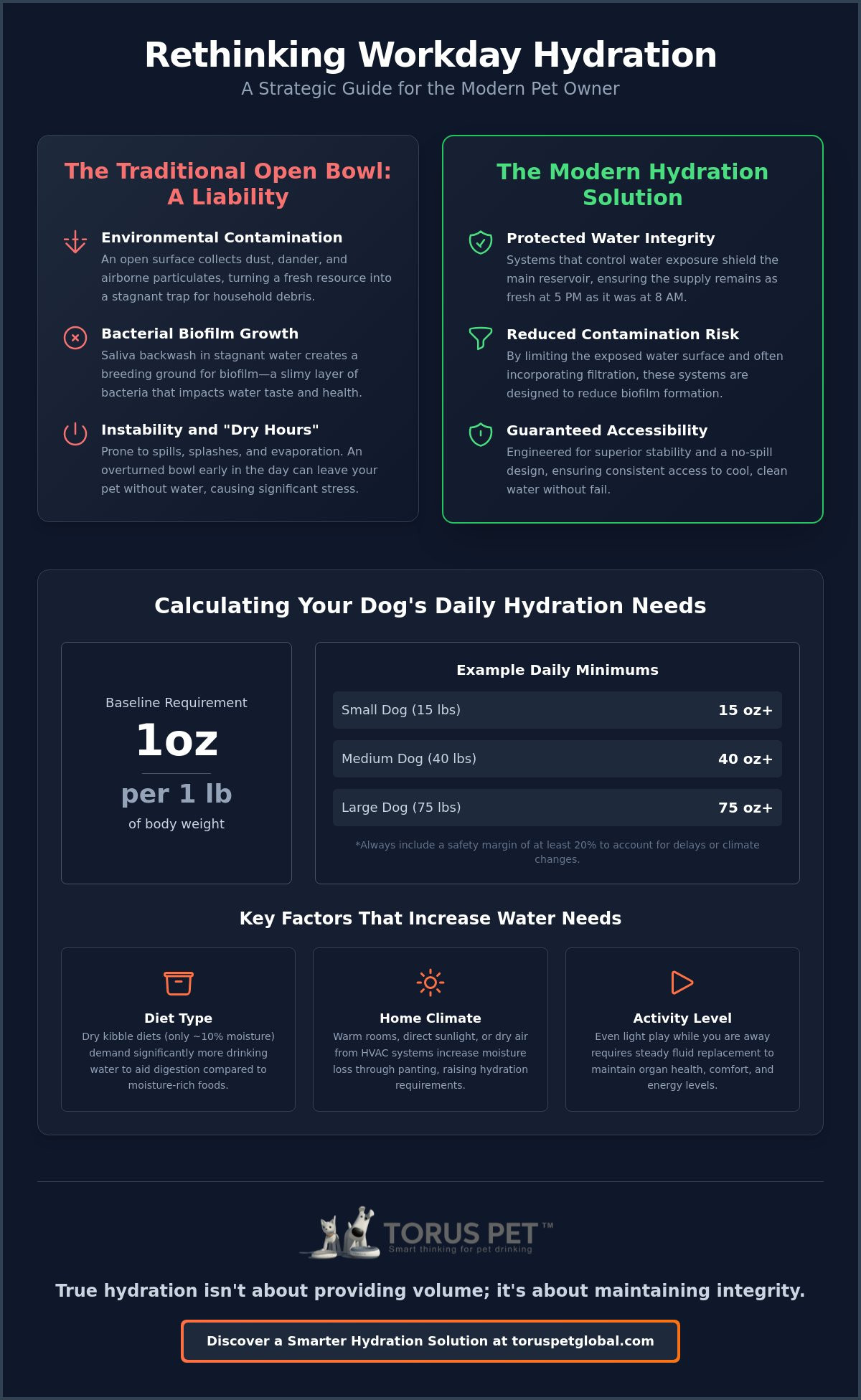
Indoor environments are surprisingly dynamic. Modern HVAC systems constantly circulate dust, pet dander, and microscopic particulates. In an open container, these elements settle directly into the water supply. Instead of a refreshing resource, the bowl becomes a stagnant trap for household debris. When considering how to make sure dog has water while at work, the goal should be consistent access to water that remains as clean as the moment it left the tap.
The Biofilm Factor and Environmental Contamination
Stagnant water is a breeding ground for invisible issues. When a dog drinks, saliva backwash introduces bacteria and organic matter into the remaining supply. Within hours, a slippery layer begins to form on the surface and floor of the bowl. Biofilm is a complex structure of bacteria that adheres to surfaces in moist environments. This bacterial load increases throughout the day, often making the water less appealing and less healthy.
Open bowls also act as a magnet for environmental contaminants. Airborne particles from cooking, cleaning products, or even outdoor pollutants brought in on shoes can accumulate in the water. This degradation happens silently while you're away. It transforms a vital resource into a source of potential contamination. Systems that control water exposure help reduce this risk by shielding the main reservoir from the environment.
Reliability and the Risk of "Dry Hours"
Beyond cleanliness, there is the issue of physical reliability. Traditional bowls are inherently vulnerable. They tip over during play. They get splashed onto the floor. They evaporate in warm, sunlit rooms. What if your electric water fountain fails through technical fault or power outage? If a bowl is emptied or overturned early in the morning, or your electric water fountain fails, your dog faces hours of thirst before you return. These "dry hours" are more than just an inconvenience.
Understanding the dangers of dehydration is vital for every pet owner. A sudden loss of their primary resource can cause significant psychological stress. It disrupts their sense of security and impacts their physiological well-being. For a deeper look at these biological needs, you can explore The Science of Hydration. Effective management requires a system like Torus that eliminates these risks, ensuring the water stays in the bowl and stays fresh.
Calculating Your Dog’s Daily Hydration Requirements
Relying on a "one-size-fits-all" approach to water volume is a common oversight. A dog’s physiological needs are dynamic. They change based on weight, activity, and metabolic rate. Understanding these variables is the first step in learning how to make sure dog has water while at work without leaving your pet in a deficit.
A standard baseline for a healthy dog is approximately one ounce of fluid per pound of body weight every day. For a 60-pound dog, this means a minimum of 60 ounces. However, this figure is a starting point, not a ceiling. You should always include a safety margin of at least 20% to account for unexpected delays in your return home or fluctuations in thirst. Sufficient water is about more than just surviving the day; it's about maintaining peak health.
Thermoregulation is another critical factor. Dogs don't sweat like humans. They cool themselves through panting, which causes significant moisture loss through evaporation from the tongue and lungs. Even while resting in a quiet home, this continuous exchange of air requires steady fluid replacement to maintain organ health and comfort. If your dog is active while you are away, this moisture loss happens even faster.
Dietary Influence on Water Intake
Your dog's diet dictates a large portion of their hydration strategy. Dogs fed a dry kibble diet, which typically contains only 10% moisture, must consume significantly more water to facilitate digestion. In contrast, those on moisture-rich diets may appear to drink less, though their total fluid requirement remains the same. The difference is simply how the water is delivered.
Sodium levels in commercial foods can also trigger increased thirst throughout the afternoon. It's essential that water remains accessible even when the dog isn't eating. This constant availability helps manage the sodium-driven thirst response effectively. For more practical advice on maintaining these levels, you can review these tips to keep your pets hydrated.
Environmental and Activity Variables
The climate inside your home directly impacts metabolic water loss. A seemingly small increase in ambient temperature, such as a shift from 70 to 75 degrees, can accelerate the rate of hydration consumption. Even low-energy dogs engaged in "active rest" require a steady supply of fresh water to support kidney and liver function while they wait for your return.
Integrating these calculations into your schedule is part of Optimizing Your Pet Care Routine. When you understand the math behind the thirst, you can select sophisticated hydration systems that meet those needs without the risk of running dry. This proactive approach ensures your dog stays comfortable and healthy until you walk through the door.
Evaluating Hydration Delivery Systems for Modern Homes
Many owners resort to messy "hacks" like placing ice cubes in water or using oversized, heavy ceramic dishes to prevent tipping. While these might solve the problem of physical stability, they fail to address the core issue of water quality over time. When determining how to make sure dog has water while at work, the focus should shift from simple volume to the mechanics of the delivery system itself. A sophisticated home deserves a solution that prioritizes both hygiene and reliability.
The ideal system should offer a "set and forget" experience. It should maintain the water's integrity without requiring constant monitoring or complex maintenance. By moving away from basic containers, you can ensure that your pet's resources are protected from the unique challenges of an empty house, such as stagnant air or unexpected power fluctuations. This is where Torus wins big against alternatives.
Traditional Bowls vs. Electronic Fountains
Electronic fountains are often presented as a high-tech upgrade. They offer filtration and movement, which can encourage some pets to drink more frequently. However, they remain "open air" systems. Dust, hair, and airborne particulates still settle in the drinking well. The internal filters can only process what has already entered the supply, meaning the water is constantly recirculating through environmental debris.
Mechanical reliability is another significant concern. If a power outage occurs or a pump fails while you are away, your dog may be left without any access to water. Additionally, the constant hum of a motor can be a source of environmental stress in an otherwise quiet home. Maintaining these systems also carries a high time cost. Complex internal parts often harbor biofilm that is difficult to reach, requiring deep cleaning that many owners find cumbersome.
The Advantage of Gravity-Fed Reservoir Systems
Advanced reservoir systems offer a more robust alternative for the modern home. Unlike open bowls or fountains, these systems utilize a "controlled exposure" design. The bulk of the water supply remains sealed within a reservoir. It is protected from light, air, and household contaminants. This design significantly reduces the risk of bacterial growth and ensures the water remains fresh for the duration of your workday.
These systems operate silently and without the need for electricity. This provides a fail-safe resource that isn't dependent on your home's power grid or mechanical pumps. They are particularly effective for anxious pets who might be deterred by the vibration or noise of a fountain. Torus hydration solutions represent this category of reservoir-style delivery, combining sophisticated engineering with a clean aesthetic that complements contemporary interiors. They ensure that hydration remains a seamless, worry-free part of your pet's daily routine.
A Strategic Framework for Workday Hydration Management
Effective hydration is not a passive event. It is a managed strategy that requires a deliberate framework to ensure consistency. While some suggest hiring a dog walker to check water levels, this is often an expensive and intermittent solution. Establishing a proactive routine is a much more reliable way to handle how to make sure dog has water while at work without relying on third-party schedules.
A "Morning Prep" routine is the foundation of this framework. Before leaving, take thirty seconds to verify that your hydration system is primed and the reservoir is at capacity. Check the filter status and ensure the drinking well is clear of any debris from the previous night. This small investment in time prevents a day-long deficit and provides the peace of mind needed to focus on your professional responsibilities.
Monitoring consumption trends is also vital. By using systems with transparent indicators or smart tracking, you can establish a baseline for your dog's daily intake. A sudden decrease in water consumption can be an early indicator of health changes, while an increase might suggest the home environment is too warm. This data-driven approach transforms hydration from a chore into a sophisticated element of pet health monitoring.
Optimal Placement and Temperature Stability
Placement is as critical as the water itself. Many owners make the mistake of placing water stations near windows for light, but direct sunlight triggers rapid algae growth and causes temperature spikes. Fluids should be kept in cool, shaded areas away from high-traffic "kick zones" where the system could be disturbed. Modern homes benefit from systems with thick, insulated walls that maintain a consistent, refreshing temperature even as the day warms up.
In larger or multi-story homes, the "Multiple Station" theory should be applied. One source is rarely sufficient if your dog spends time in different areas of the house. Providing a station in each primary "rest zone" ensures they never have to travel far to find a drink. You can use this pet hydration quiz to determine if your current layout and capacity are sufficient for your dog's specific needs.
The Maintenance Cycle: Filtration and Cleaning
A high-quality hydration strategy requires a consistent maintenance cycle. Regular filter changes are necessary to effectively remove chlorine, heavy metals, and organic tastes that can deter a dog from drinking. Active carbon filtration helps reduce exposure to common tap water impurities. This ensures the water remains palatable and encourages steady intake throughout the day.
Cleaning does not have to be a daily burden if you select the right equipment. A simplified schedule involves a quick rinse during the week and a more thorough cleaning over the weekend. This rhythm keeps the system free of biofilm without consuming your limited free time. For those looking to upgrade their current setup, exploring sophisticated hydration solutions can simplify this maintenance cycle while significantly improving water quality.
Sophisticated Hydration: The Torus Pet Approach
Traditional vessels often fail because they treat water as a static resource. When you are determining how to make sure dog has water while at work, you need a system that actively manages the supply. The Torus Maxi is designed as a comprehensive Pet Hydration Solution rather than a standard bowl. It aligns with 2026 living standards by utilizing antimicrobial materials and a minimalist footprint that complements modern interior design.
This system addresses the reliability gap found in electronic fountains. It uses a gravity-fed Auto-Replenish mechanism that provides fresh water without the need for batteries or a power source. You don't have to worry about mechanical failure during a workday outage. The No-Spill design is also a functional necessity for protecting expensive hardwood or stone flooring from the splashes often associated with open containers.
Controlled Water Exposure Technology
The core of this approach is controlled water exposure. The Torus system stores up to 68oz of water within its insulated walls, shielding the bulk of the supply from light and air. It releases only a small, filtered amount into the drinking well at any given time. This low-profile water surface prevents messy ears and reduces the risk of significant splashes.
By keeping the majority of the water sealed, the system maintains water integrity for hours. It prevents the rapid degradation discussed in earlier sections. You can view a visual breakdown of this gravity-fed delivery by exploring How Torus Works. It's a simple yet effective way to ensure the water remains as fresh as when it was first poured.
Portability for the Modern Lifestyle
Modern pet ownership often involves movement between the home, the office, and travel. A system designed for the living room should transition seamlessly to these environments. The Torus solution features a heavy-duty, non-tipping base. This is essential for dogs who are active or "pawsy" with their water stations while home alone.
Hydration is a sophisticated element of modern pet care. It involves more than just filling a dish. It requires a thoughtful, engineered approach to how water is stored, delivered, and maintained. By prioritizing water integrity and system reliability, you provide your pet with a consistent resource that supports their long-term well-being.
Elevating the Daily Hydration Experience
Providing a reliable water source is a fundamental part of responsible ownership. It requires moving beyond the open bowl to a system that prioritizes water integrity. By calculating specific metabolic needs and choosing a reservoir-based solution, you eliminate the risks of environmental contamination and mechanical failure. You gain the peace of mind that comes with a sophisticated "set and forget" strategy.
Learning how to make sure dog has water while at work doesn't have to be a source of daily stress. Designed in New Zealand for global pet health standards, our systems use antimicrobial technology to help reduce bacterial exposure without the need for power or batteries. This ensures 24/7 access to cleaner water in a way that integrates perfectly with your modern home aesthetic.
Refining your dog's daily routine starts with selecting the right equipment. Explore the Torus range of filtered hydration solutions to find a system that supports your pet's long-term well-being. You can now focus on your professional day with confidence. Your dog's health is in good hands.
Frequently Asked Questions
How much water should my dog drink while I am at work?
A healthy dog typically requires approximately one ounce of fluid per pound of body weight every day. When you are planning how to make sure dog has water while at work, you should provide enough for the full day plus a 20% safety margin. This extra volume accounts for metabolic water loss from panting or unexpected delays in your return home.
Is it better to leave out one large bowl or multiple smaller bowls?
Providing multiple water stations is generally superior to relying on a single source, especially in multi-story or large homes. Placing a dispenser in each primary rest zone ensures your dog has immediate access without traveling far. This strategy also provides a necessary backup if one station is accidentally disturbed or blocked during the day.
Can I use a water fountain if my dog is a messy drinker?
Electronic fountains can be problematic for messy drinkers because the constant flow often leads to splashing on surrounding floors. Systems that control water exposure, like Torus, offer a low-profile drinking well that minimizes these messes. This design prevents long ears or jowls from carrying excess water away from the station and across your home.
How do I keep my dog’s water cool for 8 hours without using ice?
The most effective way to maintain a refreshing temperature is by using a system with thick, insulated reservoir walls. You should also place the water station in a shaded area away from windows or heat vents. High-quality hydration solutions like Torus that have thick walls and internal water storage, are specifically designed to shield the main water supply from ambient room temperature spikes throughout the workday.
What should I do if my dog tips over their water bowl while I’m gone?
To eliminate this risk, you should transition to a hydration system with a heavy-duty, non-tipping base. Traditional bowls are inherently unstable and easily overturned during play. Professional solutions store the bulk of the water within the unit's walls, meaning even if the unit is nudged, only a few ounces are at risk of spilling. Torus water dispenser bowls are almost impossible to tip or drag. Their solid design profile and low water profile reduce spill and tip risk significantly.
Is tap water safe for my dog to drink all day, or should it be filtered?
While tap water is generally safe, active carbon filtration significantly improves the taste and quality by removing chlorine and heavy metals. This is a vital part of how to make sure dog has water while at work that they actually want to drink. Filtering encourages more frequent hydration by ensuring the water remains fresh and palatable for hours. Torus offers a Standard active carbon filter as well as an Advanced Filter option that includes antimocrobial cleantech that is especially useful for travel.
How often should I clean my dog’s water dispenser to prevent biofilm?
You should perform a thorough cleaning once a week to prevent the accumulation of bacterial biofilm. A quick daily rinse of the drinking well is also recommended to remove saliva and household dust. Using dispensers like Torus designed with antimicrobial materials can help reduce the rate of bacterial growth, making your weekly maintenance routine much more effective.
What are the early signs that my dog isn’t drinking enough during the day?
Early indicators of insufficient hydration include dry or sticky gums and a noticeable decrease in energy levels. You can also check for a loss of skin elasticity by gently lifting the skin between the shoulder blades. If the skin doesn't snap back into place immediately, it's a sign that your dog requires more consistent access to fresh fluids.