
The Best Water Bowl for Dog Crates: A Guide to Clean, Spill-Free Hydration

What if the most important feature of a crate setup isn't how the bowl attaches to the bars, but how it manages the water itself? Most owners search for the best water bowl for dog crate use by focusing on heavy clamps or deep basins. Yet, these traditional open bowls often lead to soggy bedding, biofilm buildup, and a cramped environment that limits your dog's comfort.
It's frustrating to find a wet crate and a bored dog who has splashed their water everywhere. Standard bowls are prone to contamination and spills, turning a sanctuary into a chore. We believe hydration should be a sophisticated element of care, focusing on how water is stored and delivered rather than just how much a bowl can hold.
This guide will show you how to maintain a dry, hygienic environment while ensuring constant access to fresh, filtered water. You'll learn about systems that control water exposure, like Torus Pet, to eliminate mess and improve hygiene. We'll explore solutions that fit a modern aesthetic and prioritize your dog's long-term wellbeing through smarter hydration management.
Key Takeaways
- Reframe crate hydration by understanding why traditional open bowls often compromise cleanliness and bedding comfort.
- Evaluate the essential criteria for the best water bowl for dog crate setups, prioritizing stability and integrated filtration over basic attachment methods.
- Compare the mechanics of noisy hanging bowls against advanced, gravity-fed systems that minimize splashing and gulping.
- Discover how hydration solutions that store water within a protected reservoir help reduce exposure to dust, fur, and crate debris.
- Learn practical strategies for maximizing crate floor space while maintaining a sophisticated and clean aesthetic.
The Challenge of Crate Hydration: Why Standard Bowls Fail
Most owners assume that the best water bowl for dog crate use is simply one that doesn't tip over. While stability is important, it's only a small fraction of the equation. Dog crates are designed to replicate a dog's natural den; they're meant to be clean, dry sanctuaries. When a standard open bowl is introduced, that sanctuary is often compromised within hours.
In a confined space, a single spill creates an immediate crisis. Damp bedding leads to skin irritation and a cold, unhygienic environment. Beyond the physical mess, standard bowls act as magnets for airborne contaminants. Dust, fur, and crate debris settle into the water within minutes, turning a fresh drink into a stagnant pool of bacteria. These environments are prone to the rapid growth of biofilm, that slippery layer of slime that forms when water sits exposed to the air.
The Problem with Open-Well Designs
Open-well bowls present a significant surface area that invites trouble. This design doesn't just collect debris; it often triggers a specific instinctual behavior known as "water digging." When dogs experience boredom in a crate, the sensory feedback of splashing water becomes a tempting game. They aren't trying to be destructive; they're simply interacting with the only dynamic element in their immediate reach.
Traditional buckets or hanging cups don't solve this. Even if they're bolted to the bars, the open top allows a dog to splash water out with their paws or muzzle. This behavior isn't just messy. It's a clear sign that the hydration method isn't suited for a confined, low-stimulation environment. A high surface area also means faster evaporation and a higher risk of the water tasting "stale" to a sensitive pet.
Why "Spill-Proof" is Only Half the Battle
Many products claim to be spill-proof because they're heavy or securely attached to the crate walls. However, a bowl that stays upright can still hold unappealing, contaminated water. Stability is essential for a best water bowl for dog crate, but it does nothing to address water purity. Without a way to shield the supply, you're merely securing a bowl of dirty water.
True success in crate care requires a shift toward controlled water exposure. Systems that control water exposure, like Torus, ensure that only a small amount of fresh water is available in the well at any time. This reduces the "temptation" to splash while keeping the bulk of the water supply protected from the environment. You can learn more about the science behind this approach, which prioritizes long-term health over basic convenience. Cleaner hydration is about managing the environment, not just the hardware.
Criteria for the Best Water Bowl for Dog Crates
Selecting the best water bowl for dog crate environments requires looking beyond basic attachment mechanisms. While many manufacturers focus on high-capacity buckets, a larger volume often increases the risk of significant spills and water damage to your home. A sophisticated hydration solution should prioritize controlled exposure and water purity, ensuring your dog remains hydrated without compromising the cleanliness of their sanctuary.
When evaluating options, look for these five essential pillars of crate hydration:
- Stability: The system must remain stationary and upright, even if the dog shifts position or leans against it.
- Water Purity: Integrated filtration is necessary to remove impurities and odors that can discourage drinking.
- Low Profile: The design should be sleek and unobtrusive, preserving maximum floor space for the dog to stretch and sleep.
- Controlled Flow: Only a small pool of water should be exposed at any given time to prevent splashing.
- Antimicrobial Properties: Materials should be designed to naturally inhibit the growth of bacteria on surfaces.
Stability Without the Bulk
Traditional crate bowls often rely on industrial-looking bolts and clamps. While these "fixed" options prevent the bowl from being carried away, they can be noisy, rattling against the metal bars every time your dog moves. They also create a permanent obstacle that reduces the usable square footage of the crate. A better approach utilizes a low center of gravity and a non-tipping base.
Sleek, weighted designs provide peace of mind during long work hours or travel. These systems stay in place through intelligent engineering rather than bulky hardware. This versatility allows you to move the hydration source from the crate to the living room without unscrewing complex mounts. Adhering to federal regulations for animal transport is also easier when using equipment designed for both stability and accessibility.
The Importance of Continuous Filtration
Water purity is the most overlooked aspect of crate care. Dogs have a highly sensitive sense of smell; if the water in their bowl tastes of chlorine or has absorbed the scent of crate bedding, they may avoid drinking altogether. Advanced systems utilize activated carbon filters to maintain water "sweetness" and palatability, encouraging healthy hydration habits throughout the day.
Biofilm is a bacterial colony that thrives in unmanaged pet bowls. Without filtration and controlled exposure, this slime builds up rapidly in the stagnant environment of a crate. By choosing systems that control water exposure, like Torus, you ensure that the water your dog touches is always fresh and shielded from environmental contaminants. This proactive approach to hygiene is a hallmark of thoughtful pet ownership, focusing on long-term wellness rather than just temporary convenience.
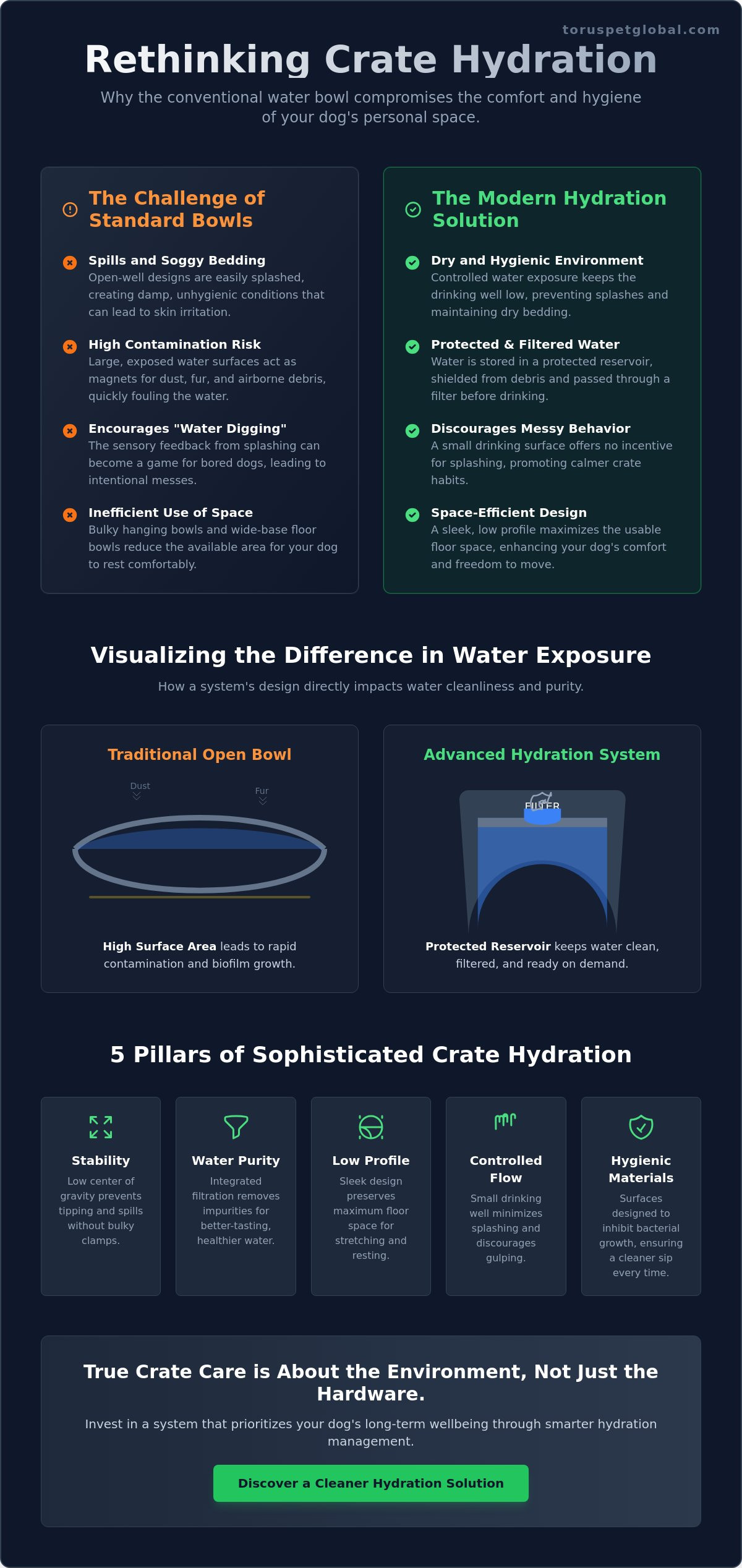
Traditional Hanging Bowls vs. Advanced Hydration Systems
Selecting the best water bowl for dog crate use often feels like a choice between two compromises: a bowl that takes up too much floor space or a hanging cup that rattles incessantly. While stainless steel pails are frequently recommended for their durability, they offer no solution for the noise generated by a shifting dog. This constant metallic clanging can disrupt a dog's rest and undermine the sense of security a crate is supposed to provide.
Advanced hydration systems move away from these mechanical frustrations. Instead of relying on noisy attachments, they use a low-profile footprint that sits securely on the crate floor. This design preserves the vertical space your dog needs to stand and turn comfortably. It replaces the clank and splash of traditional hardware with a silent, gravity-fed delivery system that respects the quiet of your home.
Maintenance also becomes a different experience. Traditional pails require frequent, aggressive scrubbing to remove the biofilm that naturally accumulates in stagnant water. In contrast, a self-managing system with integrated filtration keeps the water moving and clean. It's a shift from reactive cleaning to proactive hydration management.
Managing the "Splash Zone"
A common issue with deep hanging bowls is the muzzle dip. When a dog drinks from a deep reservoir, their chin and whiskers often become saturated. This leads to a trail of water across the crate bedding or your flooring once they exit. Shallow-well designs solve this by providing just enough water for the tongue to lap, keeping the rest of the dog dry.
By utilizing Torus hydration solutions, you can precisely control the amount of water exposed. These systems maintain a consistent, shallow pool that refills automatically as the dog drinks. This mechanic discourages gulping and significantly reduces the mess left behind. It's a cleaner approach that prioritizes a dry environment over the simple provision of a deep, open bucket.
Materials and Longevity
While many owners view bowls as disposable items, a sophisticated hydration system is a long-term investment in pet health. Basic plastic or metal bowls are prone to scratches where bacteria can hide. Even stainless steel, often touted as the cleanest option, requires significant effort to remain hygienic because it lacks any active filtration or antimicrobial surface properties.
Premium systems use food-grade, antimicrobial materials designed to inhibit bacterial growth. This choice reflects a more thoughtful pet care routine, especially for dogs who spend regular time in crates for travel or training. A single, high-quality system that works as well in a vehicle as it does in a home crate offers better value than a collection of cheap, specialized bowls. It's a modern solution for a lifestyle that values both design and functionality.
Practical Tips for Crate Hydration Success
Integrating the best water bowl for dog crate use involves more than just placing it on the floor. It requires a strategy that respects your dog's space and ensures the water remains appealing throughout the day. By following a few practical protocols, you can transform a standard crate into a highly functional and hygienic environment that prioritizes your dog's comfort.
Successful crate hydration is built on four key pillars:
- Maximize Floor Space: Position the hydration system in a corner to preserve a clear path for your dog to turn, stretch, and sleep without obstruction.
- Build Confidence: Allow your dog to interact with the new system in a low-pressure environment, like the living room, before placing it inside the crate.
- Match Capacity to Need: Choose a reservoir size that provides enough water for the duration of the crate stay without adding unnecessary bulk to the interior.
- Maintain a Rhythm: Establish a monthly schedule for deep cleaning and filter inspection to prevent the accumulation of environmental debris or minerals.
Sizing Your Solution
Choosing the right volume is a balance of utility and space efficiency. The Torus Mini (34oz) is ideal for compact crates and smaller breeds, providing ample hydration without infringing on sleeping quarters. For larger dogs or longer periods of confinement, the Maxi (68oz) offers the reservoir depth needed to maintain a consistent supply. To ensure you aren't underestimating your dog's daily requirements, consider taking the Torus hydration quiz for a personalized recommendation based on breed and activity level.
Dogs can be wary of new objects in their "den." Introducing a hydration system outside the crate first allows them to associate the device with a positive, stress-free experience. Once they are confident with the delivery method, moving it into the crate becomes a seamless transition rather than a source of confusion. This building of confidence is key to ensuring they actually use the system when you aren't there to encourage them.
Maintenance for Long-Term Health
Long-term health is supported by consistent water quality. Activated carbon filters are essential for removing the tastes and smells of tap water, which can often discourage sensitive dogs from drinking. Regular replacement of these filters ensures the water supply remains clean and inviting. Additionally, a quick rinse of the internal reservoir helps prevent the mineral buildup that can occur in hard water areas. Understanding the science of hydration helps owners appreciate how these small maintenance steps result in a significantly cleaner drinking experience.
To find the right fit for your home and ensure your dog has access to the best possible care, explore our full range of Pet Hydration Solutions.
The Future of Crate Care: The Torus Hydration Solution
A static container is no longer sufficient for the needs of the modern pet. While the search for the best water bowl for dog crate use often ends with a basic spill-proof dish, the reality is that hydration requires a more integrated approach. True innovation in this space moves away from simple open wells and toward sophisticated systems that store, filter, and deliver water on demand. This shift ensures that the water your dog consumes is as clean and fresh as the environment you've worked hard to maintain.
Systems that control water exposure, like Torus, represent this new standard. By storing the main water supply within the protected walls of the reservoir, the system prevents environmental contaminants from reaching the bulk of the water. This design eliminates the need for electricity or batteries, making it a safe, silent choice for unsupervised crate use. There are no cords to chew and no mechanical failures to worry about; just a consistent, gravity-fed supply of filtered water.
The synergy of antimicrobial technology and activated carbon filters provides a multi-layered defense against contamination. While the filters remove chlorine and sediment, the antimicrobial surfaces help reduce the growth of bacteria on the bowl itself. This proactive management of water quality is what distinguishes a professional-grade hydration solution from a standard pet store bowl.
Designed for the Modern Home
Pet equipment should not feel like an intrusion into your living space. The Torus system features a clean, low-profile aesthetic that complements contemporary interior design. Its sleek footprint and neutral palette ensure that it looks as at home in a high-end kitchen as it does in a travel kennel. This versatility is essential for owners who value a seamless transition between home life and travel adventures.
Hydration is increasingly recognized as a sophisticated element of modern pet care routines. It's about more than just quenching thirst; it's about maintaining a lifestyle of health and cleanliness. A portable, non-tipping solution allows you to maintain this standard of care regardless of your location, ensuring your dog's routine remains uninterrupted during hotel stays or long car journeys.
Peace of Mind for the Thoughtful Owner
The ultimate goal of crate hydration is to provide peace of mind. By eliminating the frustration of wet bedding and the worry of stagnant water, you can focus on the joy of pet ownership rather than the logistics of maintenance. It's a relief to return home to a dry crate and a well-hydrated dog, knowing that their water supply was protected and fresh throughout the day.
Effective hydration should be effortless, clean, and fully integrated into your daily life. It is the final piece of the puzzle in creating a truly healthy crate environment. We invite you to explore the range of Torus dispensers to discover how a smarter approach to water can enhance your dog's wellbeing and simplify your home care routine.
Takeaway: Sophisticated pet care is defined by how we manage resources. By choosing a system that prioritizes filtration and controlled delivery, you ensure that hydration remains a pillar of health rather than a source of mess.
Elevating Your Pet's Crate Environment
Modern pet care demands a shift from reactive cleaning to proactive hydration management. By moving away from noisy hanging cups and stagnant open wells, you create a sanctuary that remains dry and hygienic. The best water bowl for dog crate setups is one that integrates seamlessly into your daily life while prioritizing your dog's long-term health and comfort.
Choosing a system with antimicrobial construction and advanced carbon filtration ensures every drop is as fresh as the first. A no-spill gravity-fed design eliminates the frustration of wet bedding and provides the peace of mind you deserve during work or travel. This approach transforms a simple utility into a sophisticated hydration experience that respects both your home and your pet's needs.
Hydration should be a quiet, clean, and effortless element of your dog's day. It's time to upgrade their den with a solution that values both modern aesthetics and technical excellence. Thoughtful choices today lead to a healthier, more comfortable environment for your companion tomorrow.
Explore Torus Hydration Solutions for Your Dog’s Crate to see how thoughtful design can simplify your routine and enhance your pet's wellbeing.
Frequently Asked Questions
Is it safe to leave a water bowl in a dog crate while I am at work?
Yes, providing constant access to water is essential for your dog's health, especially during long work days. Using a non-electric pet hydration solution ensures there are no cords to chew or batteries to fail while you are away. This provides peace of mind and keeps your dog comfortable in their den without the risks associated with motorized fountains or open buckets.
How do I stop my dog from playing with and splashing water in their crate?
You can stop splashing behavior by choosing a system that controls water exposure. Dogs often play with water when they can submerge their muzzles or paws in a deep pool. By providing only a shallow layer of water that refills as they drink, you remove the sensory temptation to splash, resulting in a drier crate environment and less boredom induced mess.
Are hanging water bowls better than floor bowls for crates?
Hanging bowls are often perceived as the best water bowl for dog crate use because they attach to the bars, but they can be noisy and unstable. A low-profile floor bowl with a heavy center of gravity provides a silent experience. It also maximizes the vertical space available for your dog to stand and move comfortably within the crate without metallic rattling.
What is the best way to prevent biofilm and slime in my dog’s water?
Preventing biofilm requires a combination of filtration and material choice. Activated carbon filters remove the organic matter that bacteria feed on, while antimicrobial surfaces help reduce the rate at which slime can form. Maintaining a regular cleaning schedule with a dedicated kit ensures the internal reservoir remains free from mineral buildup and environmental contaminants.
Can a dog knock over a Torus bowl in their crate?
It is highly unlikely for a dog to knock over a Torus hydration solution because of its low center of gravity and non-tipping base. Unlike light plastic dishes, these systems are weighted by the water stored in their internal reservoir. This design ensures the unit remains stationary even if a dog shifts position or leans against it during sleep.
How often should I change the water in a crate hydration system?
You should refresh the water supply every two to three days to ensure peak palatability. Even with filtration, stagnant water can lose its appeal over time. A quick rinse during refilling helps maintain a hygienic environment, while the internal filter continues to remove impurities from the fresh water as it is dispensed into the drinking well.
Will a 68oz bowl fit in a standard-sized dog crate?
Yes, the 68oz Maxi system is designed with a sleek footprint that fits easily into the corner of most standard crates. Its low profile ensures it doesn't take up the vertical space your dog needs to stretch and turn. For smaller crates or toy breeds, the 34oz Mini offers the same benefits in a more compact size to preserve floor space.
What materials are safest for a dog crate water bowl?
The safest materials for a best water bowl for dog crate include food-grade, BPA-free plastics that are durable and easy to sanitize. These materials don't leach chemicals into the water and are less prone to the deep scratches where bacteria hide. Combining these safe materials with active carbon filtration provides a high standard of hydration for your pet's long-term health.