
Beyond the Fountain: Comparing Modern Cat Hydration Solutions

The constant hum of a water drinking fountain cats use for daily hydration is often accepted as a necessary trade-off for their health. However, that mechanical vibration and the inevitable biofilm buildup suggest these systems are becoming relics of the past. You want the best for your cat; yet, the maintenance and noise of a pump-driven unit often disrupt the very peace you've curated in your modern home.
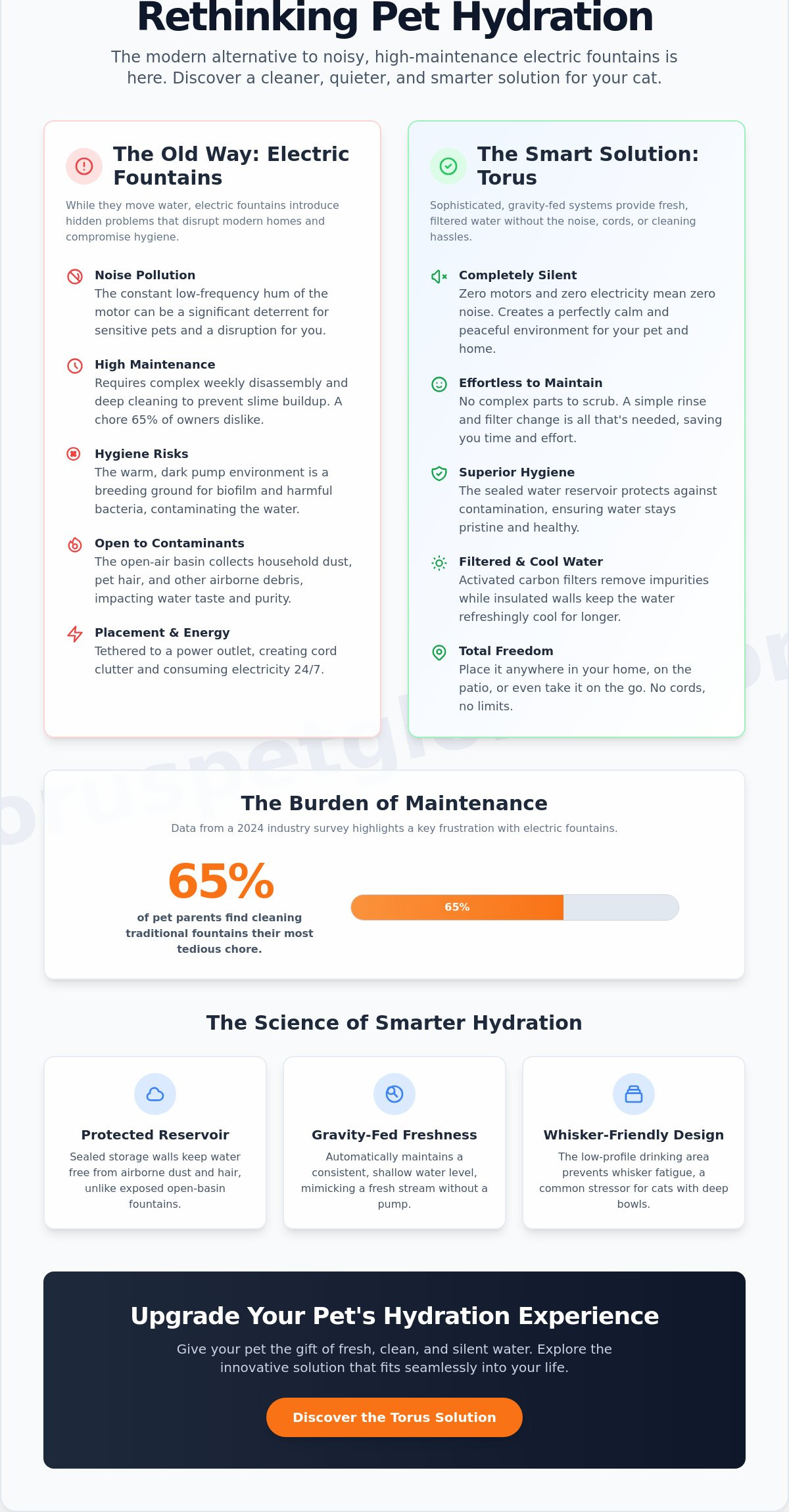
It's understandable why these devices became popular. Moving water is naturally more appealing to pets than a stagnant bowl. A 2024 industry survey showed that 65% of pet parents find cleaning traditional fountains to be their most tedious chore. You've likely experienced the frustration of finding a free power outlet or scrubbing slimy plastic parts every weekend. No power, no noise, no slime. No problem.
This guide explores how advanced hydration technology is evolving in 2026 to meet these needs. You'll learn why moving away from powered fountains leads to a cleaner, quieter environment for your family. We'll examine the benefits of systems that control water exposure, like Torus, to provide a sophisticated, low-maintenance hydration station that fits anywhere in your home.
Key Takeaways
- Understand why the evolutionary instinct for running water doesn't mean a traditional water drinking fountain cats use is the only way to ensure proper hydration.
- Uncover the hidden hygiene risks of biofilm and bacterial growth that thrive in the dark, warm environments of electric pump systems.
- Compare the long-term reliability and peace of mind offered by passive, gravity-fed systems over corded, motor-driven alternatives.
- Identify why food-grade, BPA-free materials and controlled water exposure are critical for maintaining a cleaner hydration environment.
- Discover how sophisticated storage solutions provide filtered, fresh water without the noise, cords, or maintenance of high-voltage devices.
Why the Running Water Myth Drives Feline Hydration Choices
Many pet parents believe a water drinking fountain for cats is the only way to ensure proper hydration. It’s a common assumption. We see the marketing and assume movement equals health. This belief stems from the survival tactics of feline ancestors who associated stagnant pools with bacteria and illness. In the wild, running water was a proxy for freshness. It was a life-saving instinct.
Modern homes aren't the African savanna. The water we provide is already treated and safe. However, the instinct remains. This drives the demand for mechanical fountains, but it often confuses the delivery method with the goal. A true Pet Hydration Solution focuses on water quality, temperature, and contamination risk rather than just mechanical movement. It's about how the water is stored and delivered, not how much it splashes.
Understanding the Feline Instinct for Freshness
Cats use their whiskers as high-precision sensors. They can detect subtle changes in air currents and surface tension. When drinking from a deep, stagnant bowl, a cat may experience whisker fatigue. This happens when their sensitive hairs touch the sides of the dish, causing sensory overload and stress. They don't necessarily want a waterfall; they want water they can see and feel without physical discomfort.
Innovative systems now prioritize "fresh-fill" delivery. This approach provides a shallow, constantly replenished pool of water. It mimics the freshness of a stream without the chaotic splashing of a pump. By using gravity and vacuum-sealed reservoirs, these systems maintain a consistent water level. This allows the cat to drink comfortably without submerging their face or stressing their whiskers.
The Hidden Costs of Electric Water Drinking Fountains for Cats
Electric fountains often introduce more problems than they solve. Maintenance fatigue is a primary complaint among modern pet owners. A typical electric fountain requires deep cleaning every 7 days to prevent biofilm and pink slime buildup in the pump. Disassembling these complex systems is a chore that many find unsustainable. No cords, no power, no complex disassembly. That is the goal for a modern home.
- Noise Pollution: The low-frequency hum of a motor can be a significant deterrent for sensitive cats.
- Environmental Impact: Constant power consumption and the need for frequent plastic filter replacements add up over time.
- Aesthetic Clutter: Cords create a messy look and limit where you can place the hydration station.
A sophisticated Pet Hydration Solution, like the systems designed by Torus, removes these barriers. By utilizing the science of activated carbon and insulated walls, you can provide cool, filtered water anywhere in the home. It’s a smarter way to respect feline instincts while maintaining a clean, modern aesthetic. Hydration should be a seamless part of your pet's life, not a mechanical chore for you.
The Science of Water Quality: Biofilm, Bacteria, and Stagnation
Many pet parents assume that moving water is inherently clean. However, the internal mechanics of a standard water drinking fountain cats use can hide invisible risks. Biofilm is a primary concern. It is a structured community of microorganisms that adheres to surfaces, creating a slippery, resilient coating. In the warm, dark environment of a fountain pump, biofilm thrives. It protects bacteria from standard cleaning, leading to a cycle of contamination that affects the health of the animal.
Open-air water exposure further complicates the environment. When water sits in an open basin, it acts as a magnet for household debris. Dust, hair, and airborne contaminants settle on the surface within hours. This exposure is more than an aesthetic issue. It directly impacts the goal of maintaining normal hydration, as cats are biologically programmed to avoid water that smells or tastes tainted. Sophisticated hydration hardware now utilizes antimicrobial materials to inhibit this growth before it starts.
No exposed reservoirs. No slime. No constant scrubbing. By shifting to a "controlled water exposure" model, the hydration environment remains protected. This method ensures that only a small amount of water is available at any time, while the bulk of the supply remains sealed away from environmental pollutants.
How Exposure to Air Compromises Water Purity
Air exposure triggers oxidation, a process that flatlines the taste of feline water. Cats possess a highly sensitive sense of taste and smell. When water sits out, it loses dissolved oxygen and absorbs carbon dioxide, becoming "stale." This chemical shift often discourages frequent drinking. Beyond taste, open basins accumulate hair and dander that can clog traditional water drinking fountain cats systems.
Storage within insulated walls protects water from light and heat, preventing the rapid degradation found in clear plastic or glass bowls. This temperature regulation keeps the water cool and appealing throughout the day. It offers a level of stability that open-air systems cannot match. For pet parents seeking a more refined approach, exploring an innovative hydration solution can eliminate these daily frustrations.
The Role of Filtration in Modern Pet Hydration
Filtration is the backbone of any high-quality hydration system. While standard charcoal filters are common, they often only address basic odors. Modern media is designed to remove chlorine and heavy metals like lead or mercury. These contaminants are frequently found in municipal supplies, even when the water is considered safe for human consumption.
- Charcoal Media: Primarily removes odors and improves immediate taste.
- Ion-Exchange Resins: Targets heavy metals and softens hard water.
- Mechanical Pre-filters: Captures larger debris like hair before it reaches the pump.
Effective filtration is essential for long-term health. It ensures that every sip is free from the chemical byproducts of water treatment. You can learn more about the technical specifications and the science of filtration to understand how these layers work together. A clean hydration environment is not just about movement; it is about the sophisticated management of storage, exposure, and purity.
Comparing Electric Fountains with Passive Hydration Systems
Many pet parents assume that a water drinking fountain cats use must be plugged in to be effective. This reliance on electricity creates a single point of failure. If the power cuts out while you are away, the flow stops; often, the water becomes inaccessible in the deep reservoir. Passive, gravity-fed systems operate on a different logic. They rely on physics rather than mechanics. This ensures that your pet has constant access to hydration, regardless of the grid's status.
Choosing a non-electric system is a move toward sophisticated, low-maintenance care. No motors. No cords. No power dependency. No problem. By removing the mechanical elements, you eliminate the parts most likely to break or harbor bacteria. It is a cleaner, more reliable approach to feline health that fits the minimalist aesthetic of a modern home.
Power Dependency and Reliability in the Modern Home
Cord-bound fountains limit your home's aesthetic and functional flow. You are forced to place the hydration station near an outlet, which often means high-traffic areas that cats find stressful. Cordless, non-electric solutions embrace an "Anytime. Anywhere." philosophy. You can place them in a quiet sunroom or a secluded hallway without trailing cables across the floor.
Reliability is paramount for long-term health. According to the American Veterinary Medical Association, a standard of care involves providing fresh, potable, uncontaminated drinking water at all times. Electric models often trap biofilm in hidden pump components that are difficult to reach. In contrast, advanced passive systems, like those explored in the science of hydration, use antimicrobial materials and sealed reservoirs to maintain water quality without the need for a buzzing motor.
Noise Pollution and the Stress-Free Feline Environment
Most electric fountains emit a constant low-frequency hum between 30 and 45 decibels. While humans might tune this out, a cat's acute hearing perceives this as a persistent environmental stressor. Passive systems operate at 0 decibels. They provide a silent, still environment that encourages skittish cats to drink longer and more frequently. This silence is essential for creating a calm sanctuary for your pet.
Safety and cost also factor into the comparison. Electric models require recurring expenses for replacement pumps, which typically fail within 12 to 18 months of continuous use. There is also the physical risk of cord-chewing, which can lead to electrical shocks or fires. Moving to a high-quality, non-electric hydration solution removes these hazards entirely, offering peace of mind for the pet parent and a safer environment for the cat.
Selecting a Hydration Solution for Your Home and Lifestyle
Choosing a hydration station involves more than picking a style that matches your kitchen. It requires a critical look at the materials that touch your cat's water every day. While a standard water drinking fountain cats might use relies on constant power and open exposure, a modern solution focuses on passive, high-capacity storage. This shift in design ensures that water remains fresh without the noise or mechanical failure associated with older systems.
For the design-conscious pet parent, a hydration station should be an extension of a clean home aesthetic. This means moving away from bulky, cord-heavy appliances and toward streamlined, self-contained units. A sophisticated system doesn't just provide water; it protects it from the environment, maintaining a cool temperature and preventing the buildup of household dust and debris.
Evaluating Material Safety and Durability
Material safety is a non-negotiable factor for feline health. Many budget-friendly options use porous plastics that develop microscopic scratches over time. These crevices trap bacteria and biofilm, contributing to feline acne, a condition that affects approximately 15% of domestic cats. Instead, look for food-grade, BPA-free materials or high-tech antimicrobial resins that are designed to resist bacterial growth.
Durability also plays a key role in long-term waste reduction. A 2025 study on pet product lifecycle suggests that high-quality resins outlast standard plastics by a factor of four. Investing in a system built for longevity reduces the environmental footprint of your home. To find the right material and size for your specific environment, take the hydration quiz to identify your ideal fit.
Maintenance Realities for a Water Drinking Fountain for Cats
Maintenance is where many hydration systems fail the "hassle-free" test. Traditional electronic fountains often require a weekly deep clean of the motor and internal tubing to remain functional. In a 2024 survey of cat owners, 68% identified cleaning difficulty as their primary frustration with pet products. A modern hydration solution should simplify this process with easy-access components and a design that eliminates hidden corners.
Large-capacity reservoirs are essential for the busy professional. By holding two liters or more in a protected internal wall, these systems reduce the daily burden of refilling. No batteries, no power, no noise; just a steady supply of filtered water. This creates a more reliable environment for your pet, especially during long workdays or travel. A truly modern system allows you to focus on the joy of companionship rather than the logistics of maintenance.
Explore our range of premium hydration solutions to elevate your pet's daily routine.
The Torus Pet Approach: Sophisticated Hydration Without the Cord
The assumption that a water drinking fountain for cats must be tethered to a wall outlet is a limitation of the past. Modern homes require flexibility; pet care should not depend on the proximity of a power socket or the reliability of a mechanical pump. The Torus Mini offers a sophisticated alternative that replaces complex electronics with the simple, effective science of gravity and vacuum pressure.
Traditional electric models often face issues with motor burnout or biofilm buildup in hidden internal components. By removing the cord, you eliminate these mechanical failure points. This creates a more reliable environment for your pet. It is a hydration solution designed for the way we live now: mobile, clean, and efficient.
Controlled Water Exposure for Cleaner Hydration
Static basins and traditional fountains often expose a large surface area of water to the environment. This leads to rapid accumulation of dust, dander, and household debris. The Torus system functions by storing the majority of the water supply within its insulated walls, protected from airborne contaminants.
As your cat drinks, the water level in the drinking well drops, triggering a self-filling mechanism. Fresh, filtered water flows from the reservoir to maintain a consistent level. This process ensures that only a small amount of water is exposed at any given time. You can view a visual breakdown of this how it works process to see the vacuum-seal logic in action. This method helps reduce exposure to bacteria and keeps the hydration source cleaner for longer periods.
- Internal Filtration: Active carbon filters remove impurities as water moves from the reservoir to the well.
- Reduced Contamination: Less surface area means fewer opportunities for dust and hair to settle.
- Temperature Stability: The thick-walled reservoir helps keep water cooler for longer than a standard bowl.
Hydration Anywhere: Portability for the Design-Conscious Owner
A hydration solution should adapt to your lifestyle, not dictate it. Because the Torus Mini requires no batteries or electricity, it transitions seamlessly from a minimalist kitchen to the back of a vehicle for weekend travel. Its low profile and heavy, non-tipping base provide stability that lightweight plastic fountains lack. No power, no cords, no mess.
The sleek aesthetic is designed to complement contemporary interiors rather than look like a piece of utility equipment. Pet parents can choose from various sizes and colors in the dispensers collection to match their specific space. It is a quiet, reliable presence in the home that doesn't disrupt the visual flow of a room.
Thoughtful design is about more than just aesthetics; it is about removing the friction from daily care. By choosing a system that prioritizes water quality through controlled exposure and physical stability, you invest in your pet's long-term wellbeing. Reliable hydration becomes a background benefit of a well-ordered home, ensuring your cat always has access to fresh water, anytime and anywhere.
Elevating Your Cat's Hydration Standards
Effective hydration in 2026 is no longer about the novelty of moving water; it's about the precision of water quality. While a standard water drinking fountain cats use might seem beneficial, these devices often struggle with biofilm accumulation and mechanical failure. Research from the American Veterinary Medical Association indicates that bacteria can colonize water surfaces in as little as 24 hours. Transitioning to a sophisticated pet hydration solution means moving away from high-maintenance electronics toward passive, intelligent design.
The modern home demands a system that integrates seamlessly into a clean aesthetic. By choosing a solution with a spill-proof, non-tipping design, you maintain a mess-free environment without the constant worry of cleanup. No batteries or electricity are required for this fresh, filtered water; instead, advanced antimicrobial technology does the work of keeping hydration cleaner. This approach reduces contamination risk while providing the peace of mind that comes with reliable, anytime access. Your cat deserves a hydration strategy that's as thoughtful and refined as the rest of your home.
Take the next step in optimizing your pet’s wellness and domestic harmony.
Explore the Torus range of silent, filtered pet hydration solutions
Frequently Asked Questions
Do cats really prefer drinking from a fountain over a bowl?
Most cats prefer moving water because their instincts associate it with safety and freshness. In the wild, stagnant water is a breeding ground for bacteria, while running streams are typically cleaner. A water drinking fountain for cats caters to this biological drive, often leading to increased hydration and better kidney health.
Traditional bowls allow dust and debris to settle on the surface, which can deter a fastidious pet. Moving water stays aerated and tastes better to a sensitive feline palate. By providing a dynamic source, you're encouraging your cat to drink more frequently throughout the day.
How often do I need to clean a cat water drinking fountain?
You should perform a deep clean of your fountain at least once every 7 days to ensure the water remains fresh. If you have multiple pets, this frequency should increase to every 4 or 5 days to manage the higher biological load. Regular maintenance prevents the buildup of minerals and organic matter that can damage internal components.
Cleaning involves disassembling the unit and scrubbing all surfaces with warm, soapy water. Key insights from veterinary experts suggest that neglecting this schedule can lead to the growth of harmful pathogens. Consistent care protects your pet's health and extends the lifespan of your hydration solution.
Are electric pet fountains safe to leave on 24/7?
While most electric fountains are designed for continuous use, they require constant monitoring to ensure water levels don't drop too low. A dry pump can overheat, creating a potential fire hazard or mechanical failure. Many pet parents find that the cords also present a tripping or chewing risk in the home.
For a safer alternative, consider a non-electric pet hydration solution like Torus. These systems provide fresh, filtered water without the need for power, batteries, or noisy motors. No cords, no heat, no risk. It's a more reliable way to ensure your cat stays hydrated even when you aren't home.
What is the best material for a cat water fountain?
Stainless steel and high-grade, BPA-free plastics are the most hygienic choices for modern pet homes. These materials are non-porous, meaning they won't trap bacteria in microscopic scratches like cheaper plastics or ceramic can. This helps reduce the risk of feline acne, a common skin condition caused by dirty feeding surfaces.
Design-conscious owners often prefer materials that are easy to sanitize and resistant to staining. Choosing a water drinking fountain for cats made from premium materials ensures a longer product life and a cleaner drinking environment. It's an investment in both your home's aesthetic and your pet's long-term wellbeing.
Why does my cat fountain get slimy so quickly?
That slippery film is called biofilm, a colony of bacteria that forms on surfaces in contact with water within 48 to 72 hours. Saliva, food particles, and airborne dust provide the nutrients these bacteria need to thrive. If the water is exposed to open air and light, this process accelerates significantly.
To combat this, look for systems that utilize controlled water exposure. Solutions that store water in an internal reservoir, like those from Torus, help reduce exposure to contaminants and light. This keeps the water cleaner for longer periods and minimizes the frequency of that unpleasant slime.
Can I use a cat water fountain without a filter?
You can operate most fountains without a filter, but the water quality will decline rapidly as hair and debris circulate through the system. Filters are essential for removing chlorine, heavy metals, and unpleasant odors that might discourage your cat from drinking. Without them, you'll likely need to change the water every 24 hours.
Advanced hydration systems use replaceable active carbon filters to maintain a high standard of purity. These filters trap impurities before they reach your pet's mouth, ensuring every sip is fresh. Using a filter is a simple way to provide a more sophisticated level of care for your cat.
How much water should a cat drink daily?
A healthy cat typically needs between 3.5 and 4.5 ounces of water per 5 pounds of body weight every day. For a standard 10-pound cat, this equates to approximately 7 to 9 ounces of total fluid intake. This requirement can change based on whether your pet eats dry kibble or moisture-rich wet food.
Monitoring intake is crucial for preventing urinary tract issues and kidney disease. Using a hydration solution with a graduated reservoir allows you to see exactly how much your cat consumes. This data helps you identify changes in behavior that might signal a health concern before it becomes an emergency.
Are there quiet cat water fountains that don’t use electricity?
Yes, innovative gravity-fed and vacuum-sealed systems offer a completely silent hydration experience without the need for a plug. These designs are perfect for skittish cats who are intimidated by the hum or splash of electric pumps. They also fit seamlessly into a minimalist, modern home aesthetic where peace is valued.
No batteries, no power, no noise. Systems like Torus use simple physics to autofill the drinking well as your pet drinks. This ensures a constant supply of fresh water without the mechanical failures associated with traditional fountains. It's a smart, low-maintenance choice for the modern pet parent.


