
Beyond the Plug: Choosing the Best Non-Electric Cat Water Fountain in 2026

What if the most sophisticated way to hydrate your cat didn't require a power outlet at all? Many owners assume a non-electric cat water fountain is a simplified alternative, but modern design proves it's actually a high-tech upgrade. Traditional electric models often introduce heat to the water, create audible stress for pets, and demand constant maintenance of complex, slimy pumps.
You likely appreciate a home that feels calm and looks intentional. Dealing with tangled cords and the fear of power failures shouldn't be part of your daily routine. We'll show you how to provide silent, filtered hydration that remains fresh for days without a single moving part. It's about moving toward cleaner hydration through smarter design rather than just plugging in another appliance.
This guide examines how mechanical sophistication, using gravity and vacuum seals, replaces the noise of old-fashioned motors. We'll preview the best ways to manage water exposure and highlight systems that control hydration, like Torus, to ensure your cat enjoys a safe experience. You'll learn why choosing FDA-compliant resins and advanced filtration is the new standard for the design-conscious owner.
Key Takeaways
- Understand how removing the electric pump eliminates noise and safety risks while aligning with a cat's biological preference for fresh, stored water.
- Learn how a non-electric cat water fountain uses gravity and sealed reservoirs to maintain water quality without the need for cords or batteries.
- Discover why battery-powered units often fall short of the true maintenance-free reliability offered by mechanical hydration systems.
- Identify the benefits of using food-grade, BPA-free materials that integrate seamlessly into a modern home's aesthetic.
- Explore how sophisticated systems like the Torus Mini manage water exposure to reduce contamination risks and simplify your daily routine.
Table of Contents
-
The Evolution of Feline Hydration: Why Non-Electric is the Modern Standard
-
The Mechanics of Motion: How True Non-Electric Systems Function
-
Comparison: Battery-Operated vs. True Non-Electric Gravity Systems
The Evolution of Feline Hydration: Why Non-Electric is the Modern Standard
Sophistication in pet care often gets confused with complexity. For years, the market suggested that a motorized pump was the only way to keep water moving and fresh. We now understand that this complexity creates friction. Mechanical hums, tangled cords, and the constant threat of a power outage don't just clutter your home; they create an environment of subtle stress for your pet.
Cats are biologically programmed to seek fresh sources, a trait inherited from their desert-dwelling ancestors. In a modern setting, this need is amplified by the moisture content in cat food, which is significantly lower in dry varieties than in a natural diet. Because they don't have a high thirst drive, the delivery method of their water becomes critical. A non-electric cat water fountain addresses this by using natural forces to provide the movement cats crave without the mechanical drawbacks.
Today's design-conscious owners are moving toward "silent tech." This trend prioritizes high-performance tools that disappear into the background of a modern kitchen or living space. Traditional fountains fail here because they rely on vibrating pumps that eventually wear down, grow loud, and become breeding grounds for bacteria.
The Problem with the Plug
Electric systems have several hidden failure points. The most concerning is the risk of biofilm buildup. Pumps contain small, internal cavities that are nearly impossible to scrub, allowing bacteria to colonize the very system meant to provide cleaner water. Beyond the hygiene risk, the constant low-frequency vibration can contribute to feline stress or sensory overload. If the power fails while you're away, a motorized fountain often becomes a stagnant, inaccessible reservoir, leaving your pet without a reliable source of hydration.
Defining the Non-Electric Pet Hydration Solution
A true non-electric cat water fountain like the Torus Pet range, isn't just a larger bowl. It's a system that manages water exposure to keep the majority of the supply protected from dust, hair, and saliva. These solutions rely on vacuum seals and gravity to dispense fresh water into a shallow drinking well only as it's consumed. You can explore the science behind these systems to see how they maintain water quality. Ultimately, this category is a blend of physics and filtration that ensures hydration remains a seamless part of your home.
The Mechanics of Motion: How True Non-Electric Systems Function
Most "smart" hydration tools rely on motion sensors and lithium batteries to create movement. While these features seem high-tech, they introduce new failure points and maintenance cycles. A true non-electric cat water fountain operates on a more elegant principle: the physics of vacuum pressure and gravity.
Instead of forcing water through a pump, these systems use a sealed internal reservoir. This design ensures that the bulk of the water supply remains protected from the environment. Proper hydration is essential for a variety of vital bodily functions, and keeping that water clean is just as important as the quantity provided.
Seals and Water Freshness
When water is left in an open bowl, it's immediately subject to contamination. Dust, airborne debris, and feline saliva begin to degrade the quality within hours. By storing the water supply within the insulated walls of the vessel, the exposure to light and air is minimized. This environment helps reduce the rate of bacterial growth and keeps the water at a more refreshing temperature.
Gravity and smart design regulates the flow. As your cat drinks from the well, filtered water dispenses automatically to replenish. This ensures the drinking level remains constant without the splashing or mechanical noise associated with traditional fountains. You can see this logic in action by exploring how these systems function to maintain a fresh supply. Torus Pet is a leader in this technology.
Advanced Filtration Without Power
Passive filtration is often more effective than pump-based systems because the water moves at a controlled pace. In a gravity-fed setup, water passes through a filter as it travels from the reservoir to the drinking well. This process helps reduce exposure to common contaminants that affect taste and safety.
-
Chlorine and Odors: Activated carbon absorbs chemicals that can make tap water unappealing to sensitive felines.
-
Sediment and Debris: Physical barriers catch hair and dust before they enter the drinking area.
-
Heavy Metals: Advanced filter media can help reduce trace elements often found in older plumbing systems.
Because there's no motor to clog or overheat, maintenance is simplified. You aren't scrubbing slimy plastic impellers or replacing complex pump components. Instead, you simply swap the filter every few weeks, ensuring the hydration solution remains efficient and the water remains fresh. This mechanical reliability provides peace of mind that your pet has access to clean water, even during a power outage or while you're away for the day.
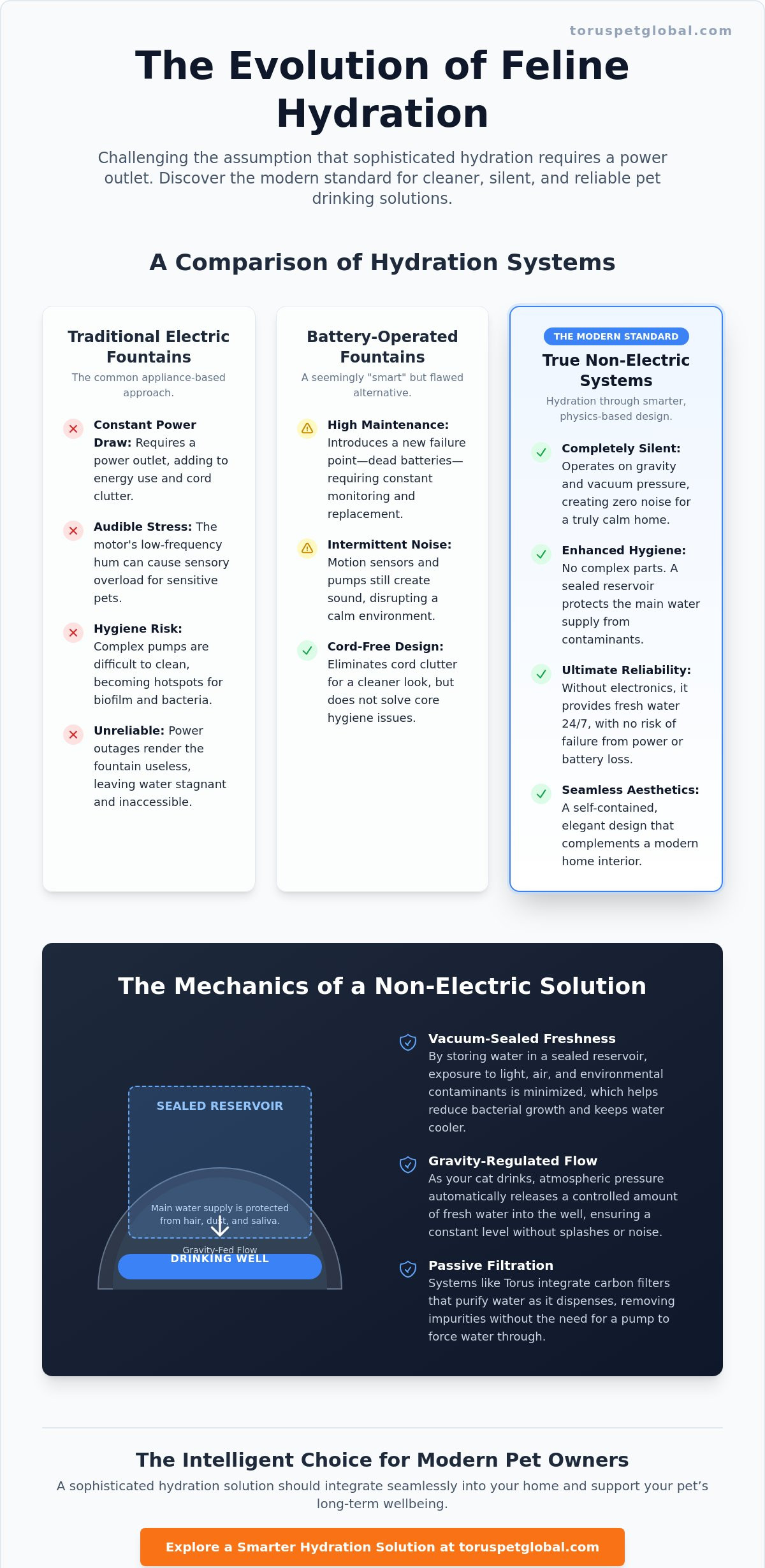
Comparison: Battery-Operated vs. True Non-Electric Gravity Systems
What if "cordless" was just a different kind of tether? Many pet owners seek a non-electric cat water fountain to escape the clutter of power cords, only to find themselves trapped in a cycle of recharging batteries and replacing failed sensors. Modern marketing often blurs the line between battery-operated electronics and true mechanical systems, but the difference in long-term reliability is stark.
Battery-powered units still rely on motorized pumps. These components are prone to mechanical failure, especially as battery health degrades over time. In contrast, a true non-electric cat water fountain uses the constant, unwavering force of gravity. Choosing the safest bowl for your pet involves looking beyond the lack of a plug; it requires evaluating the entire lifecycle of the product, from energy consumption to e-waste.
The cost of ownership also shifts when you remove electronics. Battery units frequently require expensive proprietary replacements or new pumps when the internal seals inevitably leak. Gravity systems eliminate these electronic failure points entirely. By choosing power-free hardware, you reduce your environmental footprint and ensure your pet’s hydration isn't dependent on a charging cable or a motion sensor's sensitivity.
Maintenance and Cleaning Complexity
Cleaning an electric fountain is often a multi-step chore. You must disassemble the pump, scrub the impeller with specialized brushes, and navigate tiny crevices where biofilm thrives. This "slime factor" is a direct result of water sitting in contact with vibrating plastic parts and heat-generating motors. True gravity systems prioritize a streamlined design with fewer moving parts. A quick rinse of the reservoir and a simple filter swap are often all that's required to maintain hygiene. This simplicity doesn't just save time; it ensures a longer product lifespan by removing the components most likely to break.
Travel and Portability Factors
Portability is where mechanical sophistication truly shines. Battery units are often lightweight and top-heavy, making them prone to tipping during travel or high-energy play. Sophisticated hydration solutions, like the Torus system, feature a heavy-base design and a lockable reservoir. This allows you to fill the unit and transport it in a vehicle without worrying about spills or splashes. You can Learn how gravity-fed systems work to provide this level of stability. Whether you are moving the station to a different room or taking it on an outdoor excursion, a lockable mechanical system provides a level of versatility that electronic units simply cannot match.
Design for the Modern Home: Aesthetics and Material Safety
Many pet products are designed to look like toys, featuring bright colors and bulky plastic shapes that clash with a minimalist aesthetic. A sophisticated home deserves better. Choosing a non-electric cat water fountain allows you to integrate a high-performance hydration tool into your living space without compromising on style.
Durability in 2026 is about moving away from disposable hardware. Cheaply made electric fountains often end up in landfills when the motor fails or the plastic cracks. A well-engineered mechanical system is built for longevity, using heavy-duty materials that feel substantial and remain stable during use. This shift toward quality ensures that your pet's hydration station becomes a permanent, reliable fixture in your home.
Antimicrobial Technology in Pet Care
Safety is found in the molecular structure of the materials used. High-quality systems like Torus incorporate Ionpure, an antimicrobial agent embedded directly into the reservoir walls. This technology helps inhibit the growth of bacteria and fungi, ensuring the water supply remains cleaner for longer periods between deep cleanings. Premium materials are a health investment that actively protects your pet's well-being, not just an aesthetic choice for your home.
By using food-grade, BPA-free resins, these solutions ensure no harmful chemicals leach into the water. This level of material safety is often missing in mass-produced plastic bowls that can harbor bacteria in microscopic scratches. When you prioritize medical-grade standards, you reduce the risk of feline acne and other skin sensitivities associated with low-quality plastics.
Ergonomics and Whisker Stress
A cat's comfort is heavily influenced by the shape of their drinking well. Deep, narrow bowls can cause "whisker fatigue," a state of sensory overload that occurs when a cat's sensitive whiskers touch the sides of a container. A superior non-electric cat water fountain features a wide, shallow well that allows for comfortable access. You can learn more about The Science of Feline Hydration to understand how these ergonomic choices impact daily drinking habits.
Stability is equally important. Active drinkers or those who like to "paw" at their water can easily tip over lightweight fountains. A heavy-base design with non-slip feet ensures the station stays in place, protecting your floors and maintaining a consistent water level. For those seeking a blend of safety and style, browsing the latest hydration dispensers is a practical step toward a more refined pet care routine.
The Torus Pet Solution: Sophisticated Feline Hydration
The assumption that a pet's hydration needs to be "plugged in" to be effective is a misconception of the past. A truly modern non-electric cat water fountain focuses on mechanical intelligence rather than electronic complexity. The Torus Mini, with its 34oz capacity, embodies this shift by providing a system that stores, filters, and dispenses water without a single cord, pump, or battery. This 34oz reservoir is specifically scaled for the feline metabolism, ensuring the water supply is cycled frequently to maintain peak freshness.
This 2-in-1 mechanism allows the majority of the water to remain protected within the insulated walls of the vessel, releasing it into the drinking well only as your cat consumes it. This controlled exposure helps reduce the risk of contamination from dust, hair, and airborne pathogens. Because there's no heat-generating motor, the water remains at a more refreshing temperature. It's a seamless, silent addition to your daily pet care routine that respects the calm environment of your home.
Filtered Freshness on Demand
Every drop of water passes through a cone-shaped filter before reaching the drinking well. This design ensures that sediment and chlorine are removed at the point of delivery rather than sitting in a stagnant basin. The filters are engineered to maximize surface area contact, providing consistent purification as gravity pulls water through the media. This process helps reduce exposure to trace elements that can affect the taste and safety of tap water.
To maintain this level of performance over the long term, a dedicated cleaning kit is available to ensure the internal valves and seals remain free from mineral buildup. When viewed through this lens, the system is no longer just a bowl. It's a piece of high-performance home technology designed for the health-conscious owner who values both form and function. By removing the "slime factor" of electric pumps, you ensure a higher standard of hygiene with significantly less effort.
Practical Takeaways for Feline Health
Transitioning to a silent, reliable hydration source removes the sensory barriers that often prevent cats from drinking enough water. Without the hum of a motor or the vibration of a pump, even the most sensitive pets feel secure approaching the well. This leads to more frequent hydration cycles and better long-term wellness. The peace of mind that comes from a power-independent system means your pet is never at risk during a blackout or while you're away for the day.
-
Increased Intake: Fresh, moving water encourages cats to drink more frequently, supporting kidney and urinary health.
-
Silent Operation: A noise-free environment reduces feline stress and fits perfectly into minimalist living spaces.
-
Reliable Delivery: Gravity-fed systems provide a consistent water level without the risk of mechanical failure.
The final impression of modern pet care should be one of quiet efficiency and thoughtful design. If you're ready to move beyond the plug and upgrade your home environment, you can find the right hydration system with our quiz to match your pet's specific needs. Hydration is a sophisticated element of modern pet care, and choosing a system that prioritizes how water is stored and delivered is a significant investment in your pet's future.
Elevating Your Pet’s Hydration Standard
Modern pet care is defined by removing the unnecessary noise and complexity of the past. Choosing a non-electric cat water fountain isn't a step back in technology; it's a move toward mechanical reliability that respects the calm of your home. You've seen how vacuum-sealed reservoirs and gravity-fed delivery protect water from environmental contaminants while eliminating the frequent maintenance and "slime factor" of traditional electric pumps.
Sophistication in 2026 means focusing on high-level material safety and long-term utility. Backed by over 10 years of innovation, these systems utilize BPA-free and antimicrobial materials to ensure a cleaner hydration experience for every pet. Because they require no batteries or electricity, they provide a silent, fail-safe resource that remains functional even during power outages or while you're away.
Explore the Torus Mini: The ultimate non-electric pet hydration solution
Investing in a smarter, more intentional way to deliver water is a powerful step toward supporting your pet’s long-term health. It's a choice that prioritizes quality, design, and absolute peace of mind for the modern owner.
Frequently Asked Questions
Do cats actually like non-electric fountains if the water isn’t moving?
Cats prioritize the quality and temperature of water over mechanical splashing. A non-electric cat water fountain provides a constant supply of fresh water that is replenished as they drink. This replicates the clean sources they seek in nature without the stress of mechanical noise or vibrating wells. The lack of movement isn't a deterrent; instead, the consistent freshness and silent delivery encourage more natural drinking habits.
How often do I need to change the filters in a non-electric cat fountain?
Filter replacement usually occurs every 30 days to ensure optimal performance. In systems like Torus, the active carbon and physical barriers work to remove sediment and odors from the supply. Regularly updating your filter pack ensures the hydration solution remains effective and the water stays appealing to your pet. This simple monthly routine maintains the integrity of the filtration process without the need for complex tools.
Is a non-electric fountain really quieter than an electric one?
Non-electric systems are completely silent because they lack a motorized pump. Electric fountains often produce a low-frequency hum that can be heard throughout a modern, minimalist home. By removing the motor, you eliminate the sound of vibrating plastic and the splashing noise that can disrupt a calm environment. A non-electric cat water fountain provides a peaceful hydration experience for both you and your pet.
Can I use a non-electric water fountain for travel or in the car?
High-quality mechanical fountains like Torus are ideal for travel due to their stable design and lockable reservoirs. Unlike lightweight plastic fountains that tip easily, a heavy-base system stays secure in a moving vehicle. This allows your pet to have access to a familiar, clean water source during road trips or outdoor excursions. You can fill the reservoir and lock the cap to prevent spills while in transit.
Are non-electric cat fountains easier to clean than pump-based ones?
Cleaning a gravity-fed system is significantly easier because there are no complex internal parts to disassemble. You don't have to scrub slimy impellers or navigate the tiny crevices of a pump motor. A simple rinse of the reservoir and a wipe of the drinking well are usually sufficient for daily maintenance. This reduction in cleaning complexity makes it much easier to maintain a hygienic environment for your pet.
Will a gravity-fed fountain overflow if my cat doesn’t drink for a while?
A properly designed gravity-fed system will not overflow because it relies on the pet drinking to regulate flow. Once the water level in the drinking well reaches the output valve, the reservoir stops the flow. Water only dispenses when the level drops as your cat drinks. This ensures a consistent supply is always available without any risk of spills or flooding in your kitchen. Torus has an excellent solution that works exactly like this.
What materials should I look for in a high-quality non-electric fountain?
Look for food-grade, BPA-free materials that meet FDA standards for food contact. Premium systems often include antimicrobial agents like Ionpure embedded in the walls to inhibit the growth of bacteria and fungi. These high-quality resins are more durable and hygienic than the thin, porous plastics found in cheaper alternatives. Choosing superior materials ensures your hydration solution remains a safe, long-term health investment for your pet.
Can a non-electric water system help prevent feline urinary issues?
A clean hydration system helps reduce exposure to contaminants while encouraging your cat to drink more frequently. By providing fresh, filtered water in an ergonomic, shallow well, you support the natural thirst drive. Increased water intake is a foundational element in supporting long-term kidney and urinary wellness. While not a medical guarantee, maintaining cleaner hydration is a proactive way to manage your pet's overall health and comfort.


