
Can I Find Silent Cat Water Dispensers or Fountains?

What if the constant hum of your pet’s water source is actually a source of stress rather than a sign of health? Many owners invest in a silent cat water dispenser and fountain hoping for peace, only to find that even the highest-rated 25 dB motors create a persistent mechanical vibration that echoes through a quiet home. You shouldn't have to choose between your cat’s hydration and your own need for a tranquil environment.
We understand the frustration of trying to sleep through a low-frequency buzz or watching your cat startle when a motor vibrates. No more mechanical humming. No more vibrating floors. No more complex pump maintenance. You'll discover how to achieve a genuinely quiet home while ensuring your cat receives sophisticated, filtered hydration without the stress of mechanical noise particularly the solution offered by Torus Pet. We will explore how to transition from noisy, high-maintenance pumps to intelligent systems like Torus that prioritize silence, cleanliness, and ease of use.
Key Takeaways
- Understand how feline hearing sensitivity makes standard motor hums more disruptive to your cat's well-being than you might realize.
- Identify the three primary sources of hydration noise and why even high-end electric pumps eventually develop mechanical vibrations.
- Learn how to evaluate a silent cat water dispenser and fountain based on sophisticated design rather than just marketing decibel claims.
- Discover how non-electric hydration solutions like Torus eliminate mechanical noise entirely while providing cleaner, filtered water for your pet.
- Master simple maintenance strategies that reduce contamination risk and ensure your hydration system remains a quiet addition to your home.
Table of Contents
-
Identifying the Sources of Fountain Noise: Pumps and Splashes
-
Evaluating Silent Cat Water Dispensers: A Comparison Framework
-
Redefining Silent Hydration: Design-Led Solutions for Modern Homes
The Hidden Impact of Noise on Feline Hydration
Many pet owners assume a bubbling fountain is the gold standard for feline health. The logic seems sound: cats are instinctively attracted to moving water. However, this visual appeal often masks a hidden auditory cost. For a creature with a cat's acute sense of hearing, the very device meant to encourage drinking may actually be a source of constant, low-level anxiety. We need to challenge the assumption that movement is the only way to entice a cat to drink. Often, it's the freshness and purity of the water that matters most, not the mechanical splashing. Here is where Torus Pet provides an all-round solution.
A silent cat water dispenser and fountain is frequently marketed based on human decibel levels. This ignores the reality of how cats perceive their environment. When we introduce electronic pumps into a home, we aren't just adding a utility; we're adding a persistent acoustic footprint. For a sensitive feline, a quiet home isn't just a luxury. It's a requirement for natural behavior and stress reduction.
Feline Auditory Range vs. Human Hearing
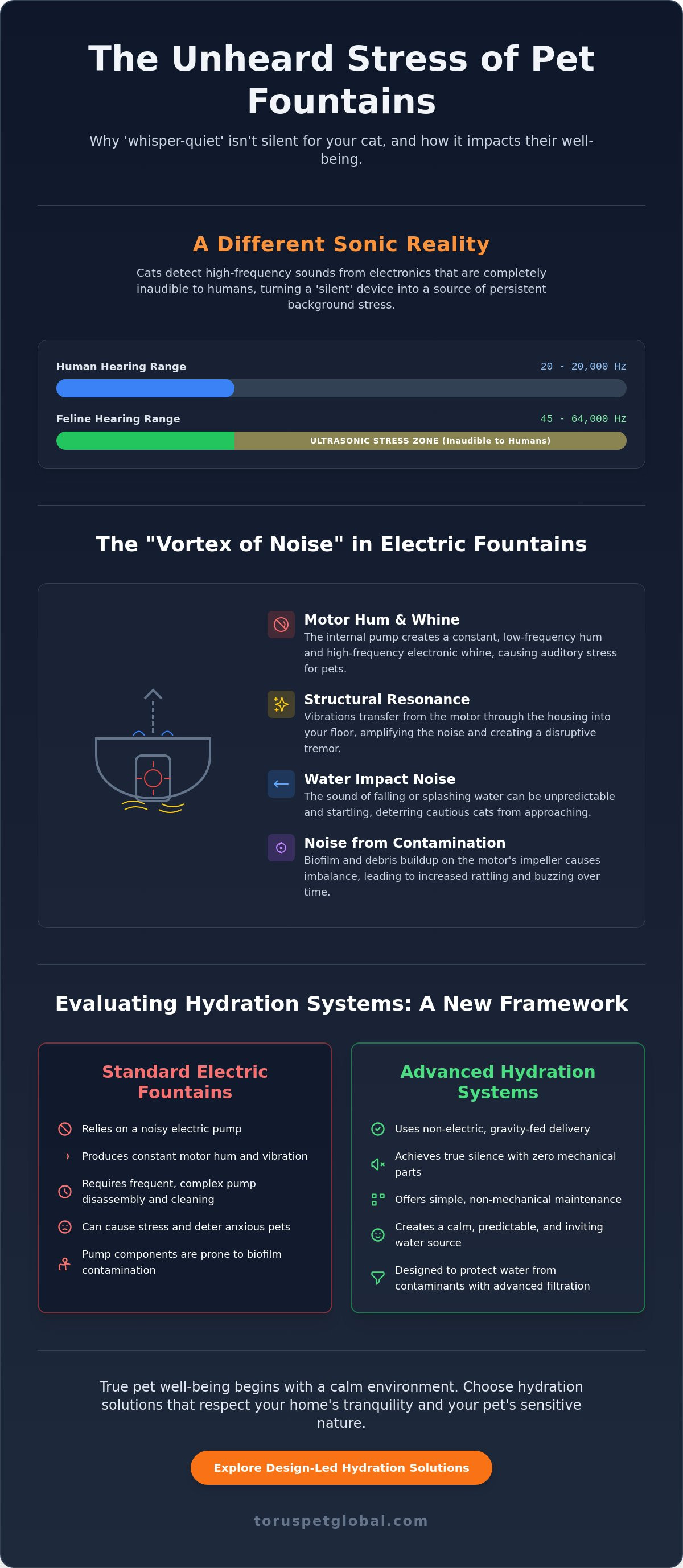
While we perceive our homes as quiet, your cat experiences a different sonic reality. Humans generally hear up to 20,000 Hz. Cats, however, detect frequencies up to 64,000 Hz, which is well into the ultrasonic range. This means that a fountain might be silent to your ears, but the electrical components often emit high-frequency whines that are impossible for humans to detect. These sounds don't just exist; they persist. A constant mechanical hum acts as a background stressor. Auditory stress in cats can occur at frequencies as high as 60,000 Hz, leading to subtle behavioral changes or a reluctance to approach the water source. The Torus water bowl on the other hand still offers autofill and filtered water, but adds no-spill, no-tipping, now cords or batteries and even portability with only the sound of your cats soft lapping.
The Psychology of the Water Source
A peaceful environment is the foundation of frequent hydration. Many cats are naturally cautious. They're often startled by the sudden vibration of a motor or the erratic splashing of a falling stream. When a water source feels unpredictable or loud, cats may limit their visits, drinking only what's strictly necessary. By prioritizing a quiet, stable environment, you encourage longer and more relaxed drinking sessions. This shift in focus from "moving water" to "cleaner hydration" is supported by the science of feline hydration, which suggests that the quality and storage of water matter far more than visual gimmickry.
True silence isn't just about low decibels. It's about the total absence of mechanical interference. Modern pet care is moving away from noisy electronic gadgets toward design-led solutions that respect a cat's sensory boundaries. Providing sophisticated, filtered hydration shouldn't require a compromise on the tranquility of your living space.
Identifying the Sources of Fountain Noise: Pumps and Splashes
Most manufacturers claim their devices are "whisper quiet," often citing a 20dB or 25dB rating. However, these laboratory tests don't account for your kitchen's tile floor or the psychological impact of rhythmic splashing. Finding a truly silent cat water dispenser and fountain like Torus requires looking beyond the decibel sticker to understand the three primary noise sources: motor hum, structural vibration, and water impact.
Even the most expensive electronic pumps eventually develop a rattle. This is often due to biofilm buildup. As organic matter accumulates on the internal impeller, it creates friction and imbalance. This mechanical strain transforms a smooth rotation into a persistent buzz. If your current setup is becoming louder, it's likely a symptom of internal contamination rather than a simple mechanical failure.
To diagnose your environment, consider this "vortex of noise" checklist:
-
The Hum: A consistent electrical drone from the pump.
-
The Rattle: Loose plastic components vibrating against each other.
-
The Resonance: The motor's vibration traveling through the base into your flooring.
-
The Splash: The sound of water hitting the surface or the side of the basin.
The Mechanics of Motor Hum and Vibration
Centrifugal pumps operate by spinning an impeller at high speeds. This motion creates low-frequency vibrations that easily transfer to plastic housings. When placed on hard surfaces like hardwood or tile, these vibrations resonate, turning your floor into a sounding board. This amplification is particularly problematic because of loudness perception in cats; what sounds like a distant hum to you can feel like a localized earthquake to a pet standing directly over the unit. Test your fountain's noise level at night when ambient household sounds are lowest to truly gauge its impact.
The Physics of the Splash
The "splash factor" is the most overlooked element of pet hydration design. Faucet-style fountains create a vertical drop that results in repetitive, high-pitched splashing. While some believe this mimics nature, the constant sound of water-on-water impact can be disruptive in modern, open-plan living spaces. Surface tension also plays a role; when water falls into a deep pool, it creates more turbulence and noise than water that glides down a sloped surface.
Transitioning to advanced hydration systems like Torus that utilize gravity and vacuum seals instead of high-speed pumps can eliminate these acoustic issues entirely. By removing the mechanical "vortex," you create a more stable and inviting environment for your pet. Not to mention, with Torus there are no pumps or moving parts to fail and need repair.
Evaluating Silent Cat Water Dispensers: A Comparison Framework
Many consumers search for a silent cat water dispenser and fountain expecting a quieter version of the status quo. They look for lower decibel ratings and smaller motors. However, a truly sophisticated approach to pet care requires a shift in perspective. The goal isn't just to find a quieter pump; it's to eliminate the noise source entirely while improving water quality. A design-led comparison framework focuses on three critical pillars: absolute silence, hygiene maintenance, and controlled water exposure.
When we evaluate hydration systems, we must look past the visual gimmick of moving water. While some studies suggest that movement can encourage cats to drink more water, the mechanical trade-offs often create secondary problems. If a device requires a motor to be effective, it's inherently prone to noise, mechanical failure, and internal contamination. We should prioritize systems that deliver fresh water through intelligent design rather than brute force.
Electric Fountains: Features vs. Friction
Electric fountains are the most common choice, but they come with significant friction. They require proximity to power outlets, creating a mess of cords that disrupt a clean home aesthetic. More importantly, they rely on centrifugal pumps that eventually fail. Even the best electric models suffer from common pitfalls:
-
Biofilm Traps: Complex internal pathways that are difficult to scrub.
-
Mechanical Strain: Pumps that buzz louder as they age or as water levels drop.
-
Energy Dependence: A constant draw on electricity and the risk of a "dead" water source during power outages.
The long-term cost isn't just the electricity; it's the recurring need for replacement pumps and the time spent deep-cleaning intricate parts. These systems often prioritize the "fountain" aspect over the "silent" requirement.
Passive Hydration: The Sophisticated Torus Pet Alternative
Passive hydration systems offer a refined alternative for the design-conscious owner. These solutions replace mechanical pumps with gravity and vacuum-seal technology. By storing water in insulated walls, systems that control water exposure, like Torus, deliver fresh, filtered water to a shallow well without a single moving part. This results in a silent cat water dispenser and fountain experience that is truly noiseless.
No pumps. No cords. No noise. This approach aligns with the science of feline hydration, which emphasizes the importance of water purity and temperature stability. Because these systems don't require electricity, they're completely portable and fit seamlessly into any room. You gain the peace of mind that comes with a reliable, low-maintenance solution that respects both your home’s tranquility and your pet’s sensory needs.
Maintenance and Placement: Strategies for a Quieter Home
Many owners resort to placing towels under their pet's water source to muffle a persistent hum. While this might slightly dampen the vibration, it's merely a band-aid for a deeper mechanical issue. True silence in pet hydration isn't achieved by masking noise, but by preventing the conditions that create it. If you're currently managing a silent cat water dispenser and fountain that has started to rattle, the solution often lies in your maintenance routine rather than the hardware itself.
The relationship between cleanliness and acoustic performance is direct. Biofilm, the slippery organic coating that forms on surfaces, is the primary cause of pump noise. When this slime accumulates on a motor's internal impeller, it creates friction and imbalance. This forces the motor to work harder, transforming a subtle hum into a persistent buzz. Regular deep cleaning isn't just about hygiene; it's about maintaining the acoustic integrity of your home. No more band-aid fixes. No more muffled towels.
Optimizing Placement for Sound Dampening
Placement is often the difference between a quiet device and a loud one. Avoid placing dispensers in corners or tight alcoves. These areas act as echo chambers, reflecting sound waves off hard walls and amplifying the motor’s drone. Instead, position the unit in an open space or a dedicated "zen" area where your cat feels safe and undisturbed.
Consider the surface beneath the unit. Hard tile and wood floors are excellent conductors of vibration. Use a soft, non-absorbent mat to break the resonance path between the device and the floor. This simple change can significantly reduce the low-frequency vibration that often disrupts sleep in modern, open-plan homes. A peaceful environment encourages more frequent drinking and supports your pet's overall well-being.
The Role of Filtration in Noise Reduction
Mineral buildup is a silent contributor to mechanical noise. In areas with hard water, calcium and magnesium deposits can form on moving parts, creating a grinding sensation that increases decibel levels over time. Advanced filtration helps reduce exposure to these minerals, protecting the system's longevity and performance. Cleaner water means a smoother operation and a longer lifespan for your hydration solution.
A consistent maintenance schedule is essential for high-performance systems. Aim for a weekly inspection of all components to ensure no debris has entered the water path. For those seeking a more streamlined experience, choosing a Pet Hydration Solution designed without complex mechanical pumps can eliminate these maintenance-related noise issues entirely. By shifting your focus from reactive fixes to proactive maintenance, you preserve both the water's quality and the room's tranquility.
-
Inspect the water path weekly for debris and organic buildup.
-
Use a dedicated cleaning kit to remove stubborn mineral deposits.
-
Replace filters every 30 days to maintain water flow and purity.
Redefining Silent Hydration: Design-Led Solutions for Modern Homes
Finding a silent cat water dispenser and fountain shouldn't feel like a compromise between your home’s tranquility and your pet’s health. We've already explored how even the most advanced motors create vibrations and ultrasonic stressors that cats find disruptive. The industry is finally shifting toward a more sophisticated category: the Pet Hydration Solution. This approach moves away from the "electric gadget" mindset and toward design-led systems that prioritize long-term wellbeing through simplicity.
True silence isn't a feature you can add to a motor; it's a result of removing the motor entirely. When we reframe the problem, we see that cats don't necessarily need the sound of splashing to drink. They need access to fresh, cool, and uncontaminated water. By prioritizing these factors over visual gimmicks, Torus can create a hydration environment that is both healthier for the pet and more peaceful for the owner.
The Torus Philosophy: Freshness Without Friction
The core of the Torus design is a sophisticated gravity-fed mechanism. By utilizing a vacuum seal, these systems deliver water to a shallow well only as it's consumed. This eliminates the need for a pump. No more mechanical hum. No more vibrating floors. No more ultrasonic whines. The Torus Mini collection offers a 34oz capacity that operates at zero decibels, providing a perfectly still and silent environment for your cat.
Beyond the absolute silence, these solutions incorporate antimicrobial materials and advanced filtration to maintain water quality. The insulated walls keep water cool, while the sealed reservoir helps reduce exposure to airborne dust and bacteria. It's a friction-free experience. You don't have to worry about power outages, tangled cords, or the recurring cost of electricity. It's a reliable innovator in the space that respects the quiet of your modern home.
A New Standard for Pet Care
Modern pet care is an extension of our own living standards. We value clean aesthetics, quiet spaces, and high-quality resources. Hydration is a fundamental element of this lifestyle, not just a daily chore to be managed. By choosing systems that control water exposure, you ensure your pet has access to cleaner hydration without the sensory burden of a mechanical device. This is the hallmark of a smart companion for the modern home.
The ultimate luxury in a contemporary living space is peace. When we remove the constant background noise of pet appliances, we create a more harmonious environment for everyone. Prioritizing sophisticated, passive technology is an intelligent choice for the discerning owner. You'll find that true quality in pet care is often found in what you don't hear. A truly silent home is the ultimate luxury for both pet and owner.
Advancing Toward a Quieter Hydration Standard
Achieving a peaceful home environment shouldn't require a compromise on your pet's health. We have seen that true silence is found by eliminating mechanical interference entirely rather than simply muffling a motor. By prioritizing controlled water exposure and advanced filtration, you provide your pet with the freshness they crave without the auditory stress of a traditional pump.
Choosing a silent cat water dispenser and fountain is an investment in both your pet's long-term wellbeing and the tranquility of your living space. Sophisticated hydration solutions, like those designed in New Zealand by Torus, offer gravity-fed freshness with zero motor noise. These systems use antimicrobial materials to ensure cleaner water and a lower contamination risk; all while maintaining a sleek, cord-free aesthetic.
Discover the peaceful, non-electric Torus hydration solution and experience the difference that design-led pet care makes. Your home stays quiet. Your pet stays hydrated. It's a modern approach to a fundamental need.
Frequently Asked Questions
Why is my "silent" cat water fountain making a buzzing noise?
A buzzing noise typically indicates that the water level is too low or that debris has entered the pump housing. When the pump lacks sufficient water, it draws in air; this creates a loud vibrating sound known as cavitation. Regularly checking the water level and cleaning the impeller can resolve this issue. If the sound persists, it's often due to mechanical wear or vibrations resonating against hard flooring.
Do cats really prefer moving water over a quiet, fresh source?
Cats are instinctively drawn to the freshness associated with moving water, but movement isn't the only way to satisfy this instinct. Many pets actually prefer a stable, quiet source if the water is consistently cool and filtered. A silent cat water dispenser and fountain like Torus that uses gravity rather than a motor provides the same level of freshness without the sensory stress caused by mechanical vibrations.
How many decibels should a quiet cat water dispenser be?
Most high-quality electric fountains are rated between 20dB and 30dB. While this sounds quiet to humans, the high-frequency sounds from the electrical components can still be audible to cats. For a truly peaceful home, the ideal noise level is 0dB. This is only achievable through non-electric, passive hydration solutions that eliminate the need for a mechanical pump and its associated acoustic footprint.
Are there any cat water dispensers that don’t use a pump?
Yes, gravity-fed systems that utilize vacuum-sealed reservoirs provide fresh water without any electronic components. These dispensers, such as the Torus Pet Hydration range, deliver water to a shallow well only as your cat drinks. This design provides sophisticated, filtered hydration while remaining completely silent. It's a reliable alternative for owners who want to avoid the maintenance and noise issues associated with traditional electric pumps.
Can biofilm buildup make a cat fountain noisier over time?
Biofilm buildup is a leading cause of increased noise in pet fountains. This organic slime coats the internal components of the pump; this creates friction and unbalances the impeller. As the motor struggles to spin against this resistance, it produces a louder, more persistent hum. Regular deep cleaning of the pump housing is necessary to maintain both the water's hygiene and the system's quiet performance.
Is it safe to leave an electric cat fountain running 24/7?
Most electric fountains are designed for continuous operation, but this requires constant monitoring of water levels. If the water drops too low, the pump can overheat and burn out, which may create a fire hazard. Additionally, a fountain that runs 24/7 is more prone to mineral buildup and mechanical wear. Switching to a non-electric system removes these risks entirely while ensuring your pet always has access to fresh water.
How often should I clean a non-electric water dispenser to keep it fresh?
You should clean the drinking well of a non-electric dispenser at least once a week to remove saliva and dust. The internal reservoir and filtration system typically require a more thorough cleaning once a month. Because these systems have fewer intricate mechanical parts than electric fountains, maintenance is significantly faster. Using a dedicated cleaning kit such as that offered by Torus Pet helps reduce exposure to contaminants and keeps the system performing at its best.


