
How Do I Keep My Dog Hydrated on Long Car Rides?

What if the traditional water bowl is actually the biggest obstacle to your dog's comfort on a road trip? Most owners struggle with the trade-off between keeping their pets refreshed and protecting their vehicle's interior from inevitable spills. Searching for the best non-tipping dog water bowl for car travel often leads to bulky, plastic options that don't solve the underlying issue of water quality or stability.
It is frustrating to manage stagnant water that collects dust and hair while you are on the move. Discover how to maintain a clean, sophisticated hydration routine for your dog during travel without the mess of traditional bowls. You will learn how to achieve a spill-proof car interior while ensuring your dog remains calm and healthy throughout the journey.
This guide explains the logic of modern pet care. We will examine how hydration systems that prioritize controlled water exposure can transform your travel experience. You will see why a low-center-of-gravity design is the key to a friction-free, premium lifestyle on the road.
Key Takeaways
- Understand the physics of centrifugal force and why open water surfaces contribute to driver distraction during transit.
- Discover how a low center of gravity and internal storage define the best non-tipping dog water bowl for car environments.
- Learn to manage water temperature and reduce exposure to airborne pollutants circulated by your vehicle's climate control.
- Implement a strategic hydration routine that ensures your pet has access to cleaner water without the need for frequent stops.
- Transition to high-capacity, non-electric systems designed for modern mobility and off-grid reliability.
Table of Contents
Why Standard Bowls Fail in a Moving Vehicle
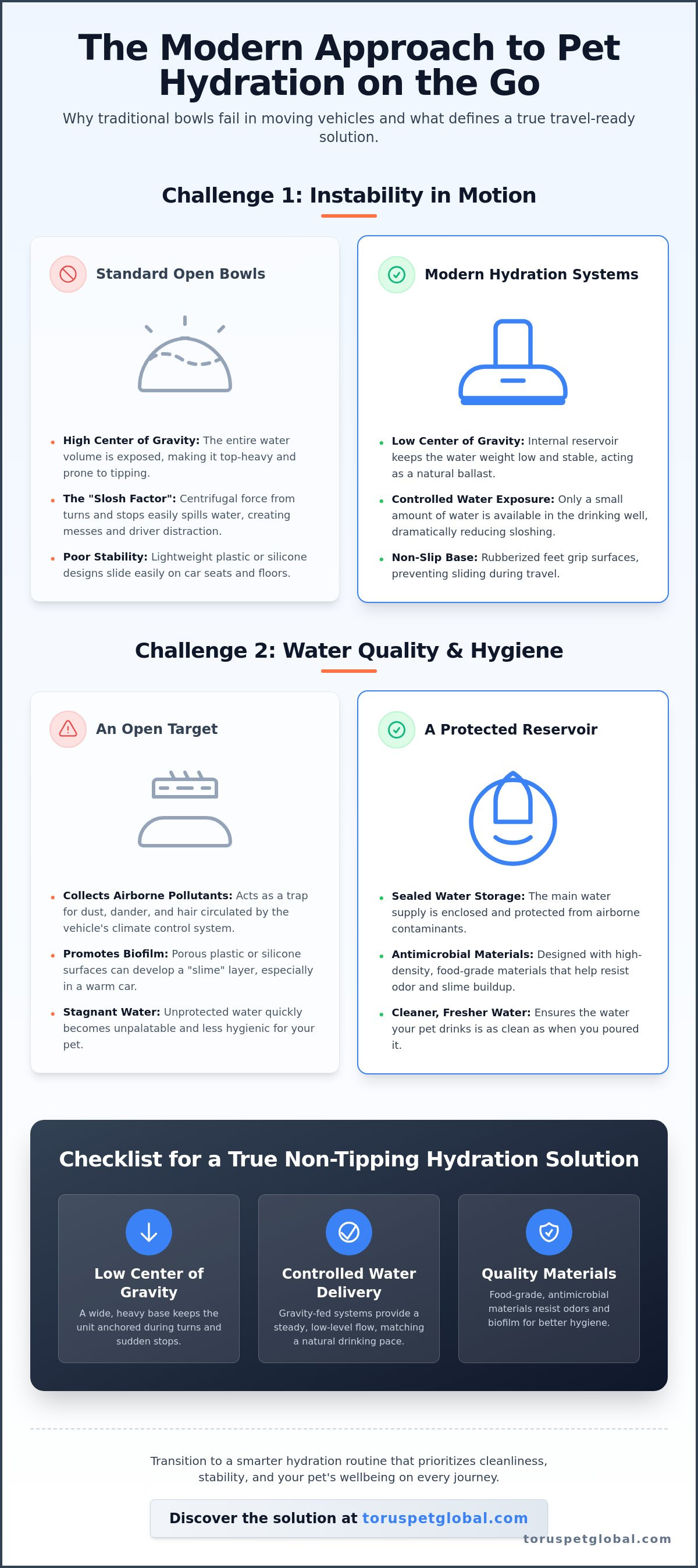
Standard bowls are designed for stationary environments. When placed in a vehicle, they become a liability. Centrifugal force ensures that water moves in the opposite direction of a turn, regardless of how high the bowl's walls are. This creates the 'slosh factor,' where open water surfaces move constantly. It isn't just about the mess; it's a significant driver distraction that pulls your attention away from the road.
Open-access bowls also act as traps for airborne pollutants. Car interiors circulate dust, dander, and hair via climate control systems. In an open bowl, these contaminants settle quickly, compromising the quality of the resource. Beyond hygiene, there's a psychological cost. Dogs often feel anxious when their water source is unstable or moving. Providing a reliable, steady supply is essential for transporting animals safely over long distances.
The Limitations of Silicone and Plastic 'Wedge' Bowls
Many owners reach for silicone or plastic wedge designs. These materials have hidden drawbacks. Porous surfaces can lead to the rapid buildup of biofilm during long trips, especially in warm vehicle cabins. These bowls also lack proper weight distribution. They tend to slide across leather or fabric seats during sudden stops. While 'collapsible' bowls offer convenience, they often sacrifice stability. This makes them a poor candidate for the best non-tipping dog water bowl for car use.
Reframing the Problem: Containment vs. Controlled Delivery
The fundamental flaw in traditional design is exposing all the water at once. This creates a high center of gravity and increases the risk of spills. A more sophisticated approach involves controlled water exposure. By using a reservoir-based system, the bulk of the water weight remains at the bottom of the unit. This design maintains stability and ensures that only a small amount of water is available at any given time.
This method of controlled hydration offered by Torus water bowls helps reduce the risk of 'gulping.' When a dog drinks too much water too quickly, it can lead to motion sickness or digestive discomfort. Systems that control water exposure, like Torus, ensure a steady flow that matches the dog's natural drinking pace. It’s a smarter way to manage hydration that aligns with a clean, modern lifestyle. You avoid the mess, and your dog stays calm.
The Mechanics of a True Non-Tipping Pet Hydration Solution like Torus Pet
Stability in a moving vehicle isn't a matter of high walls; it's a matter of physics. Most products marketed as the best non-tipping dog water bowl for car travel focus on containment rather than balance. If the center of gravity is too high, even a bowl with tall sides will slide or flip during an evasive maneuver. True stability comes from a heavy, wide base that keeps the unit anchored to the floor or seat. This is where Torus Pet overcomes all of the challenges with water in the car.
When you're reviewing official road trip safety tips, you'll notice a recurring theme: secure your cargo. A water bowl is no exception. By keeping the bulk of the water weight at the bottom of the unit in a sealed reservoir, you create a self-ballasting system. This internal storage prevents the "pendulum effect" where water weight shifts and tips the container.
Surface area management is the second pillar of a sophisticated design. Reducing the "splash zone" isn't just about preventing wet upholstery; it's about minimizing the volume of water exposed to kinetic energy. While floating disks attempt this, they don't address the risk of the entire bowl shifting. High-quality hydration systems like Torus utilize rubberized, non-slip bases that grip surfaces without the need for clunky mechanical fasteners.
Gravity-Fed vs. Open-Surface Designs
Open-surface designs are inherently unstable because the water is free to move. Gravity-fed systems like Torus water bowls are different. They maintain a constant, low level of water in a small drinking well while the rest remains protected in internal walls. These walls act as baffles, breaking up the movement of water during sharp turns. If a sudden stop occurs, a sealed reservoir ensures you don't face a full-volume spill across your car's interior.
Material Integrity and Modern Aesthetics
Modern pet ownership shouldn't mean compromising on your vehicle's aesthetic. Premium hydration gear has shifted toward antimicrobial materials that prevent the "slime" often found in cheap plastic. While BPA-free and food-grade certifications are standard, the best systems go further by using high-density materials that resist odors. This thoughtful engineering ensures your pet's gear matches the clean, sophisticated interior of a modern vehicle while providing a reliable resource for the journey.
How to Implement a Stress-Free Travel Hydration Routine
Many travel guides suggest stopping every hour as the primary hydration fix. While breaks are necessary for exercise and relief, they shouldn't be your only strategy for water delivery. Relying solely on stops creates a cycle of dehydration followed by over-drinking. A more sophisticated approach integrates constant, controlled access to water throughout the drive.
Establishing a routine allows your dog to self-regulate. When water is always available and stable, the anxiety associated with thirst disappears. This leads to a calmer pet and a more focused driver. It's about moving away from the logistics of maintenance and focusing on the joy of the journey itself.
Step 1: Priming the System for the Road with Torus Pet
Before you depart, ensure your hydration system is prepared for the trip. Filling the internal reservoir completely is a vital first step. It maximizes the low-center-of-gravity effect, using the weight of the water as a natural ballast to keep the unit anchored. Don't forget to check your filter saturation. A fresh filter ensures the water tastes clean, which encourages your dog to drink regularly rather than waiting until they're parched.
Secure the travel cap tightly before placing the unit in the car. This simple step prevents leaks while you're loading the vehicle or moving gear around. A well-primed system ensures that the first sip is as fresh as the last, maintaining quality over hundreds of miles.
Step 2: Optimal Placement and Securing
Where you place your hydration system matters for both safety and function. The footwell is often the most stable location because the surrounding walls limit lateral movement. If your dog is secured in a harness on the seat, ensure the bowl sits on a level, flat surface. Gravity-fed mechanisms require a level base to function with precision. Finding the best non-tipping dog water bowl for car travel is only half the battle; proper placement ensures a spill-free cabin.
Always avoid placing any equipment near active airbags or gear shifts. This protects your pet in the event of a sudden stop and ensures you can operate the vehicle without obstruction. A secure, well-placed bowl remains accessible to your dog without becoming a hazard to the driver.
Step 3: Maintaining the Routine During the Drive
Consistency is the goal for long-distance travel. Encourage your dog to take regular, small sips throughout the journey. This is far better than allowing them to gulp large quantities of water at a rest stop, which often leads to bloating or motion sickness. You can monitor their intake at a glance if your system has visual indicators, allowing you to stay focused on the road.
Integrating Torus hydration solutions into your travel checklist turns hydration into a background process. It becomes a reliable part of your trip rather than a logistical chore. Once you reach your destination, refresh the water and clean the drinking well. This simple maintenance prepares the system for the return leg and ensures long-term performance for your next adventure.
Addressing Contamination and Temperature in Vehicle Environments
Spill prevention is only one half of the travel equation. While many products focus on keeping the car dry, they often neglect the quality of the water itself. In a vehicle, the greenhouse effect can cause internal temperatures to rise rapidly, even with the air conditioning running. This heat quickly turns open water into a breeding ground for bacteria, making it unappealing to your pet.
Finding the best non-tipping dog water bowl for car journeys requires looking at how the water is stored. Open water surfaces are magnets for airborne pollutants. Your car's climate control system constantly circulates dust, dander, and hair. A protected reservoir like Torus, prevents these contaminants settling directly into your dog's drinking supply, compromising the freshness of the resource.
The Role of Torus Pet Active Carbon Filtration
Palatability is essential for maintaining a hydration routine on multi-day trips. Active carbon filtration plays a vital role by removing chlorine and organic impurities that affect the taste and smell of water. This process helps reduce the buildup of biofilm, the "slimy" feel often found in stagnant bowls. By prioritizing cleaner hydration, you ensure your dog is more likely to drink the amount they need to stay healthy.
A filtration system that cycles water through a dedicated filter pack ensures that every sip is as fresh as the first. This is particularly important when you're sourcing water from different locations during a road trip, where mineral content and treatment levels vary. It turns a simple bowl into a sophisticated resource for long-term well-being.
Thermal Stability and Water Storage
Thermal stability is another critical design element. Thick-walled reservoirs act as insulation, shielding the main water supply from cabin heat and direct sunlight. When the bulk of the water is kept in a protected chamber rather than an open dish, it remains significantly cooler for longer periods. Your pet is naturally more inclined to stay hydrated when the water remains at a refreshing temperature.
Keeping the water shielded also prevents the rapid evaporation that occurs with open-surface designs. This ensures that the high-capacity storage you started with is actually available for your dog to drink. To maintain this level of quality throughout your journey, consider upgrading to a premium pet hydration solution that manages both temperature and contamination risk. A smarter storage system ensures that hydration remains a sophisticated, worry-free element of your travel lifestyle.
Choosing a System Designed for Modern Mobility
Selecting the best non-tipping dog water bowl for car travel is ultimately about matching the system to your specific lifestyle. Standard silicone bowls might be lightweight, but they lack the capacity and filtration needed for serious adventures. High-capacity storage, reaching up to 68oz, ensures you have enough water for long-distance hauls without the constant need for refilling at every stop.
Non-electric automation is a hallmark of intelligent design. Gravity-fed systems provide a reliable flow of water without the need for batteries or power cords, making them ideal for off-grid trips or long days on the highway. This simplicity ensures that the system works every time, regardless of your location. You don't have to worry about finding a power source or dealing with mechanical failures in remote areas.
Investing in a non-tipping design also protects your vehicle's longevity. Soggy upholstery and stagnant water odors are difficult to remove and can decrease the resale value of a premium car. By choosing a stable, reservoir-based solution, you eliminate the risk of deep-seated moisture damage in your cabin. It's a proactive way to maintain a clean aesthetic while ensuring your pet's needs are met with precision.
The Torus Advantage: Engineering Peace of Mind
The Torus dispensers were engineered specifically for the rigors of travel. Whether you choose the Maxi or Mini version, you get a system that transitions seamlessly from the kitchen floor to the back seat. These units handle the vibrations and movements of a moving vehicle without compromising the seal of the reservoir. Sophisticated owners value this versatility, as it maintains a consistent routine for the pet and a clean look for the home.
Selecting the Right Size for Your Journey
Matching the reservoir to your pet's size and the length of your trip is essential for success. The Maxi (68oz) is the preferred choice for larger breeds or multi-day journeys, while the Mini (34oz) offers a more compact footprint for smaller companions. Using replacement filters, such as the Standard or Advanced 6-packs, ensures that the system continues to perform optimally. This makes it a strong candidate for the best non-tipping dog water bowl for car environments over the long term.
If you're unsure which model fits your specific needs, taking the Torus Quiz can help you find the ideal hydration match. It's a quick, logical way to ensure your selection aligns with your pet's size and your travel frequency. Once you have the right system in place, you can focus on the road ahead, knowing your pet is well-cared for.
Hydration is a pillar of thoughtful, modern pet care. It isn't just about providing a drink; it's about how that water is stored, filtered, and delivered. A sophisticated system respects your time, your vehicle, and your pet's long-term well-being. By choosing a solution that prioritizes stability and quality, you're choosing a better way to travel together.
Elevating Your Standard of Travel Hydration
Effective travel hydration moves beyond the search for a simple container. It requires a system that respects the physics of motion while protecting water from the environmental stressors of a vehicle. By prioritizing a low center of gravity and integrated filtration, you ensure your dog remains refreshed without the risk of spills or contamination. This approach transforms a basic necessity into a sophisticated element of your travel routine.
Choosing the best non-tipping dog water bowl for car journeys is an investment in your pet's long-term well-being and your vehicle's interior. When you choose a solution designed for modern mobility, you replace logistical frustration with genuine peace of mind. It's about focusing on the joy of the road rather than the maintenance of the mess.
Ultimately, hydration is not a task to be checked off at rest stops, but a continuous process of maintaining water quality and delivery. A smart hydration system acts as a silent guardian of health, allowing you to maintain the high standards of your home environment even while exploring the world. True travel comfort is found when the logistics of care become invisible, leaving only the experience of the journey.
Frequently Asked Questions
Is a non-tipping bowl really necessary if I stop often?
Stopping frequently is a common strategy, but it creates a cycle of dehydration followed by over-drinking. Constant access allows your pet to self-regulate their intake, which reduces stress and the risk of bloating. A stable hydration system with built-in reservoir like Torus ensures water is available during the actual transit. This provides a more consistent, calm experience for your dog compared to waiting for the next rest area. It also means your dogs Torus at home can be the same one they take in the car, meaning familiarity and comfort with their water station wherever they are.
How do I keep the water from getting hot in the car?
Maintaining water temperature is a function of storage design. Torus' thick-walled reservoir acts as insulation, protecting the main supply from the greenhouse effect inside a vehicle. Placing the unit in the footwell, away from direct sunlight and warm air vents, helps keep the resource refreshing. This encourages your dog to drink more consistently during the journey because the water remains at a palatable temperature.
Can Torus bowls be used for both food and water on trips?
Sophisticated hydration solutions are engineered specifically for water delivery and filtration. Using them for food can compromise the internal valves and the effectiveness of the active carbon filters. It's better to use dedicated systems for water to ensure the integrity of the filtration process. This also helps maintain the clean, modern aesthetic of your vehicle's interior by avoiding cross-contamination and odors.
How often should I change the filter in a Torus travel hydration system?
For optimal performance, you should replace the filter approximately every 30 days. This ensures the active carbon remains effective at removing chlorine and organic impurities that affect taste. If you're traveling through areas with high mineral content or varying water quality, you might choose to replace the filter more frequently. This keeps the hydration routine friction-free and ensures the water is always fresh.
What is the best way to secure a water bowl on a leather car seat?
Stability on leather surfaces requires a low center of gravity and a non-slip base. The best non-tipping dog water bowl for car use is the Torus water bowl which features a wide footprint and rubberized materials that grip the seat without causing damage. Placing the unit on a flat, level section of the seat or in the footwell provides the most secure foundation for the gravity-fed mechanism to function with precision.
Are Torus Pet non-tipping bowls difficult to clean after a long road trip?
Maintaining a premium hydration system is straightforward and doesn't require complex tools. Most units can be cleaned with mild soap and warm water, and specialized cleaning kits are available to ensure the internal reservoir remains free of buildup. Regular maintenance after a long trip preserves the material integrity and bowl performance. It ensures the system is ready for your next adventure while maintaining a high standard of hygiene.
Will the Torus non-tipping water bowl work in an RV or campervan?
Gravity-fed hydration systems are perfectly suited for the vibrations and constant motion of an RV or campervan. The Torus low-profile design fits easily into compact living spaces, providing a reliable water source that won't spill during transit. This makes them a versatile choice for both short car rides and extended off-grid living where water conservation and cleanliness are essential for a modern lifestyle.
Can my dog use a travel bowl if they have a flat face?
Dogs with shorter muzzles can easily access water in systems like Torus that maintain a shallow, constant level. The design of the drinking well allows these breeds to drink comfortably without having to submerge their faces. This controlled water exposure prevents the mess associated with deep bowls. It ensures that hydration remains a calm, accessible experience for every dog, regardless of their muzzle shape or size.


