
How Often to Change Dog Water: The Science of Clean Hydration

What if the clear liquid in your pet's bowl is actually a reservoir for invisible bacteria? Most pet parents wonder exactly how often to change dog's water to ensure it remains safe. While it's easy to assume that a full bowl is a healthy bowl, the science of stagnant water suggests otherwise. Biofilm can begin to form in as little as 24 hours, even if the water looks pristine to the naked eye.
It's natural to feel concerned when you notice that slippery slime forming on the surface of a traditional bowl. You want a home that reflects a clean, modern aesthetic without the constant worry of contamination or messy spills on your floors. No slime. No spills. No stress.
In this article, you'll discover the critical difference between clear water and clean water, and how to design a sophisticated hydration routine for your pet. We'll explore the health risks of stagnant water and provide a clear hygiene schedule. We'll also look at systems that control water exposure, like Torus, to offer you a low-maintenance, high-tech way to manage hydration anytime, anywhere.
Key Takeaways
- Learn why visual clarity is a deceptive measure of safety and how invisible bacterial biofilms can colonize open water bowls in just a few hours.
- Determine how often to change dog's water by evaluating specific household variables, including multi-pet dynamics and high-protein dietary needs.
- Discover how moving beyond the "dump and fill" method toward active carbon filtration removes the chemical odors and sediments that discourage pet hydration.
- Understand the critical role of controlled water exposure in maintaining hygiene, whether you are in a modern home or navigating travel adventures.
- Transition from a basic bowl to a sophisticated hydration strategy that integrates clean aesthetics with advanced, low-maintenance technology.
The Invisible Risks of Stagnant Water in Open Bowls
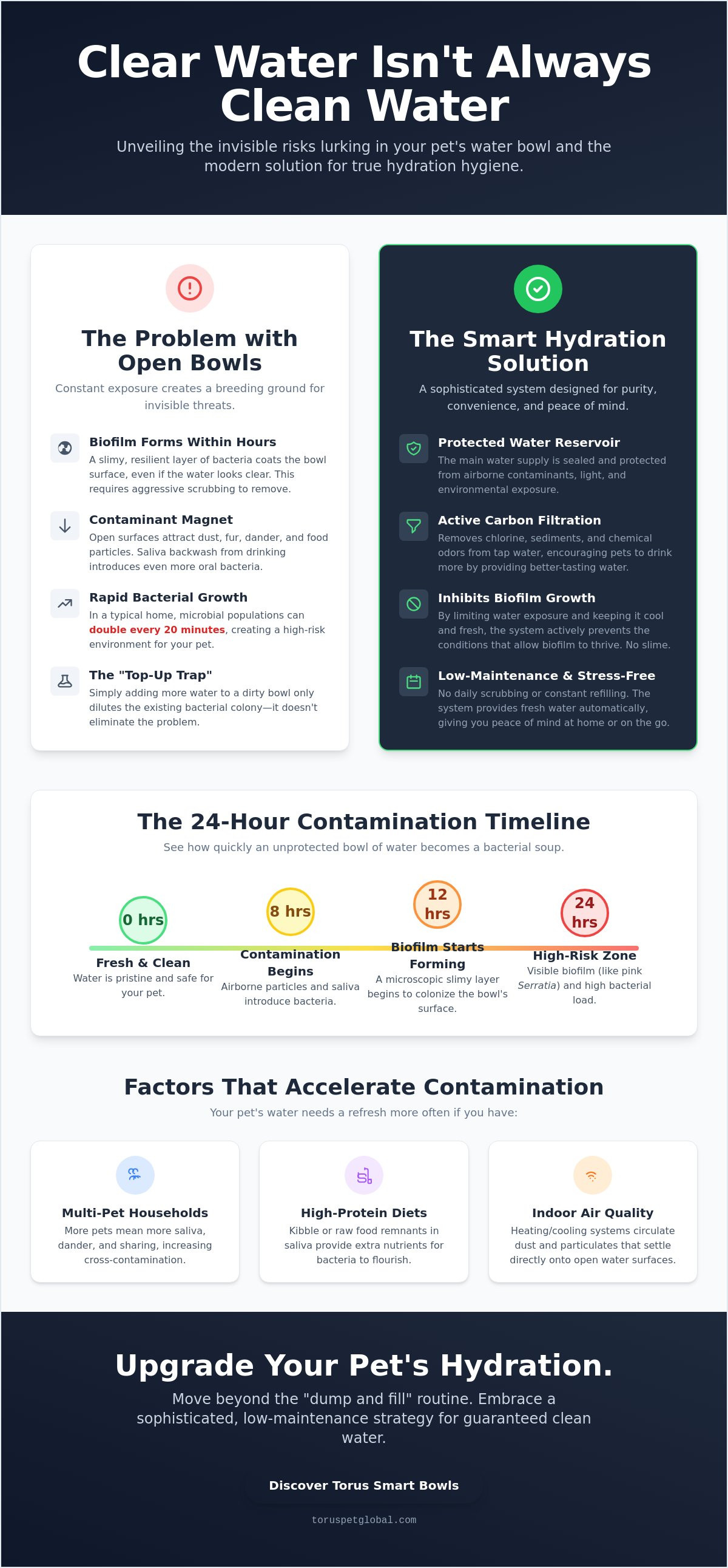
Clear water isn't always clean water. Most pet parents rely on a quick visual check to decide if a refill is necessary, but clarity is a deceptive metric for safety. Determining how often to change dog's water depends on understanding what happens the moment liquid hits a standard open bowl. Within hours, a microscopic transformation begins that compromises the quality of your pet's hydration.
The primary culprit is a resilient substance known as biofilm. Biofilm is a complex community of microorganisms that adheres to surfaces. It isn't just a side effect of water sitting still; it's an active, growing colony. Beyond bacteria, open bowls act as landing strips for household debris. They attract dust, dander, and shed fur that settle on the surface, creating a nutrient-rich soup for microbes to thrive in. No stagnant pools. No dust magnets. No compromises.
The Science of Bacterial Growth in Pet Bowls
Every time a dog drinks, they introduce a backwash of saliva into the bowl. This saliva contains organic matter and oral bacteria that jumpstart the contamination process. In a typical home maintained at 68 to 72 degrees Fahrenheit, microbial populations can double every 20 minutes. This rapid reproduction creates a high-risk environment in a very short window of time.
Specific pathogens often thrive in these neglected vessels. Serratia marcescens, a bacterium that frequently appears as a pinkish or orange film, is common in moist environments. These colonies represent a direct challenge to animal welfare, as they can lead to infections or chronic low-grade inflammation. Understanding how often to change dog's water requires looking past the surface and acknowledging the invisible microscopic activity occurring at the bottom of the bowl.
Biofilm: More Than Just a Slippery Texture
Biofilm is more than a slimy texture; it's a sophisticated survival mechanism. The extracellular matrix protects bacteria from simple rinsing, meaning that just pouring out old water and adding new liquid leaves the colony intact. It requires aggressive mechanical scrubbing to break the bond between the bacteria and the bowl surface. Without this, your pet is drinking from a contaminated source regardless of how fresh the water looks.
Chronic exposure to these bacterial communities can have long-term health implications, ranging from gastrointestinal distress to urinary tract issues. Modern pet hydration solutions now address this by utilizing antimicrobial materials and designs that limit water exposure to the air. These systems are designed to inhibit the formation of biofilm by keeping the bulk of the water supply sealed and filtered. No open exposure, no light penetration, no slime. This transition from a simple bowl to a managed system is a vital step in sophisticated pet care.
Determining the Ideal Frequency for Your Pet’s Water Refresh
The standard advice for most pet parents is to refresh the bowl once every 24 hours. While this serves as a baseline, it's often the absolute minimum for maintaining basic hygiene. Stagnant water in an open bowl acts as a magnet for airborne dust, hair, and microscopic debris. When you consider how often to change dog's water, think of it as a moving target influenced by your home's unique environment.
Many owners fall into the "Top-Up Trap." This happens when you add fresh water to a half-empty bowl without cleaning the vessel first. This doesn't fix the problem; it merely dilutes a growing colony of bacteria and biofilm. Real hydration health requires a shift in perspective. We should stop viewing water as a static resource and start seeing it as a managed system.
No stagnant pools, no open exposure, no daily scrubbing. Reframing the problem means moving toward controlled water exposure. By utilizing a system that protects the main water supply from the environment, you ensure that the liquid remains as fresh at 6:00 PM as it was at 6:00 AM. This approach prioritizes long-term wellbeing over the repetitive cycle of refilling a contaminated dish.
Environmental Factors That Dictate Freshness
Indoor air quality plays a surprisingly large role in water purity. Modern heating and cooling systems circulate fine particulates that settle on open water surfaces within hours. A bowl placed in a high-traffic kitchen will collect significantly more debris than one in a quiet corner. Outdoor settings are even more demanding. Insects, pollen, and debris can turn a clean bowl into a biological hazard in less than four hours, requiring multiple refreshes throughout the day.
Diet and Saliva: The Personal Factors
Your dog's biology and diet directly impact water quality. Kibble-fed dogs often leave behind starchy residue that accelerates bacterial growth. High-protein diets can also increase thirst, leading to more frequent backwash during drinking. Certain breeds with heavy jowls introduce more saliva, which contains proteins that bind to the bowl surface. If your pet sniffs their water and walks away, it's a clear sign of poor taste or odor.
Multi-pet households face an even steeper challenge. Every additional pet increases the biological load in a shared bowl by 100%. To maintain a premium standard of care, consider advanced hydration solutions that filter water as it's dispensed. This helps reduce exposure to contaminants and ensures that every sip is clean. Understanding how often to change dog's water becomes simpler when you implement a system designed to maintain freshness automatically.
Beyond the Surface: Why Filtration Trumps Simple Water Changes
The traditional "dump and fill" method is a reactive habit. You see an empty bowl, you fill it. You see a dirty bowl, you scrub it. However, this approach fails to address the invisible decline of water quality that begins the moment liquid hits the air. Between refills, dust, saliva, and airborne bacteria settle into the open surface, creating a stagnant environment. Continuous carbon filtration changes the equation. Instead of waiting for the water to become visibly unappealing, a sophisticated pet hydration solution treats the water before it ever reaches your dog's tongue.
When considering how often to change dog's water, the goal shouldn't just be replacement, but preservation. By utilizing systems that actively remove impurities, you ensure that the water remains at a high standard for longer periods. This reduces the logistical burden on the owner while providing a superior experience for the animal. It is a shift from basic maintenance to proactive health management.
The Role of Activated Carbon in Pet Health
Dogs possess up to 300 million olfactory receptors, making them significantly more sensitive to chemical odors than humans. While we might not notice the scent of chlorine or metallic sediment in tap water, to a dog, it can be overwhelming. Activated carbon filters work through adsorption, effectively trapping these impurities within a porous internal structure. This process improves the palatability of the water, encouraging more frequent drinking and better overall kidney health.
To maintain this level of purity, consistency is vital. How often to change dog's water filters depends on the specific system, but a standard benchmark is every 30 days. This ensures the carbon remains effective and doesn't become saturated with the very particulates it is designed to remove. Clean water isn't just about clarity; it's about the chemical profile that only active filtration can provide.
Controlled Exposure: The Modern Approach
Modern hydration requires a departure from the traditional open-air bowl. Gravity-fed systems represent a smarter way to manage water by only releasing a small amount into the drinking well at a time. This design reduces the surface area available for bacteria to colonize by approximately 80 percent compared to a standard large bowl. By keeping the main supply protected within insulated walls, the water stays cooler and cleaner for longer durations.
The efficiency of these systems is rooted in their simplicity. No batteries, no power, no complex machinery. The science of Torus demonstrates how a vacuum-sealed environment protects the water from environmental contaminants. This controlled exposure ensures that the water your dog drinks at 4:00 PM is as fresh as the water they drank at 8:00 AM. It's a streamlined, hassle-free approach that fits perfectly into a design-conscious, modern home.
- Active Adsorption: Use carbon filters to remove chlorine scents that deter dogs from drinking.
- Reduced Surface Area: Limit the amount of water exposed to the air to prevent bacterial bloom.
- Maintenance Schedule: Replace filtration components every 30 days to ensure peak performance.
- Energy Efficiency: Opt for gravity-fed systems that provide fresh water without the need for noisy pumps or electricity.
Maintaining Hydration Hygiene at Home and on the Move
Most pet parents prioritize clean water in the kitchen, yet hydration hygiene often falters once we leave the house. Outdoor environments and transit introduce variables that static home bowls don't face. When you're traveling, the question of how often to change dog's water becomes even more critical because the environment is no longer controlled. You aren't just managing thirst; you're managing a biological environment that changes with the temperature.
Travel Hydration: Keeping Water Cool and Clean
Car travel presents a specific challenge for water safety. In a vehicle, water can heat up rapidly, and stagnant, warm water is an ideal breeding ground for microbes. Research shows that certain bacteria can double in population every 20 minutes in temperatures between 40 and 140 degrees Fahrenheit. This makes standard plastic containers a risk during long summer drives.
A sophisticated hydration solution uses insulated walls to protect the water supply from external heat. This keeps the liquid at a consistent, refreshing temperature that discourages rapid bacterial growth. Design also plays a vital role in hygiene. Non-tipping systems ensure that the water stays in the bowl rather than soaking the car upholstery, which can lead to mold and odors. No spills, no mess, no lukewarm water. Just a clean, reliable supply for your pet.
The "Public Bowl" Problem
Shared water bowls at dog parks or local cafes are high-risk zones for pet health. While they seem convenient, these communal sources are often contaminated with saliva, debris, and pathogens. A 2021 study identified that shared bowls can harbor communicable illnesses like Salmonella, Giardia, and Kennel Cough. Relying on these public sources undermines the effort you put into maintaining hygiene at home.
Thoughtful pet ownership means bringing your own "hydration solution" on every excursion. It allows you to control the source and the cleanliness of the water your pet consumes. By using a portable, filtered system, you ensure that the water remains as fresh at the park as it was when you left your home. This practice significantly reduces exposure to environmental contaminants and keeps your pet's health a priority. For more information on choosing the right equipment, you can consult The Ultimate Guide to Dog Bowls.
Maintaining a clean environment isn't just about how often to change dog's water; it's about the quality of the delivery system. Systems that control water exposure, like Torus, provide a barrier against the dust and insects found in outdoor settings. This modern approach to pet care ensures that your dog stays hydrated without the risks associated with open, stagnant bowls.
Ensure your pet has access to fresh, filtered water on every adventure. Explore our premium hydration solutions designed for modern life.
Designing a Sophisticated Hydration Routine for the Modern Pet Parent
Hydration is more than a daily chore; it's a core pillar of health. Modern pet parents are moving away from simply buying a bowl. They're investing in a comprehensive hydration strategy. Understanding how often to change dog's water is the first step toward a healthier, more organized home.
A thoughtful routine ensures your pet always has access to fresh water without requiring you to hover over a bowl multiple times a day. It's about creating a system that works for your schedule. This shift reduces the daily mental load of pet care and provides total peace of mind.
Simplifying Maintenance Without Sacrificing Quality
The Torus How-It-Works logic is built for efficiency. It utilizes a gravity-fed, auto-filling design that stores water in a protected reservoir. This protects the supply from dust, hair, and airborne bacteria before it ever reaches the drinking well.
No batteries, no power, no complicated pumps. This minimalist approach fits seamlessly into modern homes. While the science dictates how often to change dog's water (ideally every 24 hours for open bowls), a filtered system extends the freshness of the source by limiting environmental exposure.
Maintenance becomes a simple weekly habit rather than a constant worry. To keep the system performing at its peak, follow these simple steps:
- Rinse the central well every 2 to 3 days to remove saliva and debris.
- Check the active carbon filter every 30 days for peak performance.
- Wipe the exterior surface weekly to maintain the clean aesthetic of your kitchen.
The Future of Pet Hydration
Smart design improves the lives of both pets and their owners. A clean, non-spill hydration station eliminates the mess of wet floors and stagnant water. It reflects a lifestyle of order and care, where every element of the home is chosen with intention.
Sophisticated hydration is about more than just quenching thirst. It's about controlling water exposure and reducing contamination risks. High-quality materials and innovative engineering ensure that every drop is as clean as the first. This is the difference between a simple container and a dedicated solution.
Choosing a system like Torus allows you to focus on the joy of companionship. You aren't just managing a bowl; you're curating a healthier environment. Clean water is a fundamental requirement for long-term wellbeing. It's time we treated it as a sophisticated element of modern pet care. Regardless of your schedule, your pet deserves hydration that is fresh, filtered, and always available.
Elevating Your Pet’s Hydration Routine
Understanding how often to change dog's water is the first step toward a healthier home environment. Research from NSF International indicates that pet bowls are the fourth germiest item in most households, with bacterial biofilm beginning to form in as little as 24 hours. Simply topping off an open bowl doesn't address the invisible risks of stagnant water or environmental contaminants.
Modern pet parents are moving beyond basic maintenance to embrace sophisticated hydration systems. By utilizing a design that controls water exposure, you can significantly reduce the risk of contamination from dust and debris. No more messy spills. No more stagnant reservoirs. No more daily scrubbing. It's about creating a lifestyle where clean water is a constant, not a chore.
The Torus hydration solution provides a spill-proof, gravity-fed design integrated with antimicrobial technology for cleaner water. It's portable and travel-ready without the need for batteries, ensuring your pet stays hydrated anytime, anywhere. Explore our range of sophisticated pet hydration solutions to find the perfect fit for your home.
Your pet deserves water as fresh and clean as the care you provide every day.
Frequently Asked Questions
Is it safe to just top up my dog’s water bowl instead of changing it?
Topping up is not recommended because it allows bacteria and organic debris to concentrate in the basin. Every time a dog drinks, they introduce backwash containing saliva and food particles. Research from NSF International indicates that pet bowls are the fourth germiest place in a home. Refreshing the supply ensures your pet receives clean hydration without the risk of concentrated contaminants. No stagnant water, no slime, no worries.
What is the "pink slime" in my dog’s water bowl, and is it dangerous?
The pink slime is an airborne bacterium called Serratia marcescens that thrives in moist, phosphate-rich environments. It feeds on the fats and minerals found in pet saliva and dust. While it isn't immediately lethal, it can cause urinary tract infections or respiratory issues in vulnerable pets. Regular cleaning prevents this biofilm from establishing a foothold in your home. A clean bowl is a fundamental part of a sophisticated pet care routine.
How can I tell if my dog’s water is contaminated if it looks clear?
Clear water doesn't guarantee safety, so you should feel the inner surface of the bowl for a slippery film. This biofilm is a colony of microscopic organisms that can develop in under 24 hours. If the water has a faint metallic or musty odor, it's already compromised. Advanced hydration solutions that use activated carbon filters help remove these invisible impurities before they reach your pet, providing peace of mind for modern pet parents.
Can dogs get sick from drinking stagnant water left out for several days?
Stagnant water is a breeding ground for pathogens like E. coli, Salmonella, and Giardia, which thrive in standing liquid. A 2018 study found that stagnant bowls can host over 1,000,000 bacteria per square inch if left for several days. These contaminants cause gastrointestinal distress and long-term health issues. Fresh, moving, or protected water sources are essential for maintaining a healthy, active lifestyle for your pet.
Do filtered water bowls really stay cleaner than standard open bowls?
Filtered water systems stay cleaner by actively removing particulates and inhibiting bacterial growth. Systems that control water exposure, like Torus, protect the main reservoir from dust, hair, and saliva. This design reduces the frequency of contamination compared to open bowls. Using a 13-layer carbon filter can remove up to 99 percent of common impurities, ensuring the water remains fresh and oxygenated for longer periods.
How often should I scrub my dog’s water bowl with soap and water?
You should scrub your dog's water bowl with hot, soapy water at least once every 24 to 48 hours. This frequency is necessary to break down the biofilm that forms quickly on plastic, ceramic, and stainless steel surfaces. For a more efficient routine, consider a hydration solution with antimicrobial materials. No scrubbing every hour, no mess, no stress. A deep clean once a week in the dishwasher also helps eliminate stubborn microbes.
Should I use tap water or filtered water for my dog’s hydration?
Filtered water is the superior choice for your dog's hydration because it removes chlorine, heavy metals, and fluoride found in municipal supplies. Many pet parents wonder how often to change dog's water when using tap water, and the answer is more frequently due to faster sediment buildup. Using a filtered dispenser ensures your pet drinks water that's as clean and safe as the water you choose for yourself. It's a simple lifestyle upgrade.
What are the signs of dehydration in dogs I should look out for?
Key signs of dehydration include dry or tacky gums, loss of skin elasticity, and sunken eyes. You can check elasticity by gently pinching the skin between the shoulders; it should snap back in less than 1 second. If your dog is lethargic or has a heart rate exceeding 140 beats per minute, they may need immediate veterinary attention. Consistent access to a reliable hydration solution prevents these dangerous physical declines and ensures long-term wellbeing.


