
Signs of Dehydration in Dogs: A Guide to Proactive Hydration Management

What if the most significant threat to your dog's health isn't a lack of water, but how that water is stored and delivered? It's a common misconception that a simple bowl is enough to ensure safety. You likely monitor your dog closely during summer travel or active afternoons, yet the subtle signs of dehydration in dogs often go unnoticed until they become a medical emergency.
We understand the frustration of managing hydration for an active pet while worrying about water quality in standard, open containers. It's difficult to maintain peak health when stagnant water loses its freshness or becomes contaminated. This article provides a clear framework for identifying early physical indicators and managing your dog's fluid intake with precision.
You will learn how to implement a sophisticated hydration strategy using systems that control water exposure, such as those from Torus Pet, ensuring your dog has access to clean resources at all times. We'll explore the mechanics of water maintenance and provide practical takeaways to reduce the risk of heat-related illness in any environment.
Key Takeaways
- Establish a clear physiological baseline for your pet to accurately identify the clinical signs of dehydration in dogs before they become a medical concern.
- Understand why traditional open bowls often fail to provide reliable hydration due to rapid temperature fluctuations and increased contamination risks.
- Learn to implement a proactive hydration strategy that prioritizes water integrity and controlled exposure for long-term health.
- Discover how a structured daily routine can transform hydration from a simple necessity into a sophisticated element of modern pet care.
Table of Contents
Understanding the Biological Importance of Canine Hydration
Canine dehydration is a deficit in total body water that disrupts electrolyte balance. This clinical state occurs when fluid loss exceeds intake, compromising physiological stability at every level. For the modern pet owner, understanding this process is the first step in recognizing the early signs of dehydration in dogs. When hydration levels drop, the body begins to prioritize vital organ function over secondary systems, leading to visible changes in behavior and physical condition.
Water acts as the primary solvent for nutrient absorption at a cellular level. Without adequate fluid volume, metabolic waste accumulates and essential biological processes stall. By Understanding the Biological Importance of Canine Hydration, we see that water is not just a resource; it is the foundation of thermoregulation, joint lubrication, and cognitive function. It is the infrastructure that keeps a dog's internal systems running smoothly.
The Role of Water in Cellular Function
Cells require a precise environment to facilitate the transport of oxygen and essential nutrients to vital organs. When fluid levels drop, blood volume decreases. This forces the heart to work harder to maintain cardiac output and blood pressure. This strain affects everything from kidney filtration to nerve signaling. Electrolytes like sodium and potassium are critical for these electrical impulses; their imbalance can lead to muscle weakness or disorientation. Maintaining blood volume is essential for efficient cardiac performance and systemic health.
How Dogs Naturally Lose Fluids
Dogs don't sweat like humans. They rely on panting as the primary mechanism for thermoregulation and evaporative cooling. This process, while efficient for cooling, results in constant fluid loss through the respiratory tract. Additional metabolic loss occurs through urination, defecation, and minor evaporation through paw pads. Every breath and every movement depletes their internal reservoir.
Active dogs and large breeds face even higher demands. Their larger surface area and increased physical exertion mean they deplete their reserves faster. Standard open bowls often fail to keep up with these needs because they allow water to stagnate or reach unappealing temperatures. Clever Pet Hydration Solutions like Torus are designed to manage these risks by protecting the water supply from environmental stressors and ensuring the water remains fresh and inviting. This proactive approach helps reduce exposure to the risks associated with fluid deficits. Torus for example, is not just a water bowl. It is a hydration solution for all situations.
Practical Takeaway: Hydration is a dynamic state. It requires constant replenishment to offset natural metabolic losses, especially during travel or periods of high activity.
Identifying the Clinical Signs of Dehydration in Dogs
You might assume that a dog will simply drink more water when they need it. In reality, thirst is often a lagging indicator of a deeper physiological need. By the time a dog actively seeks out water due to intense thirst, they may already be experiencing a significant fluid deficit. Recognizing the signs of dehydration in dogs requires more than just watching the bowl; it requires an intimate baseline understanding of your pet's healthy state.
Clinical signs often manifest only after significant fluid loss has occurred. Early detection isn't just about comfort; it is about preventing the progression toward kidney stress or heatstroke. A comprehensive check involves monitoring skin elasticity, gum moisture, and subtle shifts in energy levels. By making these checks a part of your daily interaction, you can catch minor imbalances before they escalate into medical emergencies.
The Skin Elasticity and Gum Assessment
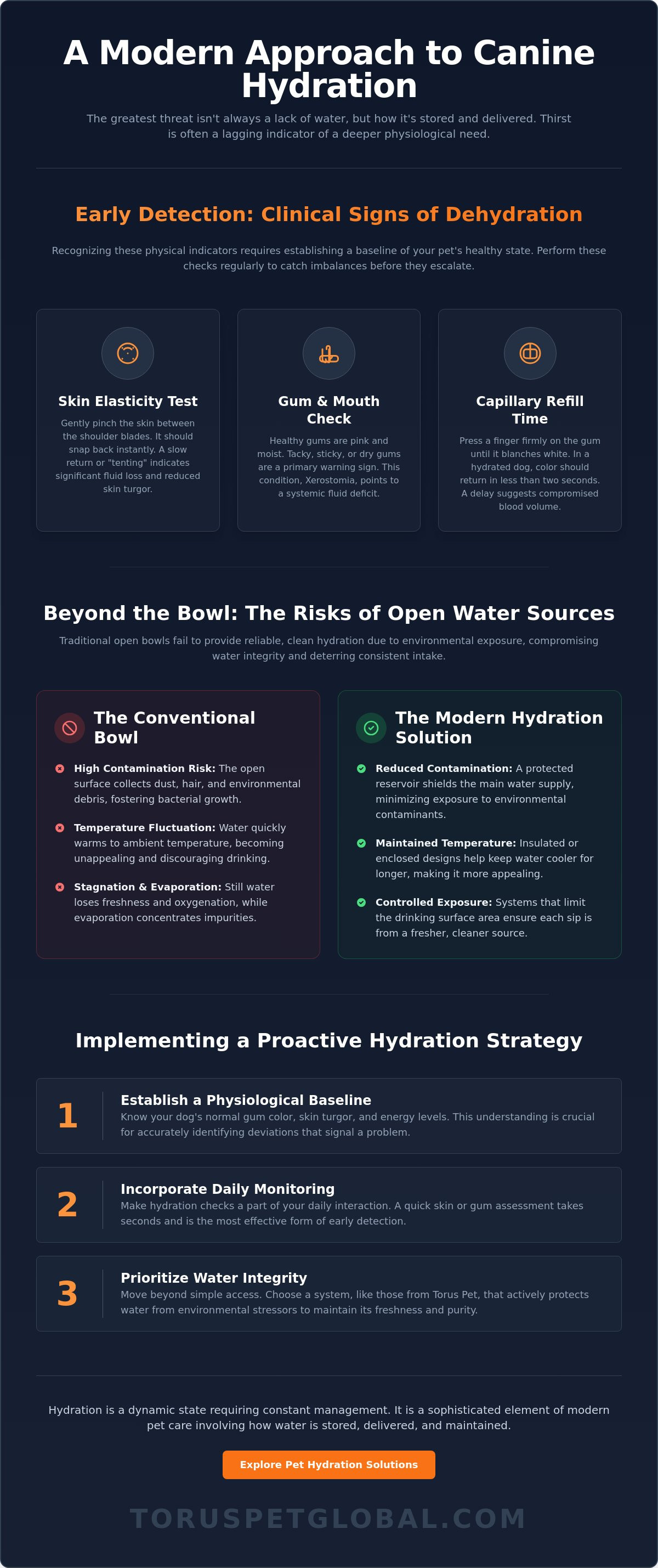
One of the most reliable methods for checking hydration is the "Skin Tent" test. Gently pinch the skin between your dog's shoulder blades or on the back of the neck. In a well-hydrated animal, the skin should snap back into place instantly. If the skin remains peaked or moves back slowly, it indicates a loss of turgor and significant fluid depletion.
Evaluating the mouth is equally critical. Healthy gums should be pink and moist to the touch. When fluid levels drop, dogs may develop Xerostomia, where the oral tissues feel tacky or sticky. You can also check capillary refill time by pressing your finger against the gum until it turns white. Implementing a Proactive Hydration Strategy involves ensuring that the color returns to a healthy pink in less than two seconds. If the refill time is delayed, the body is likely struggling to maintain blood volume.
Behavioral and Physical Indicators
Behavioral shifts often precede physical ones. Lethargy or a sudden lack of interest in physical activity can be an early warning that your dog is conserving energy and fluids. You may also notice sunken eyes, a condition known as enophthalmos. This happens because the orbital tissues behind the eyes lose the fluid volume necessary to hold the eye in its normal position.
As dehydration advances, the saliva becomes thick and stringy. This change in viscosity makes it harder for the dog to cool themselves through panting, creating a dangerous cycle of rising internal temperatures. Using systems that control water exposure, like Torus Pet, can help maintain water integrity and encourage consistent drinking habits throughout the day. Proactive monitoring and cleaner water delivery are the keys to avoiding advanced fluid depletion.
Practical Takeaway: Perform a skin tent and gum check daily. Knowing your dog's normal capillary refill time allows you to spot the earliest signs of dehydration in dogs with confidence.
Beyond the Bowl: Why Conventional Watering Often Fails
Most pet owners assume that providing a standard water bowl fulfills their daily responsibility toward hydration. It's a common oversight. An open bowl is not a reliable hydration source; it's a static environment subject to rapid degradation. When water quality declines, consumption often drops. This lack of interest in drinking can lead to the early signs of dehydration in dogs that we've previously identified. A bowl of standing water is an invitation for temperature shifts and contamination.
Dogs are biologically inclined to seek water that is fresh, moving, or cool. This instinct stems from an ancestral preference for running streams over stagnant, potentially toxic puddles. Modern home environments often ignore this biological drive. Stagnant water in an open container quickly reaches room temperature, which significantly reduces its palatability. By understanding that a bowl is an environment rather than just a container, you can better manage your dog's daily fluid intake.
The Impact of Water Temperature and Stagnation
Warm water acts as a psychological deterrent for most pets. As water sits, it loses its dissolved oxygen and becomes "stale." This makes the source less appealing, leading to reduced daily water intake. Temperature control is directly linked to how much a dog will drink. Cooler water is more refreshing and encourages more frequent visits to the hydration station. Ensuring the water stays at an optimal temperature is a simple but effective way to maintain physiological stability.
Contamination Risks in Open Water Sources
Open bowls are magnets for environmental pollutants. Dust, pet hair, and even airborne household cleaning residues settle on the surface within hours. More concerning is the development of biofilm. This is the slippery layer of bacteria that forms on the walls of unmanaged containers. These bacterial colonies can compromise the health of your pet and discourage them from returning to the bowl.
Utilizing cleaner water that is protected from the air reduces the risk of ingesting harmful pathogens. Systems that control water exposure, like Torus, prevent environmental contamination by storing the bulk of the water in a protected reservoir. This ensures that the water remains fresh and free from the debris common in modern homes. Protecting the water supply from external stressors is essential for maintaining long-term health.
Practical Takeaway: A hydration solution should do more than just hold water. Like, the Torus solution, it must protect the resource from heat, stagnation, and airborne debris to ensure every sip is as fresh as the first.
Implementing a Proactive Hydration Strategy
Most pet owners maintain a reactive stance toward health. They wait to observe physical signs of dehydration in dogs before adjusting their approach. This delay can be a significant risk. A proactive strategy shifts the focus from checking for symptoms to establishing a structured, daily routine that ensures those symptoms never appear. It is about architectural consistency in how water is delivered and monitored.
Effective management begins by integrating hydration into your modern pet care routine. This involves more than just keeping a vessel filled. It requires a commitment to water integrity, ensuring the resource is filtered, cool, and protected from environmental pollutants. By controlling the environment, you create a reliable baseline for your pet's health.
Establishing a Consistent Hydration Routine
Tracking actual consumption is the only way to know if your dog's needs are being met. Standard bowls make it difficult to measure volume due to evaporation or spills. Using hydration systems that store water in a reservoir allows you to monitor exactly how much is consumed throughout the day. Consider these steps for a more structured approach:
-
Strategic Placement: Position hydration points in quiet, low-traffic areas where your dog feels safe to drink without interruption.
-
Volume Tracking: Note how often the reservoir needs refilling to identify subtle shifts in drinking habits.
-
Automated Freshness: Utilize systems that control water exposure, ensuring only a small amount of fresh, filtered water is available at any given time.
Monitoring Intake During Travel and Exercise
Mobility often compromises hydration standards. Many owners rely on shared public bowls or tap water of unknown quality while away from home. Travel also introduces the risk of messy spills in vehicles, which often leads to pet owners offering less water to avoid the cleanup. This is a compromise that can quickly lead to fluid deficits.
A sophisticated strategy involves maintaining the same level of water integrity on the road as you do at home. Offer water before, during, and after any physical exertion. Active dogs lose fluids rapidly through panting; they require a portable, filtered solution that prevents contamination during transit. Systems designed for mobility, like those offered by Torus, ensure that your dog has access to cleaner water regardless of your location. Consistency in water quality is as important as the quantity provided.
Practical Takeaway: Don't wait for your dog to show distress. Establish a daily hydration baseline and use portable, filtered systems to maintain that standard during travel and exercise.
Sophisticated Hydration Solutions for the Modern Home
What if the physical design of your dog's water source is the primary reason they aren't drinking enough? It's common to assume a dog will drink when thirsty, but many pets are highly sensitive to water quality and temperature. When a water source is unappealing, intake drops, and the risk of seeing the physical signs of dehydration in dogs increases. Modern pet ownership demands more than basic hardware; it requires a transition toward integrated hydration solutions.
A sophisticated hydration strategy focuses on water integrity. This means moving away from the concept of a "bowl" and toward a system that actively manages how water is stored, filtered, and delivered. Thoughtful design eliminates the common barriers to drinking, such as stagnant odors or unappealing warmth, by ensuring every sip is as fresh as the last. Hydration is not a passive necessity; it is an active pillar of long-term wellness.
Controlled Water Exposure and Filtration
Storing water in a protected reservoir is the most effective way to prevent environmental contamination. Open containers allow dust and household chemicals to settle on the surface, compromising the resource immediately. Systems like Torus use a gravity-fed design to deliver only a small amount of water at a time, keeping the bulk of the supply shielded from the air.
This method of controlled exposure is paired with advanced filtration to maintain a high standard of purity. High-quality filters are designed to remove impurities and sediment while maintaining the essential mineral balance that dogs need for cellular health. By ensuring the water is consistently clean, you reduce the likelihood of your pet seeking out less desirable, potentially harmful water sources elsewhere.
Maintaining Freshness Without Constant Intervention
For the design-conscious owner, a hydration solution should be as efficient as it is effective. Non-electric systems like Torus, offer a silent, low-maintenance alternative to noisy fountains that require proximity to power outlets. These systems utilize the natural physics of gravity and vacuum pressure to maintain a fresh supply without the need for constant human intervention. This reliability is essential for maintaining a consistent routine.
-
Biofilm Reduction: Using antimicrobial materials and filtered storage helps reduce the risk of slippery bacterial growth common in standard containers.
-
Thermal Stability: Thick-walled reservoirs help insulate the water, keeping it at a consistent, cool temperature that encourages natural drinking habits.
-
Clarity and Palatability: Continuous filtration ensures the water remains clear and free of the "stale" taste that often discourages sensitive dogs.
Ultimately, a proactive approach to hydration involves selecting tools that align with a modern, clean aesthetic while prioritizing biological needs. When water is delivered through a system designed to protect its integrity, you provide your pet with a reliable foundation for health. This reduces the risk of the subtle signs of dehydration in dogs ever manifesting in your home.
Insightful Takeaway: Hydration management is a sophisticated element of modern pet care. By choosing systems that prioritize controlled water exposure and filtration, you transform a basic necessity into a proactive health strategy that supports your dog's wellbeing in every environment.
Advancing Your Pet's Hydration Standard
Identifying the signs of dehydration in dogs is a vital skill for any owner, but preventing those signs from appearing is the ultimate goal of modern pet care. It starts with recognizing that water is a dynamic resource that requires protection from heat, stagnation, and environmental pollutants. A proactive strategy ensures that your pet's physiological stability is never compromised by poor water quality or inaccessible resources. By focusing on water integrity, you move beyond basic maintenance toward a lifestyle of wellness.
Sophisticated hydration involves more than basic hardware. It requires a system that maintains water quality through advanced filtration and antimicrobial storage. Whether you're at home or on the road, your dog deserves a consistent supply of fresh, cool water that supports their active lifestyle and long-term health. Transitioning to a system that controls water exposure is a simple way to provide peace of mind and professional-level care.
Explore Torus Pet Hydration Solutions for your home to discover how innovative New Zealand design can transform your pet's daily routine. These systems are designed with filtered, antimicrobial water storage and are spill-proof and travel-ready for any adventure. Elevating your hydration standards is a profound way to enhance your dog's quality of life and ensure they remain vibrant and healthy in every environment.
Frequently Asked Questions
How much water should a dog drink daily to avoid dehydration?
A healthy dog typically requires approximately 1 ounce of water per pound of body weight every day. This requirement can increase three to four times during periods of high activity or in elevated temperatures. Monitoring consumption is significantly more accurate when using systems that control water exposure, allowing you to track actual intake rather than guessing based on a fluctuating open bowl.
Can a dog become dehydrated even if water is available?
Yes, a dog can experience fluid deficits even with a full bowl if the water quality is compromised. Stagnant water often reaches unappealing temperatures or develops biofilm, which can discourage your pet from drinking. Providing cleaner water through a filtered reservoir ensures the resource remains fresh and inviting, reducing the risk of your pet avoiding their primary water source.
Is a dry nose a definitive sign of dehydration in dogs?
A dry nose is not a definitive clinical indicator of fluid loss. While it is sometimes listed among the signs of dehydration in dogs, a dry nose can also result from napping, environmental humidity, or simple allergies. It is much more reliable to check for tacky gums or a loss of skin elasticity to assess your pet's hydration status accurately.
What is the "Skin Tent" test and how do I perform it?
The "Skin Tent" test is a simple method used to assess skin turgor by gently pinching the skin between your dog's shoulder blades. In a well-hydrated animal, the skin should snap back into place instantly when released. If the skin remains peaked or returns slowly, it indicates that the body's fluid levels are depleted and require immediate attention.
How does heatstroke relate to a dog’s hydration levels?
Hydration is the primary driver of a dog's ability to regulate their internal temperature through panting. When a dog is dehydrated, they lack the fluid volume necessary for effective evaporative cooling, which rapidly increases the risk of heatstroke. Maintaining a consistent hydration routine is essential for preventing heat-related illnesses during summer travel or physical exertion.
What should I do immediately if I suspect my dog is dehydrated?
If you suspect mild dehydration, move your dog to a cool environment and offer small, frequent amounts of fresh, filtered water. Don't allow them to gulp large volumes at once, as this can lead to gastrointestinal distress. If you observe severe signs of dehydration in dogs, such as sunken eyes or extreme lethargy, contact a veterinary professional immediately for potential fluid therapy.
Are puppies more prone to dehydration than adult dogs?
Puppies are more susceptible to fluid imbalances because they have a higher metabolic rate and a smaller body mass. Their bodies are composed of a higher percentage of water, meaning even minor losses can lead to clinical dehydration faster than in an adult dog. Consistent access to a protected, fresh water supply is critical during their early development stages.
Why does my dog refuse to drink water from their bowl?
Dogs often refuse water from standard bowls because the water has become stagnant, warm, or contaminated with biofilm. This is a biological instinct to avoid potentially harmful water sources in the wild. Switching to a Pet Hydration Solution designed to maintain water integrity and temperature, like Torus, can encourage more natural and frequent drinking habits.


