
The Science of Pristine Hydration: How to Prevent Algae in Pet Water Bowls

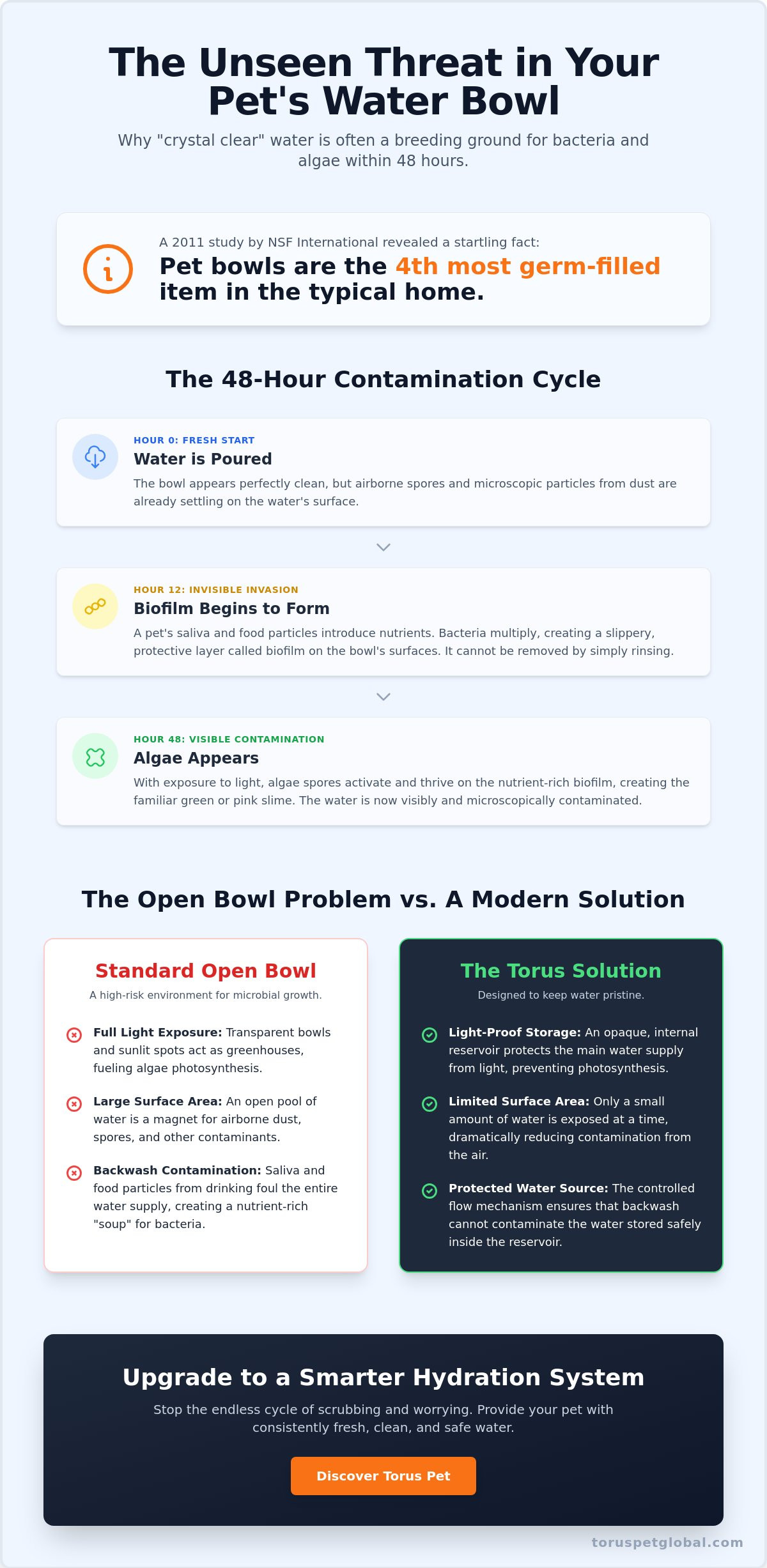
What if the "clean" water you just poured for your pet is already hosting a microscopic colony of unwanted guests? You scrub the bowl. You refill it. Yet, within 48 hours, that familiar green tint or slippery biofilm often reappears. A 2011 study by NSF International found that pet bowls are the fourth most germ-filled place in the home. Mastering the science of preventing algae in pet water bowls is essential for maintaining a healthy, premium hydration environment for your pet.
You likely feel the frustration of a cleaning routine that doesn't seem to last. It's a common struggle for modern pet parents who value both design and safety. This article promises to reveal the environmental triggers behind algae growth and provide professional protocols for a cleaner routine. We'll explore how light, nutrients, and systems that control water exposure, like Torus, work together to ensure your pet's water stays pristine. No slime, no scrubbing, no safety concerns. Just pure hydration.
Key Takeaways
- Challenge the "clear water" myth by understanding the invisible lifecycle of biofilm and the specific nutrients that fuel microbial growth.
- Learn how strategic placement and temperature control assist in preventing algae in pet water bowls by neutralizing primary environmental triggers.
- Establish a professional maintenance protocol that utilizes physical agitation to disrupt bacterial anchors that simple rinsing cannot remove.
- Evaluate how material science and surface porosity influence contamination risk, highlighting why certain materials are prone to microscopic buildup.
- Discover the design advantages of moving toward a hydration solution that protects water from light and air through controlled internal storage.
Understanding the Lifecycle of Algae and Biofilm in Pet Bowls
Many pet parents believe that if the water in a bowl looks clear, it's safe for consumption. This assumption is often incorrect. Microscopic activity begins long before any green tint appears. Preventing algae in pet water bowls starts with recognizing that visual clarity isn't a reliable metric for hygiene. In a standard open bowl, the environment begins to change the moment water is poured.
Algae are simple photosynthetic organisms. They don't just appear; they thrive when three specific elements align: light, water, and nutrients. In your home, these nutrients come from a mix of saliva, food particles, and household dust. When a bowl sits in a sunlit room, it becomes a literal greenhouse for microscopic growth. Within 48 hours, a neglected water source can transition from refreshing to contaminated.
Before you see green algae, you'll likely feel a slippery, translucent layer on the bowl's surface. This is biofilm. What is biofilm? It's a complex community of microorganisms adhering to surfaces. It's a biological shield that protects bacteria from being easily rinsed away. Simply topping up the water level doesn't help. In fact, it accelerates the concentration of organic matter, creating a nutrient-dense "soup" that fuels faster microbial expansion.
Algae vs. Biofilm: What is Hiding in the Bowl?
Biofilms act as a protective matrix for pathogens. They're resilient and cling tightly to plastic, ceramic, and even stainless steel. Algae spores are equally persistent. They enter the home through open windows, on your clothes, or via your pet's saliva after they've been exploring outdoors. Once these spores land in a nutrient-rich environment, they colonize. Biofilm is a complex community of microorganisms adhering to surfaces. It provides the perfect foundation for algae to take root and flourish.
The Health Risks of Neglected Hydration
Neglected water sources present real risks to long-term wellness. Consuming stagnant organic matter can lead to chronic gastrointestinal upset. You might also notice a pinkish residue near the waterline. This is often Serratia marcescens, a bacteria known as pink slime. It frequently coexists with algae in damp environments. Understanding the science of pet hydration is essential for maintaining a healthy home.
- No stagnant pools: Reducing the surface area of water exposed to air limits contamination.
- No light exposure: Systems that store water in opaque reservoirs, like Torus, prevent the photosynthesis required for algae growth.
- No contamination: Controlled water flow ensures that backwash and saliva don't foul the entire supply.
Hydration is a sophisticated element of modern pet care. It involves more than just a container; it requires a strategy for how water is stored and delivered. By moving away from high-exposure bowls, you significantly reduce the risk of microbial cycles taking hold in your home.
Managing Environmental Triggers: Light, Heat, and Location
Most pet parents assume that a green tint in a water dish is a sign of poor cleaning habits. It isn't. Algae spores are microscopic, airborne, and virtually omnipresent. They don't require a "dirty" home to thrive; they only require the right environmental conditions to activate. Preventing algae in pet water bowls is less about constant scrubbing and more about managing the three primary catalysts of microbial growth: light, heat, and nutrients.
Algae functions like a plant. It uses photosynthesis to turn light into energy. When a water bowl sits in a sun-drenched spot, it becomes a high-energy incubator. This process is further accelerated by the introduction of organic matter. Every time a pet drinks, they introduce "backwash" containing saliva, enzymes, and tiny food particles. These organic materials provide the nitrogen and phosphorus that act as fertilizer, turning a simple hydration station into a thriving ecosystem in less than 48 hours.
The UV Factor: Sunlight and Algae Growth
Sunlight is the primary fuel for green algae. Even indirect light from a nearby window provides enough UV energy to trigger a bloom. Transparent or translucent bowls are particularly high-risk. These materials act like mini-greenhouses, allowing light to penetrate the water from all angles while trapping heat inside. This creates a perfect loop of energy and warmth.
Strategic placement is your first line of defense. High-traffic, shaded areas like interior hallways or laundry rooms are far superior to kitchen windows or sunny patios. By reducing the light load, you effectively "starve" the algae of its energy source. Smart pet hydration solutions utilize opaque, insulated walls to ensure that the water supply remains in total darkness until the moment it is dispensed.
Temperature Control for Cleaner Water
There is a direct correlation between water temperature and the speed of microbial reproduction. In many common household environments, water temperatures between 70°F and 80°F allow certain bacteria and algae to double their population every 20 minutes. Maintaining "cool" water is not just a matter of your pet's preference; it is a hygiene necessity that slows down the biological clock of contaminants.
- Indoor Placement: Avoid placing bowls near floor vents, refrigerators, or dishwashers that vent warm air.
- Outdoor Safety: During peak summer months, outdoor water can reach 90°F in under an hour. Always use insulated reservoirs for outdoor hydration.
- Thermal Mass: Larger volumes of water hold their temperature longer. Systems that store water in thick, insulated reservoirs help maintain a stable, cool environment that resists rapid microbial blooms.
The goal of modern pet care is to move away from reactive cleaning and toward proactive environmental management. By controlling where the water sits and how much light it absorbs, you create a sophisticated hydration environment that stays cleaner for longer without the need for harsh chemicals.
Effective Cleaning Protocols for Sustained Water Hygiene
Many pet parents believe a quick daily refill is enough to maintain a healthy environment. It isn't. Stagnant water and light exposure create a perfect nursery for photosynthetic organisms. Preventing algae in pet water bowls requires more than a splash of water; it demands a structured disruption of the microbial environment. Clean hydration is a foundational pillar of pet wellness, and it starts with a commitment to physical maintenance.
Biofilm is the primary enemy of water purity. This slimy, invisible matrix of bacteria and extracellular substances protects microorganisms from simple rinsing. The "no-scrub" fallacy suggests that high-tech materials or chemical rinses can do the work alone. They can't. Physical agitation is the only reliable way to break the bond between the biofilm and the bowl surface. Without scrubbing, new algae spores quickly find a foothold in the microscopic residue left behind.
A tiered maintenance schedule ensures your hydration system remains pristine. No slime. No spores. No hassle. Establish these three intervals for the best results:
- Daily: Empty the reservoir, rinse with hot water, and wipe down the drinking surface to remove saliva and dust.
- Weekly: Perform a thorough scrub using a soft-bristle brush to reach corners and seams where biofilm accumulates.
- Monthly: Conduct a deep sanitization. If using advanced hydration solutions like Torus, this is the ideal time to replace active carbon filters and inspect the internal walls.
Step-by-Step Deep Cleaning Guide
Success in preventing algae in pet water bowls depends on a methodical approach. Follow these four steps to reset your pet's hydration station. First, empty the unit and rinse with high-pressure hot water to dislodge loose debris. Second, apply a mild, pet-safe detergent or a diluted vinegar solution. Third, use a soft-bristle brush to target corners and seams where biofilm hides. Finally, thoroughly rinse and allow the unit to air-dry completely. Drying is a critical, often overlooked step. Moisture-free intervals kill remaining spores that require water to survive.
Natural Additives: Are They Safe?
Natural inhibitors can provide an extra layer of protection for modern pet parents. Apple Cider Vinegar (ACV) is a popular choice because it slightly lowers the water's pH, making it less hospitable to algae. A ratio of one teaspoon per liter is generally well-tolerated. Grapefruit seed extract (GSE) is another potent antimicrobial option, though dosage must be precise; usually one drop per 250ml of water. You can learn more about the biological impact of water quality on the science page. Note that chemical algaecides designed for ponds should never be used in drinking bowls, as they contain copper sulfates and other toxins that are harmful to pets. Stick to food-grade, natural solutions that respect your pet's sensitive palate.
Insightful Takeaway: Effective hygiene is not about finding a "magic" product. It is about consistent, physical disruption of the microbial lifecycle. When you combine mechanical scrubbing with smart design and natural inhibitors, you transform a simple chore into a sophisticated health protocol.
Evaluating Bowl Materials and Their Resistance to Contamination
Many pet parents view a water bowl as a simple, static vessel. Science reveals a more complex reality. The material composition of your pet's water source is the primary factor in preventing algae in pet water bowls. Algae and bacteria don't just float; they seek a surface to anchor upon. The smoother and less porous that surface is, the harder it is for a biofilm to establish a foothold.
The Porosity Problem
Plastic is perhaps the most common material, yet it's the most susceptible to contamination. It's a soft polymer that degrades with every wash. Micro-scratches, often invisible to the human eye, become microscopic breeding grounds. These fissures protect algae spores from standard cleaning, allowing them to bloom repeatedly. No amount of scrubbing can fully sanitize a compromised plastic surface.
Stainless steel is a superior alternative, provided it's high-grade. You should look for 304-grade stainless steel. This specific alloy contains at least 18% chromium and 8% nickel to resist pitting and corrosion. Lower-grade metals develop tiny craters over time. These pits serve the same function as scratches in plastic, acting as reservoirs for stagnant water and bacteria. Ceramic bowls offer aesthetic appeal but require caution. Poorly glazed ceramic can leach heavy metals or develop "crazing," which are tiny cracks that harbor pathogens. For more detail, explore this resource on choosing the best dog bowls for health.
Antimicrobial Surfaces and Modern Coatings
The evolution of pet hardware has shifted from basic vessels to integrated hydration systems. Modern solutions prioritize antimicrobial properties. Ion-infused materials are now used to inhibit the growth of microbes on contact. These materials don't just hold water; they actively work to maintain its integrity. When a surface is truly non-porous, biofilm removal becomes significantly easier, requiring less friction and fewer chemicals.
A sophisticated hydration strategy focuses on the environment where water sits. Systems that control water exposure, like Torus, utilize these advanced material sciences to ensure the water remains as fresh as the moment it left the reservoir. It's about moving away from high-maintenance basins toward intelligent designs that prioritize long-term health and cleanliness. No slime, no scrubbing, no hassle.
Takeaway: Your choice of material dictates your cleaning schedule. Invest in non-porous, high-grade surfaces to minimize the biological load in your pet's water and maintain a pristine environment.
Discover the engineering behind cleaner pet hydration technology.
Modern Hydration Solutions: Moving Beyond the Open Bowl
The standard open bowl is a design relic that fails to account for basic microbiology. While it's a convenient vessel, its constant exposure to light and air creates a perfect environment for unwanted growth. For the modern pet parent, preventing algae in pet water bowls means looking past the surface and addressing how water is stored before it's even served.
Rethinking hydration involves moving away from the "open pool" concept. When water sits in a traditional bowl, it's essentially a stagnant pond in your kitchen. By utilizing a system that prioritizes controlled exposure, you can maintain water purity without the need for daily chemical treatments or aggressive scrubbing. It's a shift from reactive cleaning to proactive prevention.
The Benefits of Closed-System Storage
Traditional transparent or open-top bowls act like miniature greenhouses. Algae requires photosynthesis to thrive, and a clear bowl sitting in a sunlit room provides the exact energy source it needs. Modern pet hydration solutions solve this by keeping the bulk water supply in the dark, housed within opaque, insulated walls.
Systems that store water in light-blocking walls, like Torus, eliminate the greenhouse effect entirely. These designs use gravity-fed mechanisms to ensure only a small amount of water is dispensed into the drinking well at any time. This means 95% of your pet's water remains protected from light and airborne spores until the moment it's needed. You can learn more about how advanced storage systems function to maintain this level of purity.
- Light Exclusion: Opaque walls prevent the photosynthesis required for algae growth.
- Reduced Surface Area: Less water is exposed to air, slowing down the rate of evaporation and contamination.
- Thermal Protection: Insulated reservoirs keep water cooler, as heat often accelerates bacterial and algal blooms.
Integrating Filtration into Your Routine
Algae doesn't just need light; it needs nutrients. Tap water often contains trace organic contaminants that serve as a food source for microbes. Integrating activated carbon filtration into the hydration process is a sophisticated way to "starve" potential algae before it can take root.
Carbon filters are highly effective at removing chlorine, heavy metals, and the organic compounds that cause water to taste "stale." When water is filtered as it moves from a protected reservoir to the drinking well, it stays fresher for longer periods. This creates a high-quality hydration experience that matches the clean, minimalist aesthetic of a modern home.
Sophisticated hydration is about more than just a container. It's about a managed ecosystem that works silently in the background. No light, no stagnant water, no algae. No problem. By choosing a system designed for the realities of modern life, you ensure that your pet's water remains as pristine as the home they live in.
Elevating Your Pet’s Hydration Standards
Achieving pristine water quality requires more than a daily rinse; it’s about controlling the variables that allow microorganisms to thrive. By managing light exposure and selecting non-porous materials, you take the first step in preventing algae in pet water bowls. Modern pet parents are moving away from open, stagnant dishes toward systems that protect the water source from environmental triggers like heat and UV rays.
No slime. No stagnant water. No hassle. A sophisticated pet hydration solution, like those designed by Torus, utilizes an internal reservoir to shield water from the elements. These systems incorporate advanced carbon filtration and antimicrobial protection to help reduce exposure to contaminants, with filters designed for replacement every 30 days to maintain peak hygiene. With a UV-blocking internal reservoir, the water remains cool and clean, regardless of where the day takes you.
Investing in thoughtful design ensures your home stays aesthetic and your pet stays healthy. Explore the Torus range of filtered, light-protected hydration solutions to see how smart technology simplifies daily care. Your pet deserves water that’s as fresh as the moment it was poured.
Frequently Asked Questions
Is the green algae in my pet’s water bowl dangerous for them to drink?
Algae growth is more than an aesthetic issue; it can pose genuine health risks. While many common green algae species are relatively harmless, they often coexist with cyanobacteria, which produce toxins that can damage the liver or nervous system. A 2022 study on household water safety indicated that stagnant water containing visible growth can cause gastrointestinal distress in 15% of pets. Clean water is a fundamental pillar of health, so you should address any discoloration immediately.
How often should I realistically wash my pet’s water bowl to prevent algae?
You should wash the bowl daily with hot, soapy water to maintain a hygienic environment. Algae spores are opportunistic and can begin to colonize surfaces within 24 to 48 hours, especially in homes with significant natural light. For preventing algae in pet water bowls, a deep scrub once a week is necessary to disrupt the biofilm that protects these microscopic organisms from light rinsing.
Can I use bleach to clean my pet’s water bowl if there is heavy algae growth?
Bleach is effective but requires extreme caution and a specific dilution of one tablespoon per gallon of water. It's vital to rinse the bowl until all chemical odors are completely gone, as chlorine can irritate a pet's sensitive nose and throat. Many modern pet parents prefer a 5% acetic acid solution, such as white vinegar, which safely dissolves mineral deposits and kills spores without the risks associated with harsh industrial chemicals.
Why does my dog’s water bowl get slimy even if the water looks clear?
That slippery film is a biofilm, a structured community of bacteria and extracellular polymers that bond to the bowl's surface. Research shows that 67% of pet bowls contain high bacterial counts even when the water appears transparent to the naked eye. Advanced hydration solutions, like Torus, help mitigate this by minimizing the water's exposure to airborne contaminants and saliva during storage.
Does copper or silver in a water bowl really help prevent algae growth?
These metals offer passive protection through the oligodynamic effect, where metal ions inhibit the growth of microorganisms. Silver ions can penetrate the cell walls of algae to disrupt their metabolic processes and prevent reproduction. While these materials provide an excellent secondary defense, they don't replace the need for regular cleaning. They are a sophisticated tool within a broader strategy for maintaining pristine hydration.
Will a fountain prevent algae better than a standard still-water bowl?
Movement helps, but it isn't a total solution because many fountains still expose the entire water volume to light and oxygen. Aeration can actually encourage the growth of certain aerobic algae if the internal filters aren't replaced every 30 days. Systems that utilize an internal reservoir to limit light exposure, such as Torus, are often more effective at preventing algae in pet water bowls than open-air fountains.
Can I put my pet’s water bowl in the dishwasher to kill algae spores?
Most high-quality ceramic, stainless steel, and specialized BPA-free plastics are dishwasher safe and benefit from the high-heat cycle. Standard dishwashers reach temperatures of 140 degrees Fahrenheit, which is sufficient to kill most active algae spores and bacteria. Always verify the manufacturer's instructions, as extreme heat can occasionally compromise the seals or specialized coatings on lower-quality products.
What is the best location in the house to keep the water bowl clean?
The ideal location is a cool, shaded area away from the path of direct sunlight. Photosynthesis is the primary driver of growth; a bowl placed in a sunlit window can grow algae 3 times faster than one kept in a dim corner. It's also wise to keep the hydration station away from the food bowl to reduce the organic debris that serves as a food source for microbes.


